
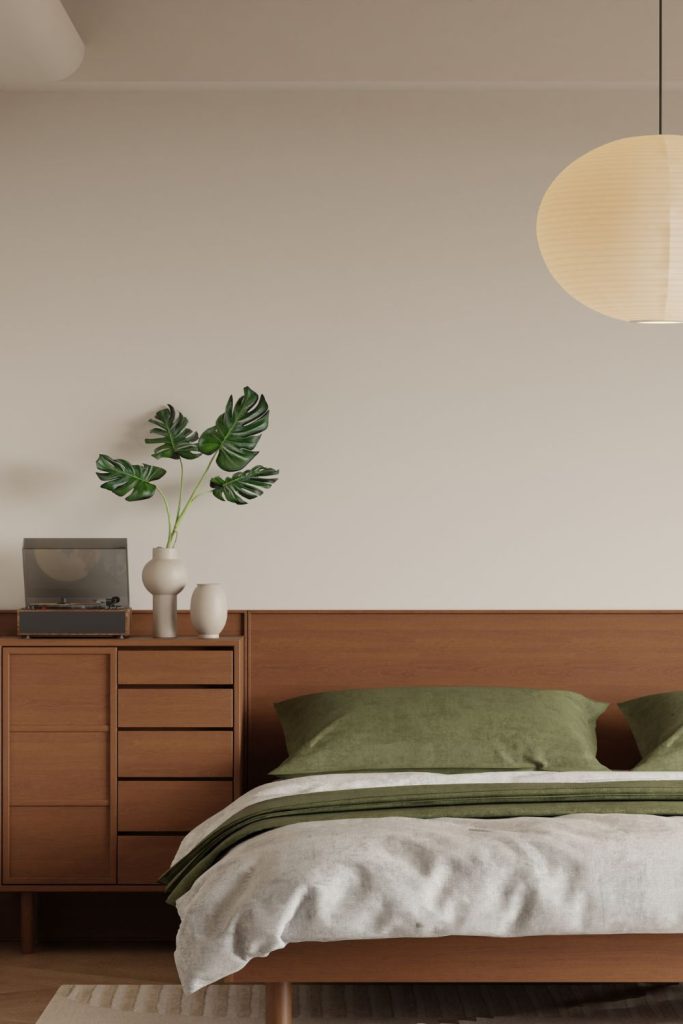
A very small Japandi bedroom works best when every detail feels calm, useful, and visually light. The style blends soft Scandinavian warmth with Japanese simplicity, which makes it ideal for compact rooms where space is tight and clutter builds up quickly. Instead of filling the room with many items, the focus stays on a few well chosen pieces, natural textures, and soft tones that keep the space open and easy on the eyes. The goal is a bedroom that feels quiet, cozy, and organized without trying too hard or adding unnecessary decoration.
How do you create a spacious and cozy atmosphere in a very small Japandi bedroom?
A very small Japandi bedroom feels more open when visual weight is reduced and light is controlled in a soft way. Oversized rice paper pendant lamps placed near the center of the room help spread diffused light that does not feel harsh or directional. This type of lighting avoids sharp shadows and gives the space a calm glow in the evening.
Layered oatmeal linen bedding adds comfort without visual noise. The wrinkled texture makes the bed feel lived in but still neat, especially when paired with neutral tones like sand or soft cream. The bed becomes the main resting point in the room without overwhelming the eye.
Vertical wood slat headboards help draw attention upward. In a small room, height matters more than width, so vertical lines create a sense of lift. It makes the ceiling feel slightly higher than it really is.
Floor to ceiling sheer flax curtains soften daylight and blur harsh edges around windows. Instead of blocking light, they diffuse it gently so the room feels airy even when the window is small or placed awkwardly.
Warm beige limewash walls add quiet texture without needing art or heavy decoration. The surface feels slightly uneven, which gives depth without clutter. Combined together, these choices help the room feel calm, breathable, and less crowded even when floor space is tight.
What furniture, color palettes, and materials define a stylish very small Japandi bedroom?
Furniture in a very small Japandi bedroom stays low, simple, and close to the floor. Low profile platform beds reduce visual height, making the room feel wider and more grounded. When paired with asymmetrical decor styling, the bed area feels curated without becoming crowded.
Curved boucle accent chairs placed in corners add softness to sharp room angles. They also create a quiet reading corner without needing large furniture pieces. The rounded shape helps break boxy room geometry.
Floating oak shelves replace bulky storage units. These shelves hold only a few objects like stacked neutral books or handmade pottery, keeping surfaces visually calm. The materials stay natural, often oak, walnut, or ash wood, sometimes mixed together for contrast without noise.
The color palette stays within soft neutrals such as beige, oatmeal, mushroom, and clay tones. Dark walnut and pale ash wood appear together to give depth while still staying warm. Black appears in small accents like matte wall sconces or frames to ground the palette.
Materials like stone inspired ceramics, jute rugs, linen fabrics, and raw wood bring texture without visual clutter. Oversized abstract ink style wall art can act as a single focal point rather than many small decor items competing for attention.
What storage and layout solutions maximize space in a very small Japandi bedroom?
Storage in a very small Japandi bedroom stays hidden or visually blended. Instead of large wardrobes, neutral woven storage baskets sit under beds or inside corners. They feel decorative rather than purely functional, so they do not disturb the visual calm.
Floating shelves also act as light storage for small items, but they stay minimal, holding only a few carefully chosen objects. This prevents surfaces from filling up too quickly.
Low profile platform beds often include hidden space underneath. This area can store seasonal items or folded textiles, keeping the main floor clear. The idea is to keep walking paths open and reduce visual blockage.
Layout planning focuses on keeping the center of the room open. Furniture stays along walls or corners, leaving negative space in the middle. This empty area gives the room a sense of breathing room, even when square footage is small.
Mirrors with minimal black frames help expand perception of space. Placing them opposite windows reflects natural light and gives the impression of a wider room.
Hand dyed indigo throws, jute rugs, and soft fabric layers are placed in controlled zones so they do not spread across the room. Each item has a clear place, reducing visual confusion and keeping movement easy.
- Related post 21 Genius Adult Bedroom Ideas for Very Small Studio Apartments That Maximize Every Inch of Space
Top 21 Very Small Japandi Bedroom Ideas
Oversized rice paper pendant lamps as the main statement piece in a very small Japandi bedroom
Oversized rice paper pendant lamps work as the visual anchor in a very small Japandi bedroom. Their soft round shape contrasts with straight walls and furniture lines. The material diffuses light evenly, removing harsh brightness and replacing it with a gentle glow.
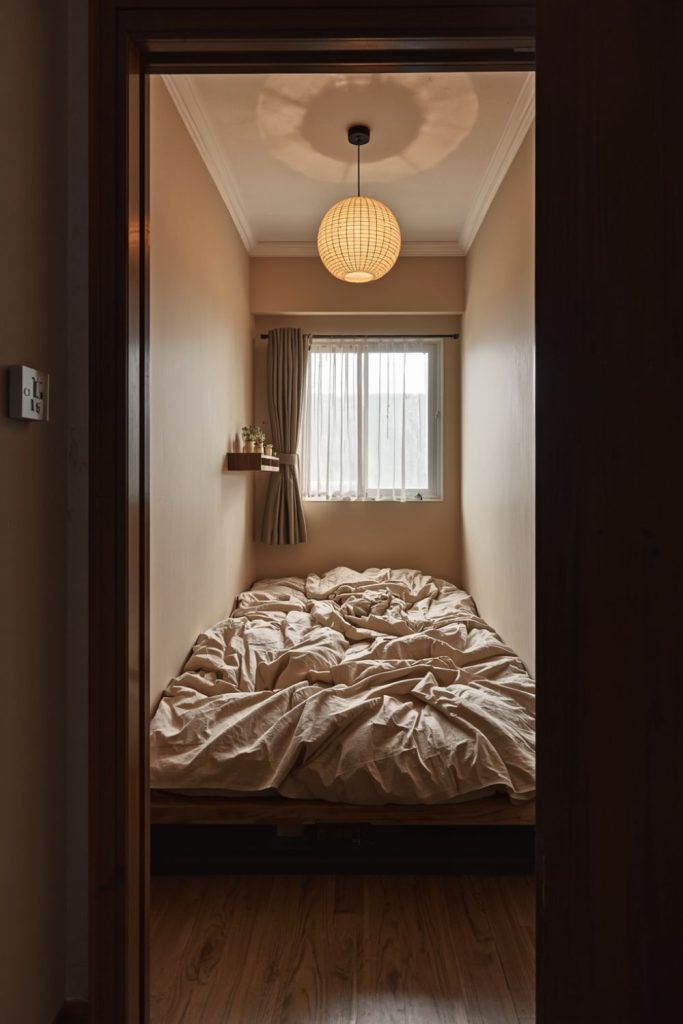
When placed slightly lower than standard ceiling lights, they create intimacy in the sleeping area. The lamp becomes the main visual object in the upper part of the room, reducing the need for extra decor on walls.
The simplicity of the paper shade fits Japandi style since it avoids heavy ornamentation. It also helps balance small rooms where too many visual details can feel crowded quickly.
Layered oatmeal linen bedding with crinkled textures for an effortlessly cozy Japandi look
Layered oatmeal linen bedding brings softness into a very small Japandi bedroom without adding visual clutter. The natural wrinkles in linen are not hidden, which removes the pressure of keeping the bed perfectly flat all the time.
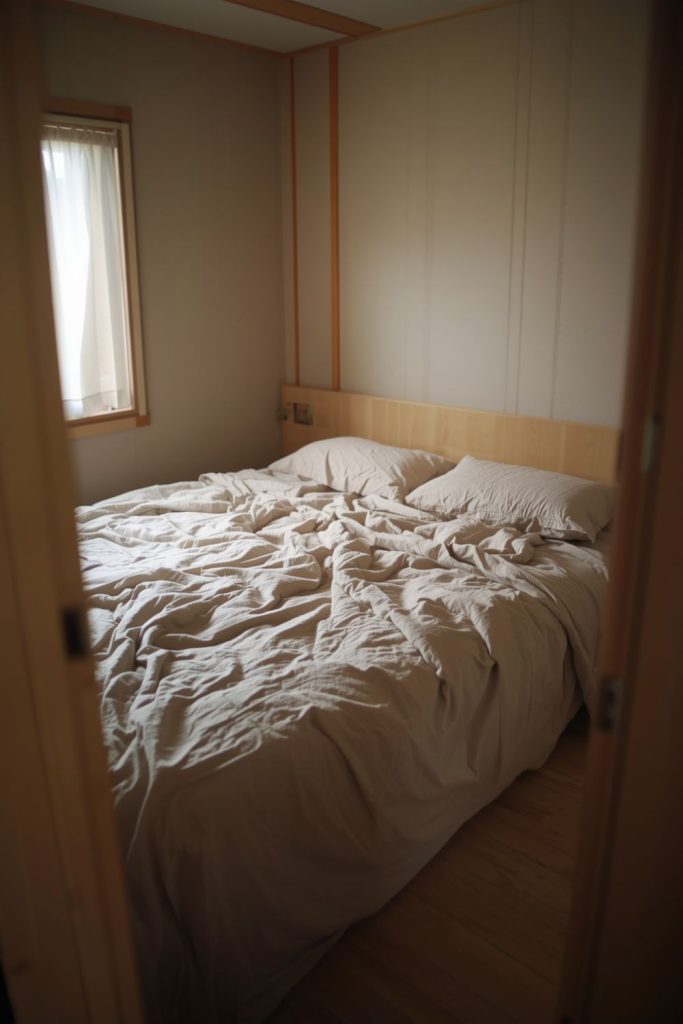
Different tones of beige and cream are stacked together in subtle layers. This creates depth without strong contrast. The bed becomes visually inviting, especially when paired with soft morning light.
The texture also works well in small rooms since it avoids flat surfaces that feel sterile or cold. Instead, it gives warmth through touch and sight at the same time.
Vertical wood slat headboards that visually stretch the height of a tiny bedroom
Vertical wood slat headboards introduce rhythm into a compact bedroom. The repeated vertical lines pull attention upward, which helps the room feel taller.
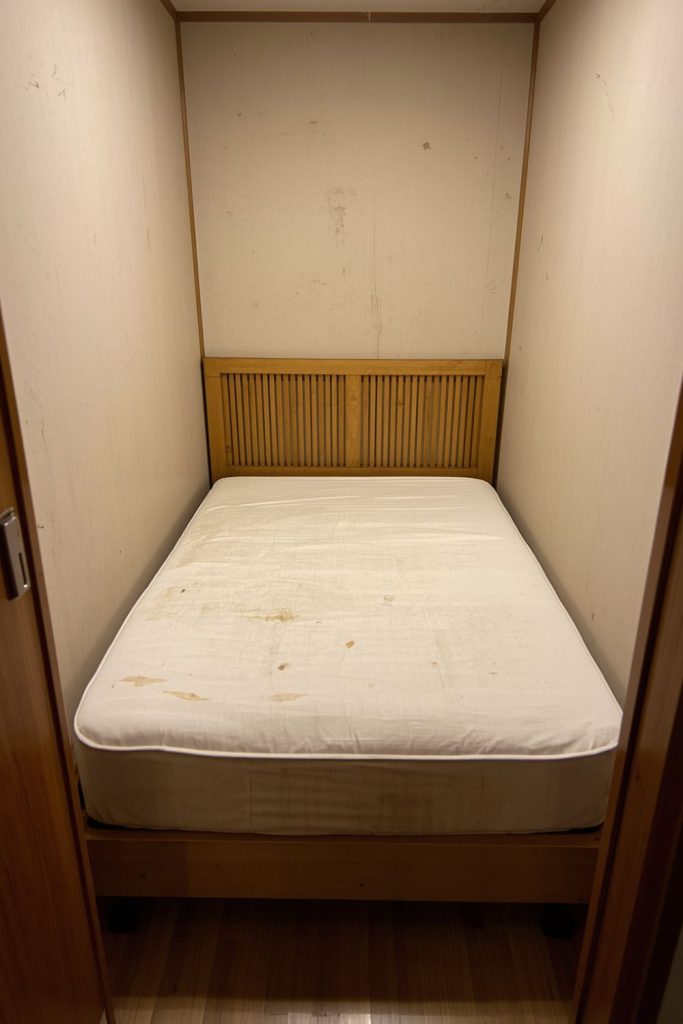
The spacing between slats allows light and shadow to interact gently, giving depth without bulk. The wood tones often stay in ash, oak, or light walnut, depending on room warmth.
This headboard style replaces heavy upholstered frames, which can feel too large in tight spaces. Instead, it keeps the bed area visually light while still defined.
Sculptural ceramic vases styled with single bare branches for minimalist visual drama
Sculptural ceramic vases placed on shelves or bedside surfaces bring quiet character into a very small Japandi bedroom. The focus stays on shape rather than decoration.
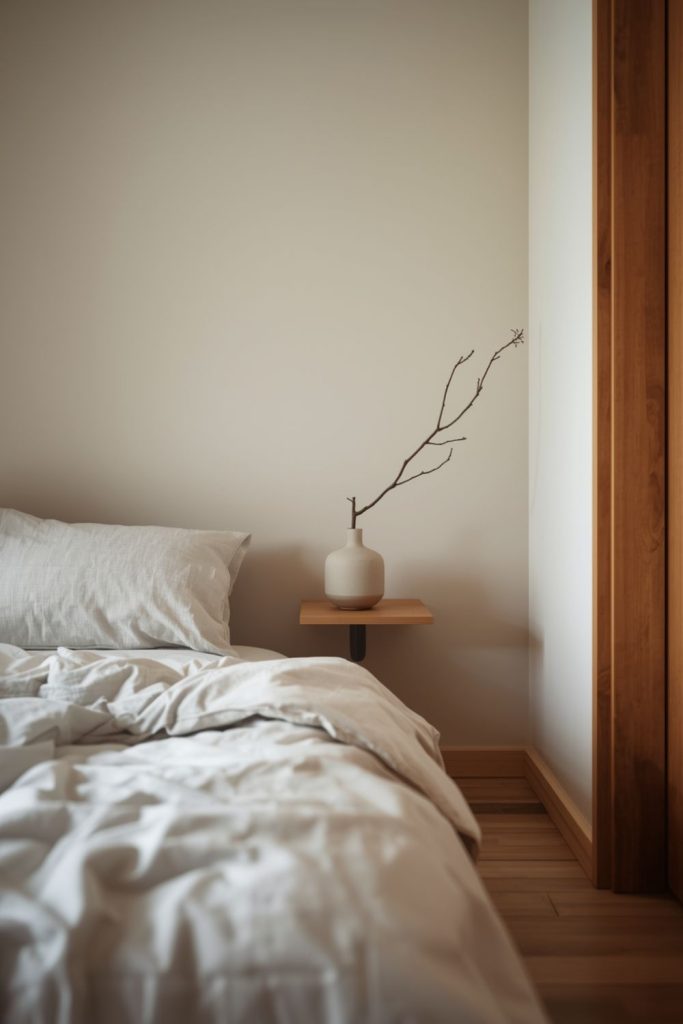
A single bare branch inside each vase adds height and natural irregularity. It avoids the need for bouquets or dense floral arrangements, which can feel crowded in small rooms.
The combination of ceramic and wood creates a calm contrast. The look stays simple but not empty, giving the room a thoughtful visual pause point.
Floor-to-ceiling sheer flax curtains that soften harsh apartment light in a very small Japandi bedroom
Sheer flax curtains running from ceiling to floor help soften daylight and reduce harsh edges from windows. They create a continuous vertical flow that makes the room feel taller.
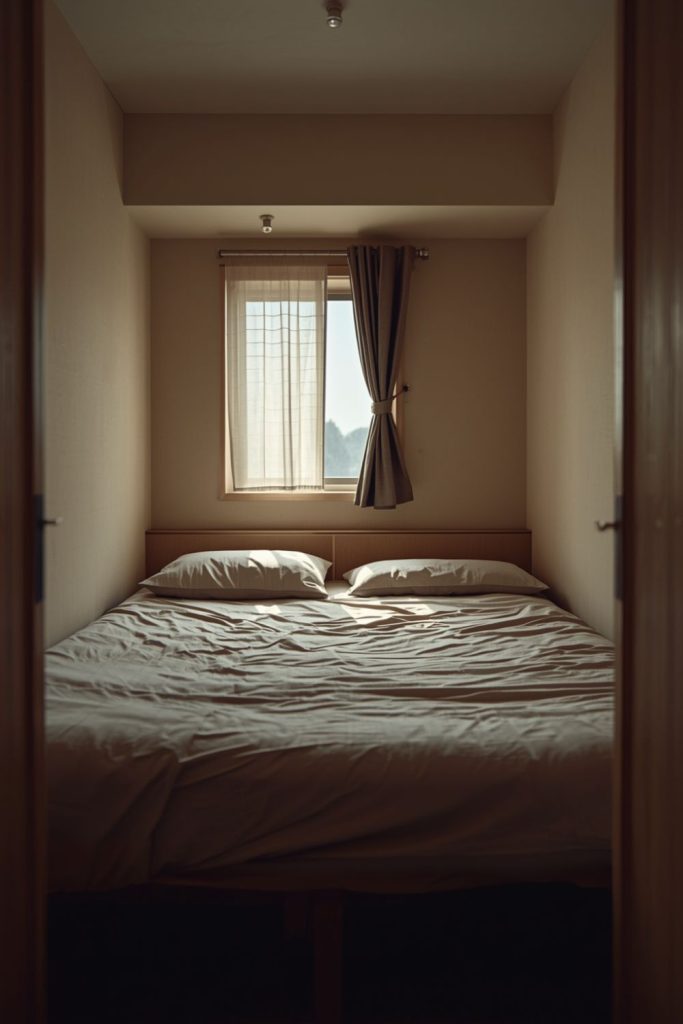
The fabric filters sunlight instead of blocking it, which keeps the room bright without glare. This is especially helpful in small bedrooms where direct sunlight can feel overwhelming.
The movement of the fabric when air passes through adds gentle motion without adding objects or clutter.
Warm beige limewash walls that create a soft cloud-like backdrop in compact Japandi spaces
Limewash walls in warm beige tones give depth through texture instead of color contrast. The surface looks slightly uneven, which avoids flat and sterile walls.
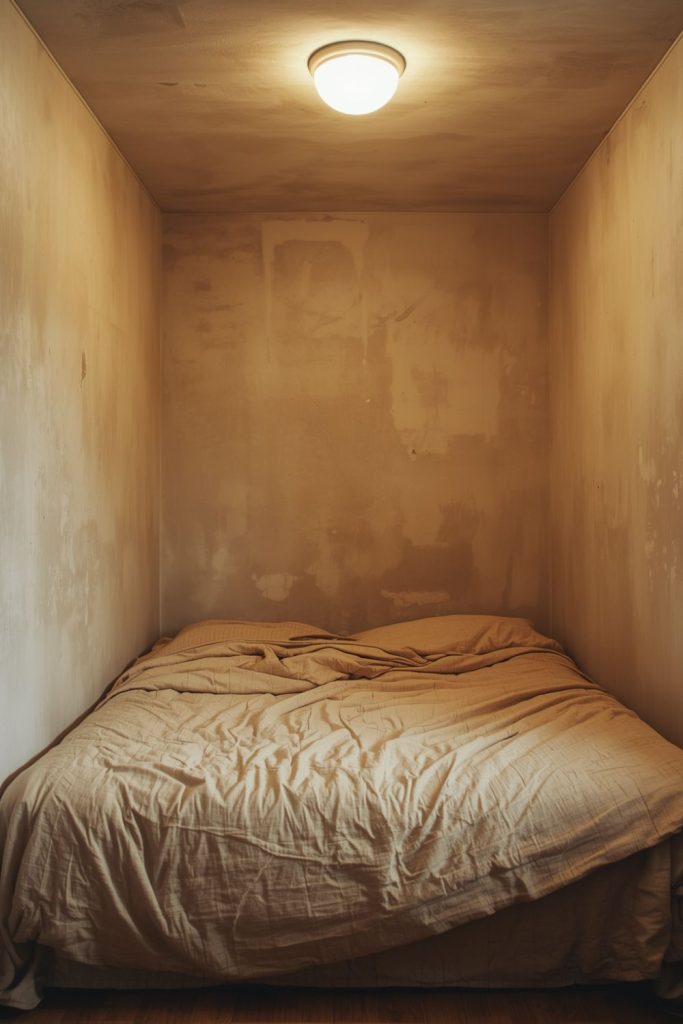
This finish works well in a very small Japandi bedroom because it replaces the need for multiple wall decorations. The wall itself becomes part of the visual identity of the room.
The soft texture pairs well with wood and linen materials, creating a balanced and calm backdrop.
Floating oak shelves styled with stacked neutral-toned books and handmade pottery
Floating oak shelves keep storage light and visible without heaviness. They replace bulky cabinets that take up floor space.
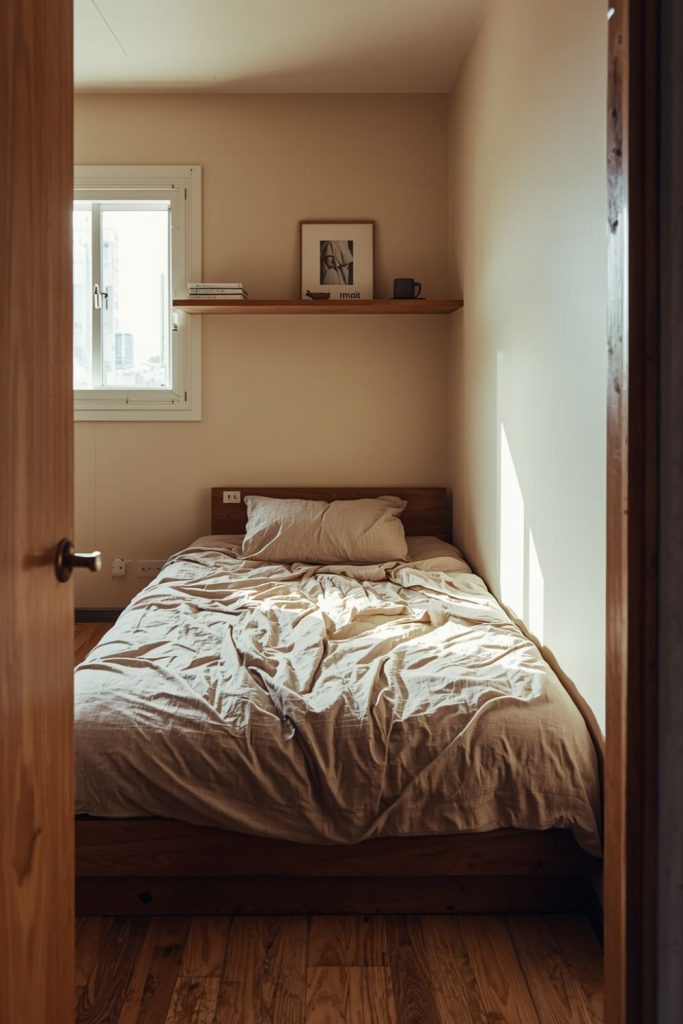
When styled with neutral books and simple pottery, they become part of the decor instead of just storage. Each object is spaced out with intention, leaving breathing room between items.
The wood grain adds warmth against neutral walls, giving a subtle contrast without overwhelming the eye.
Matte black wall sconces paired with soft ambient lighting for balanced Japandi contrast
Matte black wall sconces introduce contrast in a very small Japandi bedroom without feeling harsh. The black tone anchors the lighter palette used across walls and bedding.
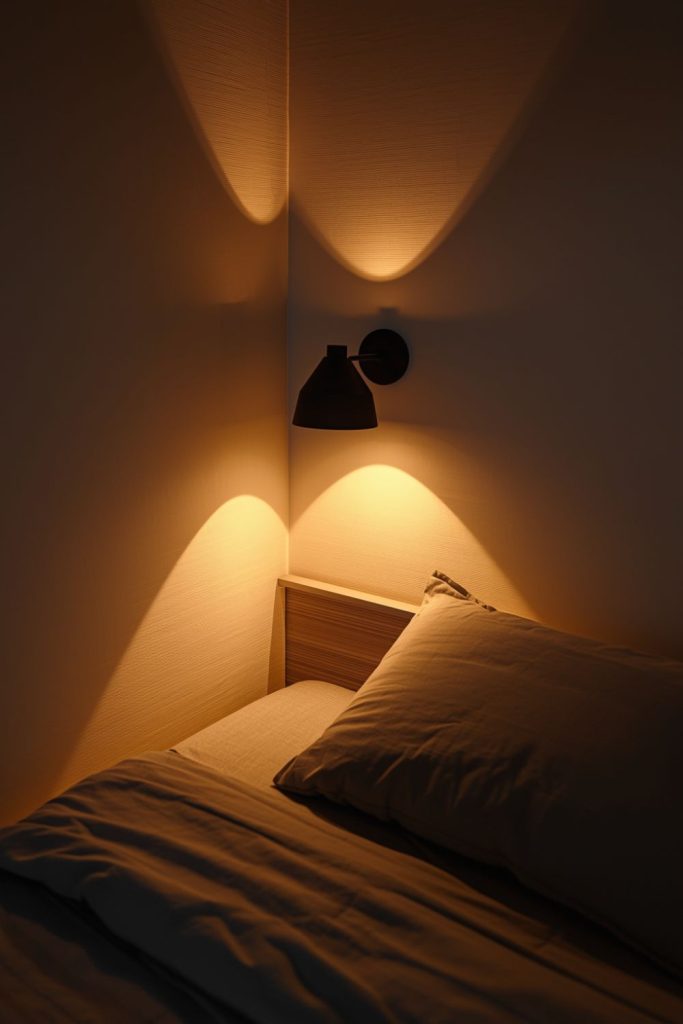
When paired with soft ambient lighting, the contrast feels balanced instead of sharp. The light spreads gently around the room, reducing shadows in corners.
This lighting setup also saves surface space since bedside tables remain free from lamps or clutter.
Handwoven jute rugs layered under low platform beds to add warmth and texture
Jute rugs bring natural texture underfoot in a very small Japandi bedroom. Their rough weave contrasts softly with smooth wood and linen surfaces.
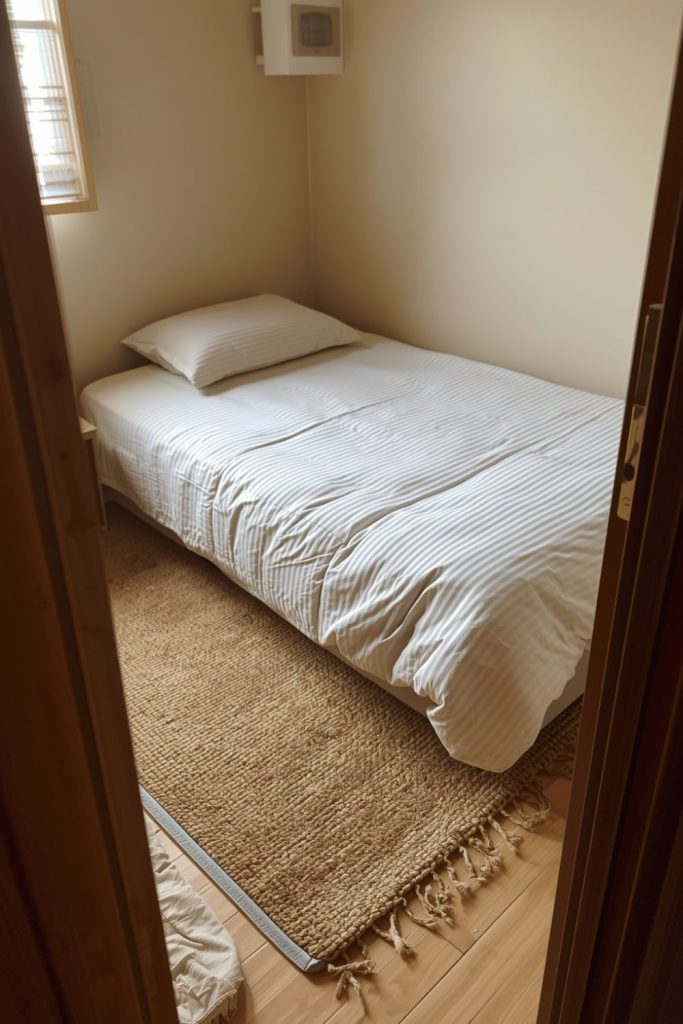
Layering rugs under low platform beds helps define the sleeping zone without walls or dividers. It creates a grounded feeling while still keeping the room open.
The neutral tones of jute blend easily with Japandi palettes, keeping the visual flow calm.
Curved boucle accent chairs tucked into corners for a sculptural Japandi aesthetic
Curved boucle chairs add softness to sharp room layouts. Their rounded shape breaks rigid geometry found in most bedrooms.
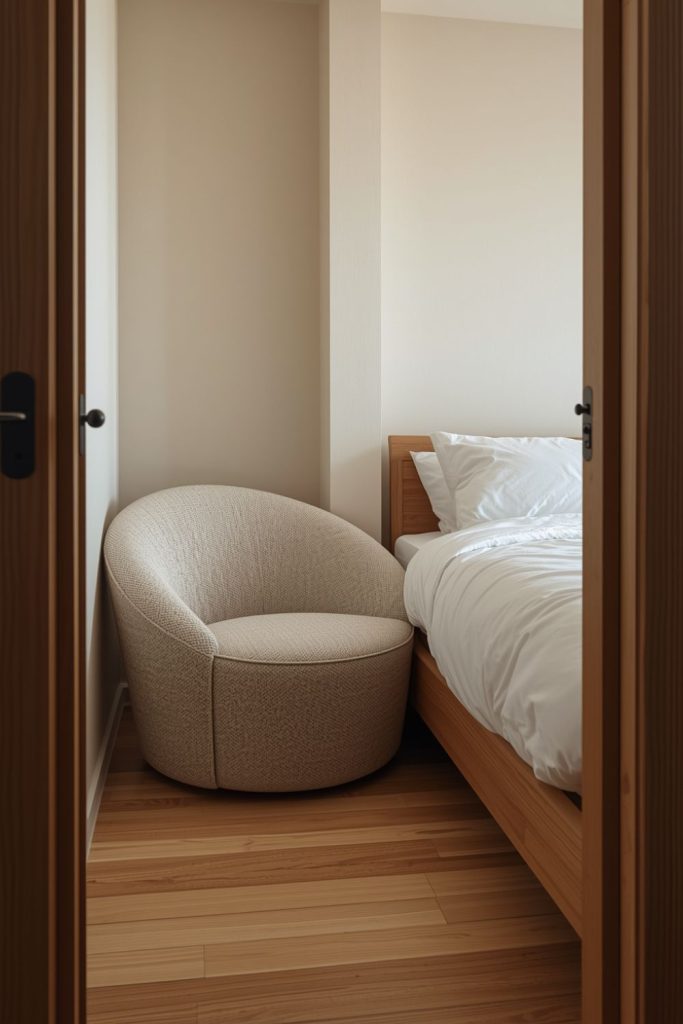
Placed in corners, they use space that would otherwise stay empty. The boucle texture adds warmth without needing extra decor around it.
The chair often becomes a quiet resting point rather than a main feature, which suits compact rooms.
Dark walnut and pale ash wood decor mixed together for a richer modern Japandi palette
Mixing dark walnut with pale ash wood creates depth in a very small Japandi bedroom. The contrast feels natural rather than forced.
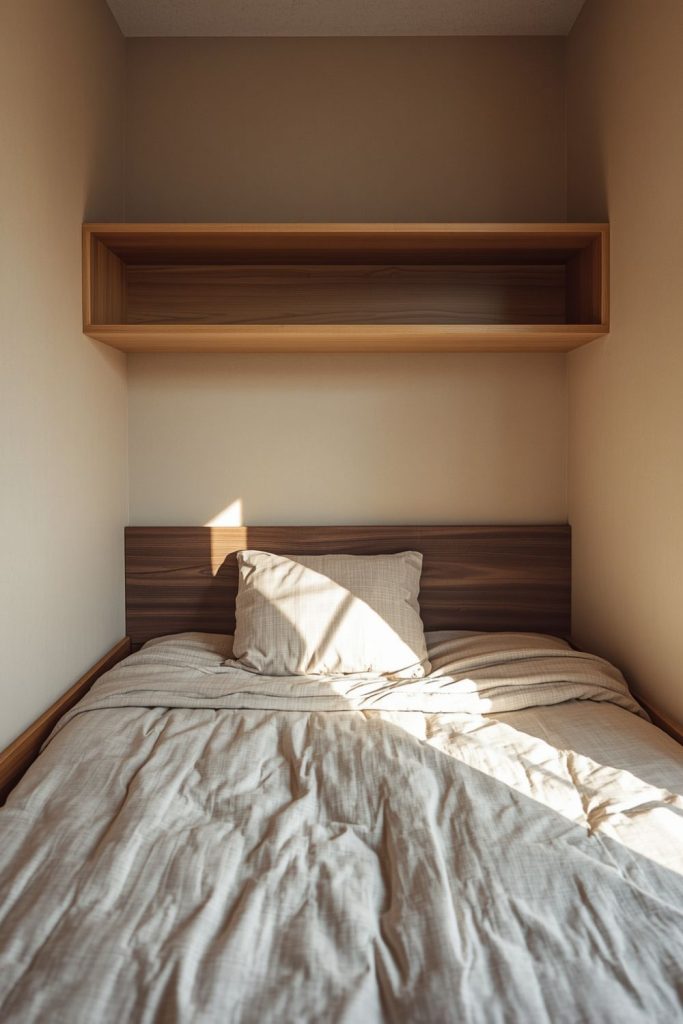
Walnut adds warmth and weight, while ash keeps things light and airy. Together they prevent the room from feeling flat or one toned.
This mix works best when repeated across furniture, shelves, and small decor objects.
Oversized abstract ink-style wall art inspired by traditional Japanese brush paintings
Large ink style artwork works better than multiple small pieces in a compact bedroom. One strong visual piece reduces clutter on walls.
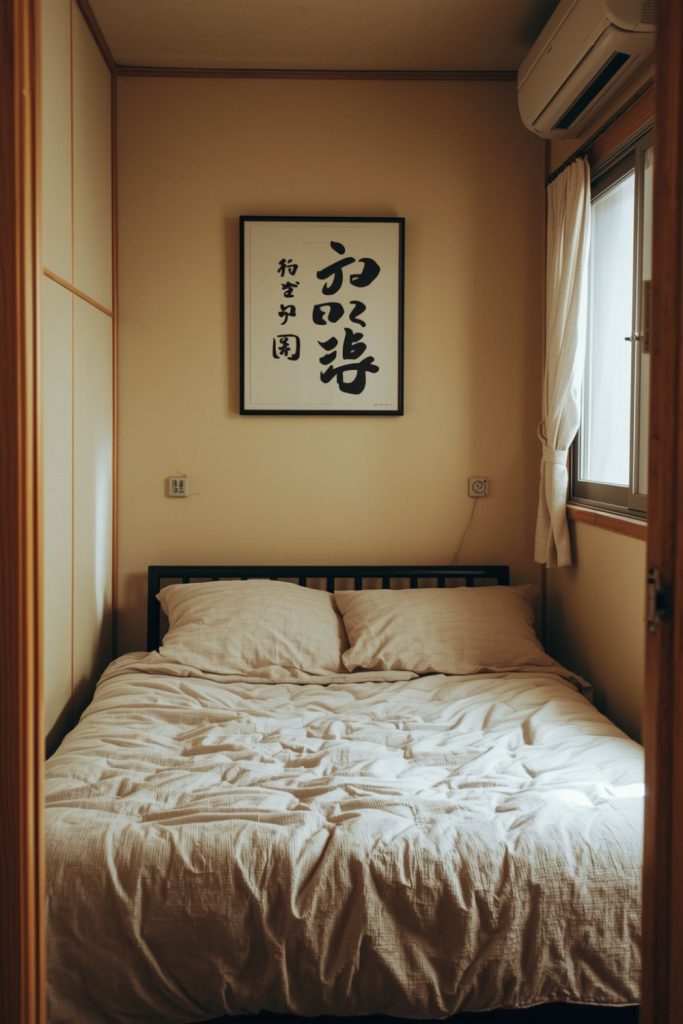
The brush style adds movement while staying minimal in color. Black ink on neutral backgrounds fits Japandi restraint.
It also acts as a focal point that balances empty wall space.
Stone-inspired ceramic table lamps that add earthy character to compact bedside spaces
Stone inspired lamps bring a grounded feeling to bedside areas. Their rough surface texture adds interest without decoration overload.
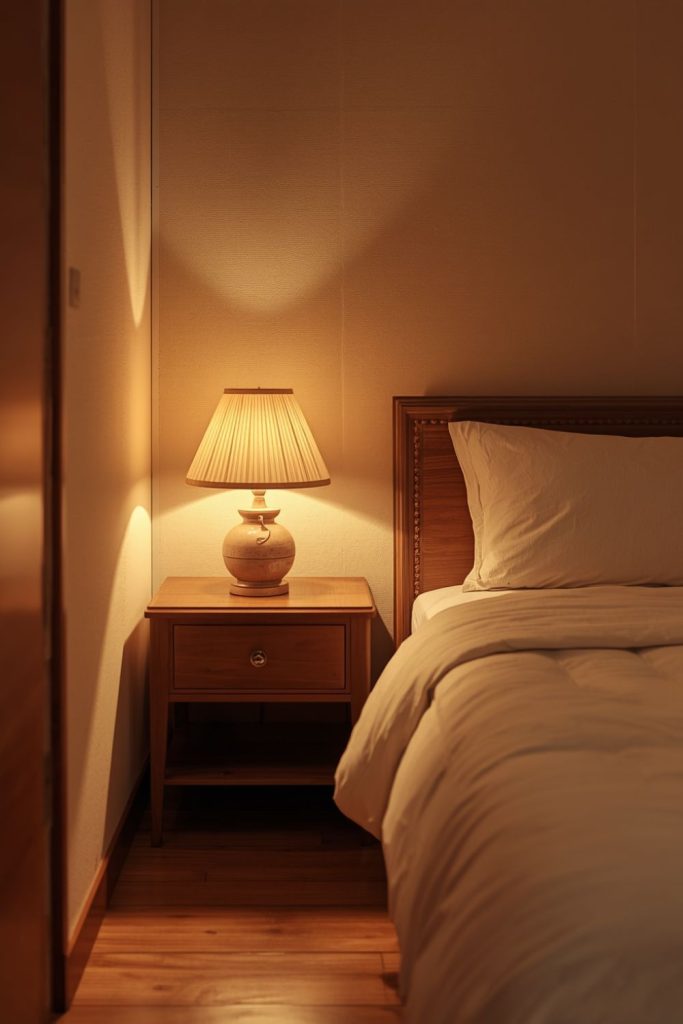
They stay compact, which is important in small rooms where bedside surfaces are limited.
The warm glow they produce supports a calm nighttime atmosphere.
Raw-edge wooden wall panels that bring natural wabi-sabi texture into a very small Japandi bedroom
Raw edge wood panels introduce irregular natural shapes into structured interiors. This contrast adds personality without adding objects.
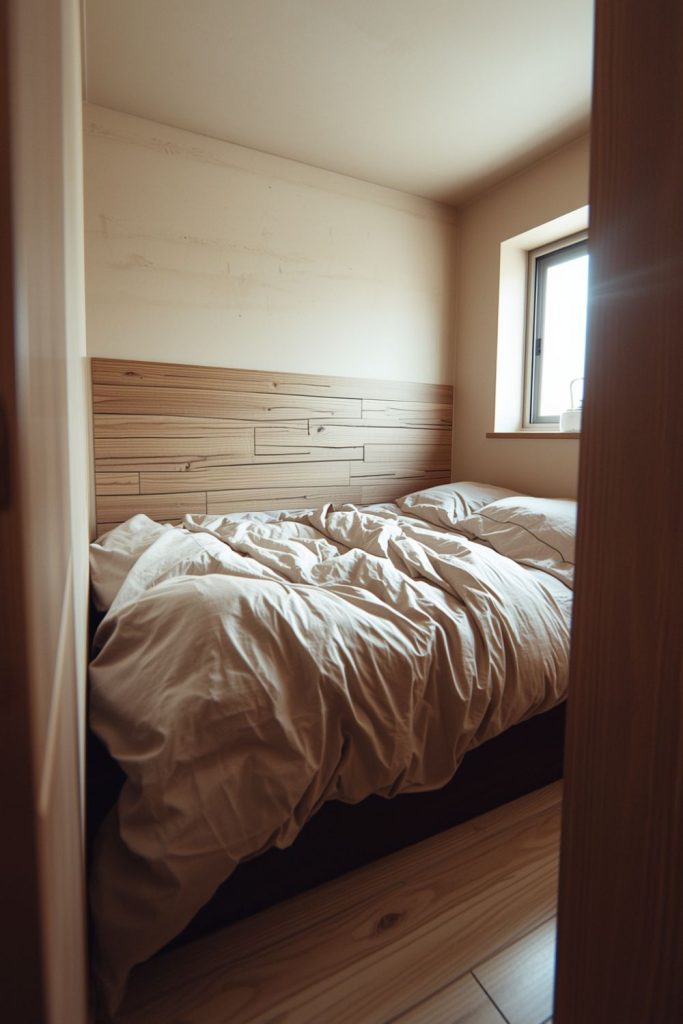
The uneven edges reflect natural material behavior, which suits Japandi style rooted in imperfection.
They can replace artwork or feature walls, reducing the need for extra decor.
Minimal black-framed mirrors positioned to reflect natural light and visually expand the room
Black framed mirrors add structure while still expanding visual space. The thin frame keeps focus on reflection rather than object itself.
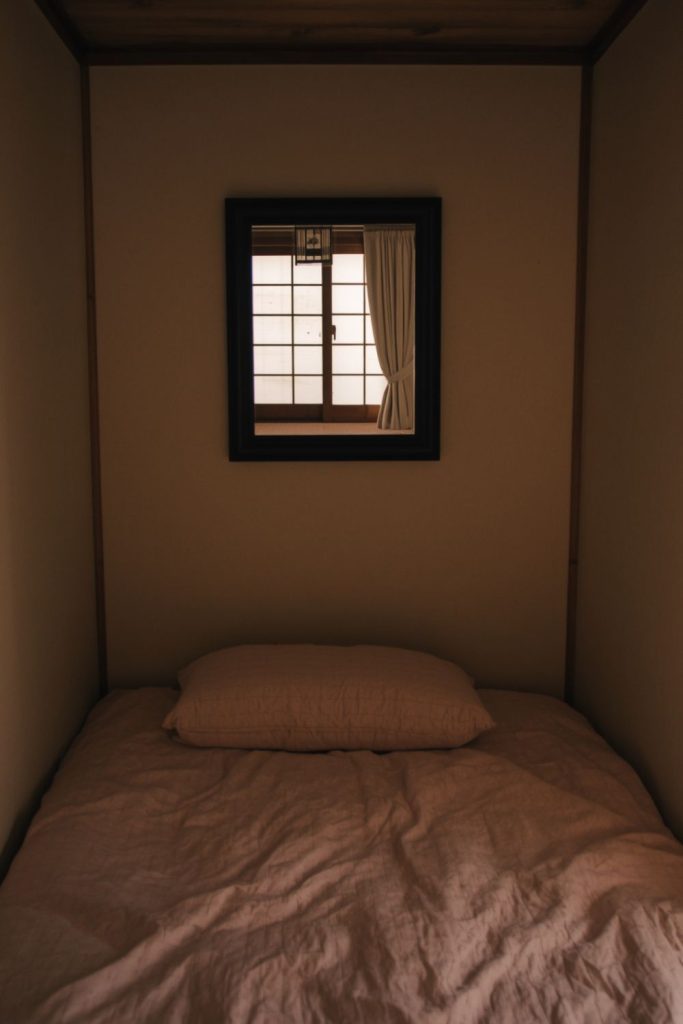
Placed opposite windows, they double the amount of visible light in the room. This creates a brighter atmosphere even in compact bedrooms.
They also help break tight wall boundaries.
Neutral-toned woven storage baskets styled as decorative accents instead of hidden storage
Woven baskets serve both function and visual softness. Instead of hiding them, they stay visible as part of the decor.
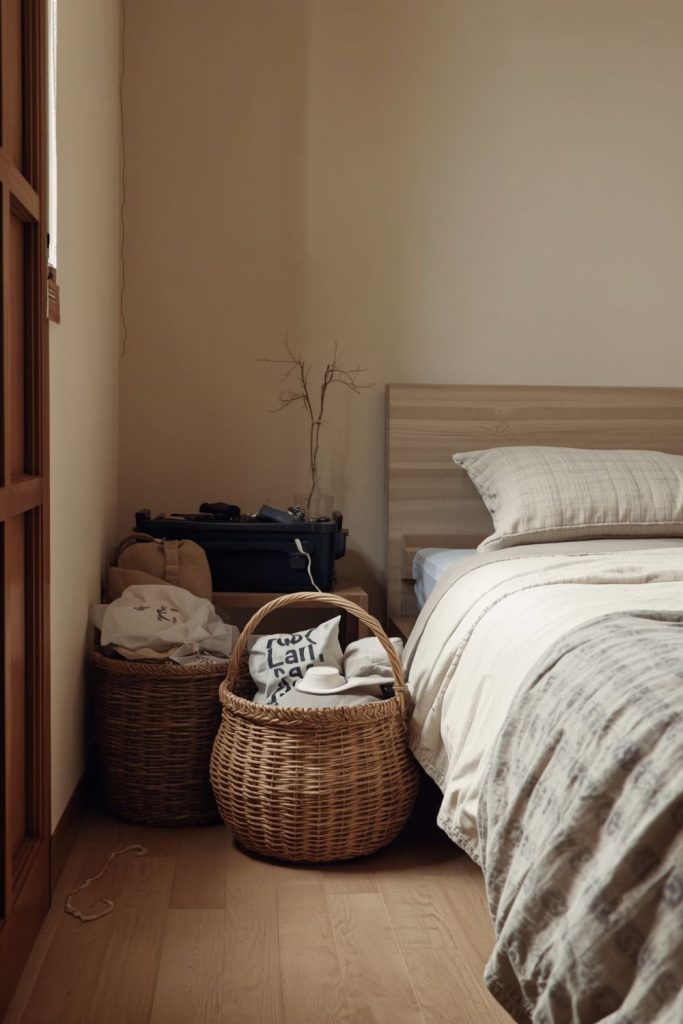
Their neutral tones blend with bedding and rugs, preventing visual disruption.
They help keep small items organized while still supporting a calm aesthetic.
Hand-dyed indigo throw blankets used as a subtle Japandi focal accent
Indigo throws introduce controlled color into a neutral room. The deep blue tone stands out gently without overpowering the palette.
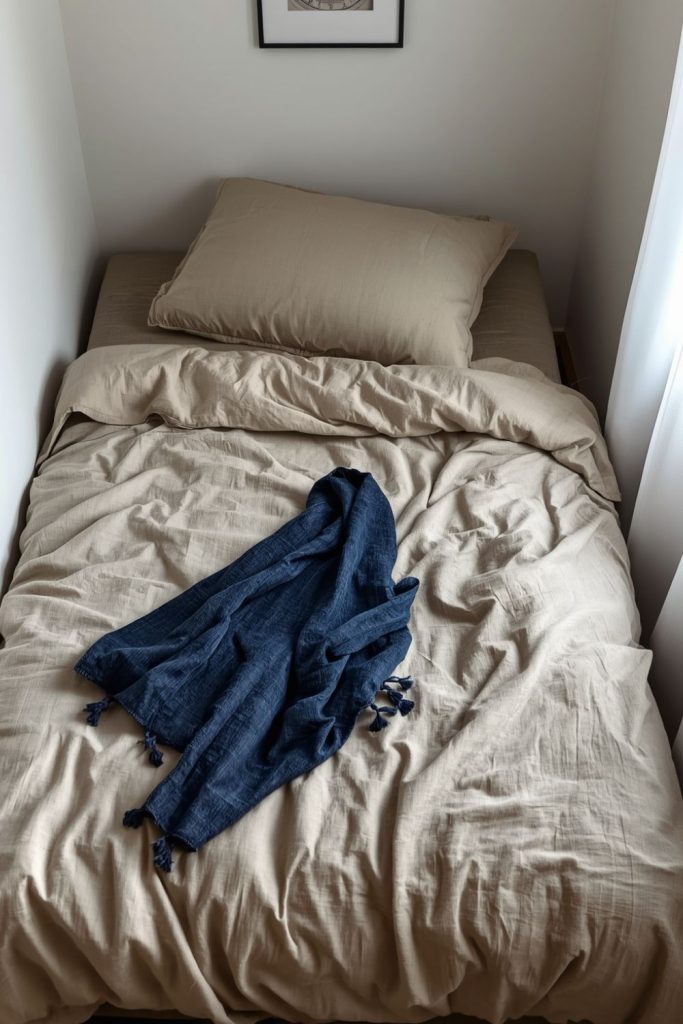
Placed over bedding or chairs, they act as a soft visual anchor.
The handmade look adds character without clutter.
Hanging fabric wall panels that bring softness and movement to plain apartment walls
Fabric wall panels replace rigid decor with soft vertical texture. They move slightly with air, adding life to still rooms.
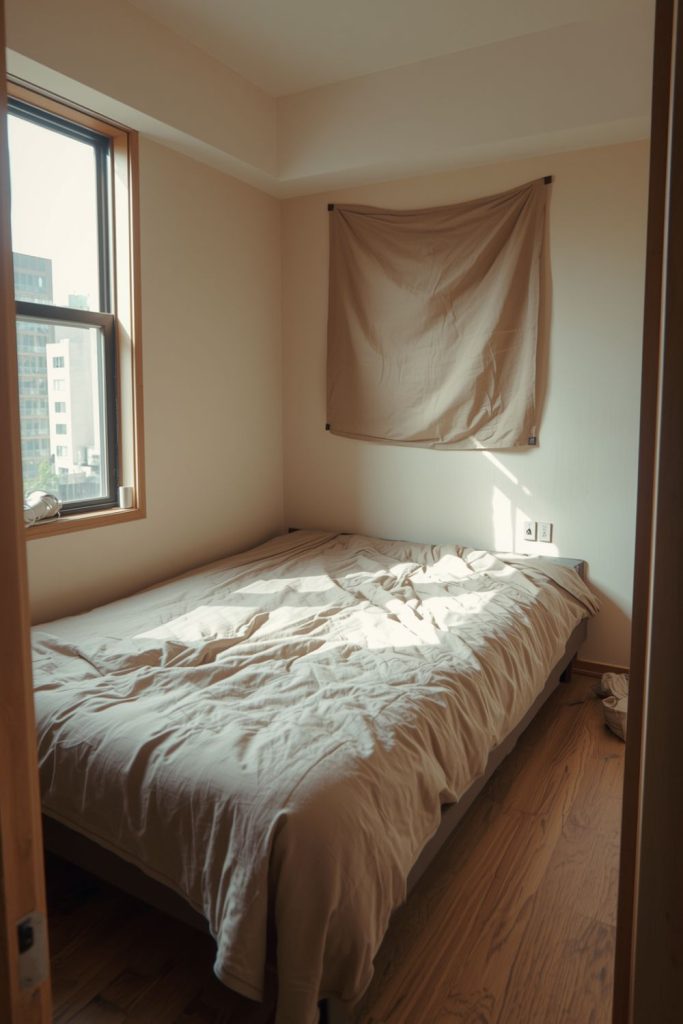
Their neutral tones keep them aligned with Japandi simplicity.
They also reduce the need for framed art or heavy wall items.
Tiny bonsai displays styled on floating shelves for understated organic elegance
Bonsai plants introduce natural form in a controlled way. Their size fits well in small bedrooms without taking floor space.
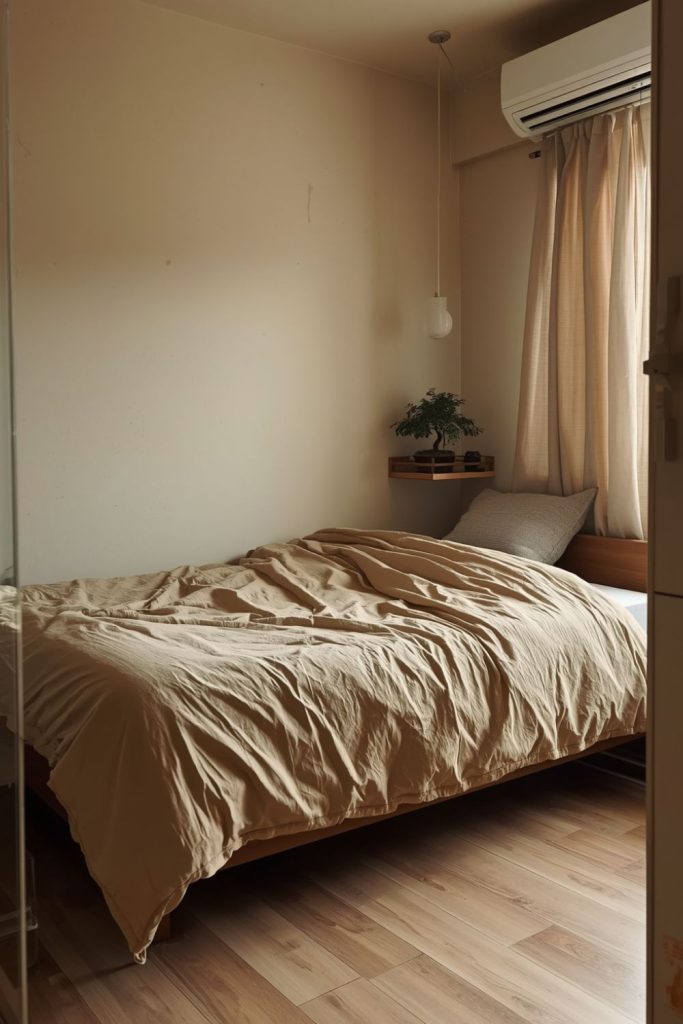
Placed on floating shelves, they add life without crowding surfaces.
The slow growth of bonsai also reflects calm living.
Candle-inspired ambient LED wall niches that create a calming evening glow in tiny bedrooms
LED wall niches shaped like candlelight sources create soft evening lighting. They remove the need for bedside lamps.
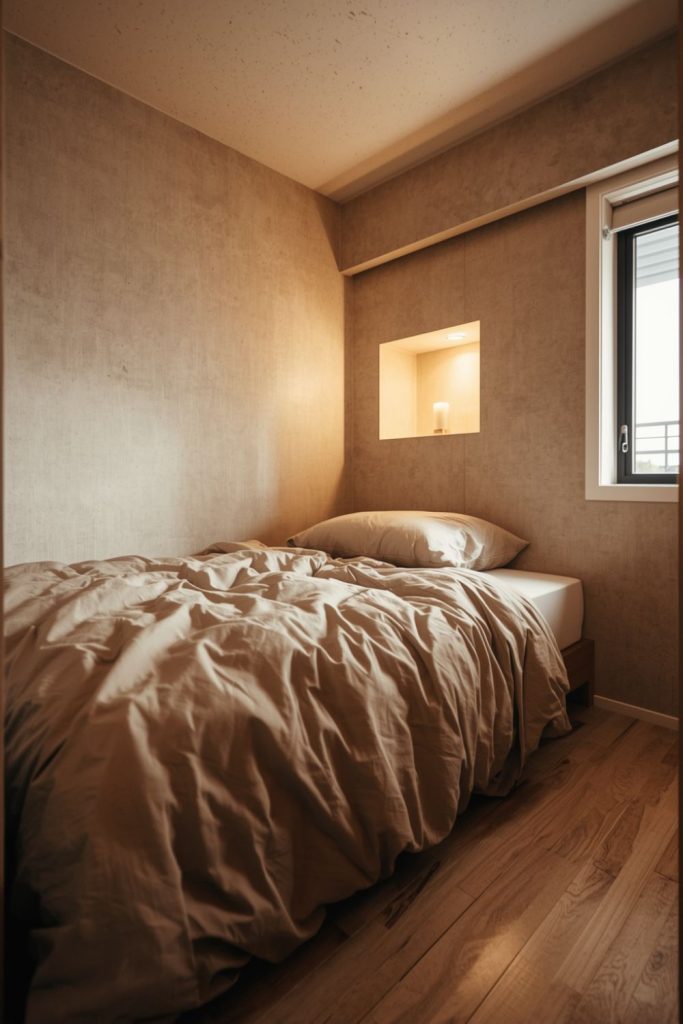
The glow feels warm and indirect, suitable for winding down at night.
Built into walls, they avoid taking any physical space.
Low-profile platform beds surrounded by asymmetrical decor styling for a curated designer feel
Low platform beds keep the room visually grounded and open. Asymmetry in decor placement adds subtle movement without clutter.
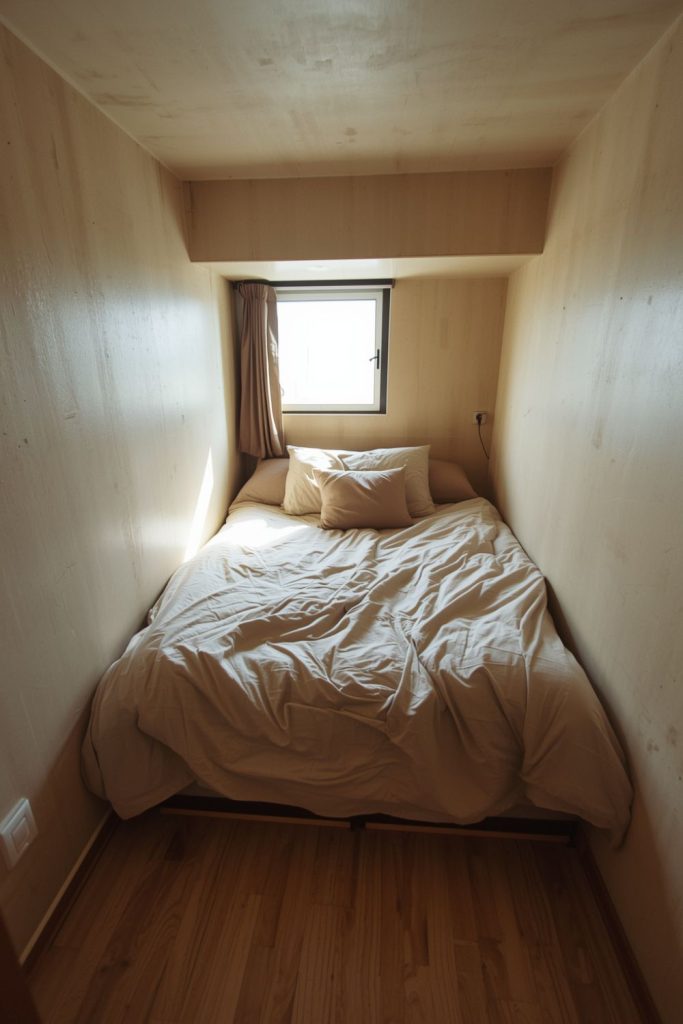
Objects are placed off center intentionally, which creates interest without excess.
This style keeps the sleeping area simple while still visually thoughtful.