
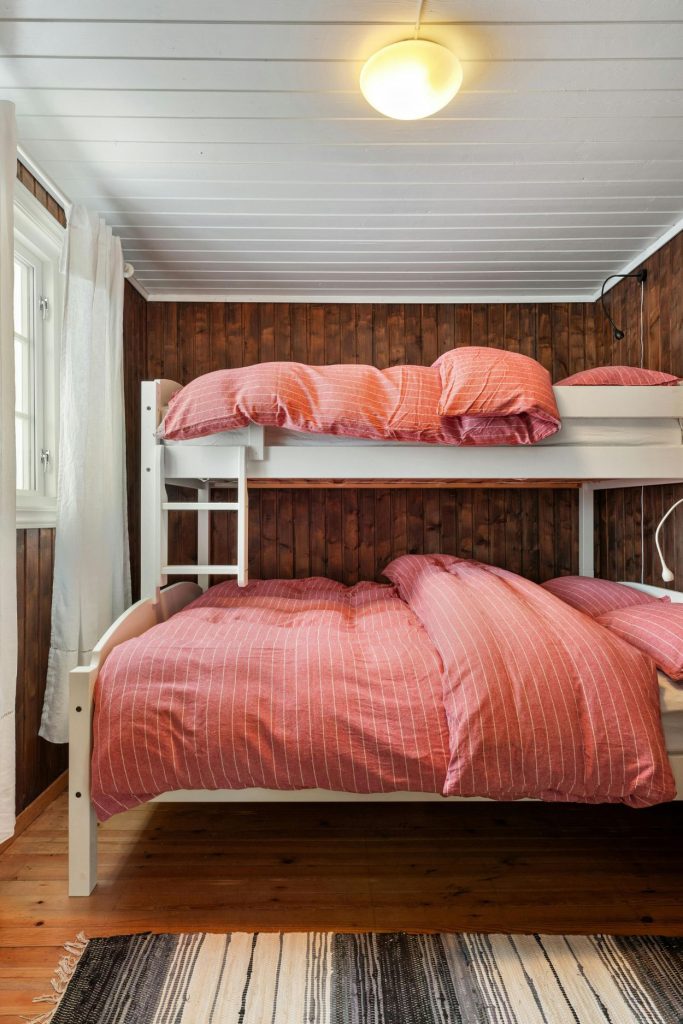
Creating a shared bedroom for teens can be both challenging and rewarding, especially in homes where space is at a premium. Parents often struggle to give each child a sense of independence and personal space, while keeping the room functional and stylish. A well-designed shared room can reduce conflict, support study habits, and reflect the personalities of each teen. With the right planning, a small shared bedroom can feel open, organized, and visually appealing, without needing extra construction or major renovations. Smart furniture, clever layouts, and simple design tricks can make a compact room comfortable for two teenagers, letting them sleep, study, and relax in a space that feels like their own.
How can parents design small shared bedroom ideas for teens that create privacy for each sibling without adding extra walls?
Parents can use room dividers, tall shelving units, or curtains to give each teen a separate zone, while keeping the room open and airy.
For example, a ceiling-mounted curtain track lets each teen pull a curtain around their bed or study area, providing a personal nook when needed. Tall headboards or wardrobes placed between beds can act as subtle dividers that double as storage, giving teens a sense of separation without blocking light.
Color-blocking or using different wall colors for each side of the room also visually marks each teen’s area. Even furniture arrangement, like L-shaped bunk beds or opposing daybeds, can create natural personal zones.
By thinking in three dimensions—vertical space, furniture placement, and small barriers—parents can give each teen privacy without feeling closed in, making shared rooms more harmonious and functional for daily life.
What furniture and storage solutions work best in small shared bedroom ideas for teens to maximize space and reduce clutter?
Beds with pull-out drawers or under-step storage on bunk stairs provide hidden spots for clothes, toys, or school supplies.
Wall-mounted floating desks free up floor space and can have vertical cubby shelving for organizing each teen’s books and accessories.
Pegboards or modular shelving allow teens to customize their own storage without taking up extra room.
Murphy-style beds that fold up during the day create a flexible space for studying or playing.
Built-in wardrobes between beds serve as both storage and visual separation. Using furniture that doubles in function, like beds with storage drawers or desks combined with shelves, keeps clutter off the floor, making the room feel larger, organized, and easier to maintain for teens who share the space.
- Related post Very Small Bedroom Ideas for Kids That Transform Tiny City Apartments Into Dream Spaces
How can small shared bedroom ideas for teens balance personal style and functionality while keeping the room harmonious for both individuals?
Using matching furniture with customizable accessories lets each teen express their personality without making the room feel disjointed.
For instance, identical beds with different bedding patterns, clip-on lights, or wall art give individuality while maintaining cohesion.
Split-color wall designs down the middle, or separate gallery walls for each teen, visually separate their areas.
A shared rug or central seating space brings both sides together, while canopy frames or sheer fabric over beds create private zones without closing off the room.
Minimalist layouts with personalized accents keep the room functional, easy to clean, and aesthetically pleasing.
By combining style, function, and thoughtful separation, parents can make a shared bedroom both practical and reflective of each teen’s personality.
Twin loft beds with built-in study desks underneath and a slim bookshelf divider in between
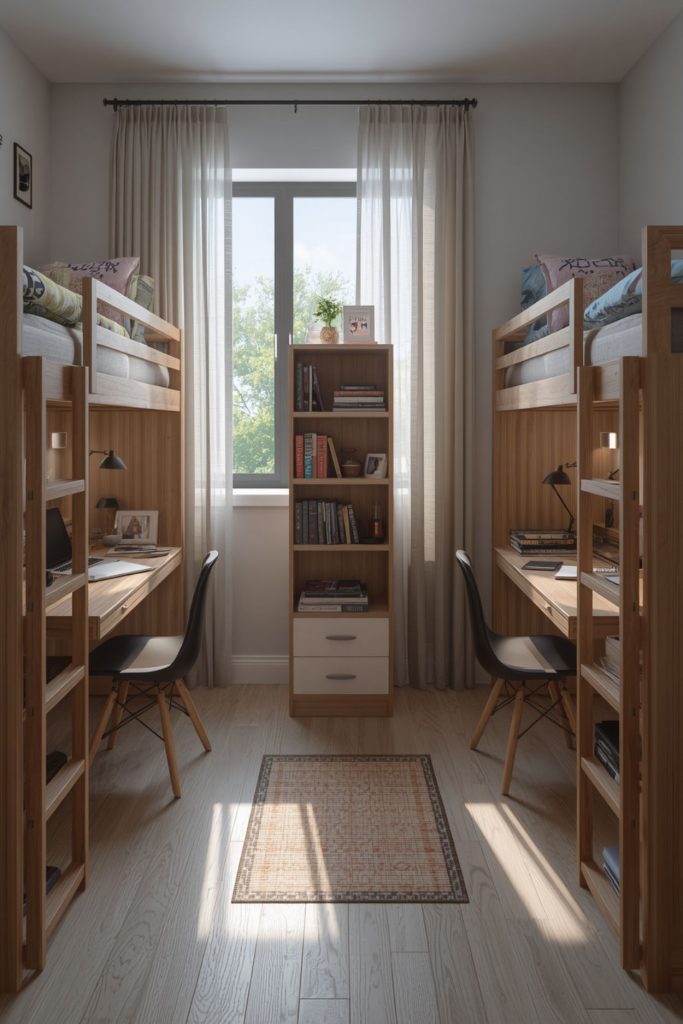
Loft beds are a popular choice for small shared rooms. By raising the beds, parents create space underneath for study desks, letting each teen have a dedicated workspace. A slim bookshelf between the two desks acts as a subtle divider, giving each child storage and a sense of separation without blocking light or making the room feel closed off. This setup maximizes vertical space and keeps the floor free for other activities or rugs. Each teen can personalize their desk area with lights, organizers, and wall decor, keeping the room functional and stylish at the same time. It also encourages focus since each teen has their own study spot while still sharing the bedroom.
A shared room split by a ceiling-mounted curtain track with contrasting color themes on each side
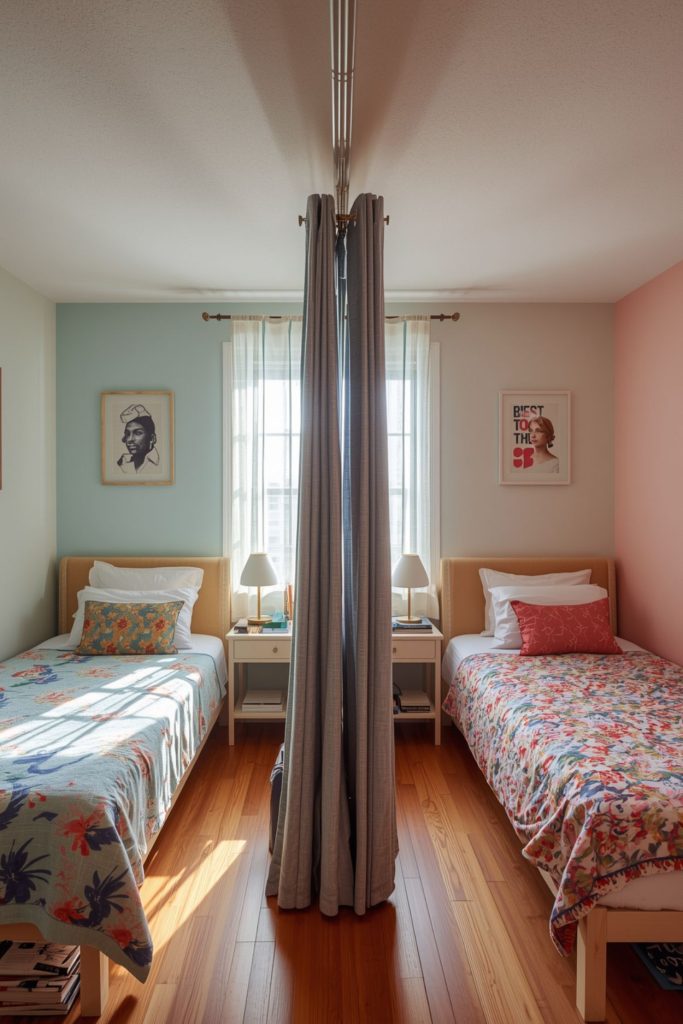
Using a ceiling-mounted curtain track is an affordable way to give each teen privacy on demand. Curtains can be drawn around a bed or desk, providing a cozy, personal nook. Contrasting color themes on each side of the room further distinguish individual spaces, giving teens ownership over their section. The curtains can easily be opened during the day to keep the room open and airy, making this solution flexible. This approach is perfect for tight rooms where walls would be impractical, keeping the layout functional while adding a decorative element with fabric and colors.
Bunk beds with staggered levels and under-step storage drawers integrated into the staircase
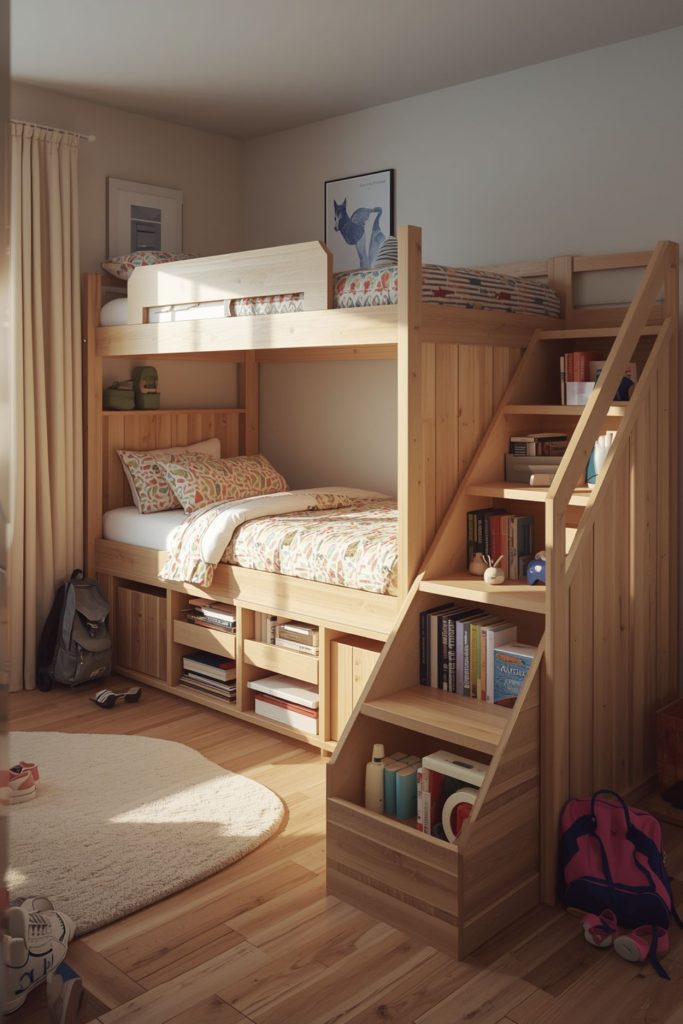
Staggered bunk beds offer both privacy and practicality. By offsetting the beds slightly, each teen gets a separate sleeping area with more visual separation. Under-step drawers in the staircase provide hidden storage for clothes, books, or personal items, keeping the room clutter-free. This design also frees up floor space that can be used for rugs, seating, or play areas. Personalizing each bunk with bedding, lights, and small shelves allows each teen to make their bed their own, while the staggered layout encourages harmony in a shared space.
A long wall-mounted floating desk with two distinct workstations separated by vertical cubby shelving
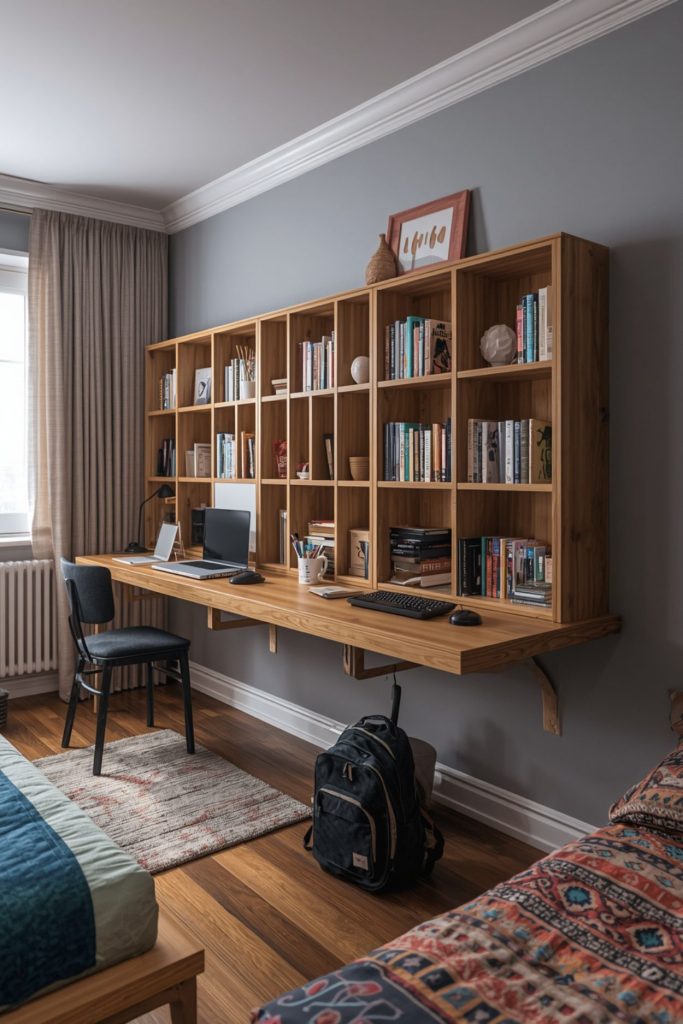
Floating desks keep the floor space open and visually uncluttered. By creating two separate workstations and adding vertical cubby shelving in between, each teen has a dedicated area for studying, crafting, or gaming. The shelving acts as both storage and a subtle divider, making it clear where one teen’s space ends and the other begins. This setup supports focus, reduces conflict over shared surfaces, and keeps school supplies organized. Floating desks can also be paired with adjustable chairs, wall-mounted lights, and personal decorations, combining style and function in a compact footprint.
Opposite wall daybeds with hidden pull-out drawers and personalized gallery walls above each bed
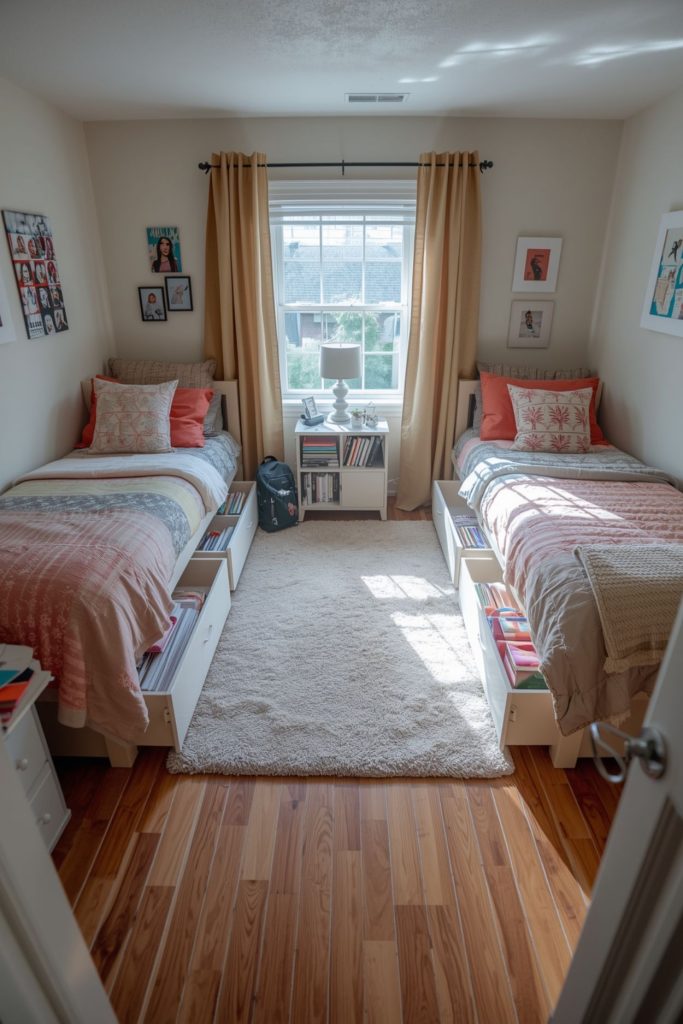
Placing daybeds on opposite walls creates personal zones while leaving a central floor area free. Hidden pull-out drawers provide storage for clothing, toys, or bedding, keeping the room tidy. Above each bed, teens can add personalized gallery walls with photos, art, or decor that reflects their style. This approach balances individual expression with room harmony and maximizes storage without making the room feel cramped. A shared rug or central light fixture helps tie the space together visually, keeping both areas cohesive and welcoming.
A compact room using a sliding barn door-style partition to create two semi-private sleeping zones
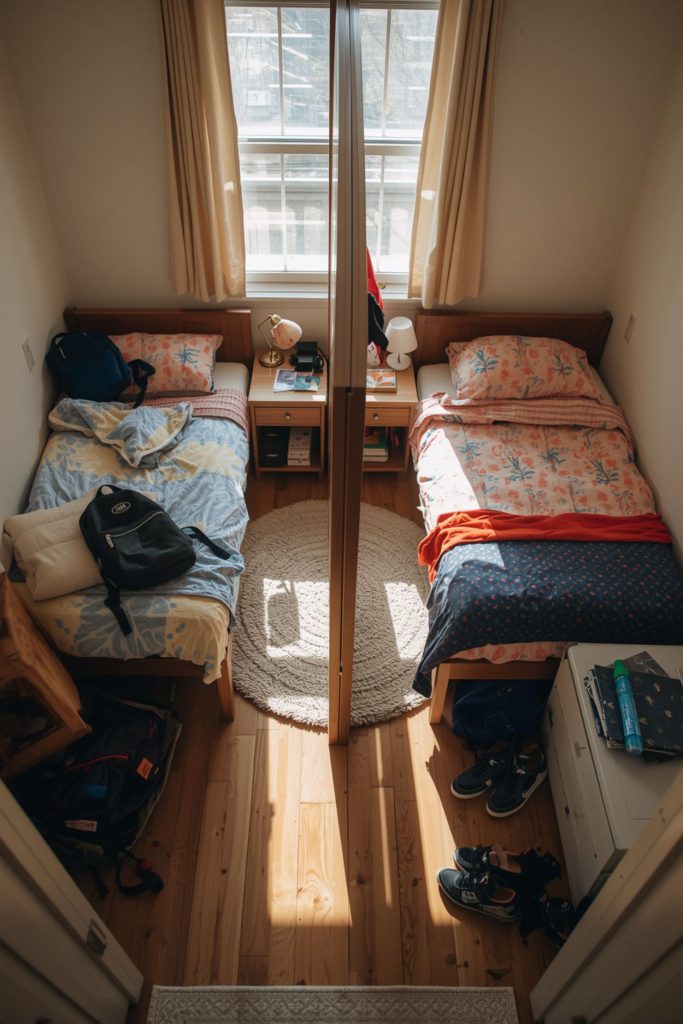
Sliding barn doors offer a stylish and space-saving way to separate areas in a shared bedroom. Each teen can slide the door to create a semi-private zone when needed, while keeping the room open when desired. This solution works well for narrow rooms, as the doors slide instead of swinging, preserving floor space. Parents can choose barn doors in colors or finishes that complement each teen’s taste, making the room both functional and visually appealing. The partition also adds a modern, decorative element that elevates the overall design of the bedroom.
L-shaped bunk bed configuration that opens up a central hangout space with floor cushions
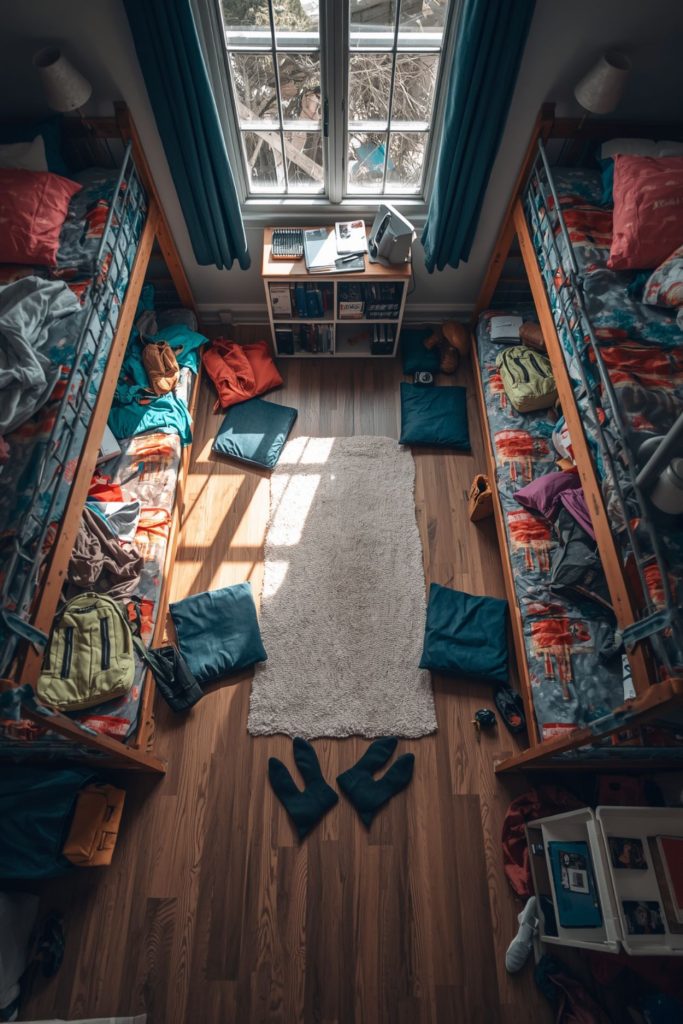
L-shaped bunk beds maximize corner space while leaving a central area free for relaxing or playing. The corner layout allows each teen to have a sense of their own zone, while the central floor area with cushions or rugs creates a shared lounge. This design balances private sleeping areas with communal space, encouraging interaction without encroaching on privacy. Teens can personalize their bunks with bedding, small lights, or storage bins, keeping their sides distinct while the shared area remains functional for both.
Matching beds with tall headboard storage units that act as partial privacy dividers
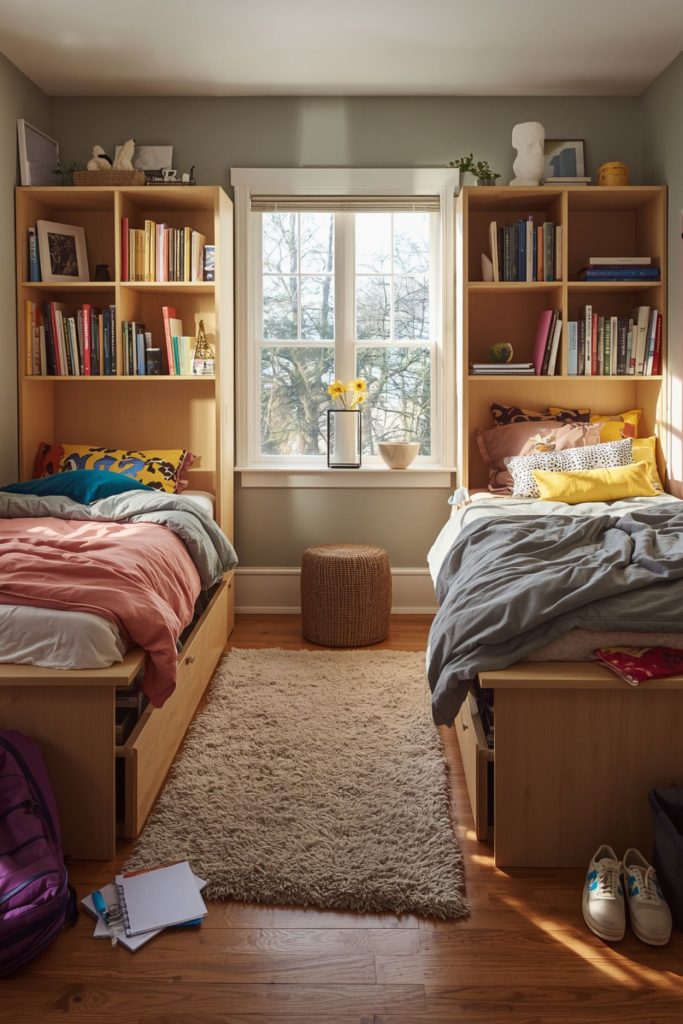
Tall headboard units provide storage and act as visual separators between beds. Each teen can store personal items like books, decor, or electronics, while gaining a sense of privacy in the shared space. Matching beds maintain cohesion in the room’s style, while the headboards allow each teen to personalize their area independently. This combination of function and design helps keep the room organized and visually appealing, ensuring that shared bedrooms feel like two individual spaces within a single room.
A shared bedroom with a pegboard wall system customized differently on each teen’s side
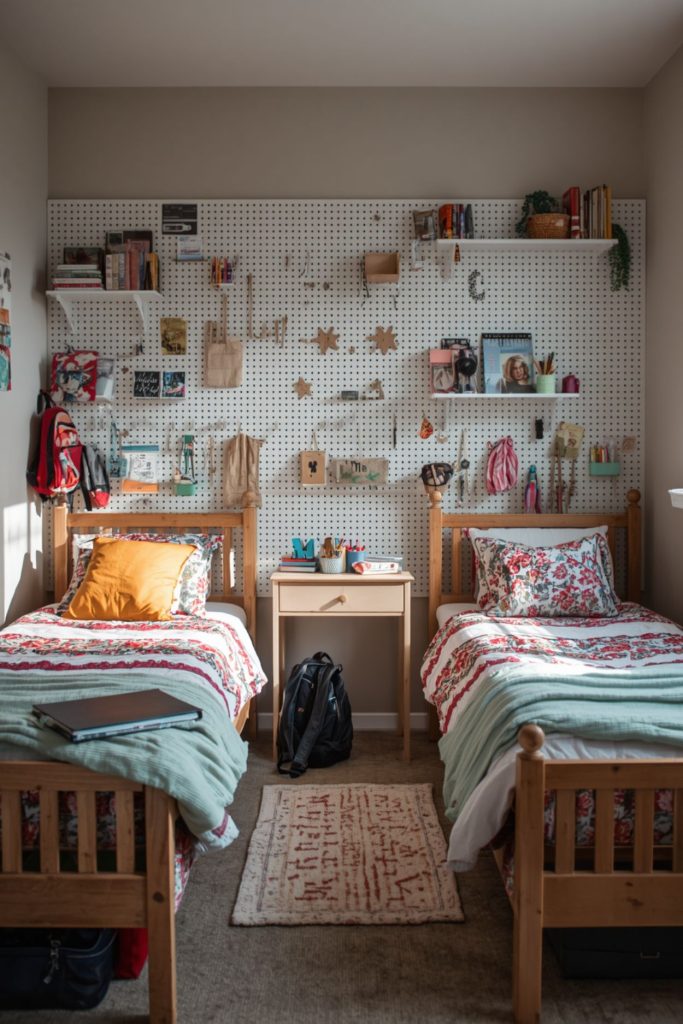
Pegboard walls are flexible storage solutions for small shared bedrooms. Each teen can customize their section with hooks, shelves, or bins for school supplies, art materials, or personal items. This creates organization while allowing individual expression. Pegboards save space by using vertical surfaces, leaving floors clear for movement or play. Teens can easily rearrange items as their needs change, making the system adaptable as they grow. The wall also adds a visual texture and can be painted or decorated to match each teen’s taste, keeping the shared room lively and functional.
Murphy bunk beds that fold up during the day to reveal a shared lounge or study area
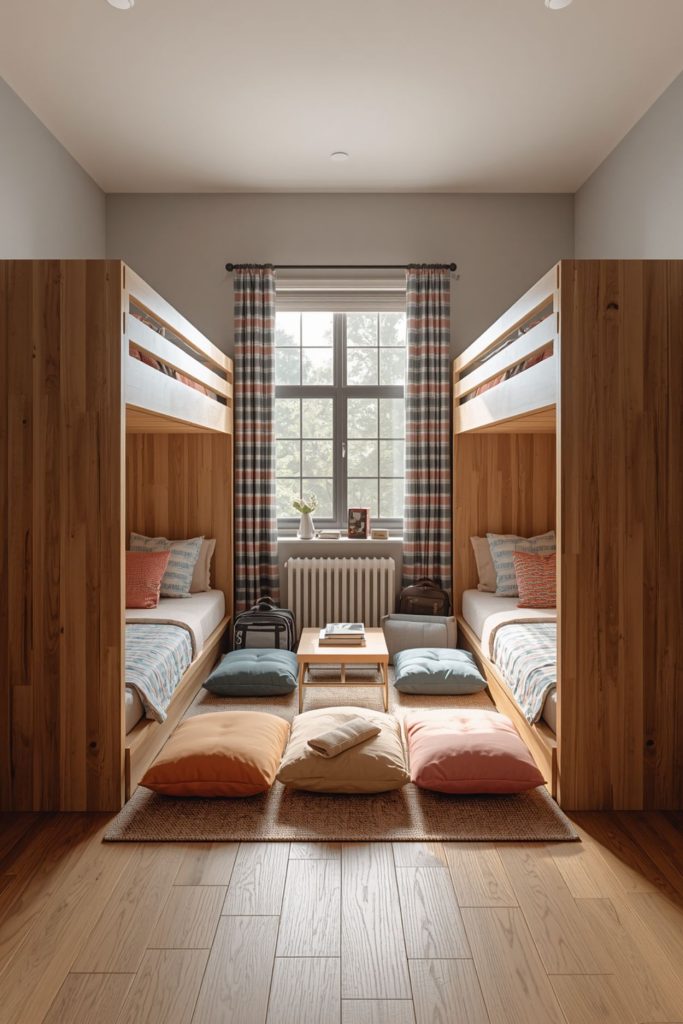
Murphy-style bunk beds maximize flexibility in small shared rooms. When folded up, they free floor space for studying, playing, or relaxing together. During sleep time, they provide cozy individual beds. This design combines privacy, function, and style, allowing parents to maintain a multi-use room. The beds can be personalized with bedding and small accessories, while the open area can include rugs, seating cushions, or a shared desk. Murphy beds are ideal for compact apartments or rooms where creating separate spaces is difficult, providing practical versatility for both teens.
A narrow room design with parallel beds separated by a vertical plant wall divider
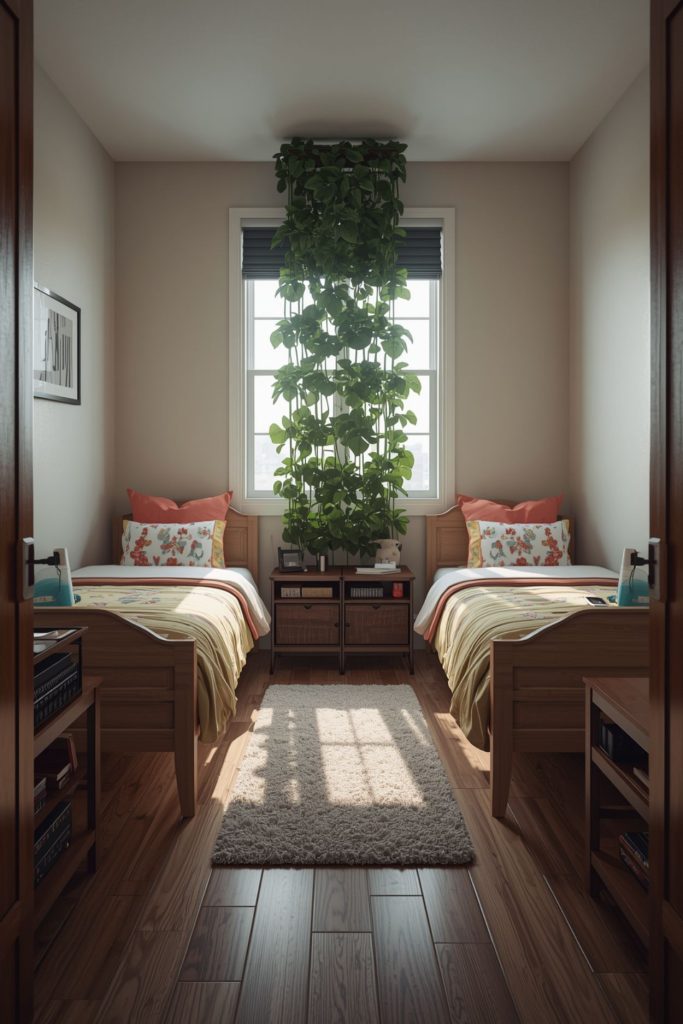
In narrow rooms, parallel beds with a vertical plant divider create privacy without heavy furniture. The plant wall acts as a natural barrier, improves air quality, and adds greenery to the room. Teens can decorate around the divider with lights or small shelves to make their areas feel personal. The central floor space remains open for movement or shared activities. This setup balances visual appeal, functional separation, and practical use of narrow layouts, giving each teen a sense of individual space in a compact room.
Built-in wardrobe units placed between beds to create both storage and visual separation
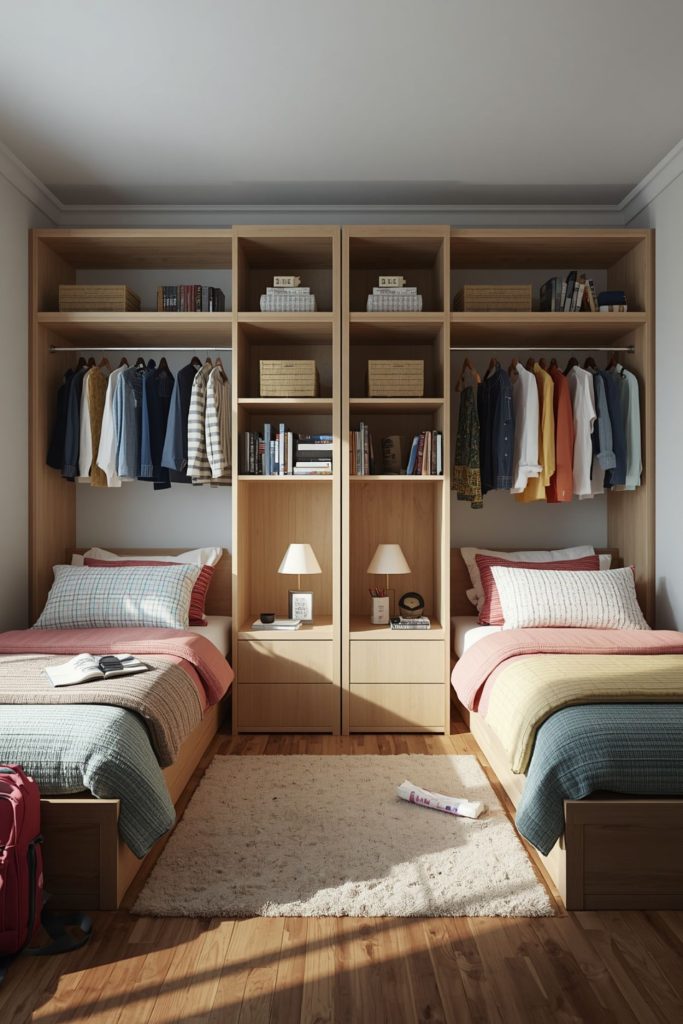
Wardrobes between beds serve dual purposes: storage and privacy. Each teen can organize clothing, books, or toys in their own section while the wardrobes act as partial dividers. This approach maximizes space in small bedrooms and keeps personal items contained, reducing clutter. The wardrobes also add vertical height, which can make the room feel larger while maintaining clear separation. Parents can choose finishes or colors that coordinate with the room’s overall style, keeping the space cohesive and functional.
A split-color paint design down the middle of the room with coordinated but distinct decor styles
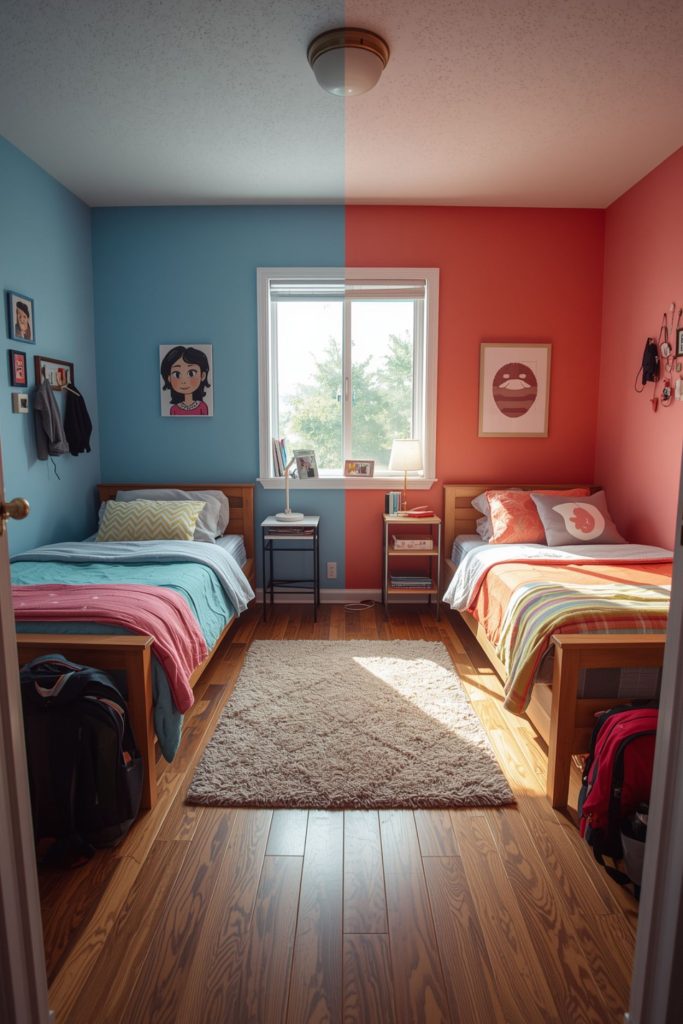
Painting each side of the room a different color helps teens feel ownership of their area without physical dividers. Coordinated decor like rugs, bedding, and lighting keeps the room harmonious, while allowing each teen’s personality to shine. This low-cost approach is visually striking and easy to change as teens grow or tastes evolve. It can be combined with furniture placement or small dividers to further enhance privacy and functionality, making a shared bedroom more dynamic and visually appealing.
Raised platform beds with deep storage drawers and a central shared rug for balance
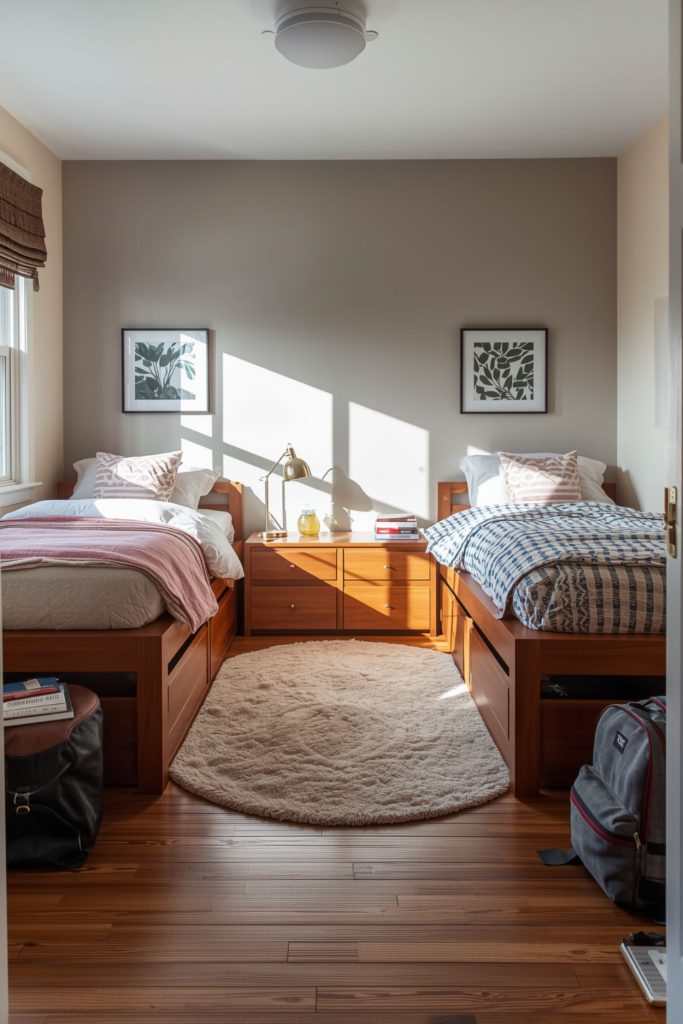
Platform beds lift the sleeping area and provide deep storage underneath for clothes, toys, or supplies. A shared rug in the center of the room ties the space together and defines a communal zone. This setup keeps the room organized while giving each teen personal space. The raised beds also make it easy to separate sleeping zones from floor activity areas, creating a functional and balanced environment. Personal touches like bedding or bedside lights can be added without disrupting the overall cohesion.
Industrial-style metal bunk beds paired with individual clip-on lighting and privacy curtains
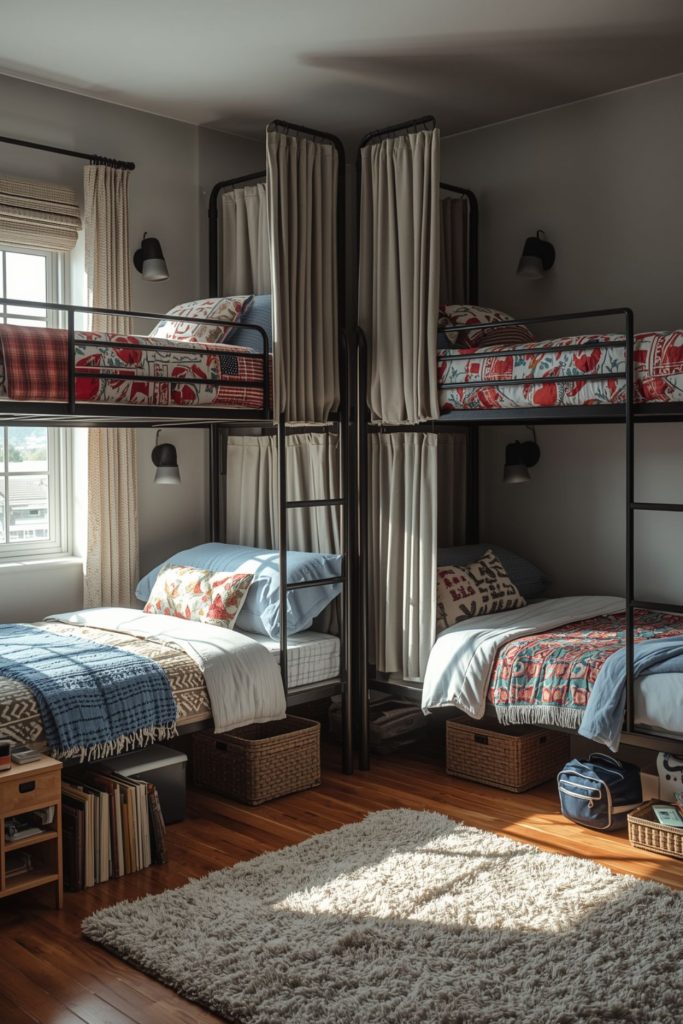
Metal bunk beds with privacy curtains give each teen a semi-private sleeping nook. Clip-on lights allow personalized reading or study areas without interfering with the other teen. The industrial look adds style and durability, and the curtains give flexibility—open during the day for airiness, closed at night for privacy. This combination maximizes floor space, adds a decorative touch, and provides functional separation in a compact room.
Corner beds with angled headboards and a shared floating corner desk connecting both spaces
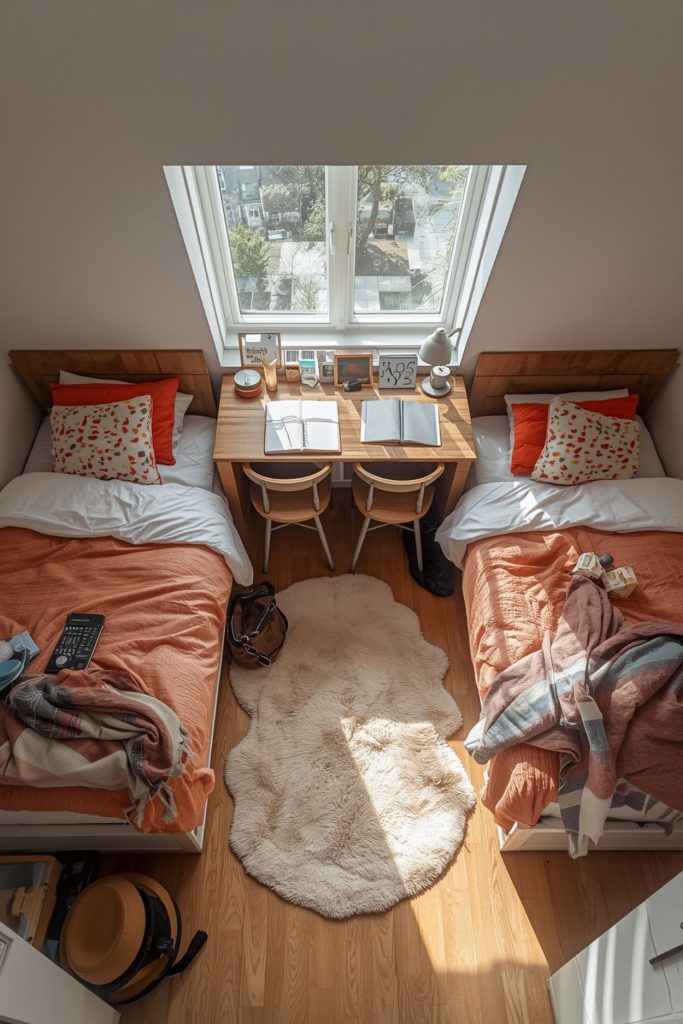
Corner beds make use of room angles efficiently, leaving a central area open. Angled headboards provide visual separation, while a shared floating desk in the corner gives both teens a workspace. This layout balances individual zones with a communal area, encouraging cooperation and organization. The corner desk can be personalized on each side with lighting, organizers, or decor to give teens ownership over their workspace.
A minimalist design with identical layouts but personalized bedding, lighting, and wall art
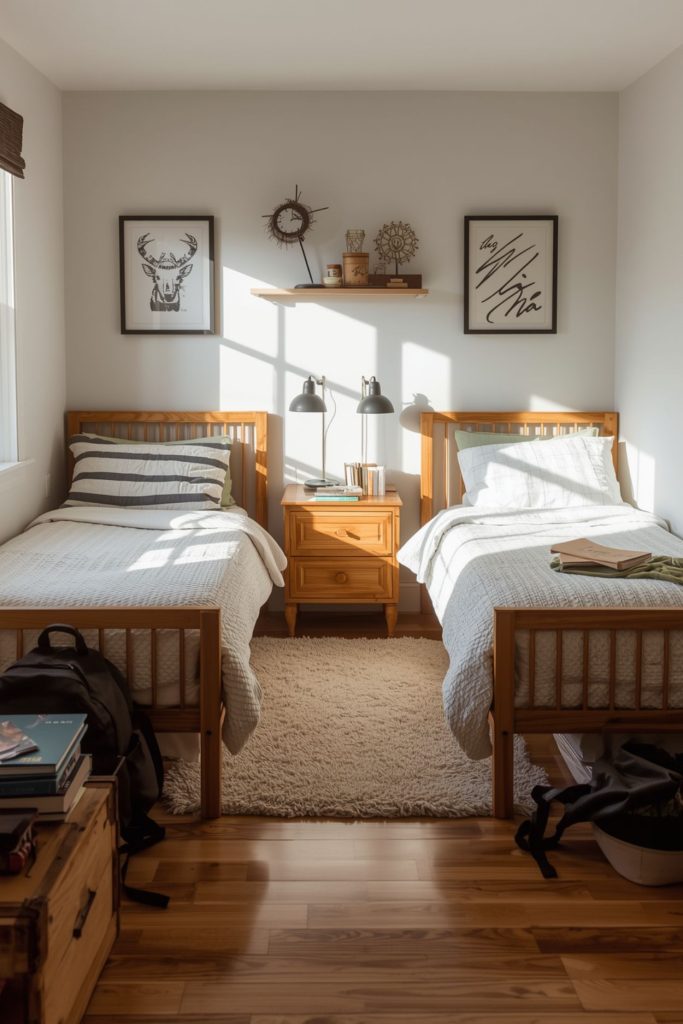
Keeping furniture and layout identical across the room ensures balance, while each teen can personalize bedding, lighting, and wall art to express individuality. Minimalist layouts keep the room clean, functional, and open, making it easier to manage and maintain. This approach also allows shared floor space for activities while giving teens a sense of their own zone through accessories. Simple furniture like beds, desks, and shelves keeps the focus on personalization rather than clutter.
A shared room featuring a glass partition with frosted panels for light flow and privacy
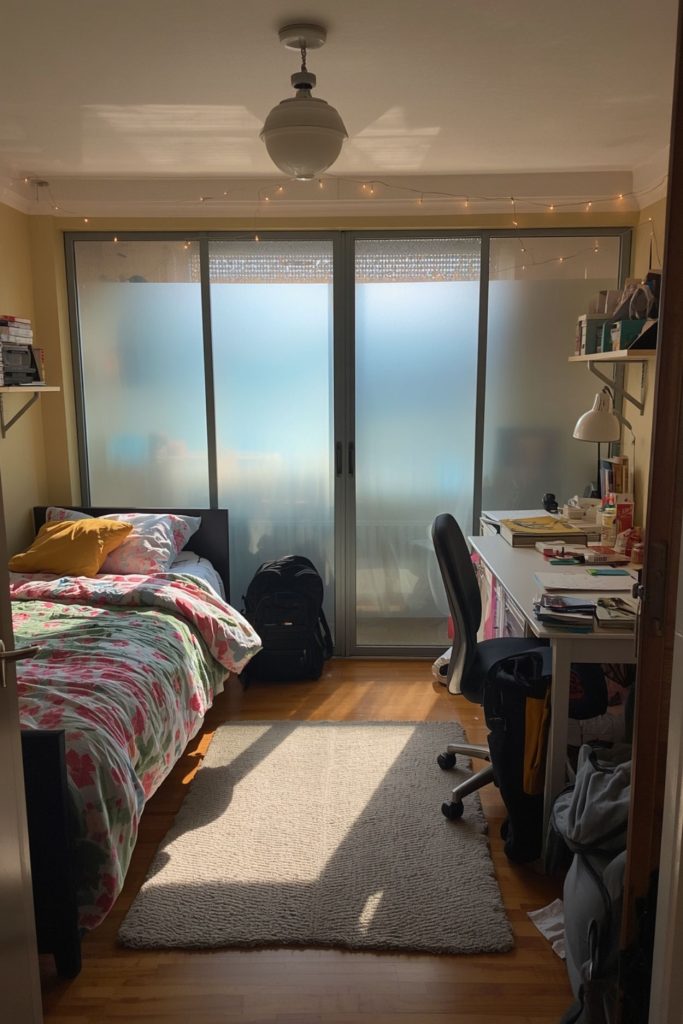
Glass partitions with frosted panels separate sleeping or study zones while allowing light to pass through. This creates a bright and airy room while giving teens privacy when needed. Frosted glass maintains visual separation without making the space feel smaller, and the partition can double as a decorative feature. Personal touches can be added with lights or small shelving along the partition, keeping the room functional, stylish, and comfortable for both individuals.
A cozy setup with canopy frames over each bed using sheer fabric to create individual zones
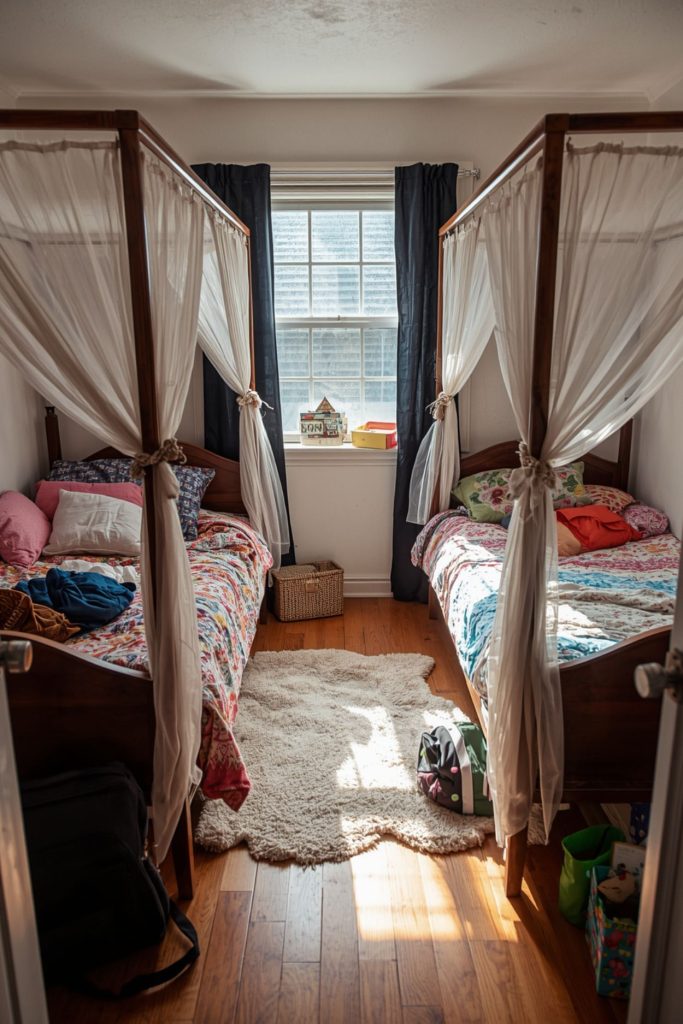
Canopy frames with sheer fabric over beds create semi-private zones that feel cozy and personalized. The fabric allows light to flow while giving each teen a sense of their own space. This design adds softness and visual interest, while still leaving room for study or shared activities in the rest of the bedroom. Accessories like hanging lights, clips for decorations, or small shelves can be incorporated to enhance personalization without cluttering the room.