
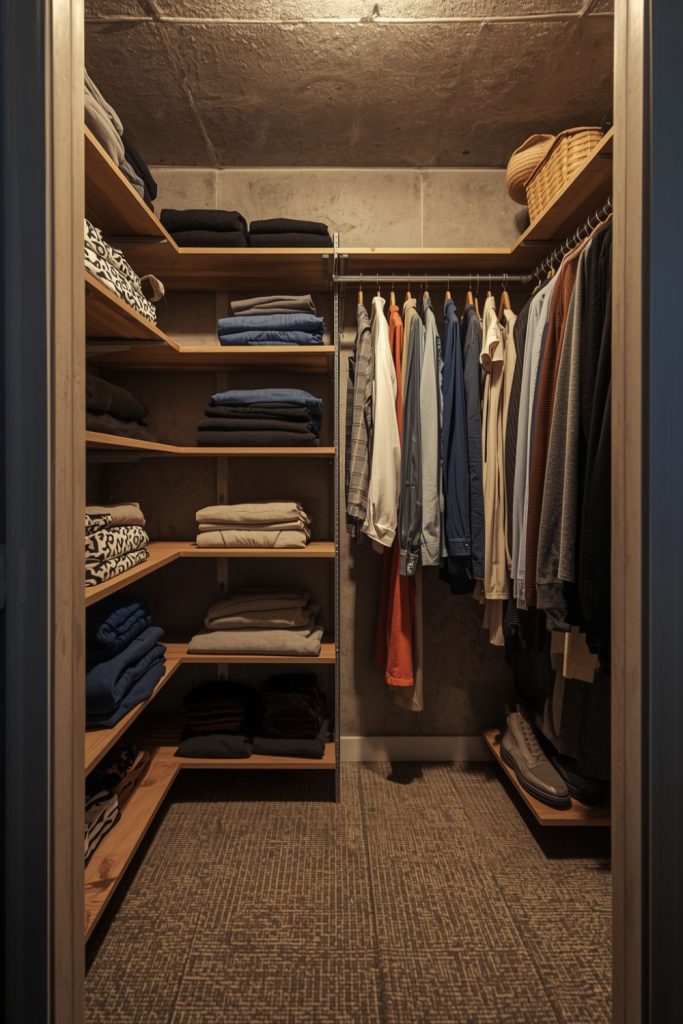
Basements often become the most overlooked part of a home, especially in compact houses where every inch matters. Instead of serving a clear purpose, they slowly fill with items that don’t quite belong anywhere else. The result is clutter, wasted space, and frustration. But with the right approach, even the smallest basement can become a highly efficient storage area without tearing down walls or starting major construction.
Small basement closet ideas offer a practical way to reclaim control. They focus on using what already exists and improving it through smart layout choices, creative storage builds, and thoughtful design touches. Many homeowners assume they need expensive upgrades to fix storage problems, but that’s not always true. With a bit of planning and the right concepts, it’s possible to turn even the most awkward basement into something useful, organized, and visually appealing.
How can small basement closet ideas help maximize storage space in compact homes without requiring renovation?
Small basement closet ideas work by shifting focus from expansion to optimization. Instead of trying to create more space, the goal becomes using existing square footage more effectively. Many basements already have hidden potential, it just isn’t used properly. Corners sit empty, vertical height goes unused, and awkward layouts remain ignored.
By introducing closet systems that fit into these overlooked areas, storage capacity increases without structural changes. Vertical shelving, slim-profile racks, and wall-mounted storage can double or even triple usable space. A basement that once felt cramped can suddenly feel structured and purposeful.
Another advantage is adaptability. Unlike built-in renovations, small closet setups can evolve. As storage needs change, shelves can be adjusted, units can be moved, and layouts can shift. This flexibility makes them ideal for homeowners who want long-term usability without committing to permanent construction.
Lighting also plays a role. Adding simple lighting elements can make closets easier to use and visually larger. When spaces feel brighter, they feel more functional too. Even small changes like reflective surfaces or lighter colors can create that effect.
What makes these ideas effective is their practicality. They don’t rely on expensive materials or complicated work. Instead, they rely on awareness of space, better layout choices, and smart storage thinking, which is often what compact homes need most.
What are the most effective budget-friendly and DIY small basement closet ideas for improving organization?
Budget-friendly closet ideas often succeed because they focus on simplicity rather than complexity. Many homeowners already have materials they can reuse or modify, which makes DIY approaches both affordable and practical. A basic shelving unit, for example, can be transformed with repositioning and better spacing.
One effective approach is using modular storage. These systems allow sections to be added or removed depending on need. They are easy to assemble and don’t require professional help. Another option is repurposing furniture, old cabinets or bookcases can become functional closet units with minor adjustments.
Curtains instead of doors is another smart choice. Doors can take up space and cost more, while curtains are flexible and visually softer. They also make access easier, especially in tight areas.
Hooks, pegboards, and wall rails are also helpful. They take advantage of vertical surfaces and keep items visible and accessible. This reduces clutter on the floor and makes the entire basement feel more open.
Storage bins and labeled containers also improve organization without much cost. When everything has a place, it becomes easier to maintain order. Even small habits like grouping similar items together can make a noticeable difference.
DIY ideas succeed because they give homeowners control. There’s no need to wait for contractors or spend heavily. With a bit of effort and creativity, a cluttered basement can turn into a clean and functional storage space.
Which design strategies make small basement closet ideas both functional and visually appealing in limited spaces?
A well-designed basement closet doesn’t just store items, it also improves how the space feels. Function and appearance should work together, especially in smaller homes where every area is visible and connected.
One effective strategy is using light colors. Dark basements can feel heavy and closed in, but lighter tones reflect light and create a more open feel. This simple change can make a big difference without requiring major updates.
Another approach is maintaining visual consistency. Using similar materials, colors, or finishes helps the space feel organized rather than chaotic. When everything looks intentional, even small closets feel more refined.
Open storage can also improve visual appeal when done right. Instead of hiding everything, neatly arranged items can become part of the design. This works well with minimal setups where clutter is controlled.
Mirrors and reflective surfaces add depth. They bounce light around and create the illusion of more space. This is especially useful in basements where natural light is limited.
Proportion also matters. Oversized furniture or bulky storage units can overwhelm a small basement. Choosing slim and appropriately scaled pieces keeps the area balanced and usable.
A thoughtful design doesn’t need to be complicated. It just needs to respect the space and make it feel both useful and comfortable to use, which is often overlooked in basement storage planning.
Under-the-stairs pull-out closet systems that turn awkward basement angles into sleek hidden storage
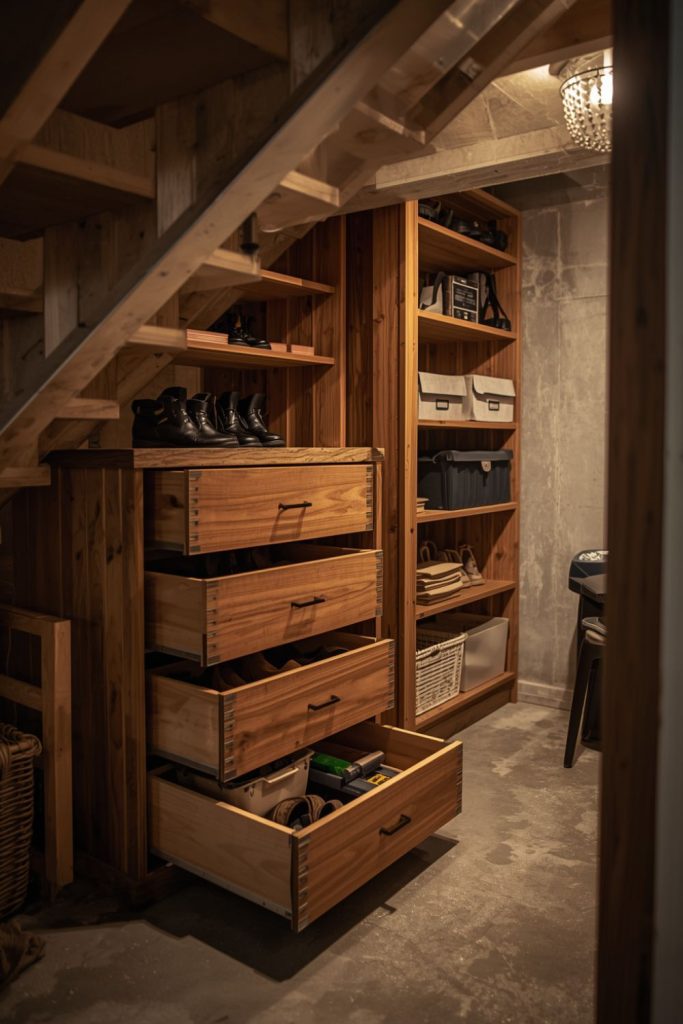
Under-the-stairs areas are often ignored because of their unusual shape. Sloped ceilings and tight corners make them difficult to use with standard storage units. But pull-out closet systems can completely change that.
These systems are designed to slide out smoothly, making it easy to access items stored deep inside. Instead of crawling into a cramped space, everything comes to you. This improves both usability and comfort.
Custom or semi-custom drawers can be built to match the angle of the stairs. Each section can serve a different purpose, shoes in one, seasonal items in another, tools in another. This structured approach prevents clutter from building up.
The visual benefit is just as strong. When closed, these closets blend into the wall, creating a clean and uncluttered look. There’s no wasted space, no awkward gaps, just a smooth surface that hides a highly functional system.
This idea works especially well in compact homes where every inch matters. Instead of letting the space go unused, it becomes one of the most efficient storage zones in the basement.
Floor-to-ceiling glass-paneled basement closets that visually expand tight, dark spaces
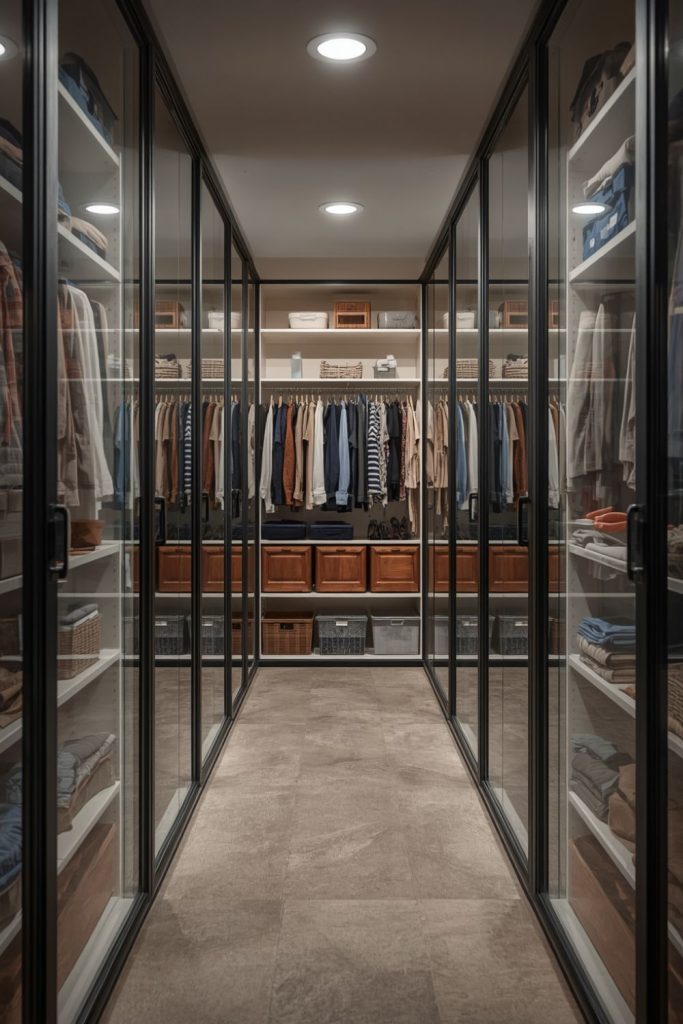
Glass-paneled closets bring a sense of openness that traditional closets often lack. In a basement setting, where light is already limited, this can make a noticeable difference. Instead of blocking light, glass allows it to pass through, making the space feel larger.
Floor-to-ceiling designs also maximize vertical storage. Items can be stacked higher without making the area feel cramped. The transparency keeps everything visible, which encourages better organization since clutter is harder to ignore.
Frosted or tinted glass can be used for a bit of privacy while still maintaining the light-enhancing effect. This is useful for homeowners who want a balance between openness and concealment.
Lighting inside the closet can add another layer of depth. When shelves are softly lit, the entire basement gains a more polished appearance. It doesn’t feel like a storage area anymore, it feels more intentional.
This idea works best for those who value both function and appearance. It turns a basic storage solution into something that contributes to the overall feel of the home.
Sliding pegboard closet walls for flexible, ever-changing storage in small basements
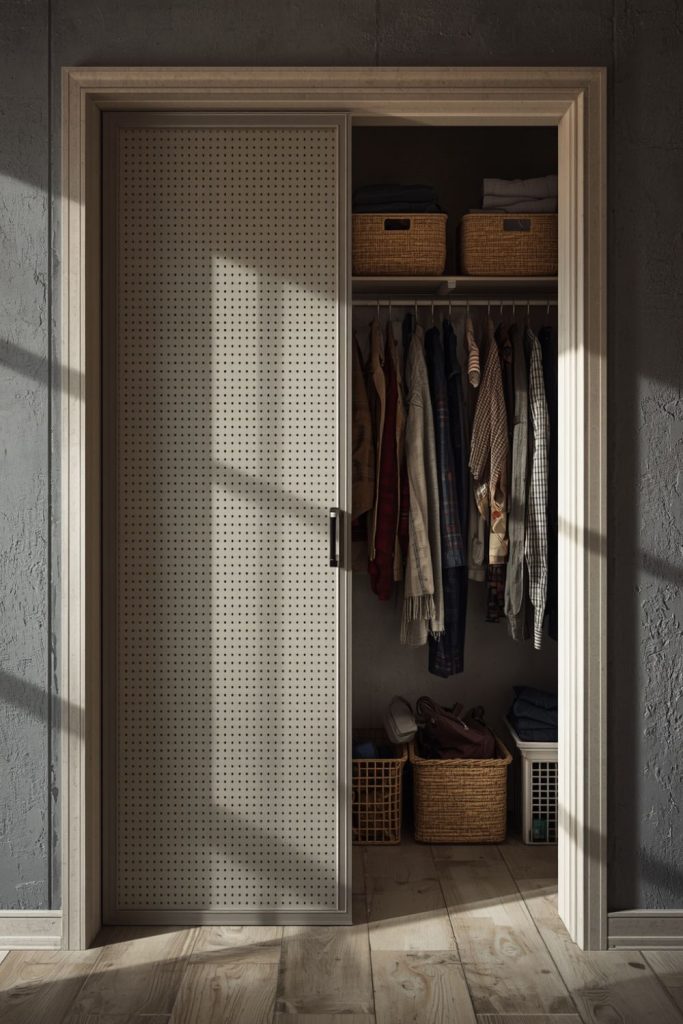
Pegboards are often associated with garages, but they work just as well in basement closets. When combined with sliding panels, they become even more versatile. Instead of fixed storage, you get a system that can shift as needed.
Hooks, baskets, and shelves can be rearranged easily. This makes it simple to adapt the closet for different uses over time. One month it might store tools, the next it might hold sports equipment or seasonal decor.
Sliding panels add another layer of efficiency. They allow multiple storage surfaces within the same footprint. You can slide one panel aside to access another, which increases capacity without taking up more space.
Visually, pegboards can be styled in different ways. Painted surfaces, uniform hooks, and organized layouts can make them look clean and intentional rather than cluttered.
This idea suits homeowners who want flexibility without committing to a fixed system. It’s practical, adjustable, and surprisingly stylish when done right.
Built-in closet benches with lift-up storage for dual seating and organization
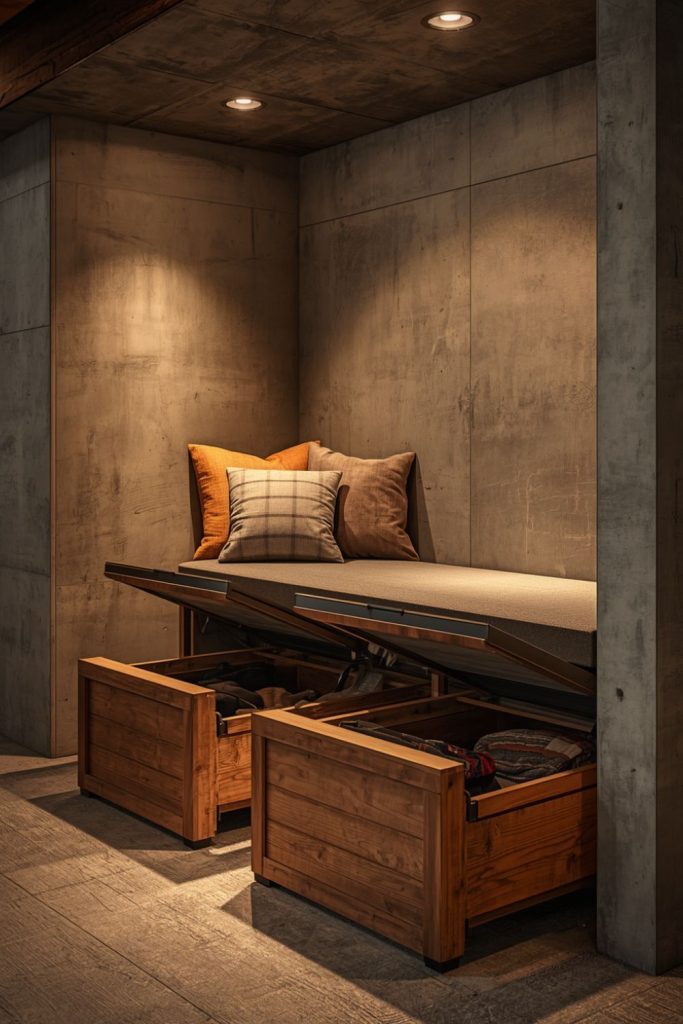
A built-in bench with storage underneath combines comfort with practicality. In small basements, every piece of furniture should serve more than one purpose, and this idea does exactly that.
The top of the bench provides seating, which can be useful in multipurpose basements. Whether it’s for putting on shoes or just taking a short break, it adds usability to the space. Underneath, the storage compartment keeps items out of sight but easy to access.
Lift-up lids or hinged tops make it simple to open and close the storage area. This keeps the design clean while still being functional. Soft-close hinges can also improve the experience slightly, making it feel more refined.
These benches can be built along walls or tucked into corners. This helps maintain open floor space while still adding storage. Cushions or upholstery can be added for comfort, bringing a warmer feel to the basement.
It’s a practical idea that blends storage with everyday use, making it a smart addition for compact homes.
Industrial pipe-frame closet designs that add character while maximizing vertical space
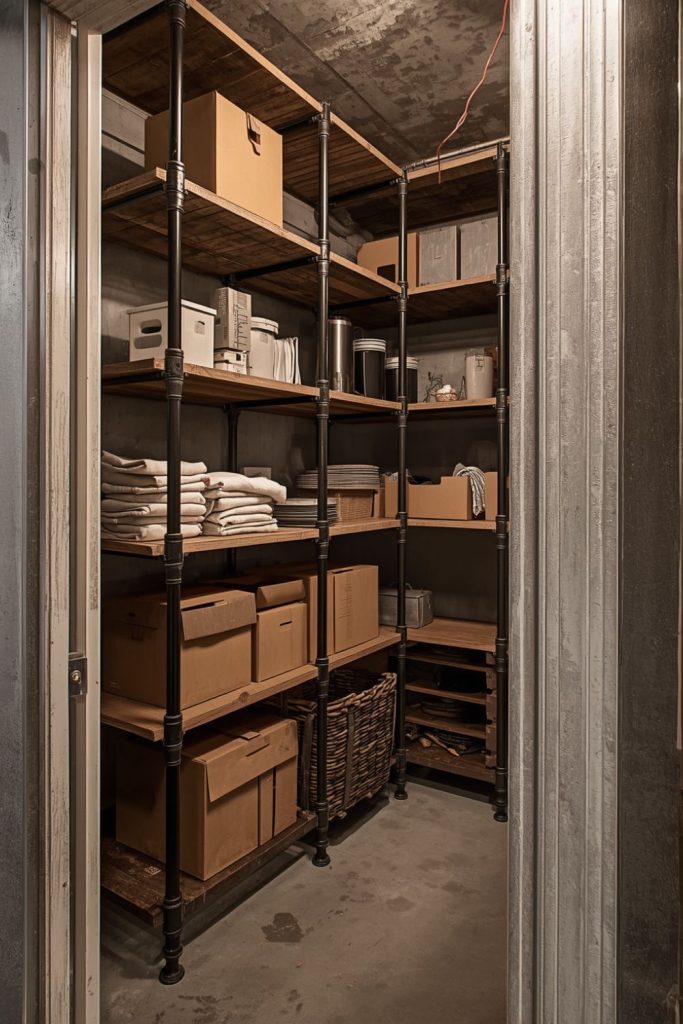
Industrial pipe-frame closets stand out because of their raw and simple structure. Made from metal pipes and wooden shelves, they create a strong visual presence without feeling bulky.
The open design keeps the space from feeling closed in. Clothes, boxes, or storage bins are easily accessible, and the vertical layout makes full use of wall height. This is especially helpful in basements where floor space is often tight.
Installation is fairly straightforward. Pipes can be assembled into frames and mounted securely, while shelves are added between levels. The result is a sturdy and customizable storage system.
The style also adds personality. Instead of hiding storage, it becomes part of the room’s look. This works well in unfinished basements where exposed materials already exist.
This idea combines durability with visual interest, making it both practical and appealing for homeowners who want something a bit different.
Mirror-lined closet doors that reflect light and make small basements feel twice as large
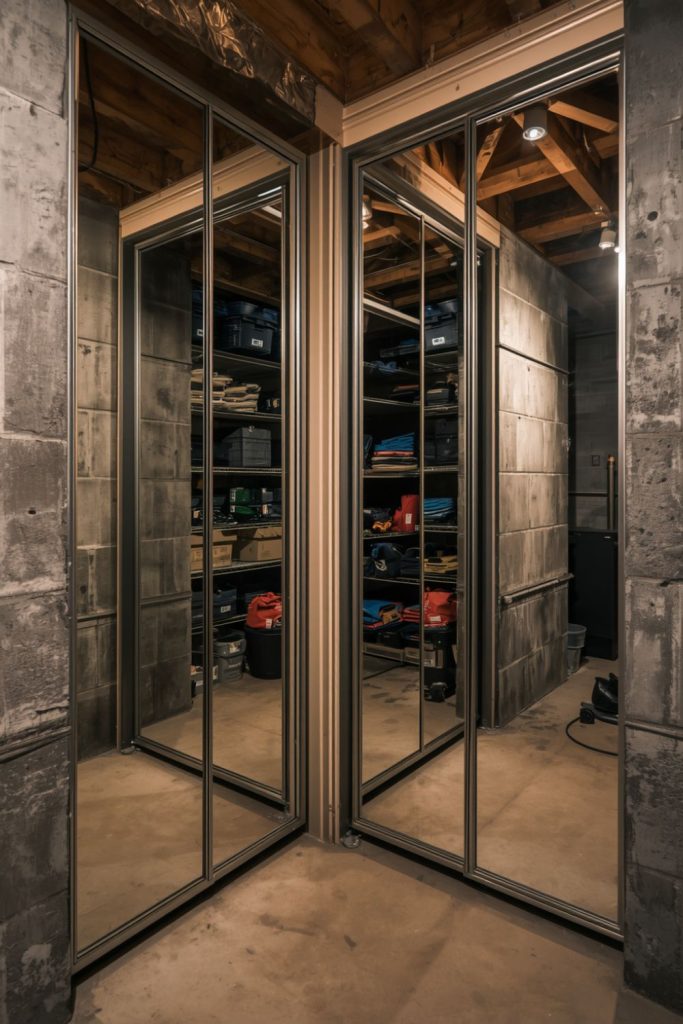
Mirrors have a simple but powerful effect in small spaces. When used on closet doors, they reflect both light and surroundings, making the basement appear larger than it is.
This works especially well in areas with limited natural light. Even a single light source can be amplified through reflection, brightening the entire space. The result is a basement that feels less enclosed.
Mirror-lined doors also remove the need for separate full-length mirrors. This saves space while adding functionality. It’s a small detail that can make daily routines easier.
From a design perspective, mirrors add a clean and modern touch. They blend with most styles and don’t overwhelm the space. When paired with simple frames or frameless designs, they keep the look minimal.
This idea is easy to implement and doesn’t require major changes, yet the impact can be quite noticeable.
Color-zoned closet sections that visually organize items while adding a bold design statement
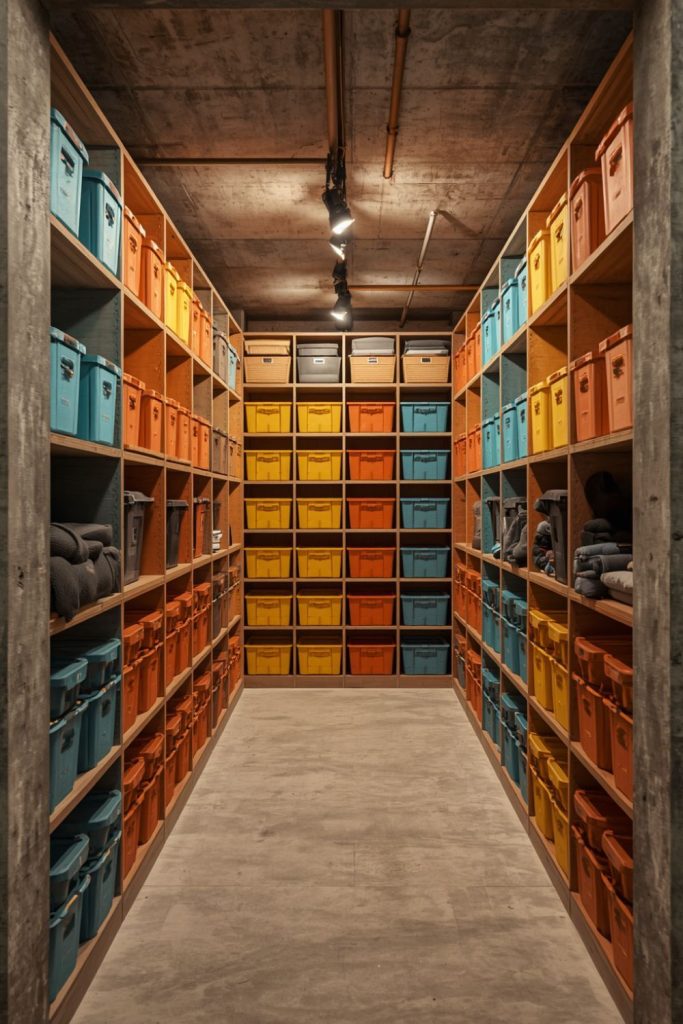
Color zoning turns organization into something visual. Instead of mixing everything together, items are grouped by color or category, making them easier to find and manage.
This approach works well in open or semi-open closets. Shelves, bins, and hanging sections can each have a designated color theme. This not only improves organization but also adds a sense of order that’s easy to maintain.
Bright or contrasting colors can bring energy into a basement, while softer tones create a calmer feel. The choice depends on personal preference, but either way, the result is more visually structured.
Labels and matching containers can enhance the system further. When everything looks coordinated, the space feels less cluttered even if it holds many items.
Color zoning is both practical and visually appealing, making it a simple yet effective idea for small basement closets.
Closet nooks carved between support beams for ultra-efficient use of overlooked gaps
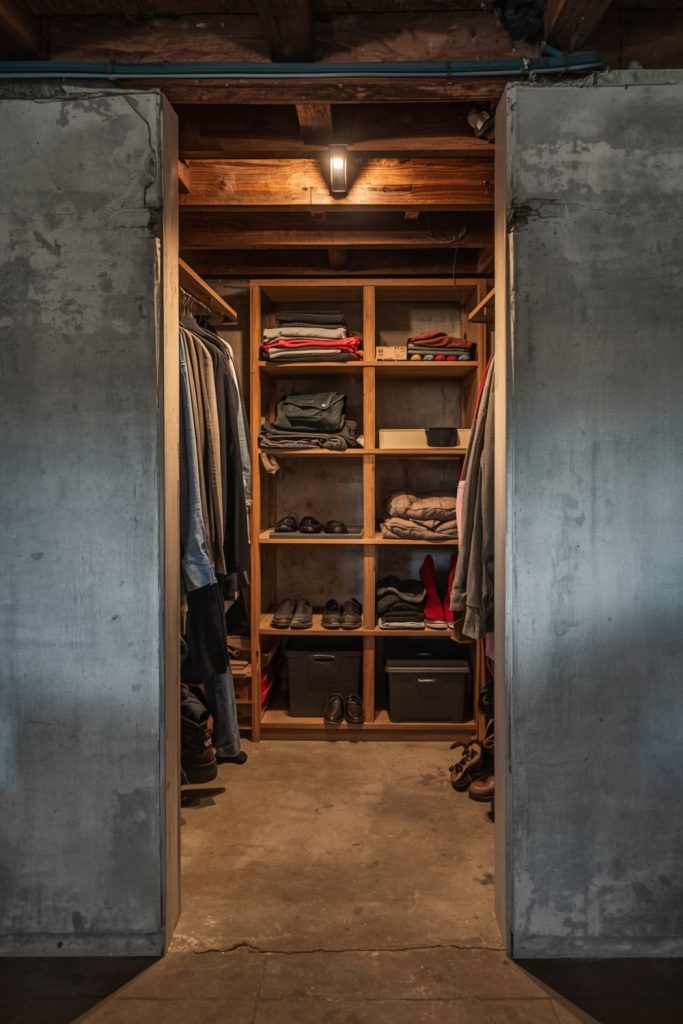
Support beams often create awkward gaps that go unused. These narrow spaces may seem too small for storage, but with the right approach, they can become functional closet nooks.
Custom shelving or slim cabinets can be fitted between beams, turning dead space into useful storage. Even a few shelves can hold a surprising amount when arranged properly.
These nooks work well for storing smaller items like shoes, tools, or folded clothing. Vertical stacking makes the most of the available height, while keeping everything organized.
Visually, these built-in sections can blend with the rest of the basement. Painted finishes or matching materials help them feel intentional rather than improvised.
Using these gaps effectively reduces clutter in other areas. Instead of spreading items across the basement, they are contained within these compact zones.
Minimalist open-rail closet systems that keep the basement airy and uncluttered
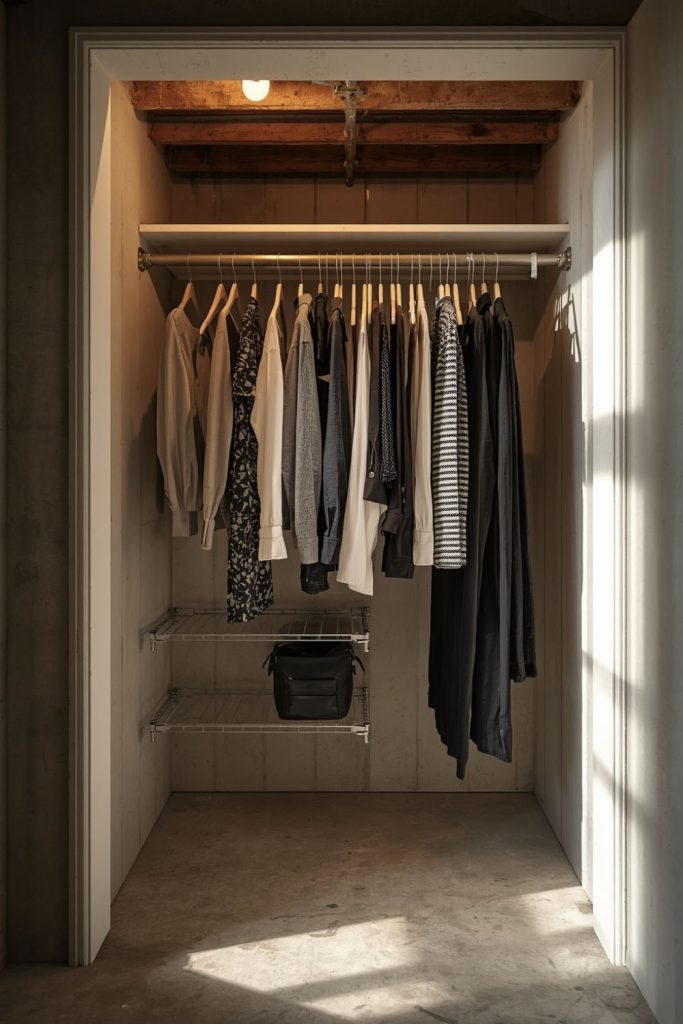
Open-rail systems focus on simplicity. Instead of bulky cabinets or enclosed closets, they use slim rails and supports to hold clothing and storage items.
This approach keeps the basement feeling open. There are fewer visual barriers, which helps the space appear larger. It also makes items easier to access since nothing is hidden.
Organization becomes more important with this setup. Since everything is visible, it encourages better habits. Items need to be arranged neatly to maintain a clean look.
The installation is usually straightforward. Rails can be mounted directly to walls, and shelves or rods can be added as needed. This flexibility makes it easy to adjust over time.
Minimalist systems work well for homeowners who prefer a clean and simple setup without unnecessary complexity.
Hidden closet doors disguised as wall panels for a clean, seamless basement look
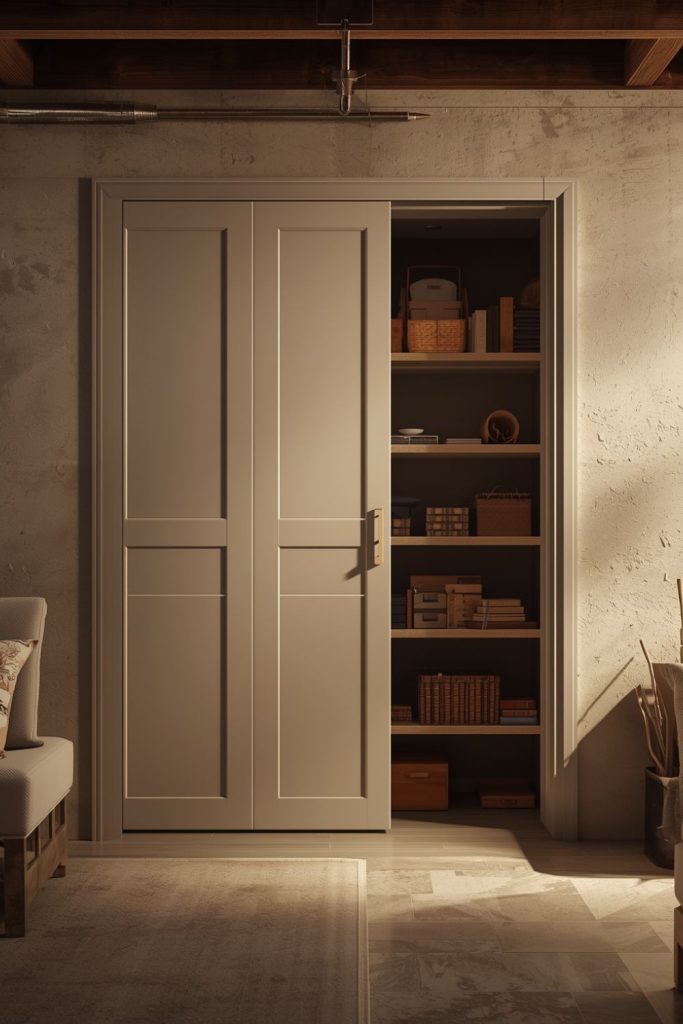
Hidden doors create a smooth and uninterrupted wall surface. Instead of a visible closet, the storage area blends into the background.
This works well in small basements where visual clutter can make the space feel crowded. By removing visible door frames and handles, the area looks more open.
Push-to-open mechanisms or concealed handles keep the design simple. When closed, the closet is almost invisible, which adds a sense of neatness.
Inside, the storage can be as detailed as needed. Shelves, hooks, and compartments can be arranged for maximum efficiency.
This idea is ideal for those who prefer a clean and understated look without sacrificing functionality.
Modular cube storage closets that can be rearranged as needs evolve
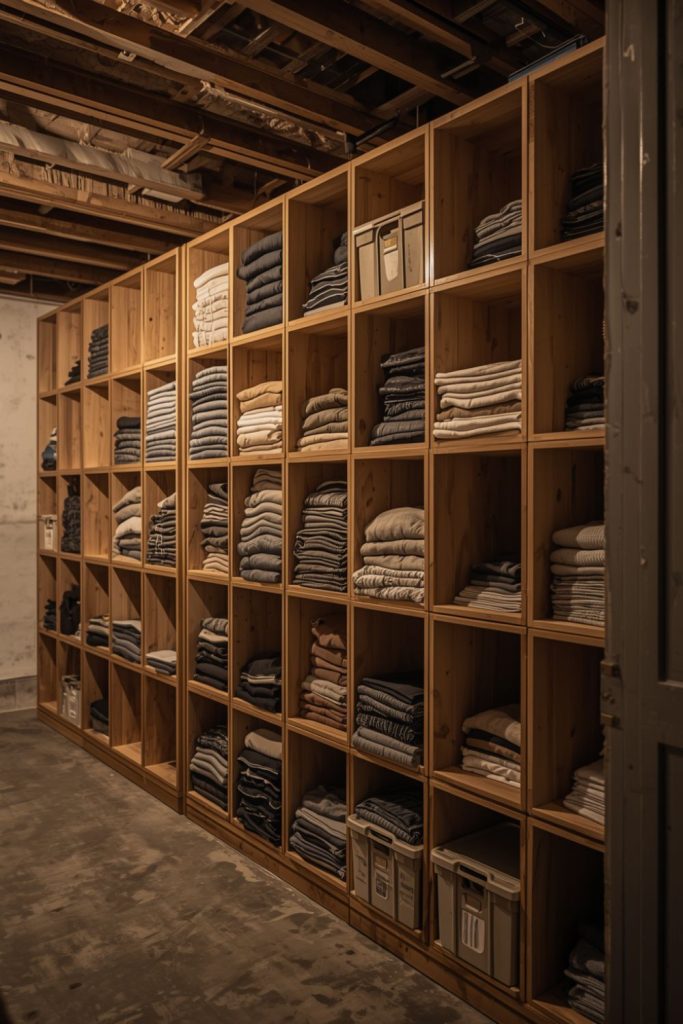
Modular cubes offer flexibility that fixed systems cannot. Each cube acts as an individual unit, which means they can be stacked, separated, or rearranged at any time.
This adaptability makes them useful for changing storage needs. As items increase or decrease, the layout can be adjusted without starting over.
Cubes can hold bins, baskets, or loose items. This keeps everything organized while allowing for quick access. Labels can also be added for clarity.
Visually, they create a structured grid that feels organized and balanced. When arranged neatly, they add a sense of order to the basement.
This idea works well for homeowners who want a system that can grow and change with them.
Rolling closet units on casters for flexible, movable basement storage solutions
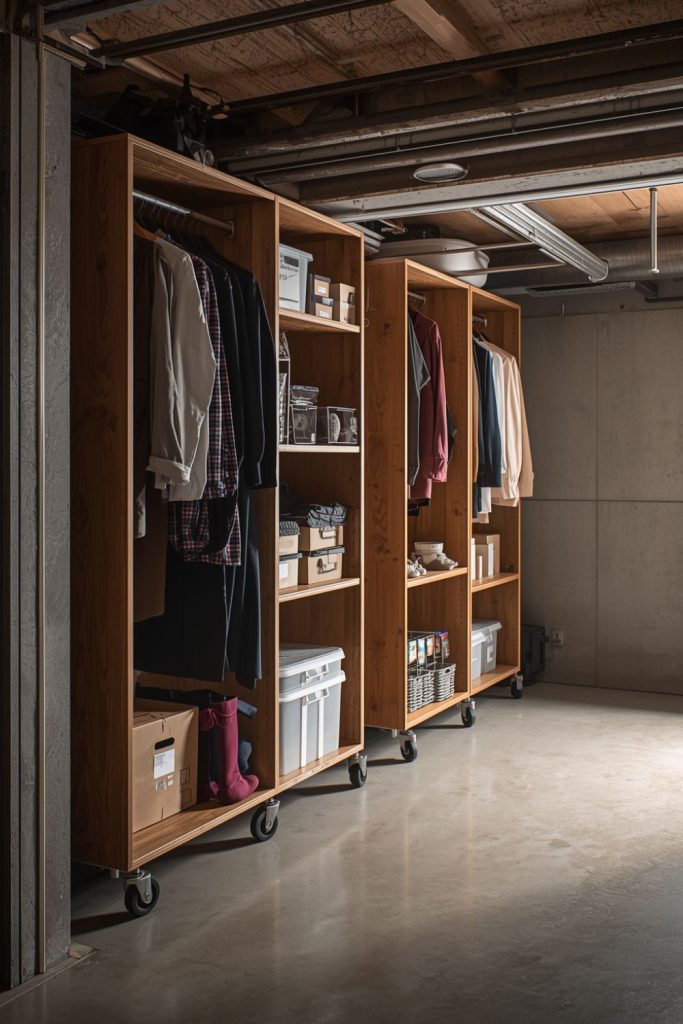
Rolling units bring mobility into storage. Instead of fixed closets, these units can be moved around as needed. This makes it easier to clean, reorganize, or access different areas.
Casters allow even heavier units to move smoothly. This is helpful in basements where space might need to serve multiple purposes.
These units can be used for clothing, tools, or general storage. When not in use, they can be pushed aside to free up space.
The design can vary from simple shelves to more structured cabinets. Either way, the focus is on flexibility.
This idea is practical for homeowners who want storage that adapts to changing needs without permanent placement.
Vertical shoe towers that transform narrow basement corners into functional displays
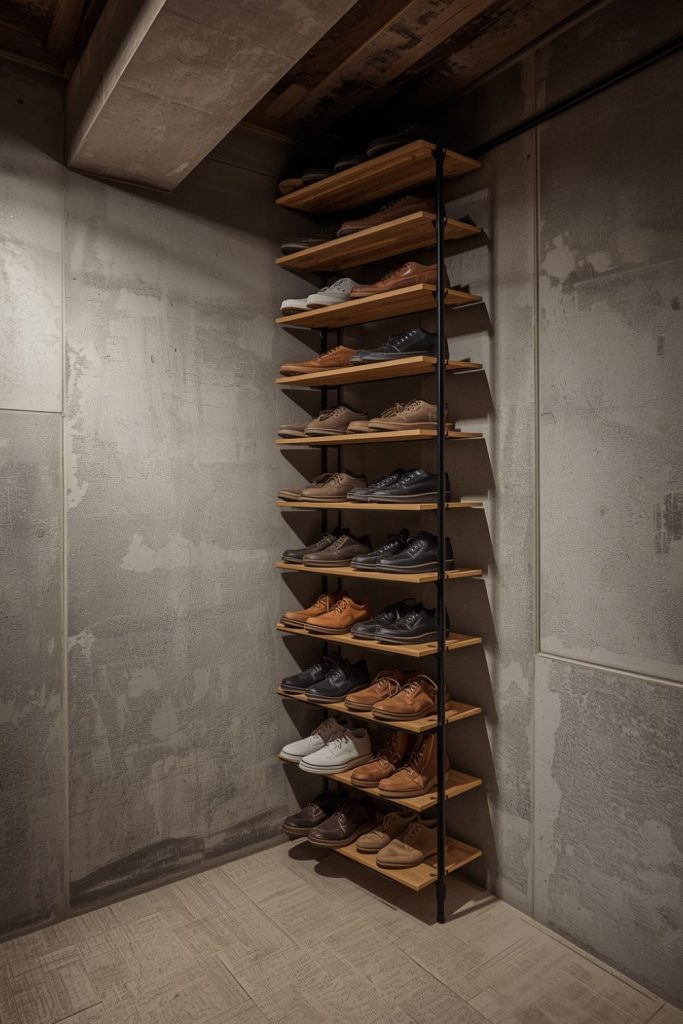
Narrow corners often go unused because they seem too small for standard storage. Vertical shoe towers solve this by stacking storage upward instead of outward.
These towers can hold multiple pairs of shoes while taking up very little floor space. This keeps the basement organized without crowding the area.
The vertical design also makes items easy to see. Instead of digging through piles, everything is visible at a glance.
Materials can range from wood to metal, depending on the desired look. Open designs keep the space feeling light, while enclosed versions offer a cleaner appearance.
This idea is simple but effective, turning overlooked corners into useful storage spots.
LED backlit closet shelves that add both visibility and a modern aesthetic glow
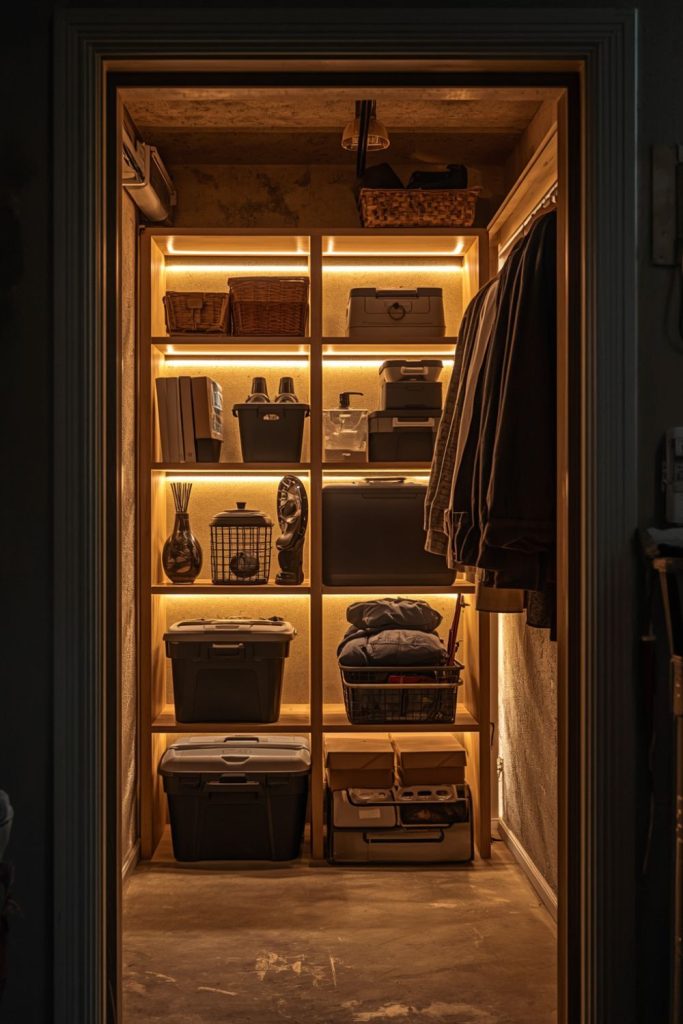
Lighting can change how a basement feels. LED backlit shelves provide both function and style. They make it easier to see stored items while adding a soft glow to the space.
The lighting can be installed along shelf edges or behind panels. This creates a layered effect that adds depth.
Energy efficiency is another benefit. LED lights use less power and last longer, making them a practical choice.
The visual impact is noticeable. A dim basement can feel more inviting with even subtle lighting improvements.
This idea works well for those who want to improve both usability and appearance without major changes.
Curtain-covered closet spaces for a soft, budget-friendly alternative to doors
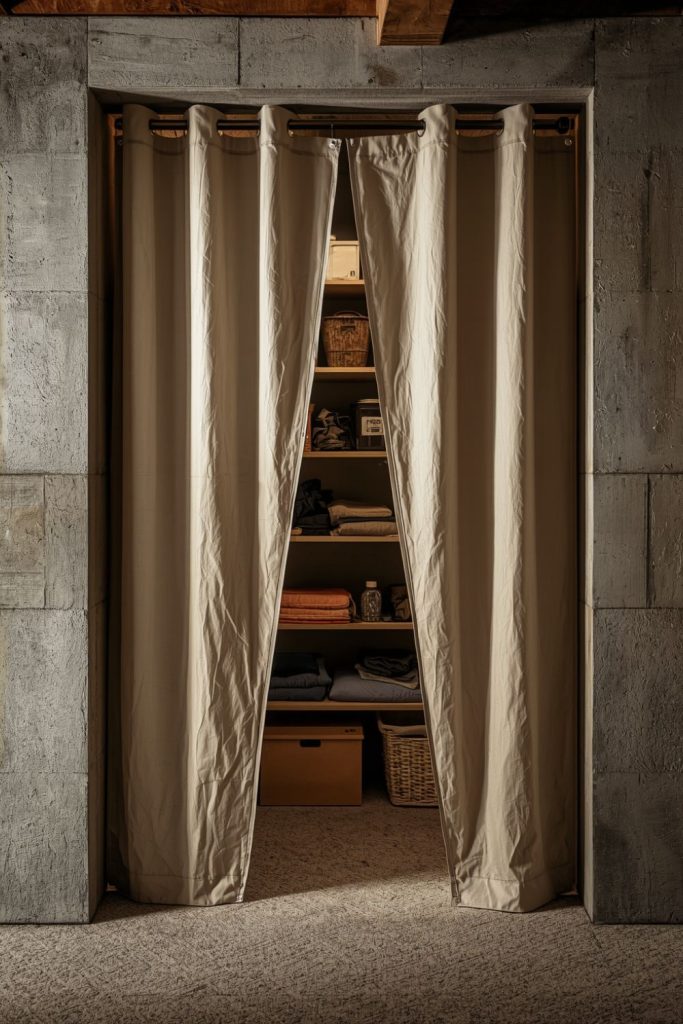
Curtains offer a simple way to cover storage areas without installing doors. They are easy to set up and can be changed whenever needed.
Fabric choices can influence the look of the basement. Light fabrics create an airy feel, while heavier ones add warmth.
Curtains also save space. Unlike doors, they don’t require clearance to open, which is helpful in tight areas.
They can be drawn open or closed quickly, making access easy. This is useful for frequently used storage areas.
This idea combines affordability with flexibility, making it a practical option for many homeowners.
Multi-purpose closet walls that combine storage with a fold-down desk or workspace
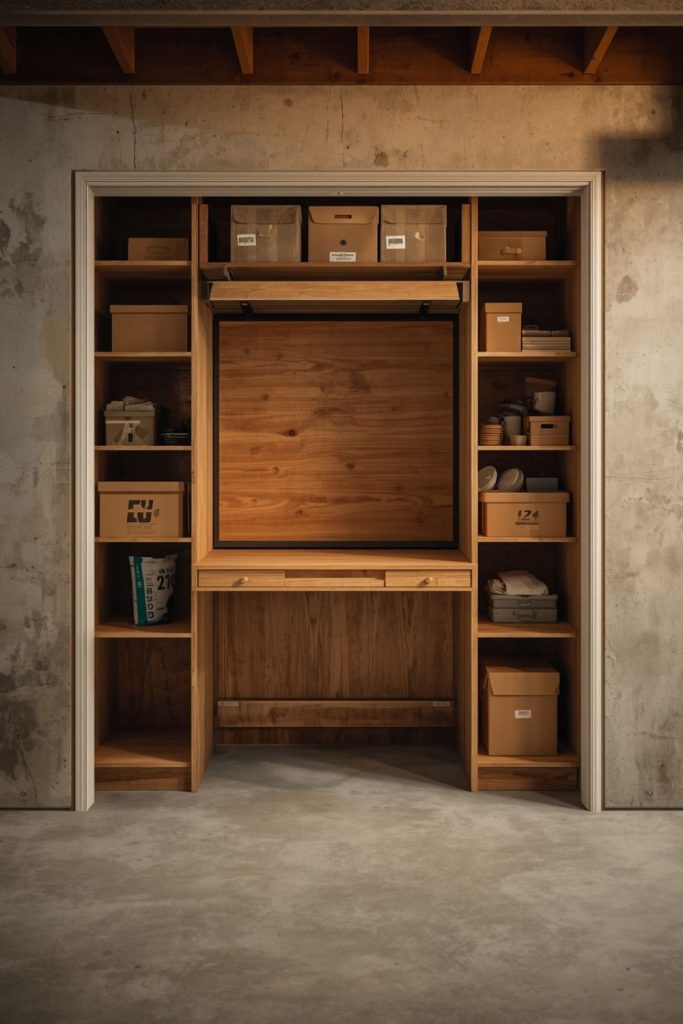
Combining storage with a workspace makes better use of limited space. A closet wall with a fold-down desk can serve multiple functions without taking up extra room.
When the desk is folded up, it blends into the storage unit. When needed, it can be pulled down for work or study.
Shelves above or around the desk can hold supplies, keeping everything within reach. This reduces the need for additional furniture.
This setup works well in basements used for multiple purposes. It keeps the area organized while adding functionality.
It’s a practical solution for homeowners who need both storage and a workspace in the same area.
Reclaimed wood closet builds that bring warmth and texture to unfinished basements
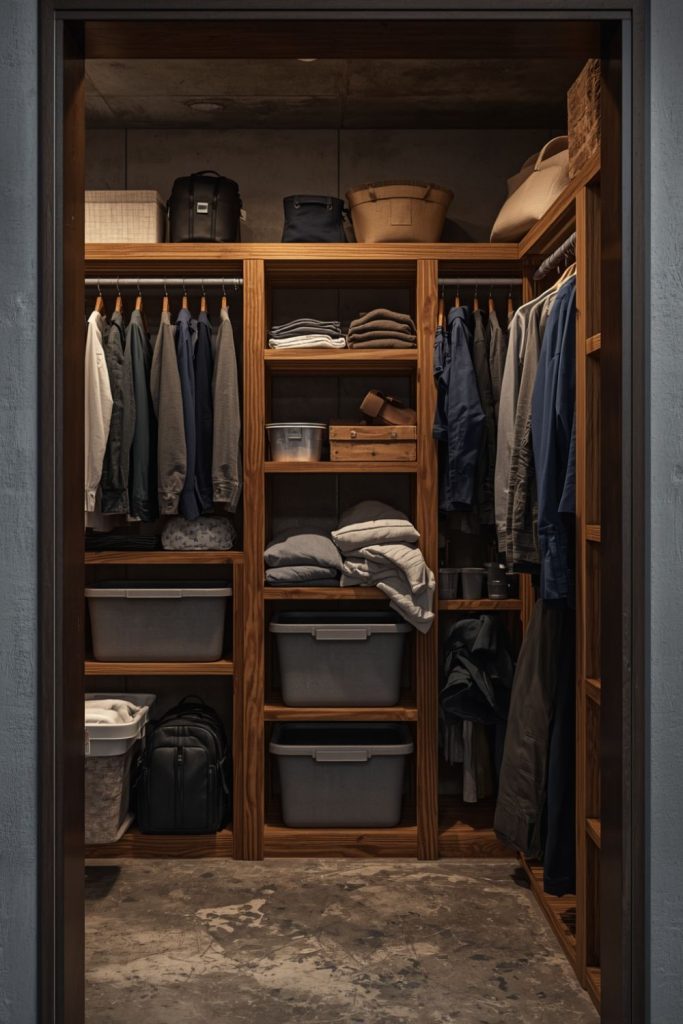
Reclaimed wood adds character to basement closets. Its natural texture contrasts with the often cold and plain surfaces found in basements.
Using reclaimed materials is also cost-effective. Old wood can be repurposed into shelves, frames, or panels.
The result is a closet that feels more inviting. It softens the overall look and adds a sense of warmth.
Each piece of wood has its own marks and variations, which creates a more natural appearance.
This idea works well for those who want a more relaxed and lived-in feel in their basement space.
Ceiling-mounted hanging storage closets for rarely used seasonal items
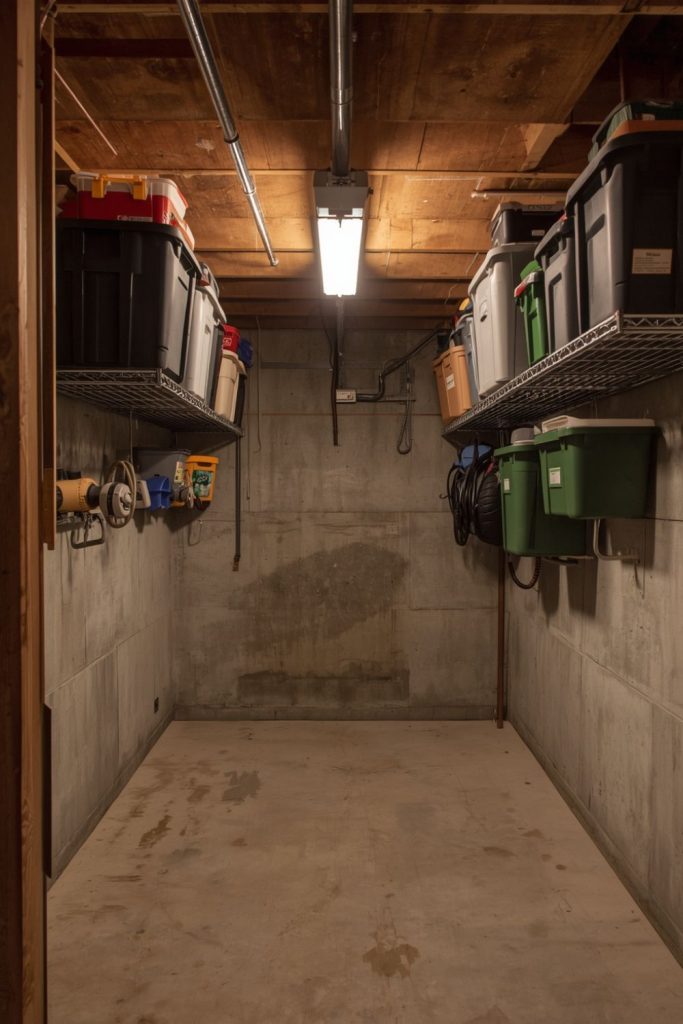
Ceiling-mounted storage uses space that is often ignored. By hanging storage units from above, floor space remains clear.
This is ideal for items that aren’t used often, such as seasonal decorations or extra supplies. Keeping them out of the way reduces clutter.
Proper installation is important to ensure safety. Strong supports and secure mounting keep everything stable.
The visual effect is also helpful. With fewer items on the ground, the basement feels more open.
This idea is practical for maximizing storage without affecting daily use areas.
Compact “capsule wardrobe” basement closets designed for simplicity, style, and efficiency
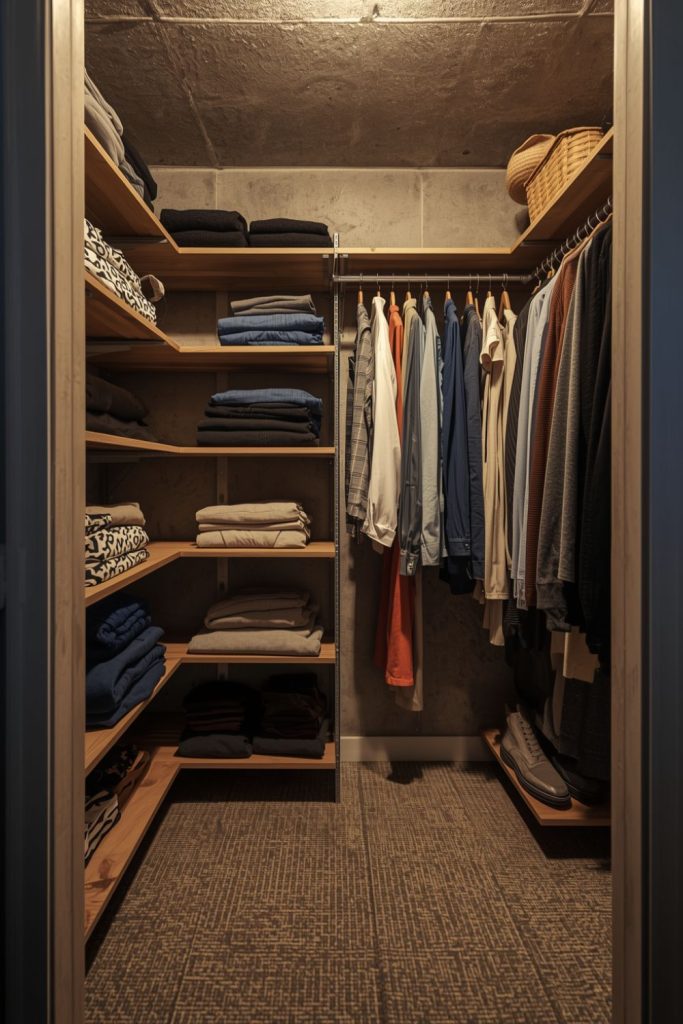
A capsule wardrobe focuses on keeping only essential clothing items. This approach reduces clutter and makes organization easier.
In a basement closet, this means fewer items but better arrangement. Each piece has a place, which improves accessibility.
Shelves, rails, and drawers can be arranged to support this simplified setup. The result is a clean and efficient closet.
This idea works well for homeowners who want to reduce excess and focus on practicality.
It creates a space that feels organized without being crowded, which is often the goal in compact homes.