
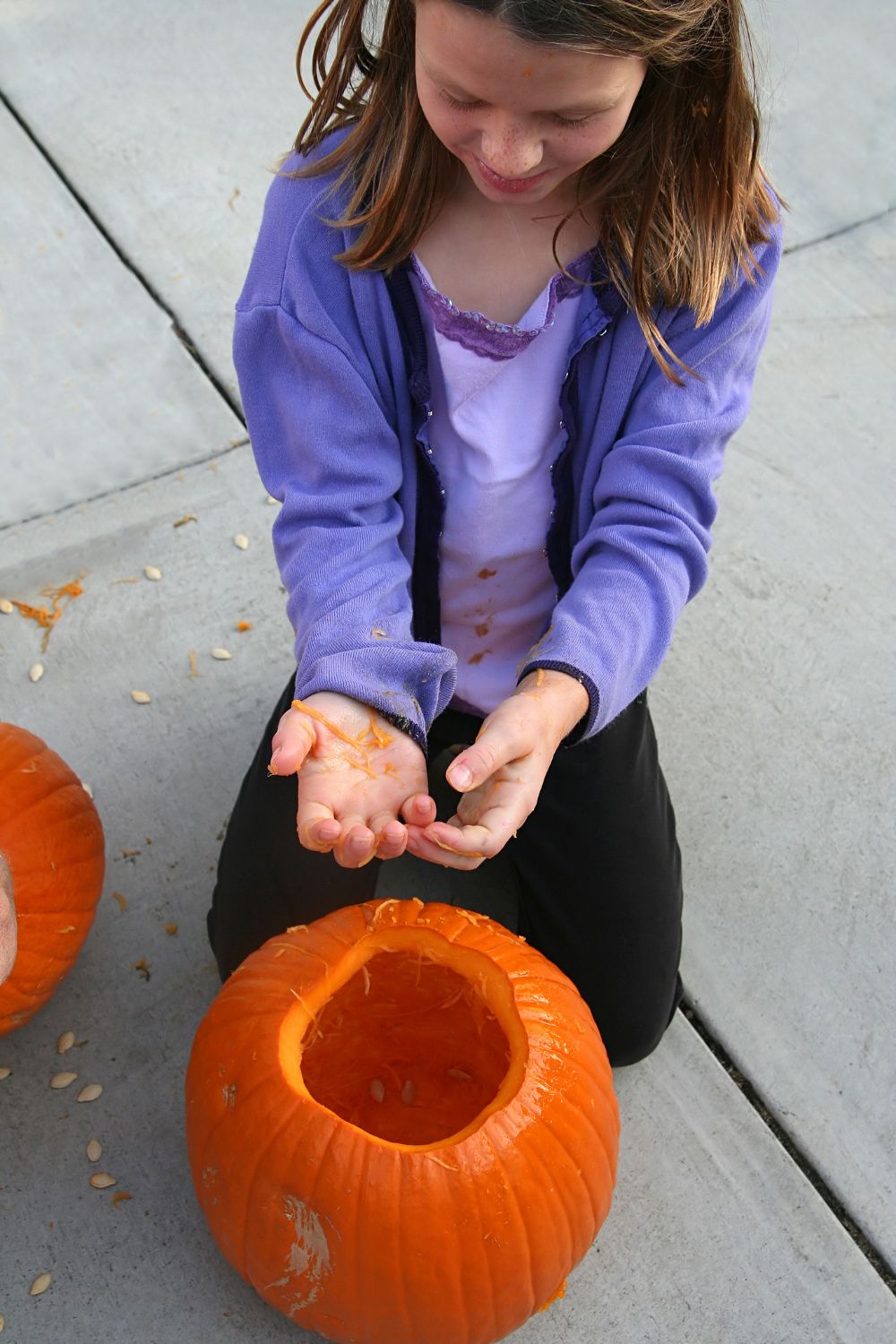
Fall is the perfect time for preschool teachers to introduce fun, hands-on learning experiences with pumpkins. Pumpkin activities preschool children enjoy can help build early math, science, creativity, language, and social skills through playful exploration. With simple planning, teachers can create meaningful fall lessons using pumpkins as a tool for discovery, problem-solving, and imagination. This guide shares practical ideas to help plan engaging pumpkin activities that keep young learners excited throughout the season.
Why Are Pumpkin Activities Perfect for Preschoolers in the Fall?
Young children learn through hands-on experiences, and pumpkins provide opportunities to touch, compare, observe, and ask questions. This makes them a natural choice for classroom activities during autumn.
Pumpkin activities preschool teachers plan can support many areas of development. Children can count pumpkin seeds to practice early math skills, examine pumpkin parts to learn about nature, and create pumpkin artwork to improve fine motor control. These activities help children build knowledge while enjoying a seasonal theme.
Pumpkins also encourage children to use their senses. They can feel the outside texture, smell the inside of a pumpkin, compare sizes, and notice differences in color and shape. These experiences help children develop observation skills and expand their vocabulary.
Another benefit is that pumpkins can be used across many classroom areas. Teachers can include them in science centers, math stations, art activities, reading time, and pretend play. This makes it easier to create a connected fall theme instead of separate lessons.
When teachers choose pumpkin activities with clear goals, children gain more than a fun experience. They practice important skills while building confidence, curiosity, and a love for learning.
- Related post 25 Creative Fall Preschool Door Ideas to Welcome Students with Color, Learning, and Smiles
How Do You Plan Meaningful Pumpkin Activities That Support Early Learning?
Planning meaningful pumpkin activities preschool children enjoy starts with knowing what children should learn from each experience. A well-planned activity combines fun with a learning purpose, helping children develop skills while staying interested.
Teachers can begin by choosing a learning goal. The goal may focus on counting, vocabulary, problem-solving, creativity, observation, or social interaction. Once the goal is clear, selecting an activity becomes much easier.
Step 1: Choose a Learning Goal
Decide what skill children will practice. A pumpkin seed activity may support counting, while a pumpkin life cycle lesson may focus on science and vocabulary.
Step 2: Select an Activity That Matches Children’s Ages
Younger preschool children may enjoy sensory exploration and simple sorting activities. Older children may be ready for measuring, experiments, and storytelling projects.
Step 3: Gather Materials Before the Lesson
Prepare supplies ahead of time so children can spend more time participating. Simple materials such as pumpkins, seeds, paper, paint, and classroom tools can support many lessons.
Step 4: Prepare the Learning Space
Choose whether the activity works best for circle time, small groups, learning centers, or individual work. A prepared area helps children understand where materials belong and how to participate.
Step 5: Encourage Questions and Discovery
Teachers can ask children what they notice, what they predict, and what they want to investigate. These conversations help children think more deeply and share their ideas.
Good planning helps teachers create pumpkin activities that feel organized, purposeful, and enjoyable for preschool learners.
Which Pumpkin Activities Keep Preschool Children Engaged and Excited?
Preschool children learn best when they can actively participate. The following pumpkin activities preschool teachers can use provide hands-on experiences while supporting different learning goals.
1. Pumpkin Exploration Sensory Bin

Learning Goal:
Develop sensory awareness, observation skills, and descriptive language.
Materials Needed:
Mini pumpkins, pumpkin seeds, dried leaves, scoops, cups, and sensory fillers.
Preparation:
Arrange the materials in a sensory container and place tools nearby for children to use.
Classroom Use:
Best for small groups or learning centers. Children can touch, sort, compare, and describe different pumpkin materials during 15 to 20 minutes of exploration.
2. Pumpkin Volcano Science Experiment
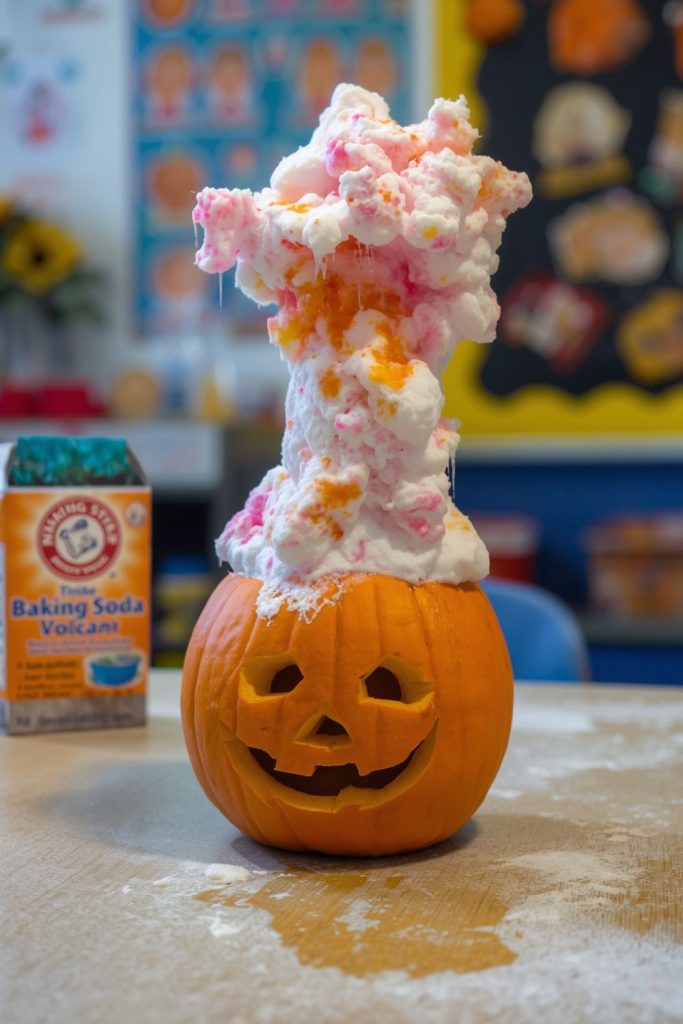
Learning Goal:
Introduce prediction, observation, and simple science reactions.
Materials Needed:
Small pumpkin, baking soda, vinegar, food coloring, and a tray.
Preparation:
Prepare the pumpkin opening and place it in an easy-to-clean area.
Classroom Use:
Use during science time. Children can predict what will happen, watch the reaction, and discuss their observations.
3. Pumpkin Counting and Number Match Game
Learning Goal:
Practice counting, number recognition, and matching skills.
Materials Needed:
Pumpkin number cards and pumpkin seed counters.
Preparation:
Create pumpkin cards with numbers and prepare matching groups of seeds.
Classroom Use:
Use during math centers. Children match numbers with the correct amount of seeds.
4. From Seed to Pumpkin Life Cycle Activity
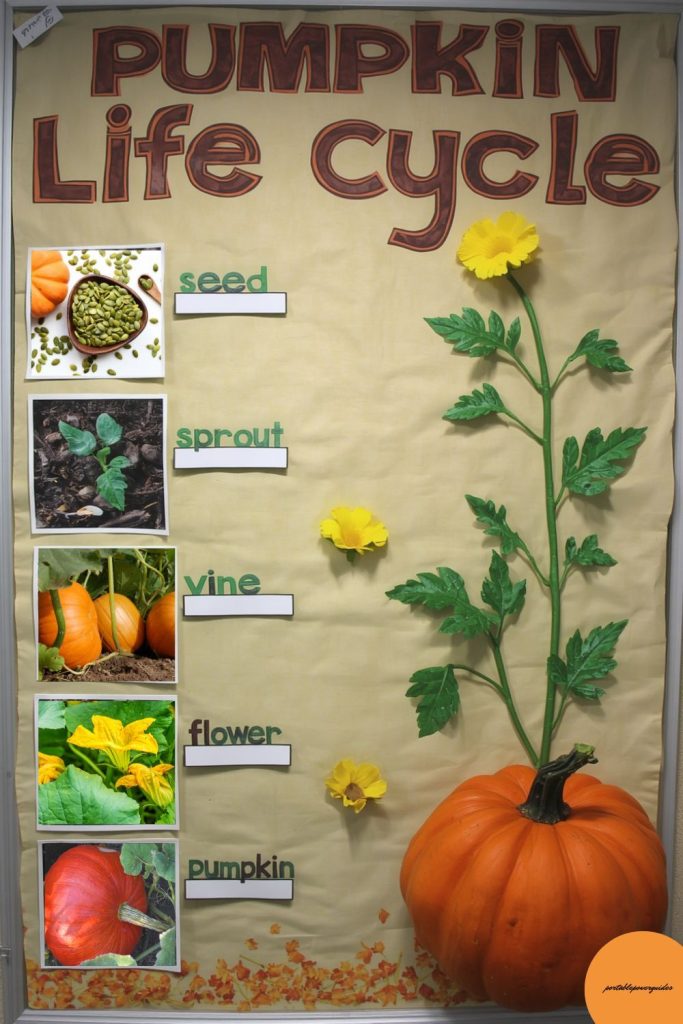
Learning Goal:
Teach children how pumpkins grow.
Materials Needed:
Life cycle pictures, paper, crayons, and craft materials.
Preparation:
Create picture cards showing seed, sprout, vine, flower, and pumpkin stages.
Classroom Use:
Children arrange the stages and create a classroom display showing plant growth.
5. Pumpkin Painting with Natural Tools

Learning Goal:
Encourage creativity and strengthen fine motor skills.
Materials Needed:
Mini pumpkins, paint, leaves, sponges, cotton swabs, and brushes.
Preparation:
Set up an art table with different painting tools.
Classroom Use:
Children create pumpkin designs while exploring patterns, textures, and colors.
6. Pumpkin Sink or Float Experiment

Learning Goal:
Develop prediction and early science skills.
Materials Needed:
Water container, pumpkin pieces, seeds, and small pumpkin objects.
Preparation:
Create a safe testing area with towels nearby.
Classroom Use:
Children predict results, test objects, and compare what happens.
7. Pumpkin Shape and Color Sorting Activity
Learning Goal:
Build classification and early math skills.
Materials Needed:
Pumpkin cutouts in different colors, sizes, and shapes.
Preparation:
Create sorting groups or labeled areas.
Classroom Use:
Children organize pumpkins and explain how they grouped them.
8. Pumpkin Size Detective Measurement Challenge
Learning Goal:
Practice comparing sizes and measuring objects.
Materials Needed:
Different pumpkins, blocks, rulers, and measuring tools.
Preparation:
Place pumpkins in a math learning area.
Classroom Use:
Children compare pumpkins and discover differences in height, weight, and size.
9. Pumpkin Storytelling Puppet Theater

Learning Goal:
Improve vocabulary, communication, and imagination.
Materials Needed:
Pumpkin puppets, story props, and books.
Preparation:
Create a small storytelling corner.
Classroom Use:
Children create pumpkin stories and share them with classmates.
10. Pumpkin Seed Counting Fine Motor Craft
Learning Goal:
Support counting skills and hand control.
Materials Needed:
Paper pumpkins, glue, pumpkin seeds, and markers.
Preparation:
Prepare pumpkin templates before the activity.
Classroom Use:
Children decorate pumpkins while counting and placing seeds.
11. Pumpkin Investigation Discovery Station
Learning Goal:
Encourage observation and questioning.
Materials Needed:
Pumpkins, magnifying glasses, scales, and recording sheets.
Preparation:
Create a science table where children can examine pumpkins.
Classroom Use:
Children investigate pumpkin features and record their discoveries.
12. Pumpkin Patch Dramatic Play Center
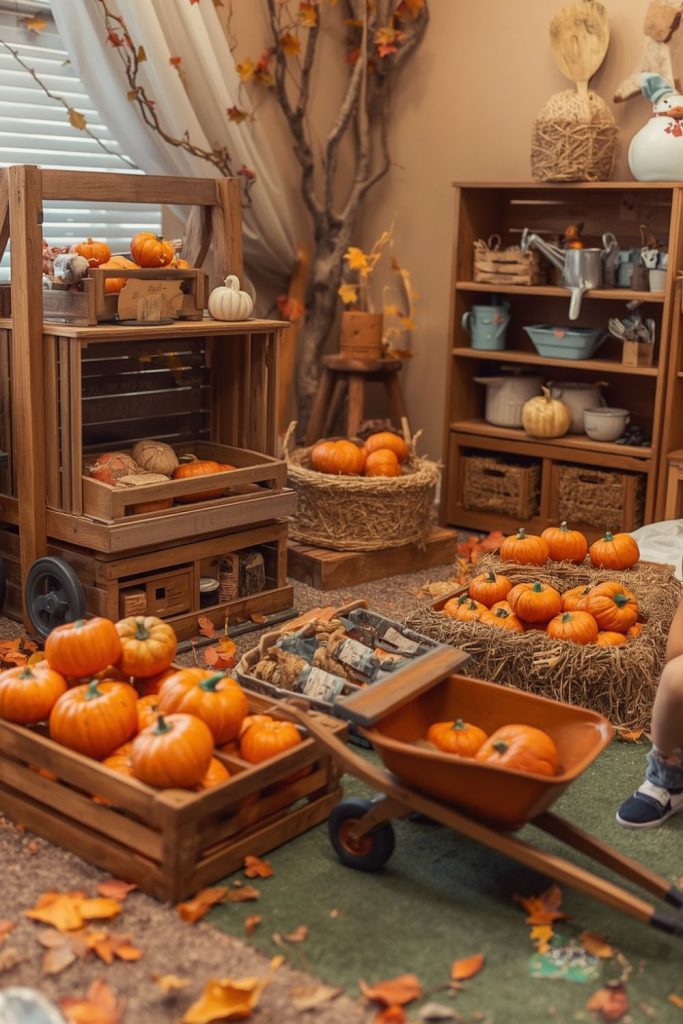
Learning Goal:
Develop language skills, creativity, and teamwork.
Materials Needed:
Play pumpkins, baskets, signs, pretend money, and gardening tools.
Preparation:
Turn a classroom corner into a pretend pumpkin patch.
Classroom Use:
Children act as farmers, shoppers, and helpers while practicing social interaction.
What Materials and Classroom Setup Make Pumpkin Lessons Run Smoothly?
A successful pumpkin lesson depends on having organized materials and a classroom setup that supports children’s independence. Teachers do not need complicated supplies. Many effective pumpkin activities preschool children enjoy can be created with simple classroom resources.
Common materials include mini pumpkins, pumpkin seeds, paper, paint, glue, measuring tools, books, puppets, and sensory items. Teachers can prepare activity trays so children know where supplies are located and how to use them.
Classroom areas can be arranged based on activity type. A science table can include pumpkins, magnifying glasses, and observation tools. An art area can hold painting supplies. A math center can include counting materials and sorting games. A dramatic play area can become a pumpkin market or farm.
Teachers should also consider safety and cleanup. Materials should be easy for young children to handle, and activity areas should have enough space for children to work comfortably.
A prepared classroom allows children to focus on exploring and learning. When materials and spaces are organized, teachers can spend more time supporting children’s ideas and conversations.
How Can You Adapt and Improve Pumpkin Activities for Every Preschool Learner?
Every preschool classroom includes children with different abilities, interests, and learning preferences. Teachers can adjust pumpkin activities preschool children participate in so everyone can take part successfully.
Activities can be changed by adjusting difficulty. Younger children may sort pumpkins by color, while older children may create patterns or compare measurements. Teachers can also provide different tools so children can participate at their own level.
Children who enjoy movement may benefit from active pumpkin games, while children who prefer quiet activities may enjoy drawing, sorting, or observation tasks. Giving children choices helps them feel comfortable and involved.
Teachers can improve activities by encouraging children to explain their ideas. Questions such as “What do you notice?” and “What do you think will happen?” help children develop thinking and communication skills.
After each activity, teachers can reflect on what worked well and what changes may help future lessons. This reflection helps create better classroom experiences throughout the fall season.
Flexible planning allows every child to enjoy pumpkin activities while building important early learning skills.