
A basement guest bedroom meant for long stays by parents or in laws works best when it feels calm, private, and steady in daily use. Many homes already have extra basement space, yet it often stays underused or feels cold and disconnected from the rest of the house. Turning that space into a comfortable stay area takes attention to how people move, rest, and spend time inside it. The goal here is not just to place a bed below ground level but to form a living area where someone can stay for weeks or even months without feeling like a visitor. Small decisions like wall color, light placement, storage access, and sitting corners shape how the room feels day to day. When those parts come together in a simple way, the space starts feeling calm and homelike, even though it sits below the main floor.
How should you design the layout of a basement guest bedroom suite to ensure privacy and independence for your parents?
A simple flow helps a lot, starting from entry point into sleeping area, then toward seating or small activity corner.
If possible, placing the sleeping area away from stairs or shared walls gives quieter rest.
A sliding door works well for entry since it does not take extra space and gives a soft boundary between levels of the home.
Inside, walking paths should stay open so movement feels easy even at night. A small sitting spot near one corner allows quiet reading or tea time without needing to go upstairs.
Closet space should stay close to the bed but not block movement.
Layout planning like this allows parents or guests to feel settled without depending on the main living space too often, which brings a sense of personal routine even during long stays.
- Related post Small Basement Closet Ideas for Smart Homeowners Who Want More Space Without Renovating
What essential features and amenities are needed to make a basement guest bedroom function like a complete living space?
A small coffee station with kettle, mugs, and a tray helps mornings feel relaxed without going upstairs.
A compact fridge adds another level of independence, especially for longer visits.
Storage also matters, so a built in wardrobe with simple flat doors keeps clothing and items organized without visual clutter.
A wall mounted television with hidden wiring gives entertainment without messy cables showing.
A small console table near entry works for keys, phone, or small personal items.
Seating like a soft armchair with a small round table lets guests sit apart from the bed when they want quiet time.
These small additions reduce constant movement between floors and allow the basement guest bedroom to act like a self contained living area that still feels connected to the home.
How can you improve lighting, ventilation, and air quality in a basement guest bedroom to create a healthy living environment?
Ceiling recessed lights give general brightness across the room, while wall sconces near the bed add softer light for reading.
Table lamps also help create different moods through the day.
Natural light can be limited, so a large floor mirror helps bounce light around and makes the room feel less closed in.
For air movement, a ceiling fan or quiet ventilation system keeps air from feeling still.
Windows, if present, should stay open when weather allows.
Air quality improves with small steps like keeping surfaces clean and avoiding heavy dust fabrics.
Light curtains instead of heavy coverings also help airflow.
When lighting and air feel balanced, the basement guest bedroom stops feeling enclosed and becomes a more steady place for rest and daily living.
What design choices make a basement guest bedroom feel warm, comfortable, and emotionally welcoming for long stays?
A soft greige wall paint sets a calm base that does not feel cold or sharp.
Light oak laminate flooring adds brightness and makes walking barefoot more pleasant.
Bedding in layered neutral tones brings softness to the bed area and helps the room feel lived in.
A textured rug under the bed adds warmth underfoot and also reduces echo in the space.
Small personal touches like a ceramic lamp on each bedside table create gentle light in the evening.
A throw blanket placed at the end of the bed adds both comfort and visual softness.
These choices work together without needing strong color contrast or heavy decoration.
The result is a space that feels steady and quiet, giving long stay guests a sense of ease without needing much adjustment time.
How can you balance shared family connection and personal space through your basement guest bedroom design?
Placement of the room near but not directly inside busy living areas helps reduce constant interruption.
A sliding door or soft close door can give separation while still feeling part of the home structure.
Inside the room, having both sleeping and small sitting zones allows guests to decide how close they want to stay to family activity.
A console table near the entrance works as a small transition point between shared and private areas.
Communication also plays a role, such as allowing flexible access rather than strict schedules for shared spaces.
At the same time, personal storage and private corners help guests keep their own routine without disruption.
When this balance is handled with care, the basement guest bedroom supports long stays that feel relaxed for both guests and family members.
Top 21 Basement Guest Bedroom
Warm greige wall paint with matte finish to soften the underground feel
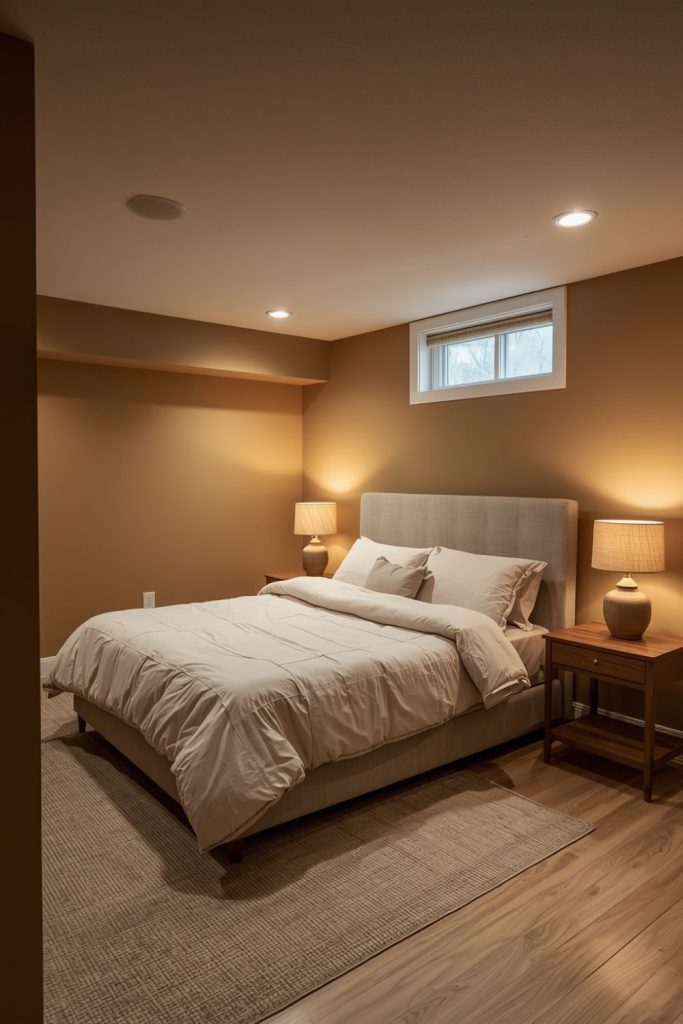
A warm greige wall paint with matte surface works well in a basement guest bedroom because it reduces harsh shadows and softens the underground impression. Glossy finishes often reflect light unevenly in low sunlight areas, while matte paint spreads light more evenly across walls. This color choice sits between gray and beige, so it does not feel too cold or too warm. It supports different decor styles without needing frequent repainting. In a basement guest bedroom, walls often carry the feeling of depth, so lighter tones help reduce that heaviness. Even with limited natural light, greige keeps the room calm and steady. When paired with soft lighting and simple furniture, the wall color becomes a quiet background that lets other room parts stand out without distraction. Small imperfections in the wall also appear less visible under matte finish, which makes maintenance easier over time.
Wall to wall light oak laminate flooring for a bright continuous look
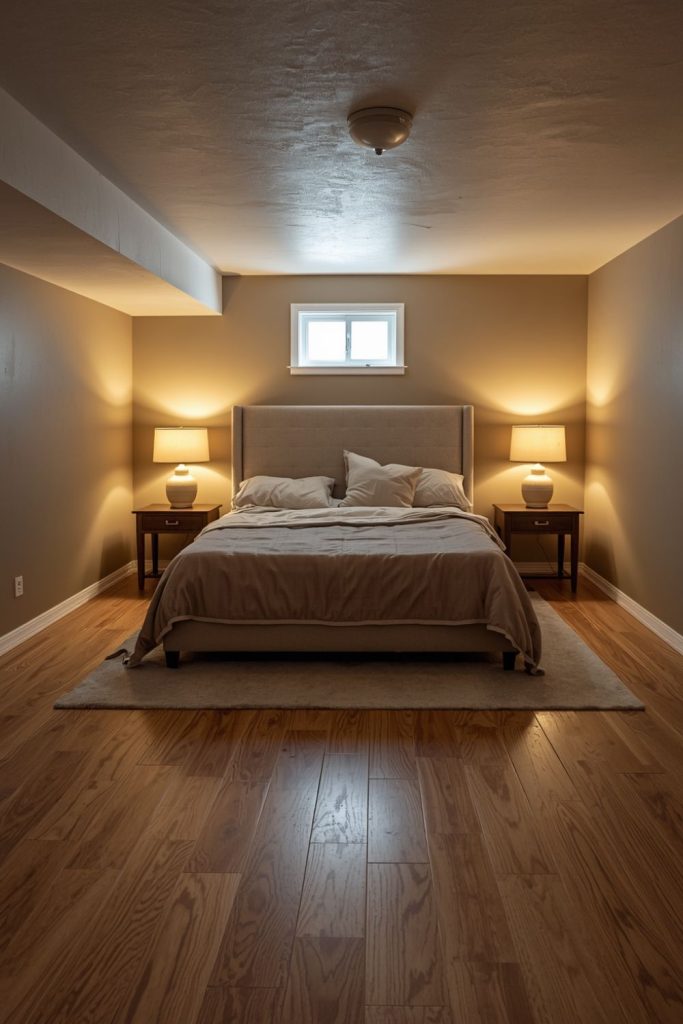
Wall to wall light oak laminate flooring gives a basement guest bedroom a clean and open base underfoot. The light wood tone helps reflect artificial light, which is useful in lower level rooms where sunlight is limited. Unlike darker flooring, light oak reduces the feeling of heaviness and makes the space appear wider. Laminate material also handles moisture better than some natural wood options, which suits basement conditions. A continuous floor without breaks or mixed materials helps the room feel more connected from corner to corner. It also pairs well with neutral furniture and soft textiles. Cleaning stays simple since dust and small marks are easier to notice and remove. Over time, this flooring choice supports both comfort and practicality, giving guests a steady walking surface that feels warm rather than cold, even during colder months when basement temperatures tend to drop.
Upholstered headboard in soft linen fabric for a hotel style focal point
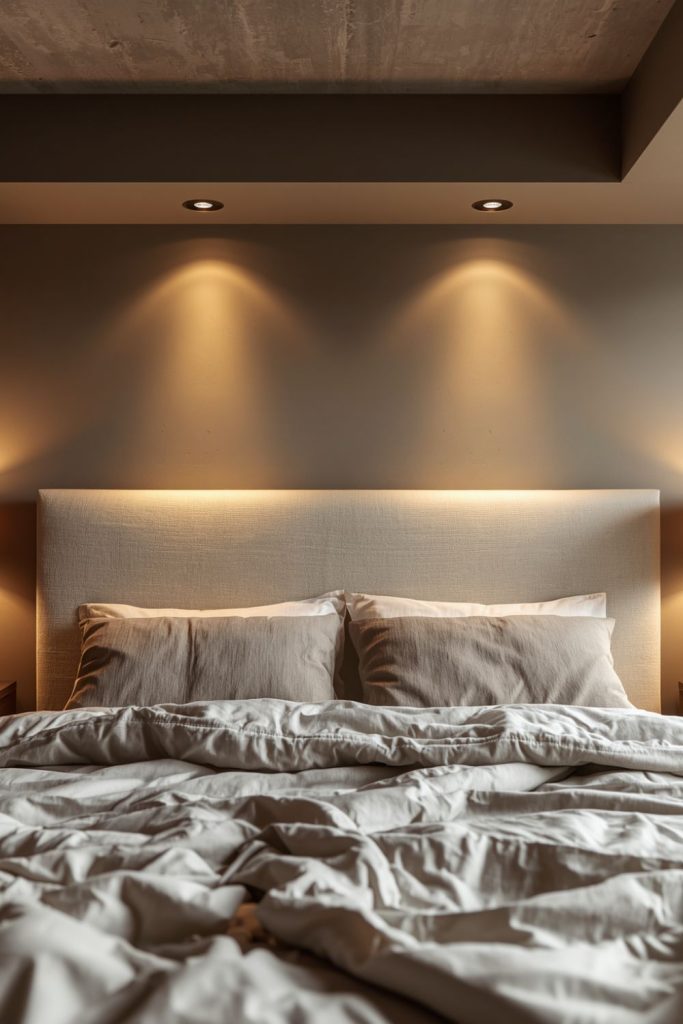
An upholstered headboard in soft linen fabric creates a calm focal point in a basement guest bedroom without feeling heavy or sharp. Linen has a natural texture that brings softness to the sleeping area, making it feel more relaxed during long stays. A padded headboard also adds comfort for reading or sitting up in bed. Neutral colors like beige or light grey keep the visual tone steady and easy on the eyes. In a basement setting where walls may feel plain, this type of headboard adds a gentle layer of texture without overwhelming the room. It also helps separate the bed visually from the rest of the space, giving the sleeping area its own identity. When paired with soft lighting on each side, the headboard becomes a quiet anchor that supports a calm resting experience, which is often appreciated during extended family visits.
Matching wooden bedside tables with simple clean lines
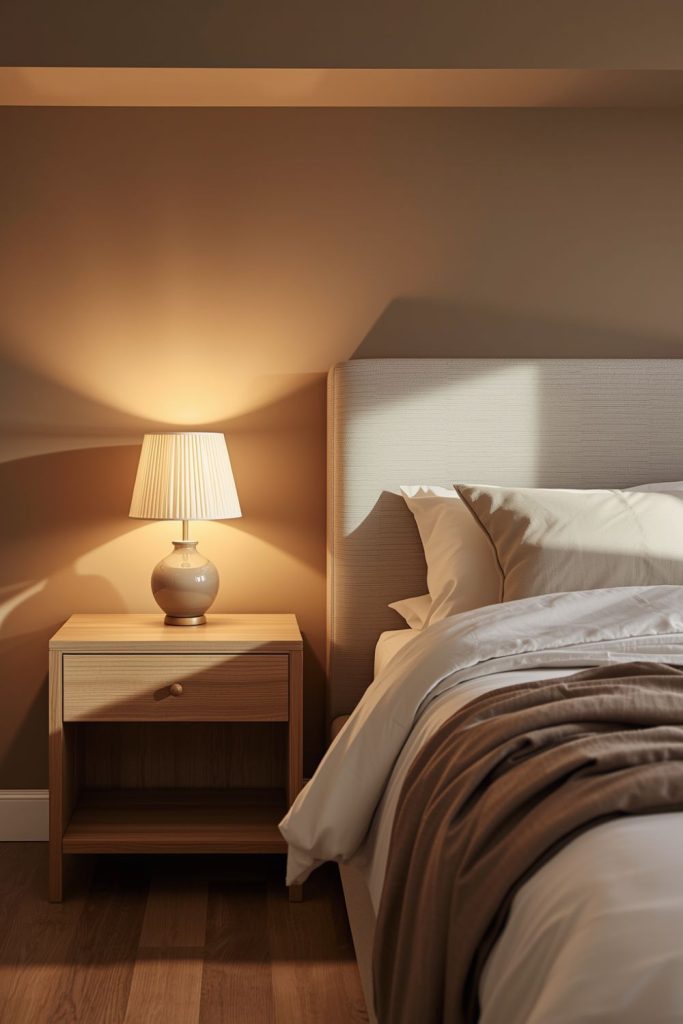
Matching wooden bedside tables with clean lines bring order and balance to a basement guest bedroom. When both sides of the bed share the same design, the sleeping area feels stable and well arranged. Light wood tones often work best because they match flooring and do not overpower the space. Simple shapes without heavy decoration keep the look calm and uncluttered. Each table can hold a lamp, a book, or small personal items, giving guests easy access without leaving the bed area. Drawers with soft close movement add quiet storage for small belongings. The surface should stay clear most of the time so the room does not feel crowded. In a basement setting where space can feel enclosed, these tables help maintain visual order. They also support daily routines, such as reading or placing a cup of tea, without needing to move around too much.
Brass or matte black wall sconces placed symmetrically above nightstands
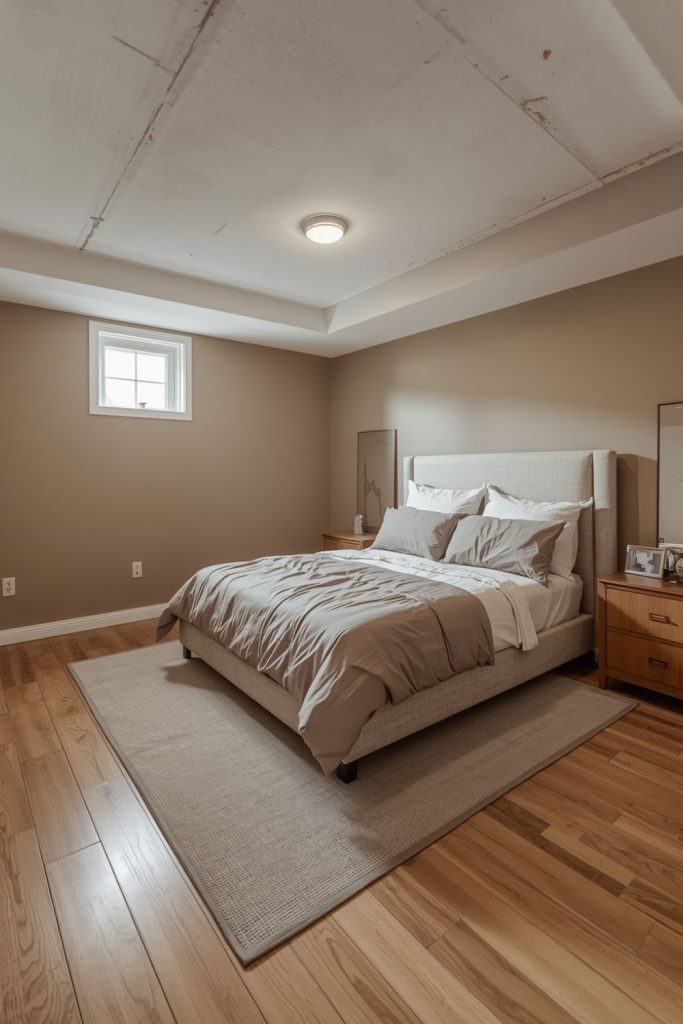
Brass or matte black wall sconces placed above nightstands give a basement guest bedroom steady side lighting without taking table space. These wall mounted lights free up the bedside tables for other items while still offering focused light for reading or evening rest. Symmetrical placement on both sides of the bed keeps the visual balance even and calm. Brass finishes add a mild warm tone, while matte black offers a more modern contrast against light walls. Both options work well in a basement setting since they do not rely on natural light. The direction of light can be adjusted to avoid glare, making it comfortable for eyes during night use. Wiring hidden inside walls keeps the space neat and uncluttered. This lighting setup also reduces the need for strong ceiling lights at night, allowing a softer atmosphere that supports rest without disturbing sleep cycles.
Layered bedding in neutral tones with textured cotton and linen mix
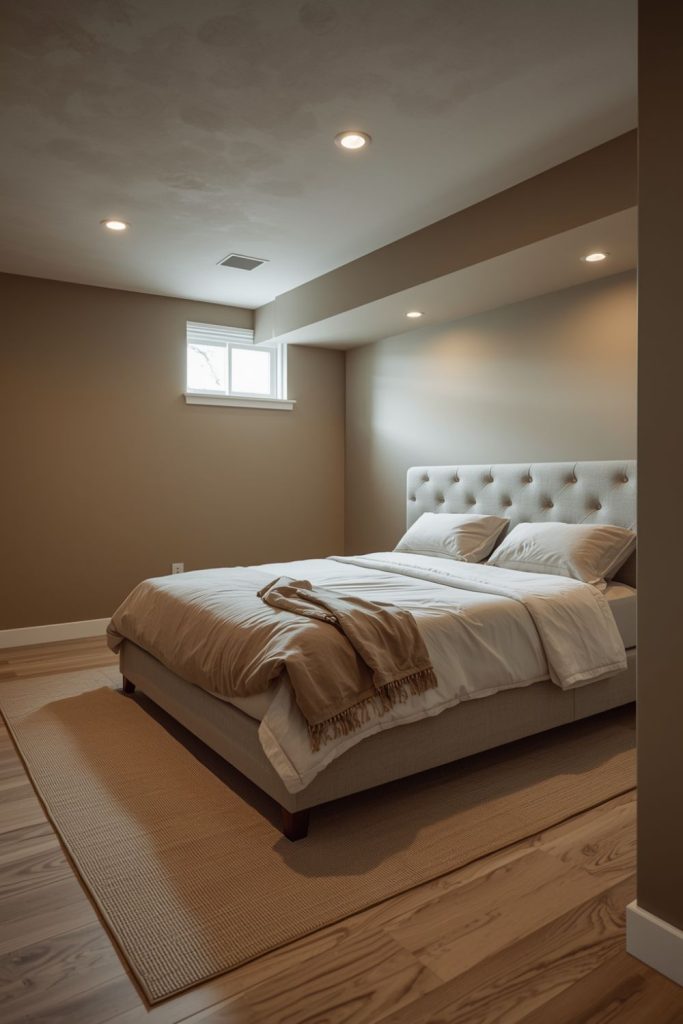
Layered bedding in neutral tones adds softness and depth to a basement guest bedroom without strong color contrast. Mixing cotton and linen fabrics gives both comfort and breathability, which helps during different seasons. A simple base sheet in light color can be topped with a slightly textured duvet cover, followed by a soft throw for extra warmth. Neutral shades like cream, sand, and light grey keep the bed area visually calm and easy to rest in. Layers also allow guests to adjust comfort level without needing extra items from storage. In a basement setting where air can feel still, breathable fabrics help maintain comfort during sleep. The bedding arrangement should look neat but not overly styled, giving a relaxed hotel like feel. Small imperfections in layering also add a natural touch that makes the room feel lived in rather than staged.
Large rectangular floor mirror leaning against the wall to reflect light
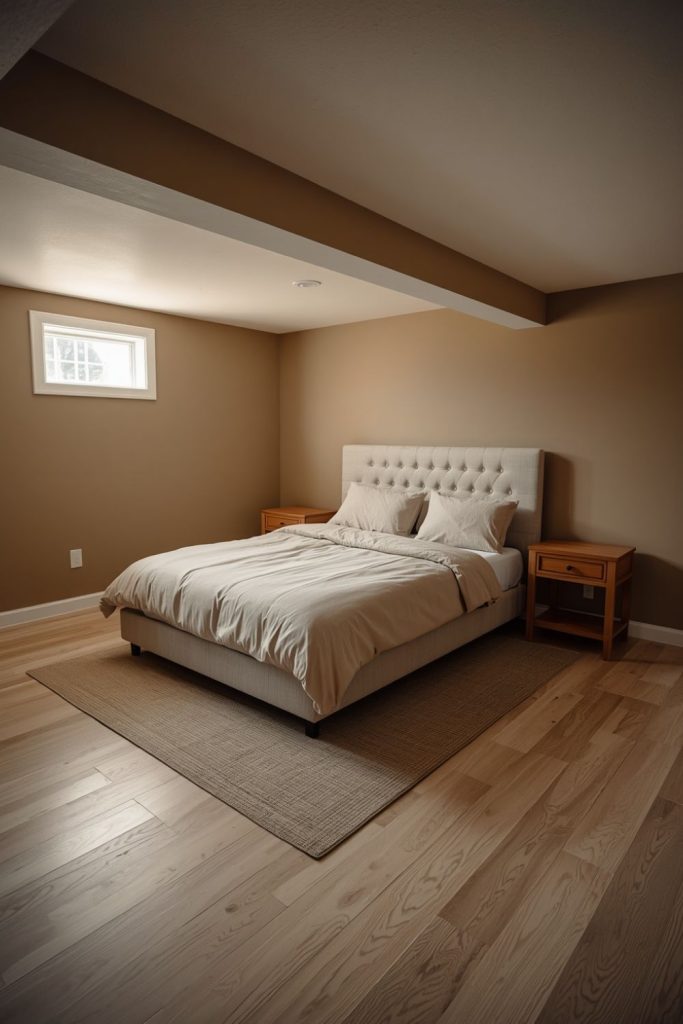
A large rectangular floor mirror placed against a wall helps a basement guest bedroom feel more open by reflecting both natural and artificial light. This simple addition can change how the room is perceived without any structural change. The mirror works best when placed opposite a light source or near a lamp so brightness spreads further into the room. It also adds depth, making smaller basement areas feel less confined. Leaning style mirrors avoid heavy wall installation and can be repositioned easily if needed. The frame should stay simple, often in wood or thin metal, so it does not distract from other design parts. Besides visual effect, the mirror also serves daily use for dressing. In a space where daylight may be limited, this type of mirror helps reduce shadowed corners and brings a more balanced feel to the basement guest bedroom environment.
Sheer white curtains paired with blackout curtains for flexible lighting control
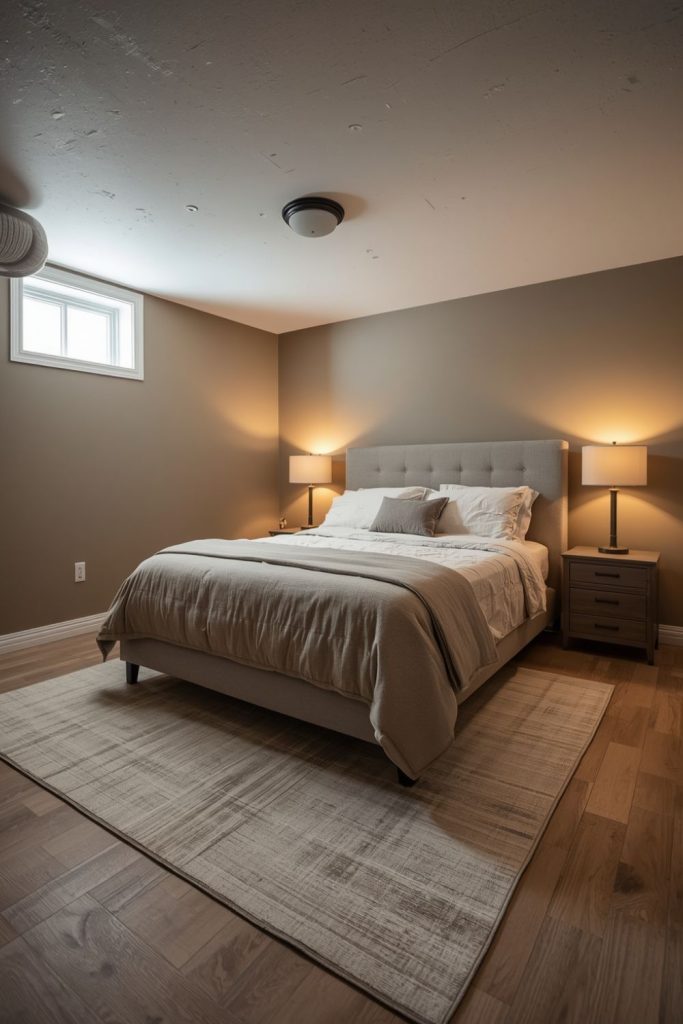
Sheer white curtains paired with blackout curtains give a basement guest bedroom flexible control over light levels throughout the day. Sheer fabric allows soft filtered light during daytime, keeping the room bright without harsh glare. Blackout curtains provide full darkness when rest is needed, which is helpful in lower level spaces where natural light can already be limited. The combination of both layers lets guests adjust the room according to mood or time of day. White sheer fabric keeps the space feeling light and airy, while blackout panels add privacy and insulation from outside temperature changes. Curtain rods should stay simple in design so attention remains on fabric flow. This setup also helps reduce outside noise slightly when closed. In a basement guest bedroom, this dual curtain system supports both comfort and privacy without requiring additional window changes or structural adjustments.
A compact armchair in a corner with a small round side table
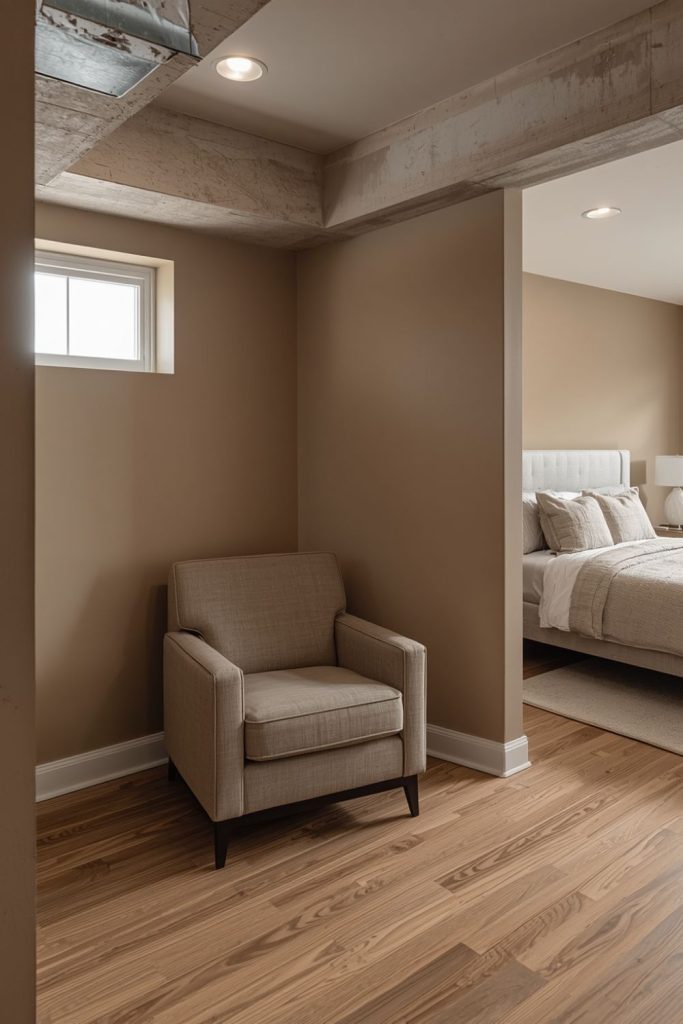
A compact armchair placed in a quiet corner of a basement guest bedroom creates a small resting spot away from the bed. This seating area allows guests to read, use a phone, or simply relax without lying down. Choosing a soft fabric chair with simple shape helps keep the space calm and not crowded. A small round side table beside it provides space for tea, books, or small personal items. This setup is useful for longer stays where guests may want different sitting options throughout the day. Positioning the chair near a light source such as a lamp or window improves comfort during evening use. In basement settings where floor space may feel limited, compact furniture like this helps maintain openness. The goal is to give a quiet personal corner that supports relaxed moments without needing to leave the room or move upstairs frequently.
Built in wardrobe with flat panel doors in soft white or beige
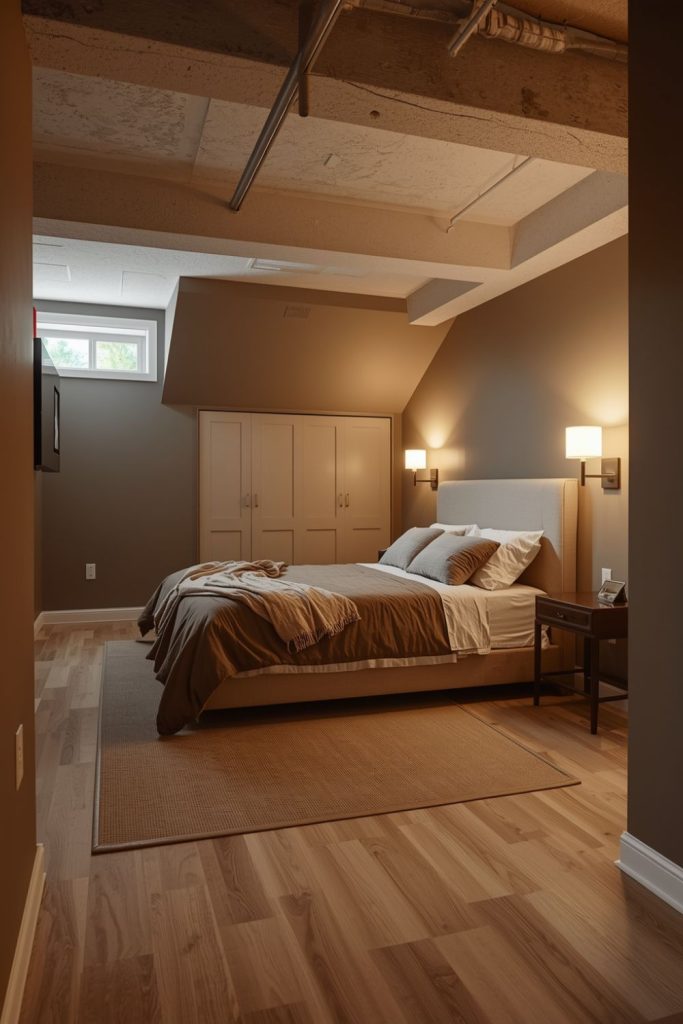
A built in wardrobe with flat panel doors in soft white or beige helps keep a basement guest bedroom organized without visual clutter. Built in storage uses wall space efficiently, which is helpful in lower level rooms where open floor area may be limited. Flat doors avoid strong patterns or heavy design, allowing the room to feel calm and steady. Inside, shelves and hanging space keep clothing and personal items in order during long stays. Soft colored doors blend into the wall, making the storage feel part of the structure rather than a separate object. This helps maintain a clean appearance across the room. Good internal lighting inside the wardrobe also makes use easier in low light conditions. For guests staying extended periods, having dedicated storage reduces the need for luggage on the floor, which keeps the basement guest bedroom more comfortable and easier to move around in daily.
Floating shelf above the bed for minimal decorative styling
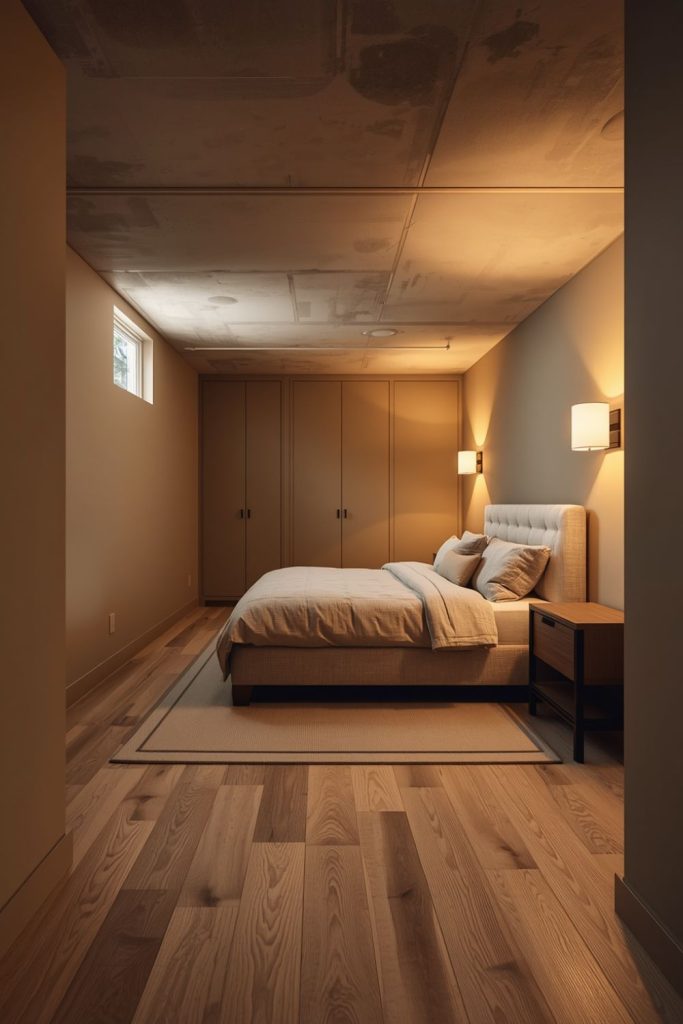
A floating shelf above the bed adds a light storage and display area in a basement guest bedroom without taking floor space. This type of shelf works best when kept simple, holding only a few items like a small lamp, a book, or a neutral decorative piece. It helps bring a small visual focus above the bed while keeping the rest of the room clean. Wood finish or white paint works well depending on wall color. The shelf should not feel heavy or overloaded, as basement rooms benefit from open and airy design. Placement should be at a safe height so it does not interfere with head space. This feature also helps balance wall space above the headboard, preventing it from looking empty. In daily use, it becomes a quiet spot for small personal items, supporting both function and soft visual interest in the room.
Neutral toned area rug with subtle geometric pattern
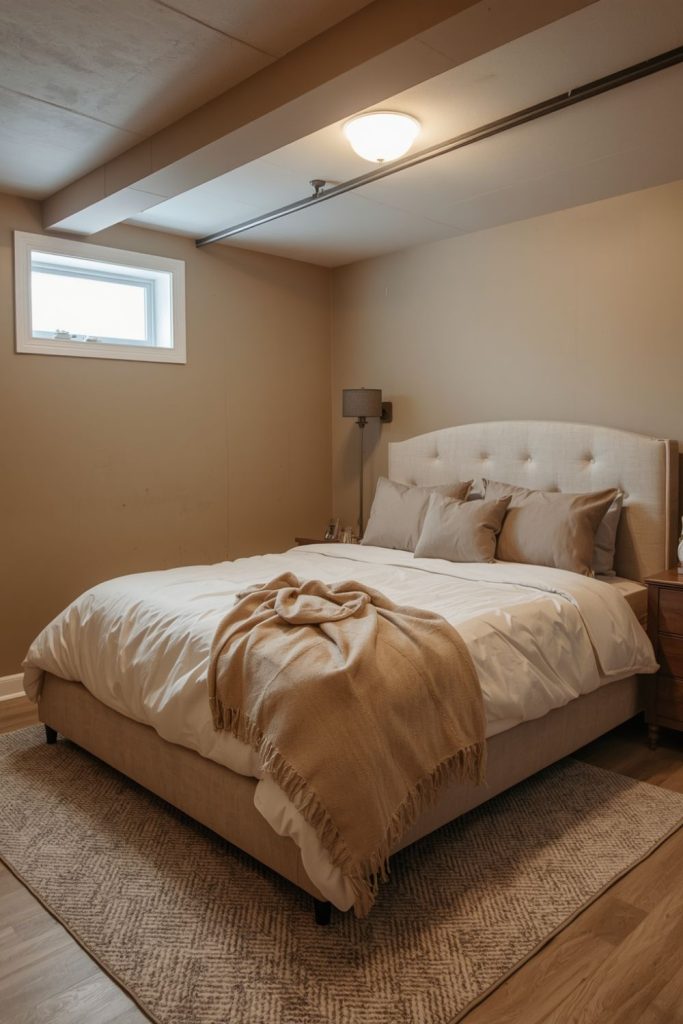
A neutral toned area rug with a subtle geometric pattern adds warmth underfoot in a basement guest bedroom while also reducing echo from hard surfaces. The rug helps define the sleeping area, especially when placed under the bed and extending outward on both sides. Soft patterns in light grey, beige, or sand colors keep the room calm without drawing too much attention. The texture of the rug adds comfort when stepping out of bed, which is helpful in lower level rooms where floors may feel cooler. It also helps tie together furniture pieces like bed, chairs, and tables into one visual area. Cleaning should remain simple, so low pile rugs often work better than thick shag styles. In a basement setting, this type of rug adds both comfort and subtle structure to the room, making the space feel more grounded and steady during long stays.
Ceiling mounted warm white LED recessed lights for even illumination
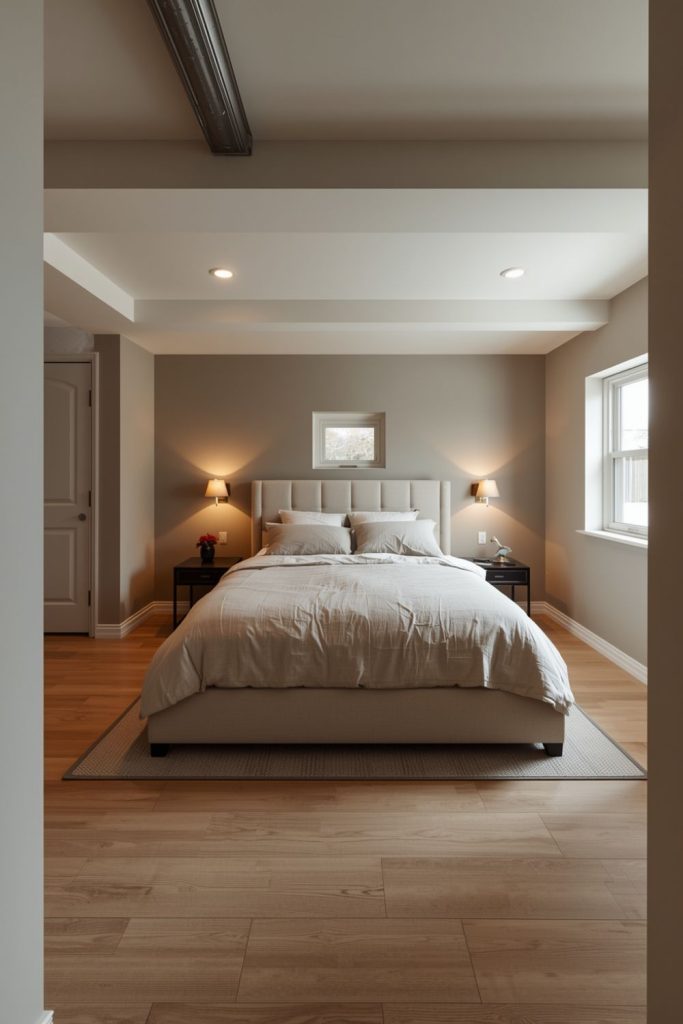
Ceiling mounted warm white LED recessed lights give a basement guest bedroom even brightness across the entire room. This type of lighting reduces dark corners and helps the space feel more open during evening hours. Warm white tone is preferred since it avoids a harsh or cold effect that can happen with cooler light shades. Recessed placement keeps the ceiling clean and free from hanging fixtures, which helps maintain a simple look. Spacing the lights evenly ensures that both sleeping and sitting areas receive balanced illumination. Dimming control can also be added so brightness can be adjusted depending on activity. In basement rooms where natural light is limited, this lighting setup becomes the main source of visibility, so consistency matters. When combined with bedside lamps or wall sconces, it creates a layered lighting effect that supports different moods throughout the day and night.
Slim console table near the entrance for keys and essentials
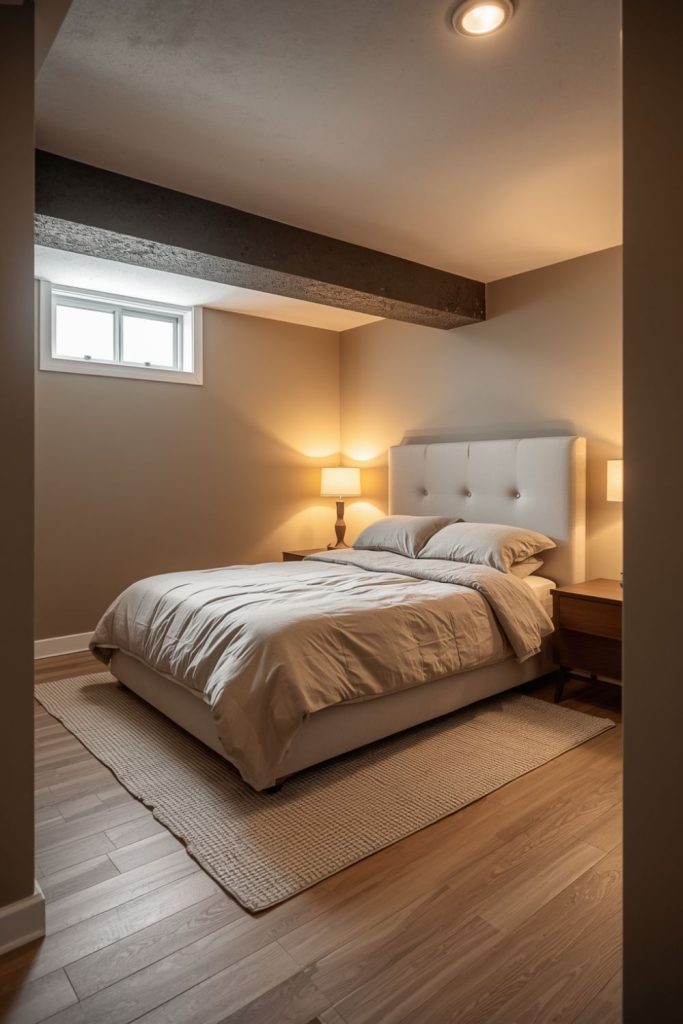
A slim console table placed near the entrance of a basement guest bedroom gives guests a small area to drop daily essentials like keys, phones, or glasses. Its narrow design allows it to fit against a wall without blocking movement, which is helpful in smaller basement layouts. Simple wooden or metal frames work best since they do not overpower the space. A clean surface keeps the room organized and avoids clutter near the entry point. Some people may place a small tray or bowl on top for loose items, which helps maintain order. This table also acts as a soft transition between entry and main sleeping area. In longer stays, having a dedicated spot for everyday items reduces confusion and supports routine. The design should remain simple and practical, fitting into the overall calm feeling of the basement guest bedroom without drawing too much attention.
Soft beige throw blanket folded neatly at the foot of the bed
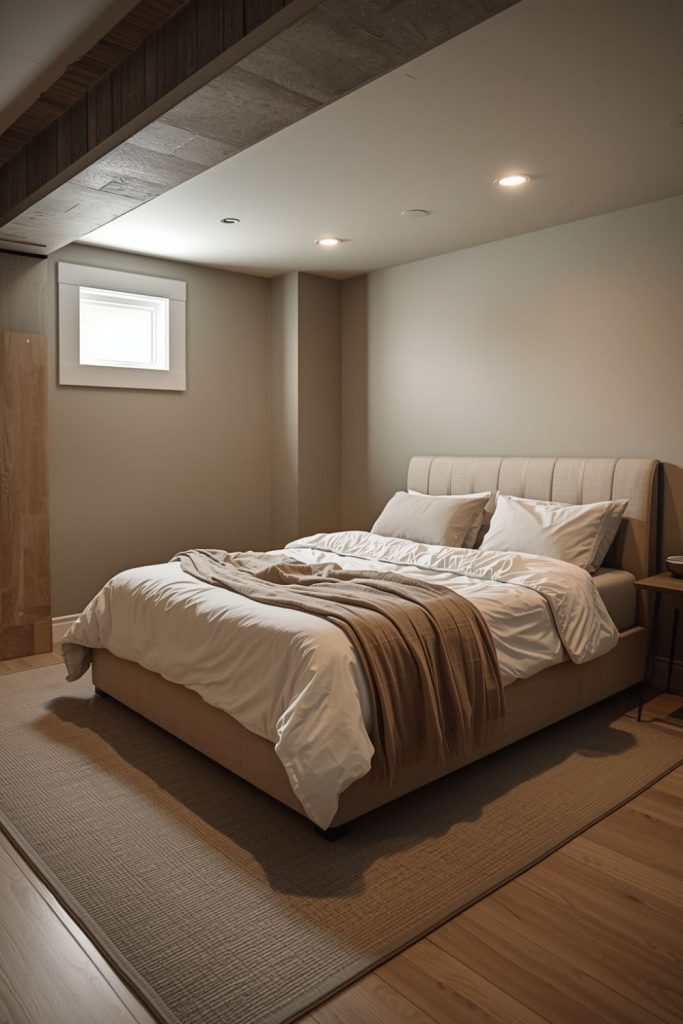
A soft beige throw blanket folded at the foot of the bed adds warmth and texture to a basement guest bedroom without needing strong color changes. This simple addition gives guests extra comfort during cooler nights while also improving the visual layering of the bed. Beige tone blends well with neutral bedding and does not interrupt the calm color scheme of the room. Folding it neatly keeps the bed area looking organized while still relaxed. The fabric should feel soft to touch, such as cotton blend or light wool depending on season. In basement spaces where temperature may shift slightly, having an extra blanket available adds comfort without needing extra heating. It also creates a welcoming feel when guests first enter the room. Small touches like this often make the space feel more lived in and cared for during extended family stays.
Ceramic table lamp with warm light on each nightstand
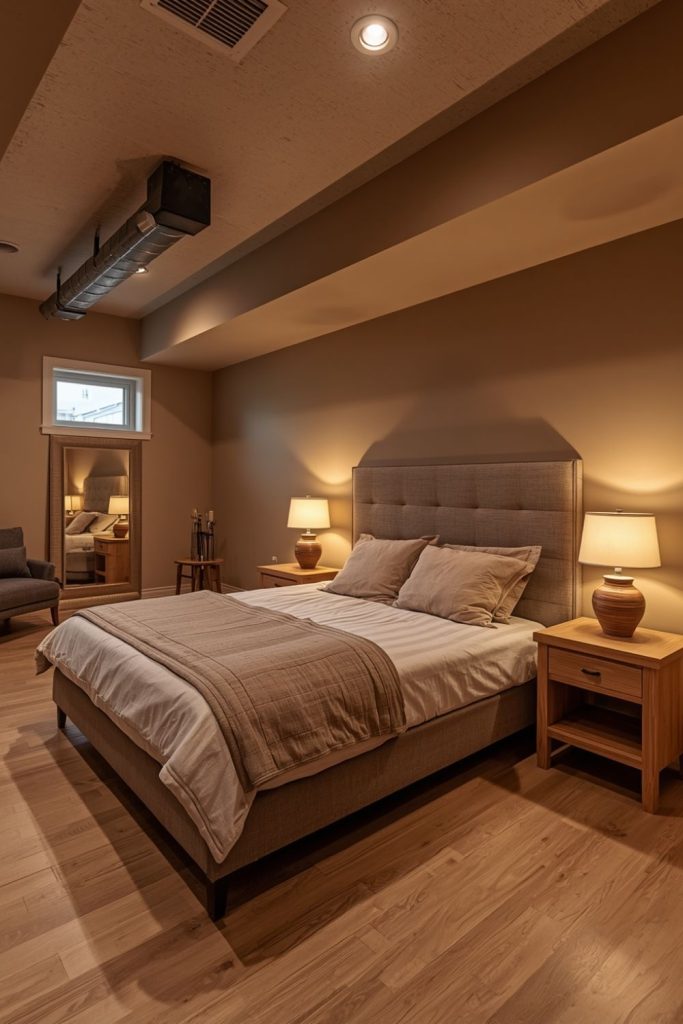
Ceramic table lamps with warm light placed on each nightstand bring soft side lighting to a basement guest bedroom. The ceramic base adds a calm, grounded look that fits well with neutral interiors. Warm light bulbs reduce harsh brightness and support a relaxed evening setting. Having lamps on both sides of the bed allows each person to control light without disturbing the other. This setup is helpful during reading or quiet night time routines. Lamp shades in light fabric help spread light gently across the room instead of focusing it in one direction. Cord management should stay hidden to keep bedside areas clean. In basement rooms where overhead lighting may feel strong at night, table lamps give a softer alternative. They also add a small decorative touch without making the space feel busy or crowded, supporting a steady and peaceful sleeping environment.
Sliding door in wood finish to separate the basement guest bedroom from main areas
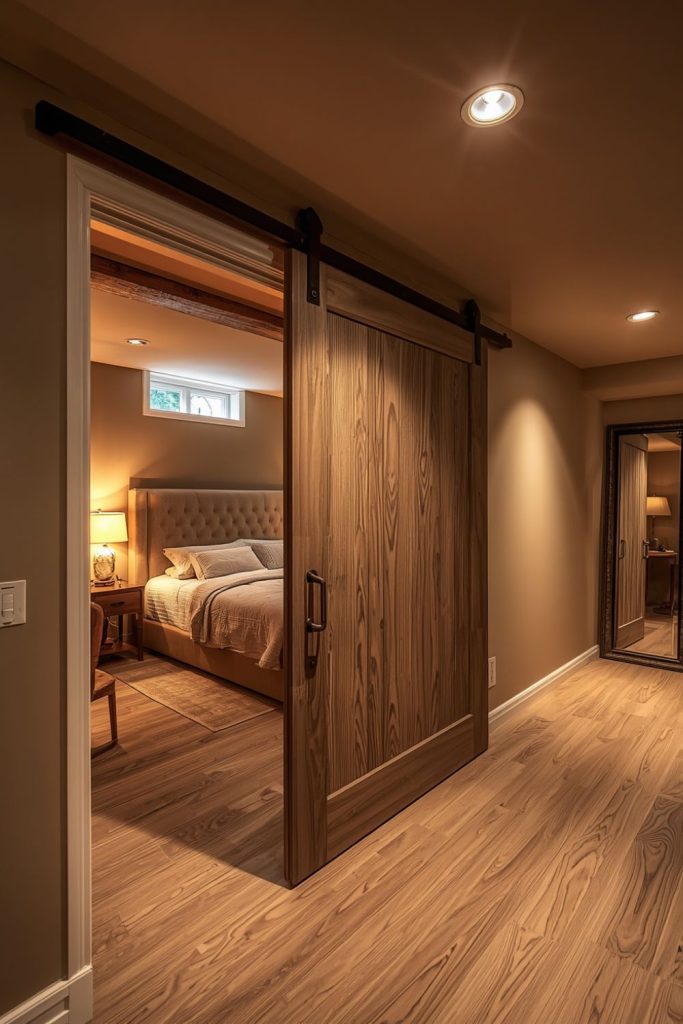
A sliding door in wood finish helps separate a basement guest bedroom from the rest of the house without taking extra space. Unlike swing doors, sliding panels move along a track and do not block hallways or furniture placement. Wood finish adds warmth and blends with natural tones inside the room. This separation gives guests a clearer sense of privacy while still keeping access simple. The door can remain partially open during the day for airflow and closed at night for quiet rest. Smooth sliding mechanism reduces noise, which is useful in shared living homes. This type of door also helps manage temperature differences between floors. In basement setups, where space efficiency matters, sliding doors provide a practical way to divide areas while keeping design clean and simple. It supports both privacy and easy movement within the home structure.
Compact wall mounted TV with concealed wiring
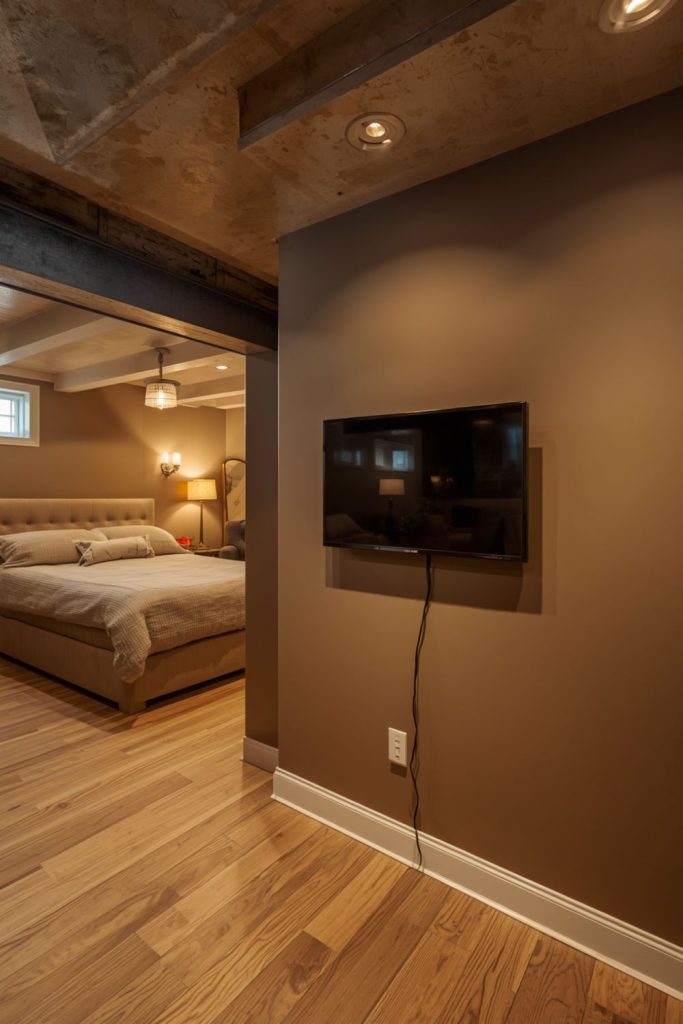
A compact wall mounted TV with concealed wiring keeps entertainment simple and clean in a basement guest bedroom. Mounting the screen on the wall saves floor space and avoids the need for bulky furniture. Hiding cables inside the wall or behind panels keeps the setup neat and free from visual clutter. The TV should be placed at a comfortable viewing height from the bed, allowing relaxed watching without strain. A small size is usually enough for a guest room, focusing more on comfort than large screen display. Remote control access keeps use simple for guests staying longer. In basement rooms where natural activities may be limited, having a TV adds a quiet activity option during evenings or rest periods. The setup should remain minimal so it does not dominate the room design, keeping attention on comfort and calm atmosphere instead.
Small coffee station setup with tray kettle and mugs on a side counter
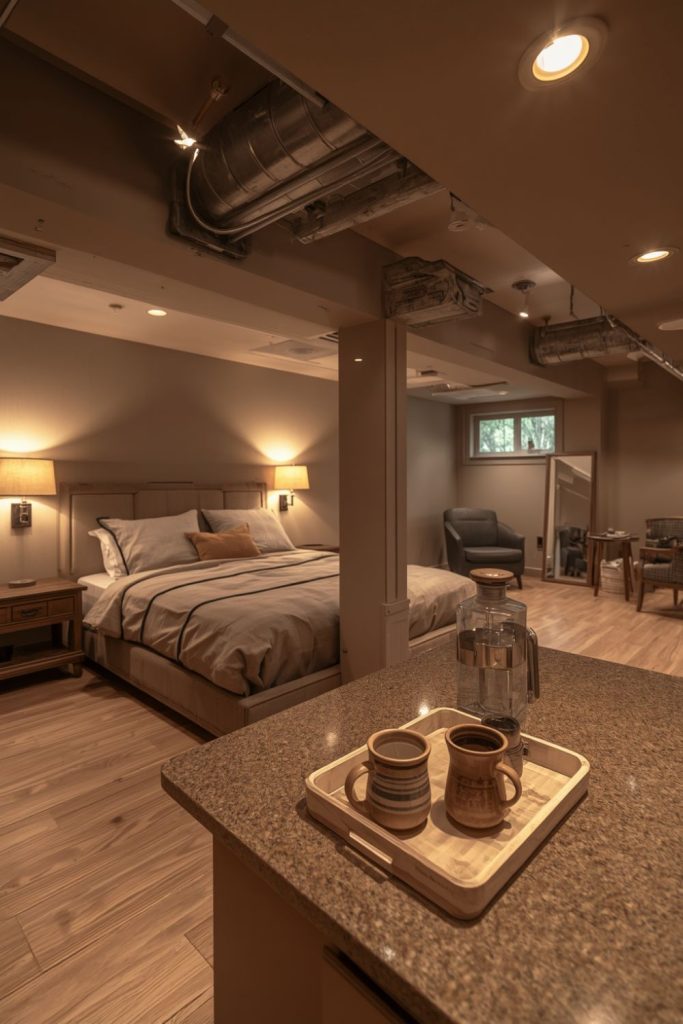
A small coffee station setup with tray, kettle, and mugs on a side counter adds daily comfort to a basement guest bedroom. This area allows guests to prepare drinks without going upstairs, which supports longer stays. A simple tray keeps items organized, while a compact kettle provides quick hot water access. A few mugs and basic supplies are enough to meet daily needs. Placement on a side counter or small cabinet keeps it separate from sleeping area, avoiding clutter near the bed. Clean design matters here, so surfaces should stay free from unnecessary items. This small station also adds a sense of independence for guests, especially parents or relatives staying for extended periods. It creates a small routine corner that feels familiar and easy to use. In basement settings, this feature helps reduce dependence on the main kitchen area.
Minimal indoor plant in a ceramic pot with textured accent wall using wood slat panels in light oak
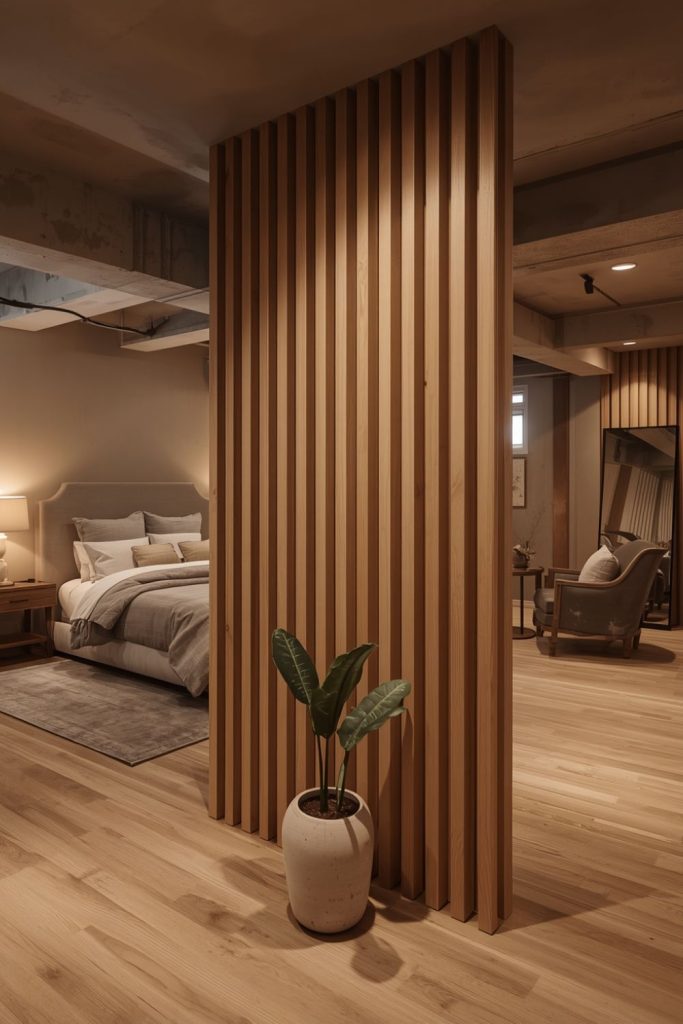
A minimal indoor plant placed in a ceramic pot alongside a textured accent wall using light oak wood slat panels brings a gentle natural feel to a basement guest bedroom. The plant adds a touch of freshness and soft color without overpowering the calm palette of the room. Ceramic pot keeps the look simple and steady. Behind it, a wood slat accent wall adds vertical texture that breaks up flat surfaces and gives depth to the sleeping area. Light oak tone matches flooring and other wooden furniture, creating a sense of flow across the room. This combination works best behind the bed, where it can act as a quiet backdrop without distraction. Maintenance stays simple, especially with low care indoor plants. Together, these two parts bring subtle variation into the space while keeping the overall mood calm and steady for long stays.
Textured accent wall behind the bed using wood slat panels in light oak
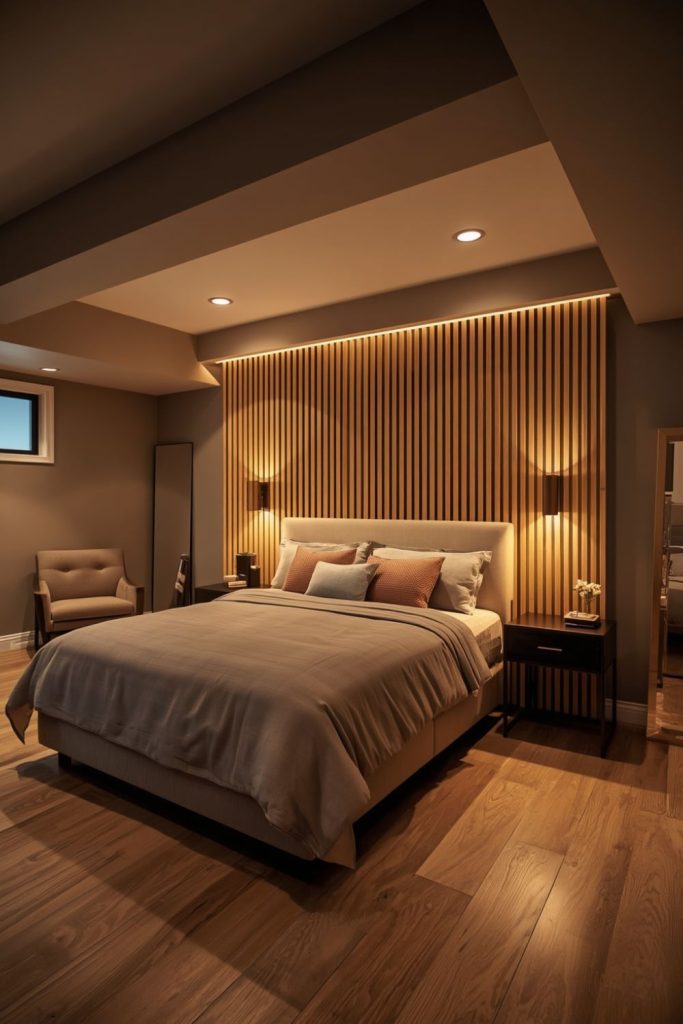
A textured accent wall behind the bed using light oak wood slat panels brings structure and calm visual rhythm to a basement guest bedroom. The vertical lines naturally draw the eye upward, which helps reduce the low ceiling feeling often found in basement spaces. Light oak tone keeps the surface bright without feeling heavy, and it pairs smoothly with neutral wall colors like warm greige. This type of wall treatment works best as a backdrop for the headboard, giving the bed area a clear identity without needing strong decoration. The slight depth between slats adds subtle shadow play when light from lamps or sconces hits it, which makes the space feel more layered without becoming busy. It also blends well with other wooden furniture pieces in the room, creating a quiet sense of consistency. In long stay settings, this feature supports a steady, restful atmosphere that feels grounded and visually balanced.