Creating a modern, curated living room often comes down to the details. One of the simplest yet most impactful ways to add character is through an accent wall in living room spaces. Accent walls offer the chance to introduce color, texture, and personality without overwhelming the entire room. They can define zones in open-concept layouts, highlight architectural features like vaulted ceilings or fireplaces, and act as a backdrop for furniture, art, or shelves.
But choosing the right accent wall isn’t just about picking a color. It involves understanding how lighting, room dimensions, furniture placement, and design style interact to create harmony. A well-chosen accent wall in living room spaces can make small rooms feel bigger, create drama in larger areas, and offer a curated vibe that reflects your personal style. Whether you’re considering paint, wood panels, stone, or creative wallpaper, each choice can significantly influence the mood and perception of the room. This guide explores practical steps, color psychology, material selection, and common mistakes to help you confidently select the perfect accent wall that balances modern aesthetics with functional living.
What factors—such as lighting, room layout, and architectural features—should you evaluate before selecting an accent wall in a living room?
Before selecting an accent wall in living room layouts, it’s important to evaluate multiple factors that affect how the wall will be perceived. Natural lighting is a critical consideration because sunlight can drastically change the appearance of paint colors, wood tones, and textures throughout the day.
Rooms with large windows may handle darker or bolder colors better, while dimmer spaces often benefit from lighter tones that create openness. Room layout and furniture arrangement also influence which wall should become the focal point. For example, the wall behind a sofa or a fireplace naturally draws attention, while a long, uninterrupted wall can provide a canvas for bold patterns or textures.
Architectural features such as vaulted ceilings, alcoves, or built-in shelving can dictate whether an accent wall should incorporate color, paneling, or materials like stone or wood. Evaluating sight lines from various areas of the living space is also essential; an accent wall should enhance the flow rather than create visual clutter.
Additionally, the room’s overall function and how people move through it can guide placement choices. By analyzing lighting, layout, and architecture first, you set a foundation that ensures the accent wall complements the living room’s natural strengths rather than competing with them.
- Related post How to Create a Timeless Western Living Room Ranch Style Using Wood, Leather, and Natural Textures
How do color psychology and design style influence the best color or material choice for an accent wall in a living room?
Color and style play a significant role in selecting an accent wall in living room layouts. Color psychology affects mood and perception, making certain hues better suited for specific living room atmospheres.
Blues and teals evoke calmness and relaxation, perfect for cozy seating areas, while yellows and burnt oranges can add energy and warmth, enhancing social spaces near dining areas. Neutral shades like gray or white help maintain a minimalist, modern aesthetic, allowing furniture and décor to stand out.
Design style also influences material choices; a farmhouse-inspired living room may call for wood paneling or stone textures, while modern interiors might favor sleek paint finishes or textured wallpaper. Understanding the interplay between your living room’s existing colors, furniture, and lighting ensures your accent wall integrates smoothly. For instance, pairing olive or navy walls with lighter sofas or wood tones can create a curated contrast. Additionally, accent walls should reflect personal style while remaining harmonious with overall room design, avoiding clashes that disrupt flow. Thoughtful color and style decisions ensure the wall becomes a visually compelling feature without overwhelming the living space.
What types of textures, patterns, or materials (paint, wood, wallpaper, stone, etc.) work best for creating a modern, curated accent wall in a living room?
Selecting textures, patterns, or materials for an accent wall in living room layouts is critical to achieving a modern, curated look. Smooth painted walls are versatile, providing a clean backdrop for furniture or artwork, while wood panels add warmth, natural texture, and a sense of structure.
Stone walls bring dimension and create a dramatic focal point, particularly behind fireplaces or media units. Wallpaper allows for creative patterns, geometric shapes, or subtle textures that draw attention without dominating the room. For modern living rooms, a combination of these materials can be effective, such as a wood panel wall with floating shelves or a stone accent paired with soft lighting to highlight texture.
Even partial walls or half-walls using different textures can define spaces in open-concept layouts. The key is to ensure balance: materials should complement furniture, flooring, and ceiling treatments, creating a cohesive feel. Mixing textures in moderation and considering how they interact with light ensures your accent wall feels curated rather than cluttered.
How should furniture placement, décor, and lighting be coordinated to enhance and support the chosen accent wall in a living room?
Furniture placement, décor, and lighting are essential in enhancing an accent wall in living room layouts. Positioning a sofa or chairs against or facing the accent wall can emphasize it as a focal point, while floating furniture in open spaces allows viewers to appreciate the wall from multiple angles.
Lighting plays a significant role in highlighting textures and colors; wall-mounted sconces, recessed lights, or uplighting can make wood, stone, or paint finishes pop. Décor such as artwork, shelves, or mirrors should complement the wall’s material and color without overwhelming it. For instance, floating shelves on a navy or gray wall can create functional visual interest, while a fireplace surrounded by stone benefits from minimalistic décor that doesn’t compete.
Coordinating furniture and décor ensures balance, guiding the eye naturally to the accent wall while supporting the room’s overall flow. Proper alignment and layering of elements create a living space that feels harmonious and thoughtfully curated.
What common mistakes should homeowners avoid when designing an accent wall in a living room, and what expert tips ensure a cohesive, stylish result?
Many homeowners make mistakes when creating an accent wall in living room layouts, such as choosing overly dark colors for small spaces, placing the wall in a non-focal location, or overloading it with décor.
Another frequent error is ignoring lighting, which can make bold colors appear flat or mismatched. Expert tips for cohesion include testing paint samples on different walls at various times of day, coordinating accent wall materials with existing furniture and flooring, and using complementary colors instead of stark contrasts.
Avoid clutter by limiting shelves or artwork to maintain focus. For open-concept rooms, consider how the accent wall interacts with adjacent spaces, using consistent tones or textures to create a seamless transition.
Small adjustments, like adding proper lighting or selecting scaled décor, ensure the accent wall enhances rather than dominates the living room, resulting in a modern, curated look.
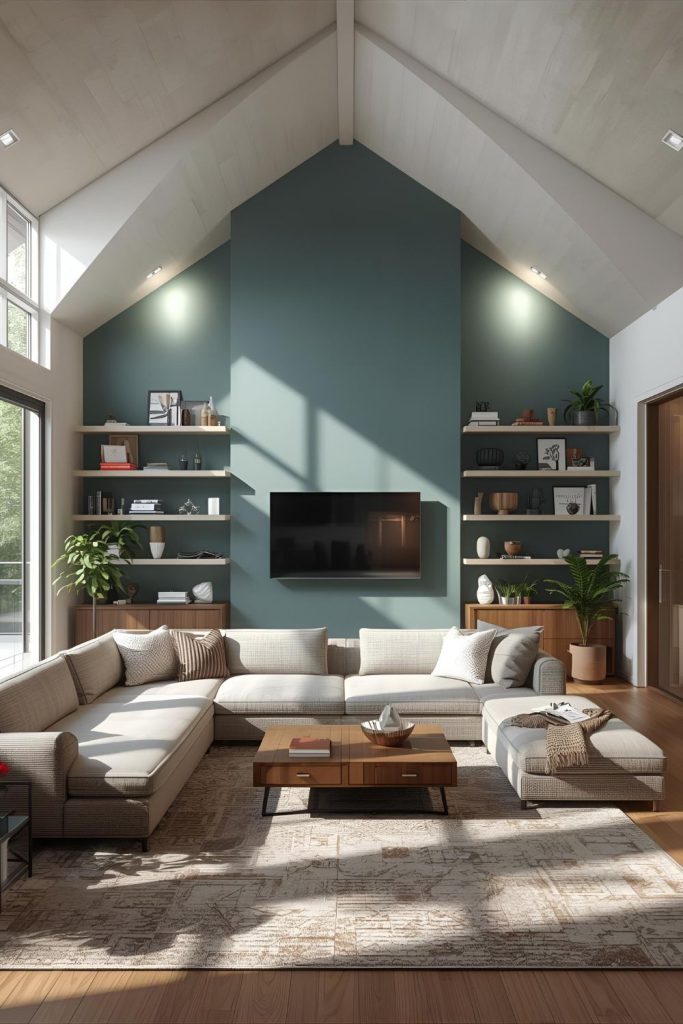
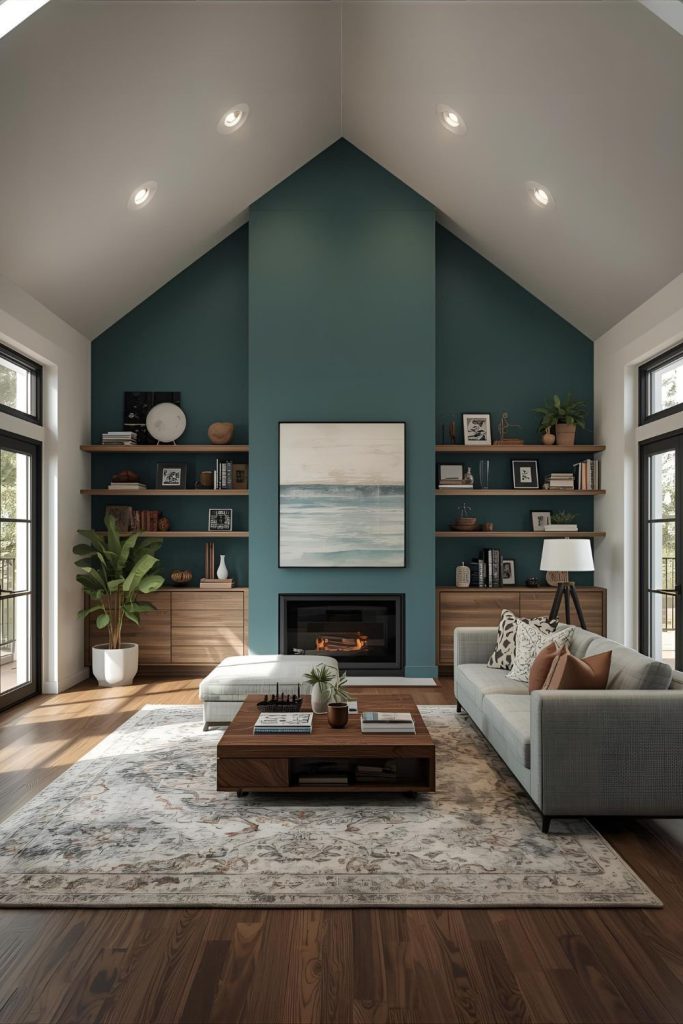
Teal Accent Wall Ideas for a Vaulted Living Room Ceiling With Open Shelving
A teal accent wall can bring depth and character to living rooms with vaulted ceilings. Pairing the wall with open shelving allows for decorative displays while maintaining an airy feel. The color contrasts beautifully with neutral furniture, wood accents, or white trim, creating a modern yet inviting atmosphere. Vaulted ceilings provide extra visual height, making the teal wall appear expansive without feeling overpowering. Using soft lighting, such as wall sconces or spotlights on shelves, enhances textures and emphasizes décor pieces. This combination works especially well in open layouts, where the teal wall anchors the space and draws attention to key architectural features.
- Related post 30 Small Living Room Decor Ideas for Big Impact
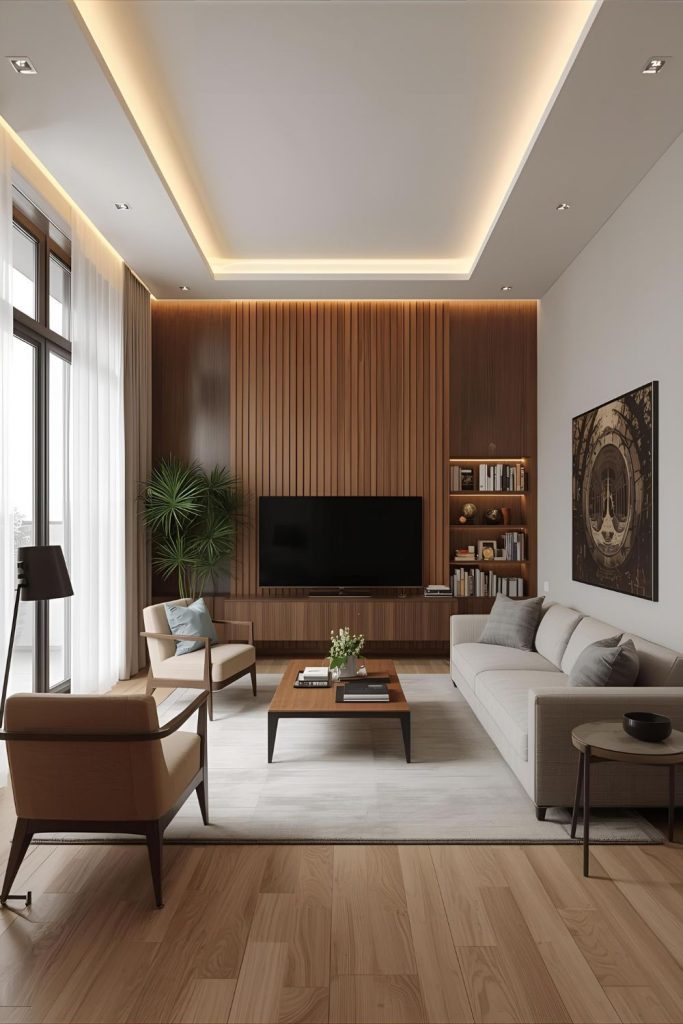
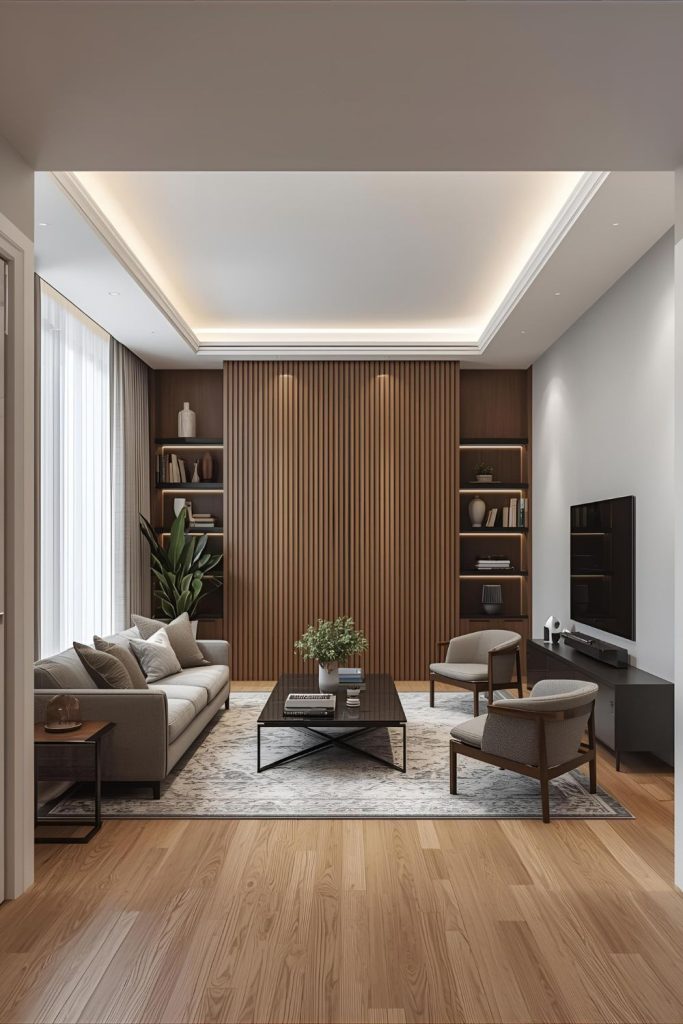
Half-Wall Wood Panel Concepts to Define a Narrow Living Room Layout
In narrow living rooms, half-wall wood paneling adds warmth and visual interest without overwhelming the space. Using horizontal panels can make the room feel wider, while vertical panels emphasize height. This approach provides a subtle yet effective accent wall in living rooms, creating separation between seating areas or adjacent spaces. Light wood tones paired with neutral furniture help maintain brightness, and the paneling can serve as a backdrop for art, lighting, or floating shelves. The half-wall concept balances practicality and style, giving narrow rooms a curated and inviting feel.
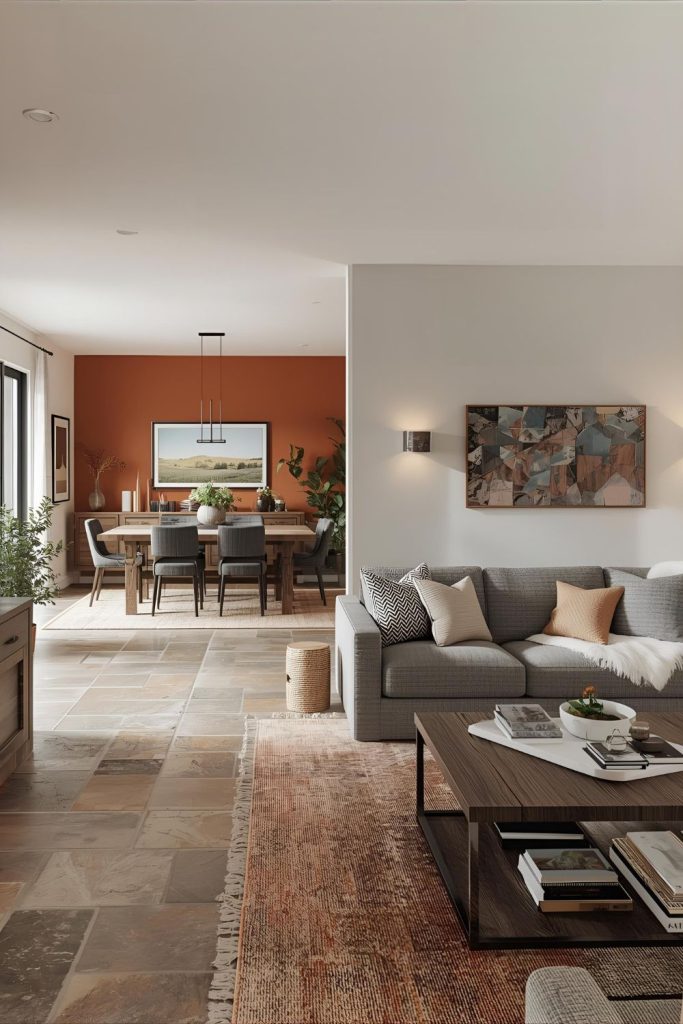
DIY Burnt Orange Wall Behind the Dining Table for a Modern Farmhouse Look
A burnt orange wall behind a dining area adds warmth and energy, perfect for modern farmhouse interiors. DIY techniques such as painting with textured rollers or layering shades can create depth. This accent wall complements wooden furniture, stone flooring, and rustic lighting. It transforms the dining area into a focal point while maintaining cohesion with the living space, especially when paired with neutral walls and muted décor. Burnt orange works well with olive, navy, or grey accents, balancing vibrancy with a curated, lived-in aesthetic.
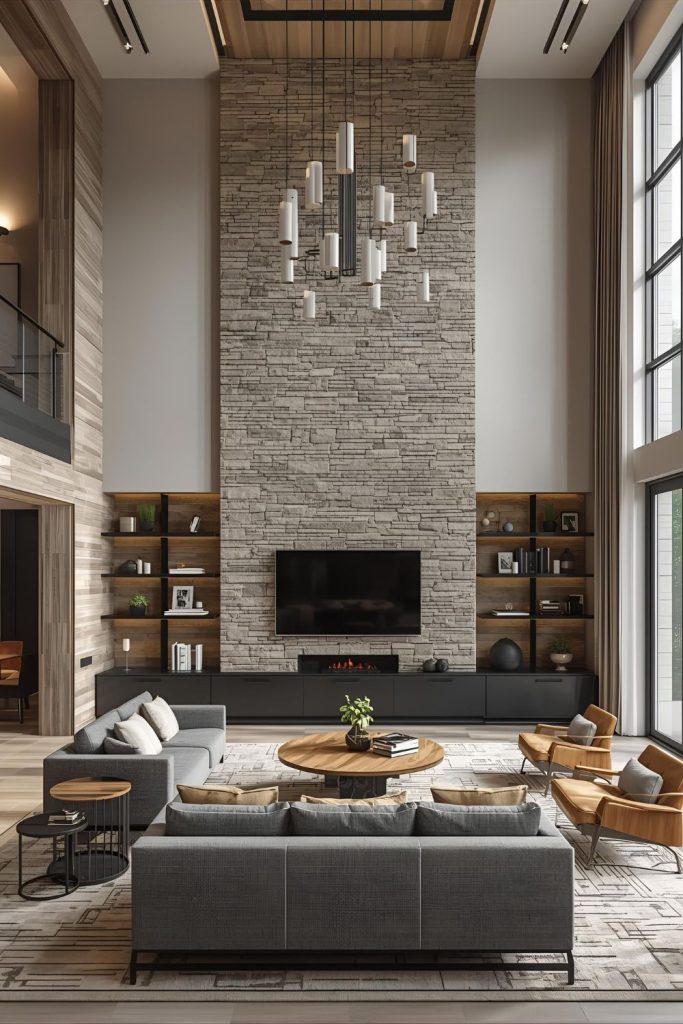
Stone Wall Using Black Shelves in a High Living Room for Texture and Depth
Stone accent walls in high-ceilinged living rooms introduce natural texture and dimension. Adding black shelves provides contrast and functionality, allowing decorative or personal items to stand out. This combination enhances modern, curated aesthetics by blending organic and sleek elements. Proper lighting, such as recessed ceiling lights or adjustable sconces, accentuates stone textures, highlighting depth and creating dynamic visual interest. The wall becomes a dramatic centerpiece without overwhelming the rest of the living room décor.
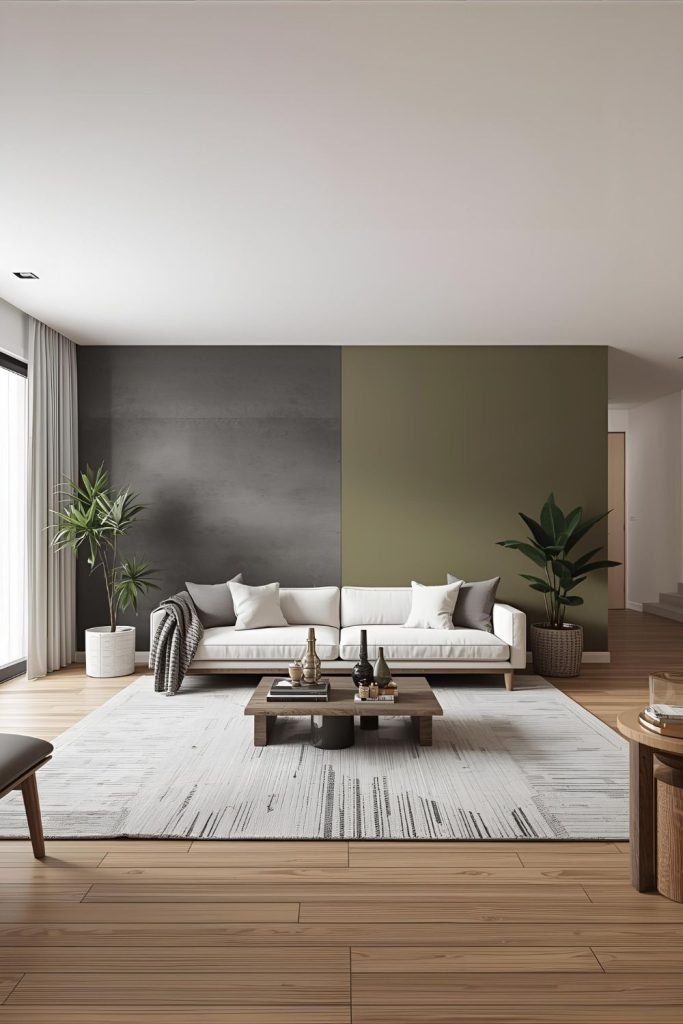
Grey and Olive Color Ideas to Pair With a White Sofa in an Open Living Space
Grey and olive accent walls create a balanced, modern look in open living rooms. Pairing these colors with a white sofa ensures the space feels fresh and airy while maintaining visual interest. Olive adds a touch of warmth and earthiness, while grey offers neutrality and sophistication. Accessories like cushions, rugs, and art pieces can complement this palette, and proper lighting ensures colors appear vibrant and cohesive throughout the day. This approach works well in open layouts, connecting living, dining, and kitchen areas seamlessly.
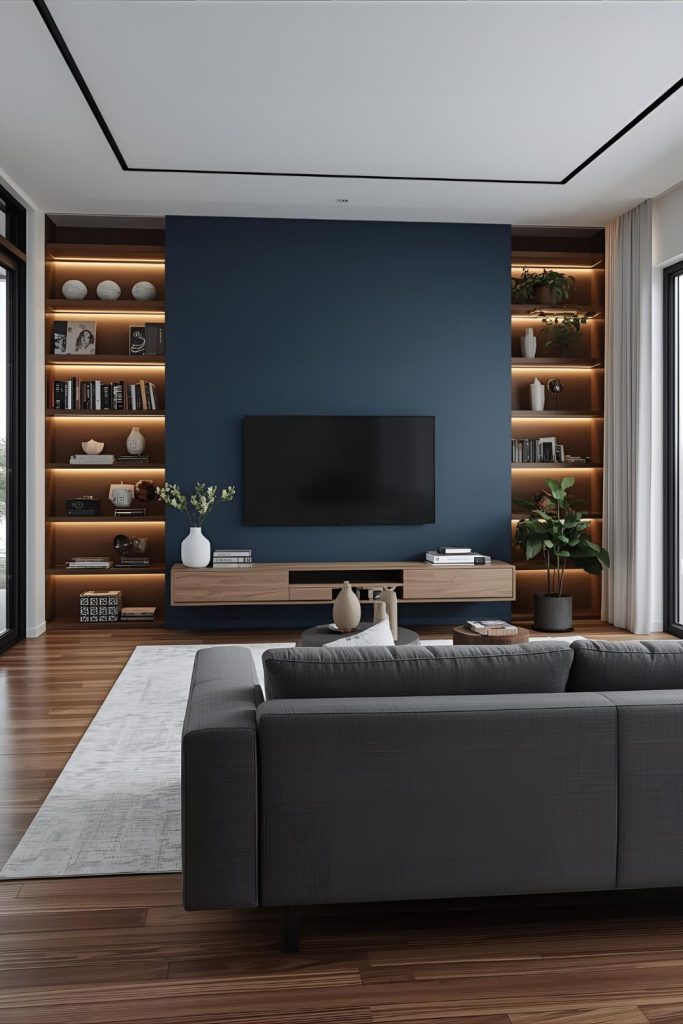
Navy Accent Wall Design With Floating TV Mount for a Sleek Home Setup
Navy accent walls behind a TV create a sleek, modern focal point. Floating mounts enhance minimalism, and the deep color reduces glare while framing electronics elegantly. Lighter furniture, wood accents, or metallic décor balances the richness of navy, creating a curated appearance. Layered lighting, such as floor lamps or sconces, adds dimension and ensures the wall feels inviting instead of heavy. Navy works particularly well in contemporary living rooms seeking a sophisticated yet comfortable vibe.
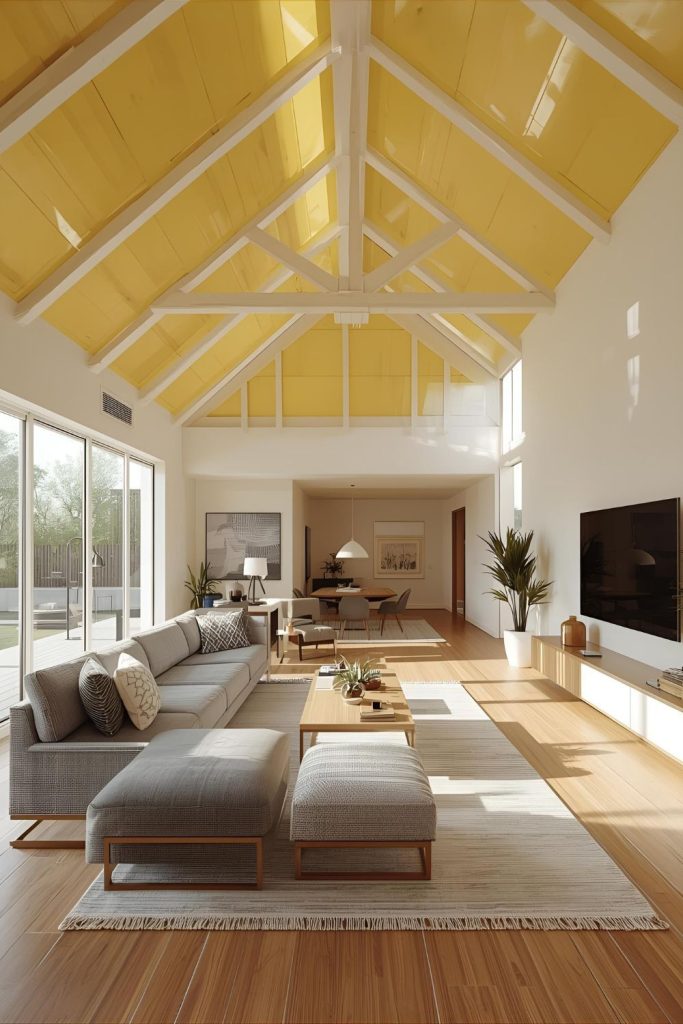
Yellow Panel Feature in a Long Living Room With Vaulted Ceilings
Yellow panels can energize a long living room, making it feel warm and cheerful. Vaulted ceilings emphasize openness, and strategic lighting enhances the wall’s vibrancy. Pairing with neutral furniture or wood accents creates balance, preventing the space from feeling overly bright. Yellow works well as a focal point behind seating areas, dining spaces, or architectural elements, providing contrast and visual interest while supporting modern, curated interior design.
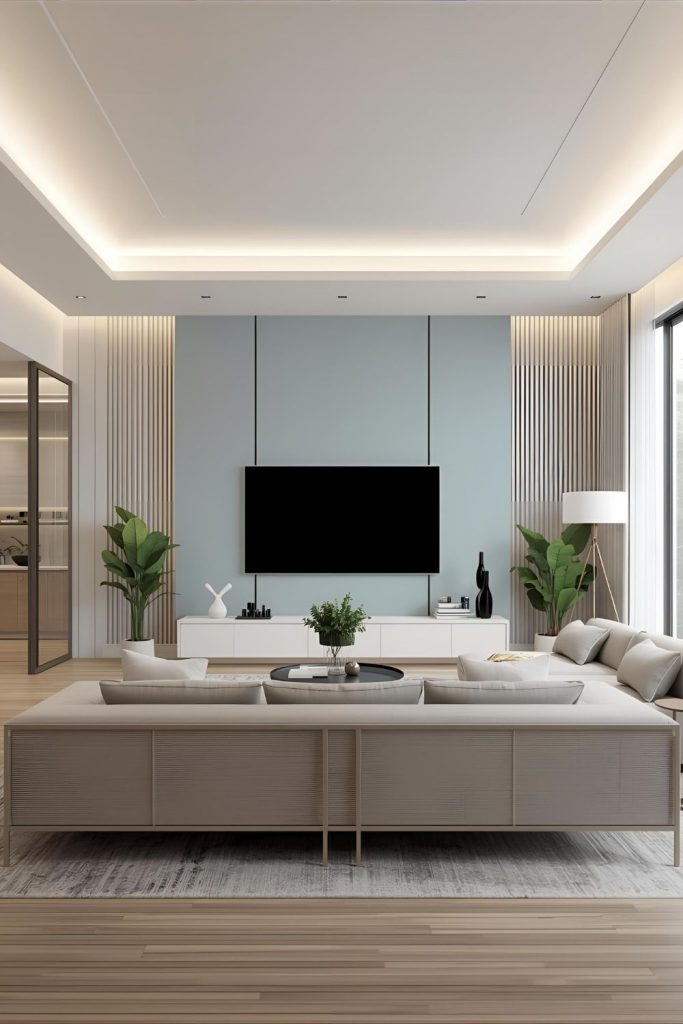
Light Blue Wall Behind a Modern Couch for a Calm and Airy Room Concept
Light blue walls behind sofas bring calmness to living rooms while enhancing a sense of space. This soft tone works beautifully with neutral furniture and wood accents, creating a relaxing, airy atmosphere. Layered lighting and subtle décor can elevate the curated feel. It’s ideal for contemporary or minimalist interiors that prioritize openness and serenity, while the color enhances natural light, making the living room appear larger and more inviting.
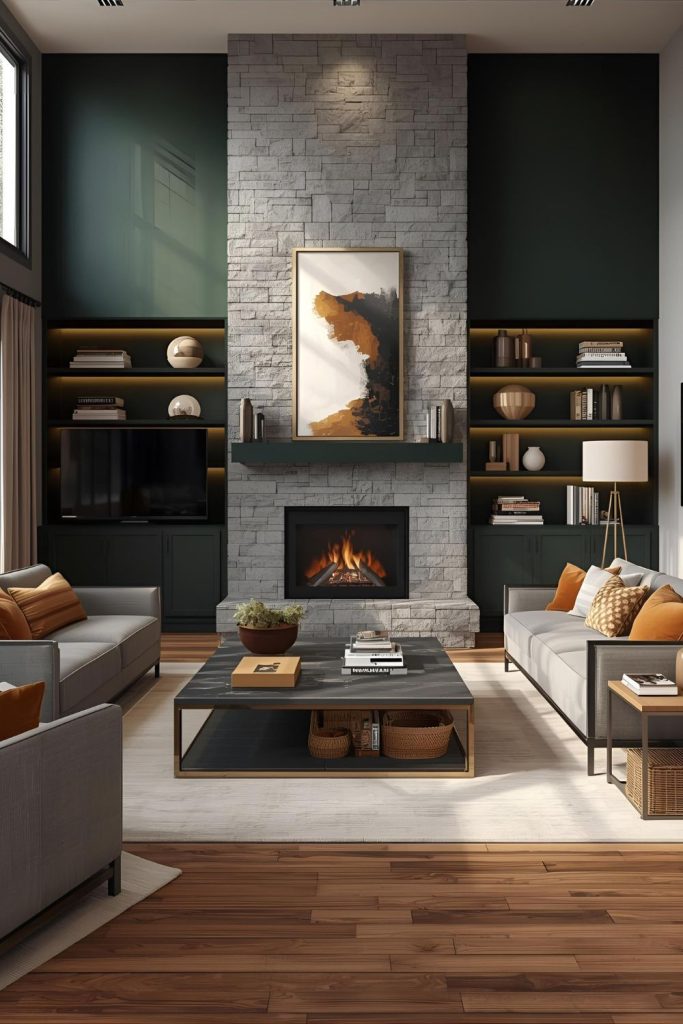
Dark Green Wall Using Built-In Shelves to Frame a Fireplace in the Living Room
Dark green accent walls provide a rich backdrop for fireplaces, especially when paired with built-in shelves. This combination adds depth, texture, and functionality, offering space for décor, books, or personal items. The green hue complements wood, stone, and neutral tones, creating a modern, curated aesthetic. Lighting accentuates shelves and fireplace features, while furniture placement ensures the wall remains a cohesive focal point in the living area.
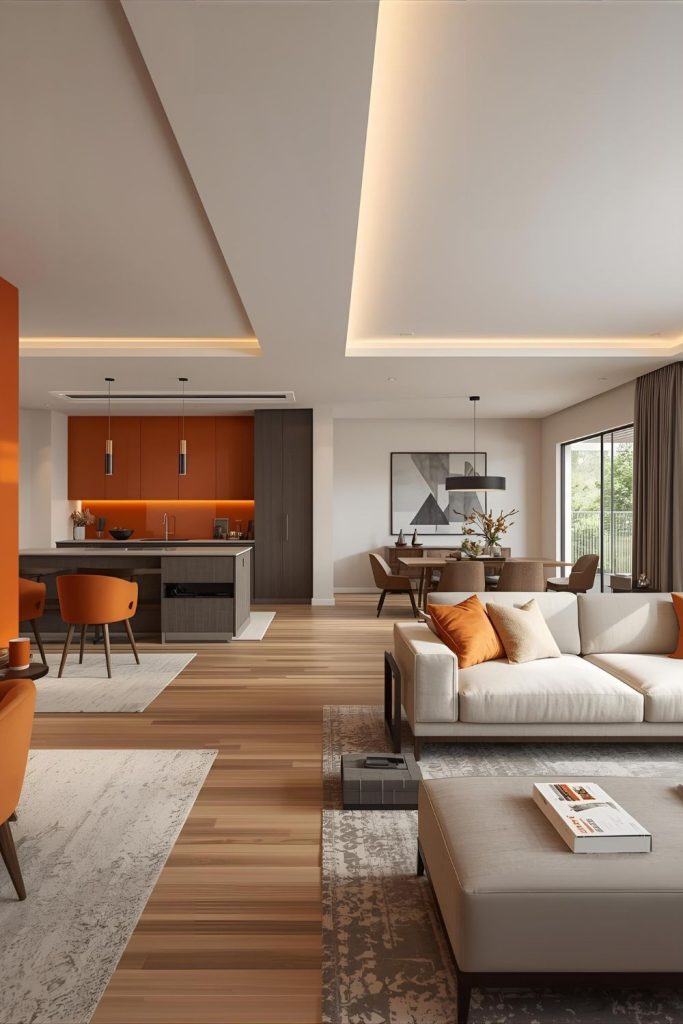
Orange Wall Decor Ideas for a Contemporary Kitchen-Connected Living Space
Orange accent walls inject energy into living rooms adjacent to kitchens. The color fosters warmth and social interaction, enhancing open-concept layouts. Pairing orange with neutral cabinetry, stone countertops, or wood furniture maintains balance. Accessories such as rugs, cushions, or wall art can tie the colors together, creating a cohesive and lively environment that feels modern and curated.
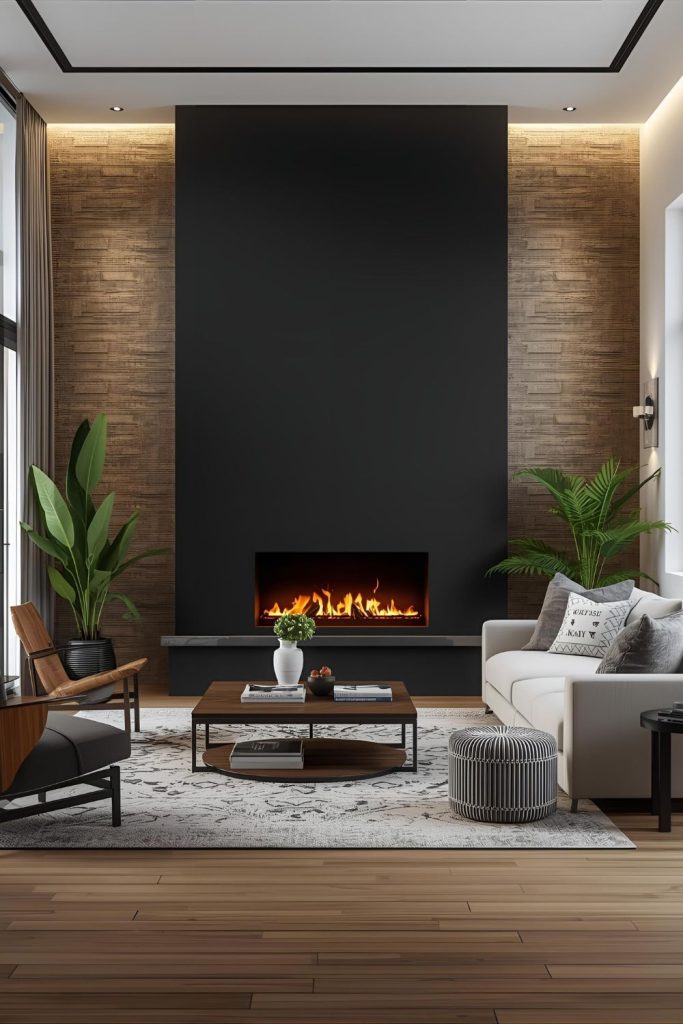
Black Painted Wall Behind a Stone Fireplace to Highlight Home Lighting Features
A black accent wall behind stone fireplaces adds drama while emphasizing texture and architectural features. Light fixtures, candles, or accent lighting can highlight details, creating contrast and sophistication. Furniture placement should balance darkness with lighter elements, ensuring the wall serves as a bold but harmonious focal point in the living room.
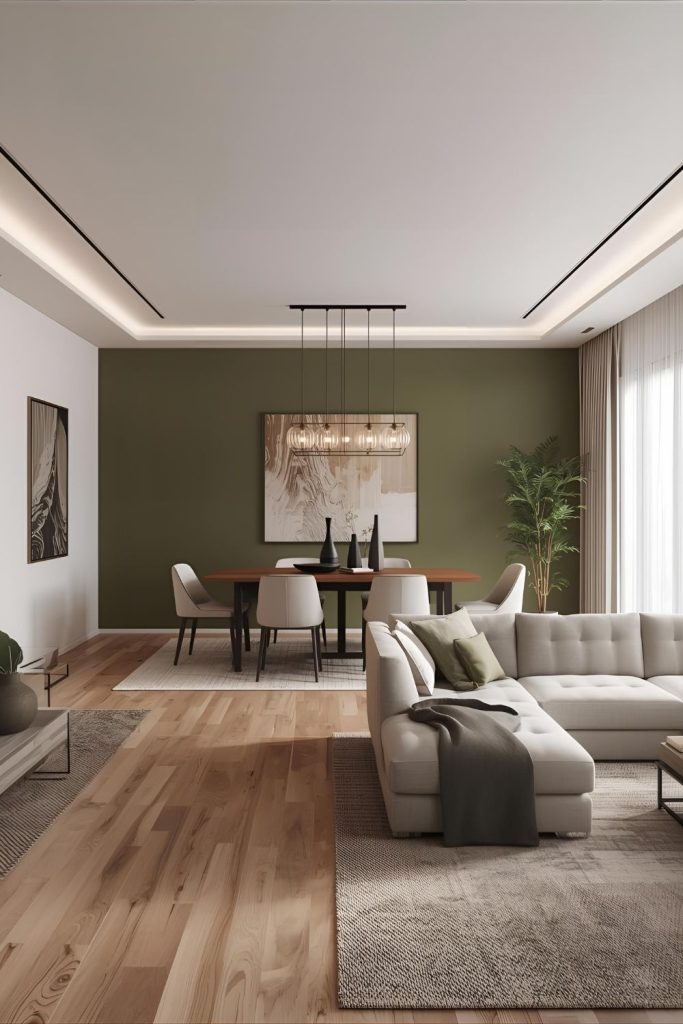
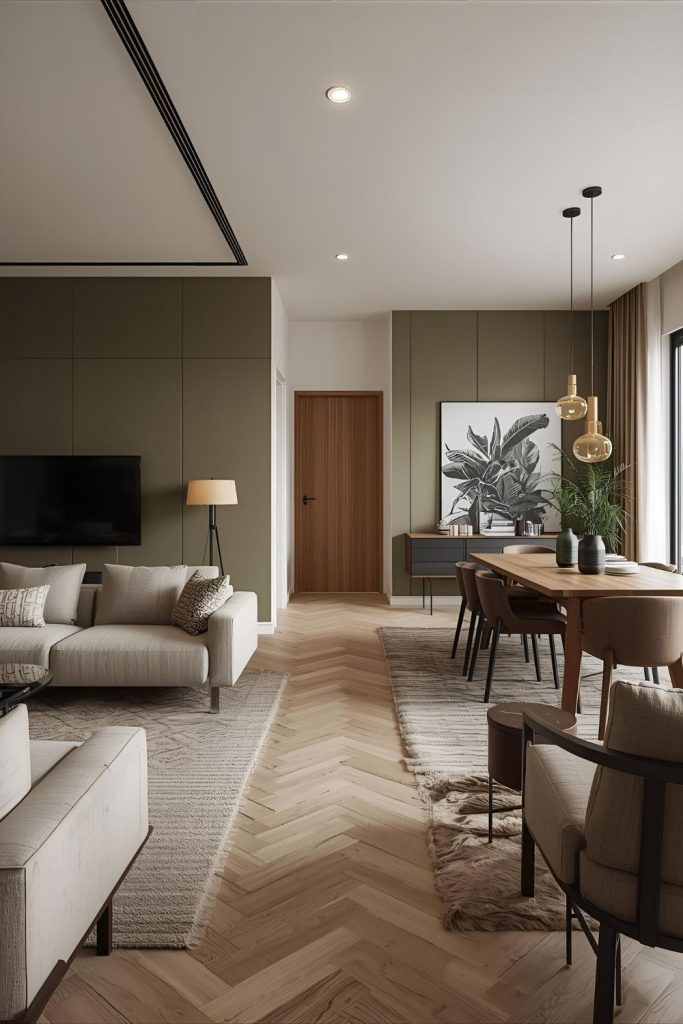
Olive Green Wall Panels for a Half-Open Living and Dining Area
Olive green panels work well in half-open living and dining layouts, providing separation without isolation. The hue adds warmth and blends with wood, stone, or neutral furnishings. Panels can act as a backdrop for art, shelves, or subtle décor, creating a curated, modern ambiance while maintaining visual flow across connected spaces.
Teal and White Striped Accent Wall for a DIY Small Living Room Makeover
Teal and white stripes brighten small living rooms while adding visual interest. Vertical stripes emphasize height, while horizontal ones expand width. This DIY approach allows personalization and creativity, complementing furniture, curtains, and lighting. The pattern adds a playful yet curated aesthetic without overpowering the space.
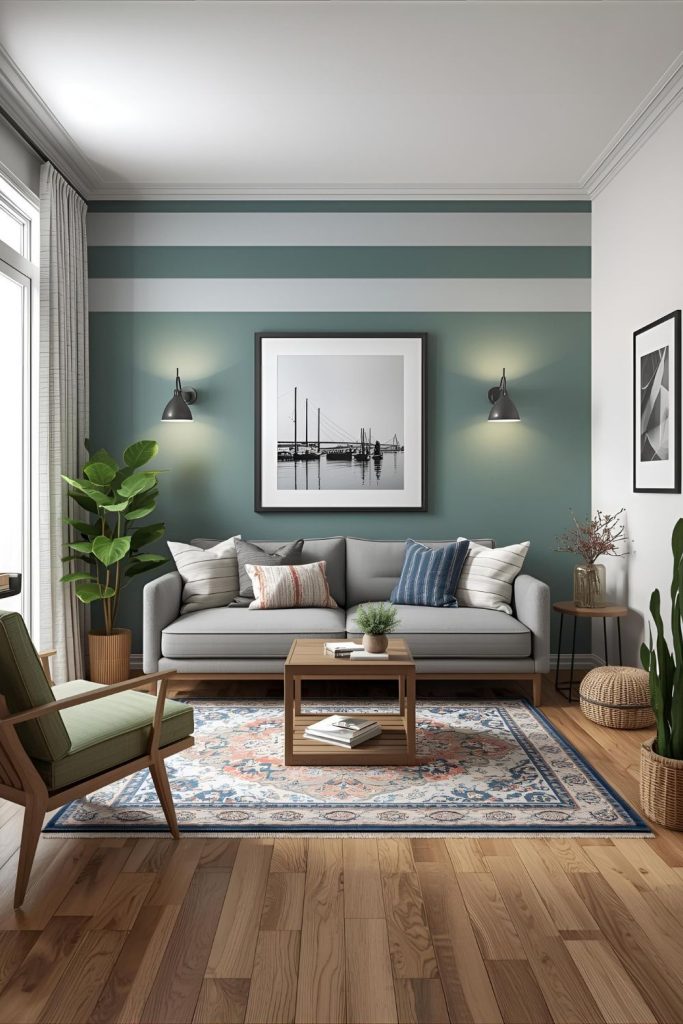
Grey Wall With Wood Shelves to Complement a High Ceiling Living Room
A grey wall paired with wood shelves balances modern minimalism with warmth. High ceilings benefit from vertical shelf arrangements, and lighting highlights textures. The combination creates a functional and stylish accent wall, perfect for curated living rooms where storage and design merge seamlessly.
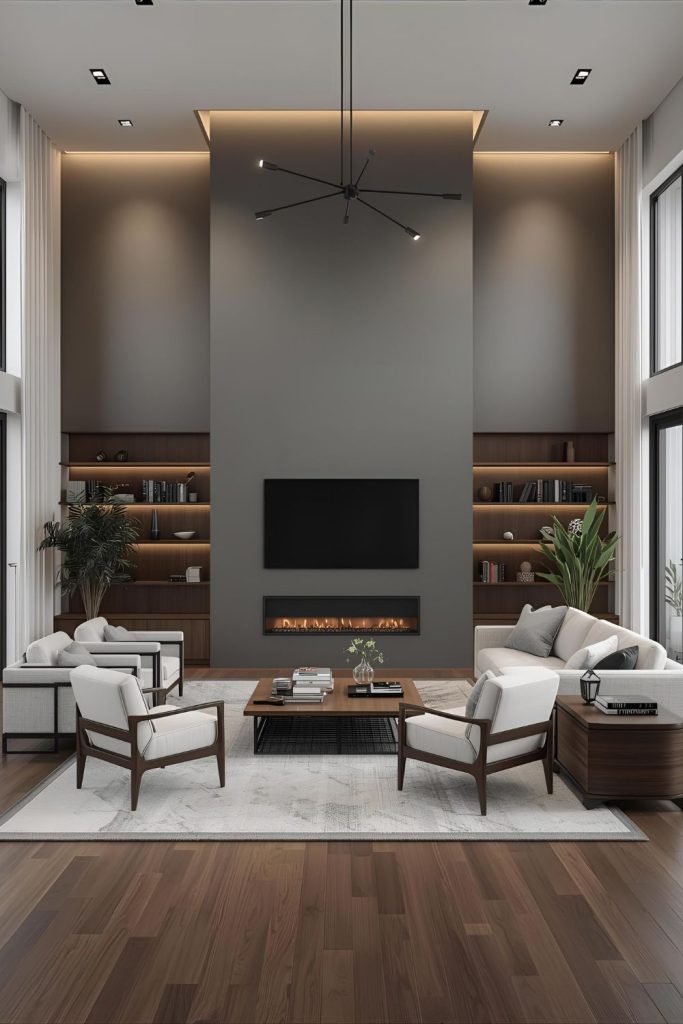
Burnt Yellow Wall Behind a TV in an Open-Concept Farmhouse Living Room
Burnt yellow behind a TV energizes a farmhouse-style open living area while keeping it cozy. The wall becomes a focal point, complementing wood furniture and neutral flooring. Proper furniture placement and lighting ensure functionality and visual balance, enhancing the modern yet curated appeal.
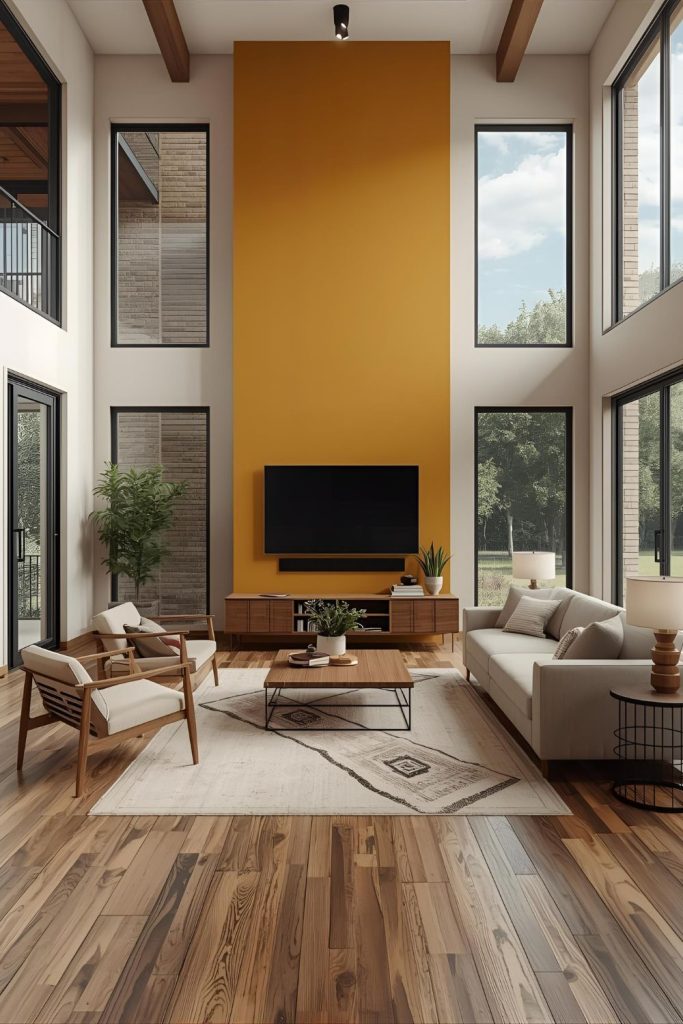
Navy Wall Decor Using Curtains as Layered Texture in a Long Living Room
Navy accent walls in long rooms gain depth when paired with layered curtains. The wall anchors the space while the curtains add softness and dimension. Combining navy with neutral furniture or wood accents maintains balance, creating a stylish, curated environment that feels comfortable yet modern.
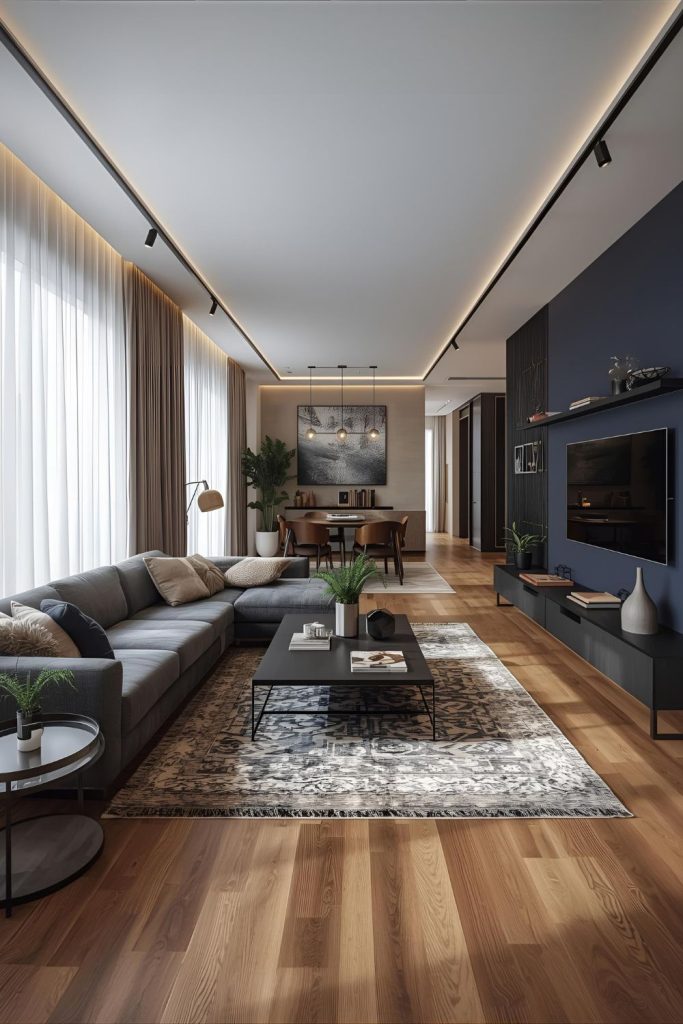
White Wall With Wood Panel Inserts to Frame Stairs in a Modern Home
White walls with wood inserts around staircases offer a clean, contemporary look. Panels emphasize architecture without dominating, and wood adds warmth. This approach works in modern living rooms, creating cohesion with furniture and lighting, while visually linking the stair area to adjacent spaces.
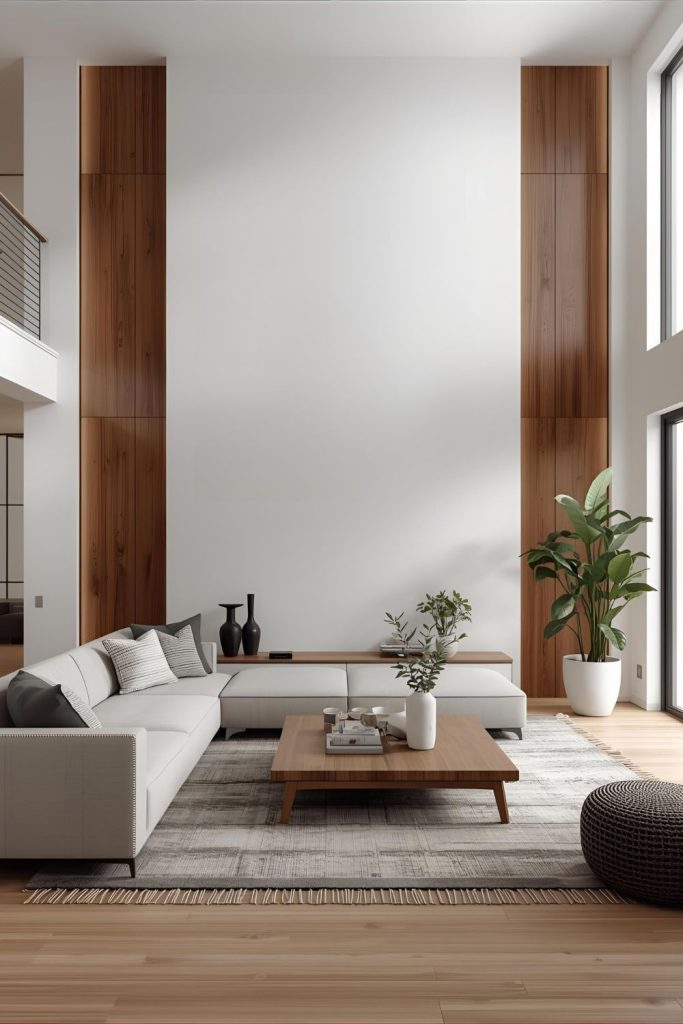
Light Grey Wall Accent Using Floating Shelves for an Easy Living Room Refresh
Light grey walls with floating shelves are a simple way to refresh living rooms. The neutral tone allows décor, plants, or art to stand out while maintaining a modern aesthetic. Shelves add functionality and dimension without cluttering the space, making it curated and inviting.
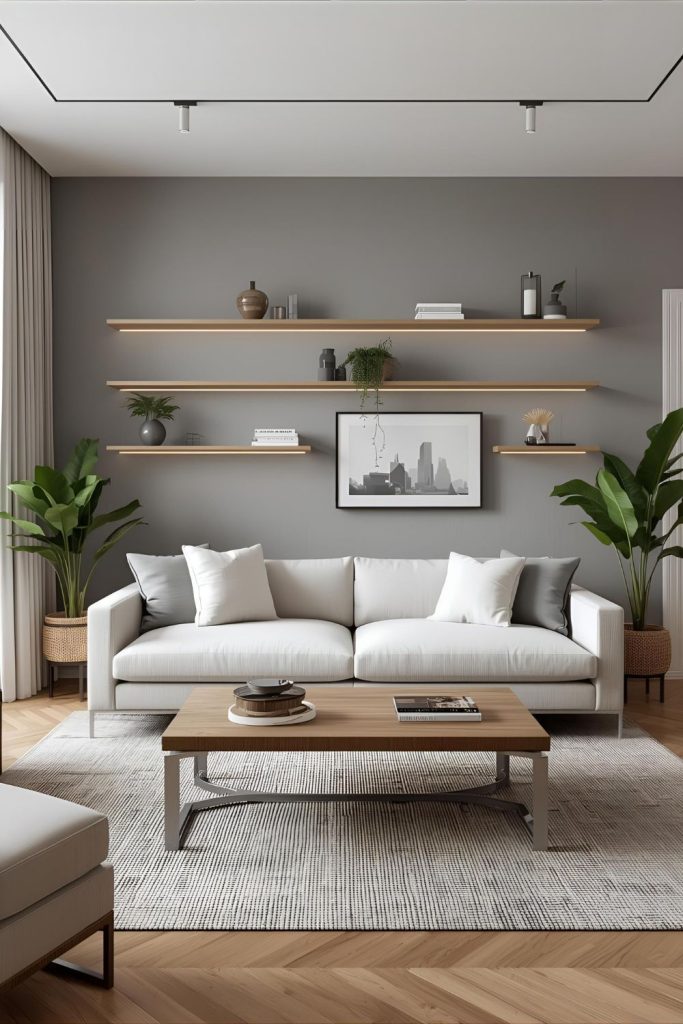
Teal Accent Wall Behind a Fireplace With Stone Surround for a Cozy Concept
Teal walls behind fireplaces with stone surrounds create rich, cozy focal points. The color contrasts with neutral furnishings and highlights textures. Lighting enhances depth, and accessories on mantels or shelves complete the curated, modern look while supporting functional living spaces.
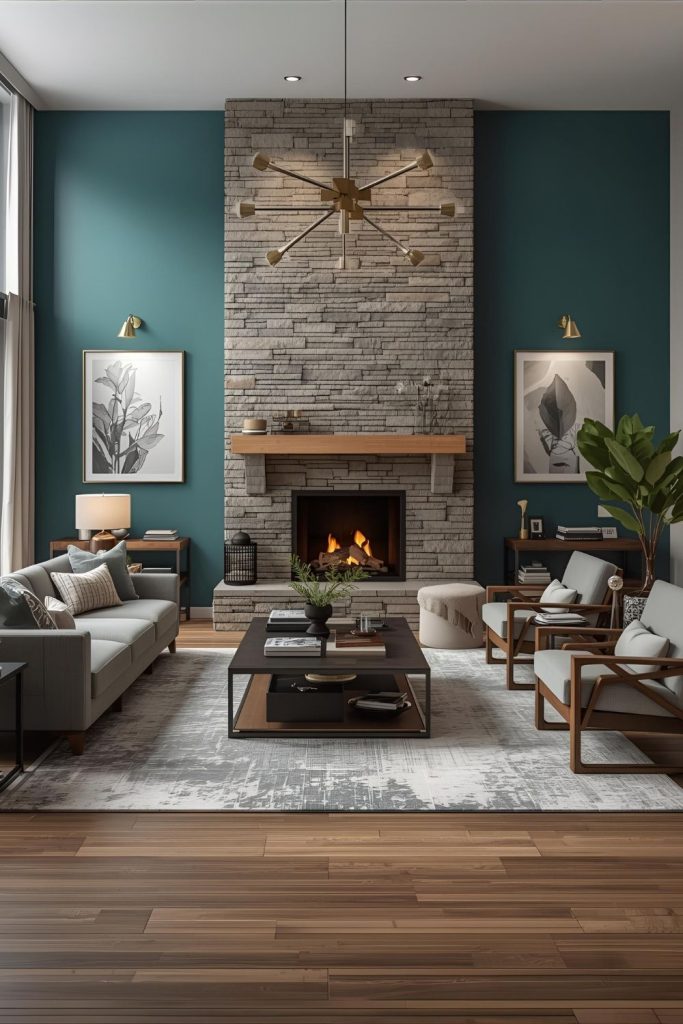
Black Wall With Olive Green Accents to Enhance a Narrow Living Room Flow
Black walls combined with olive green accents add sophistication to narrow living rooms. The darker color recedes visually, creating depth, while green highlights prevent heaviness. Using minimal décor and thoughtful furniture placement ensures the wall enhances flow, contributing to a curated and balanced layout.
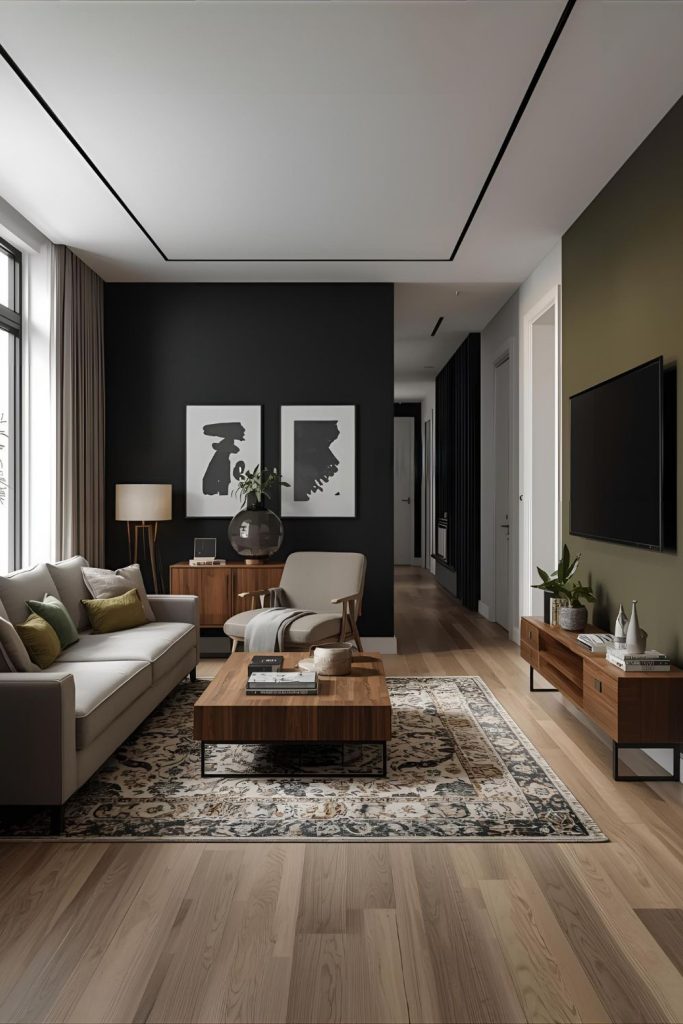
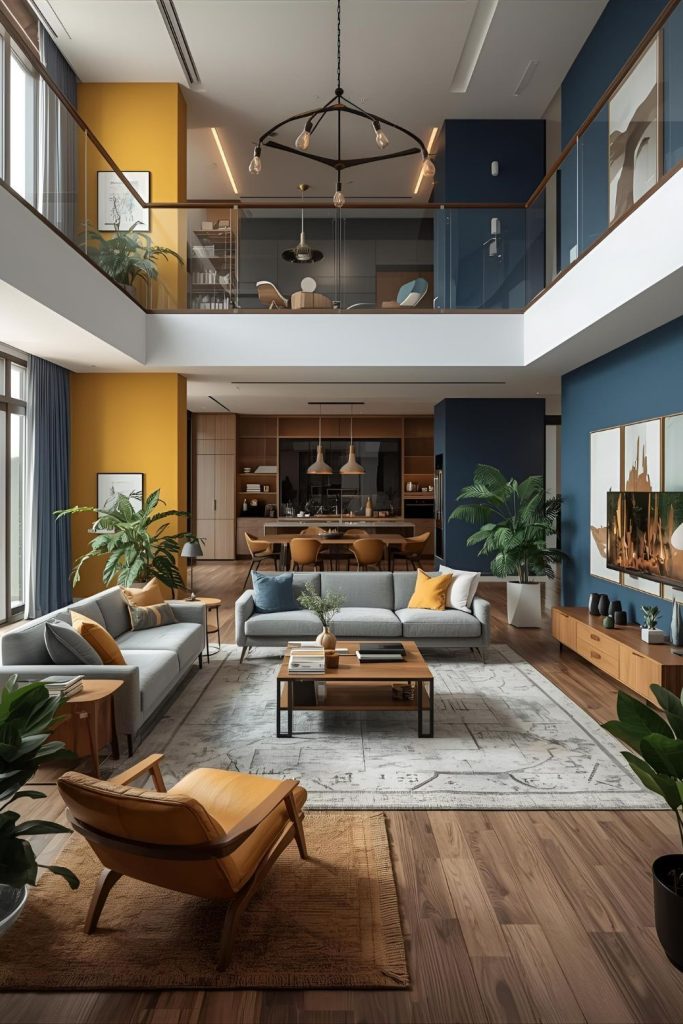
Yellow and Blue Wall Paint Ideas to Create a Playful Open Living Space
Combining yellow and blue accent walls energizes open living rooms, defining zones without separating spaces. Lighter furniture, rugs, and accessories balance vibrancy. The playful combination supports modern, curated interiors and helps connect living, dining, and kitchen areas visually.
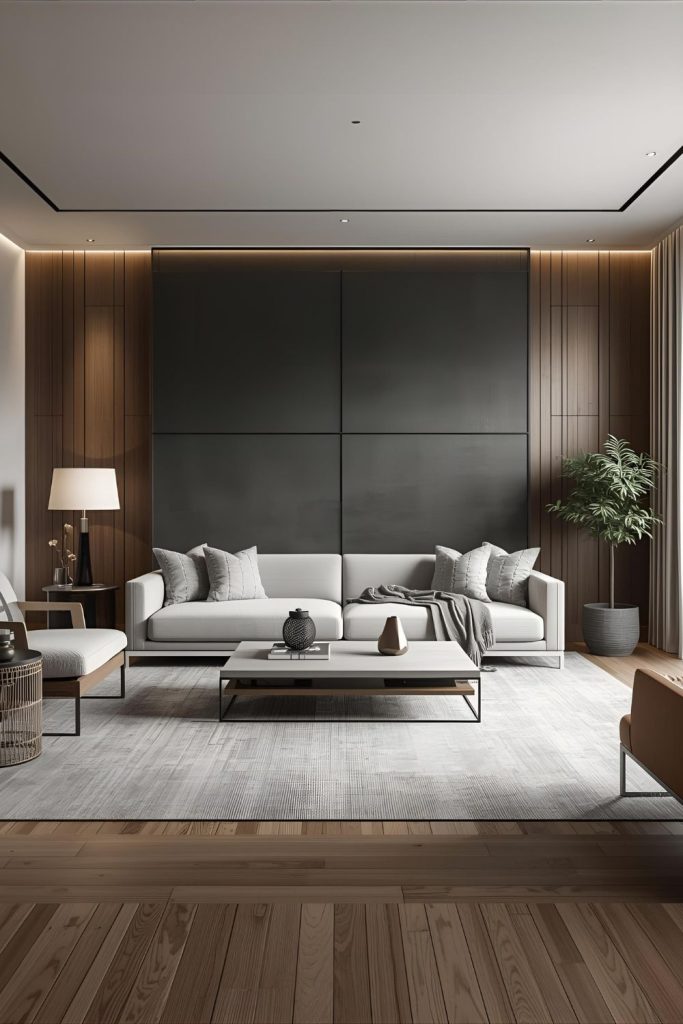
Dark Grey Wall Panel Behind Sofa for a Sleek and Minimalist Modern Living Room
A dark grey wall behind the sofa anchors the seating area, creating a sleek, minimalist feel. Panels add subtle texture, and contrasting cushions or rugs prevent the wall from feeling flat. Lighting and décor placement reinforce a curated, modern aesthetic without overpowering the room.
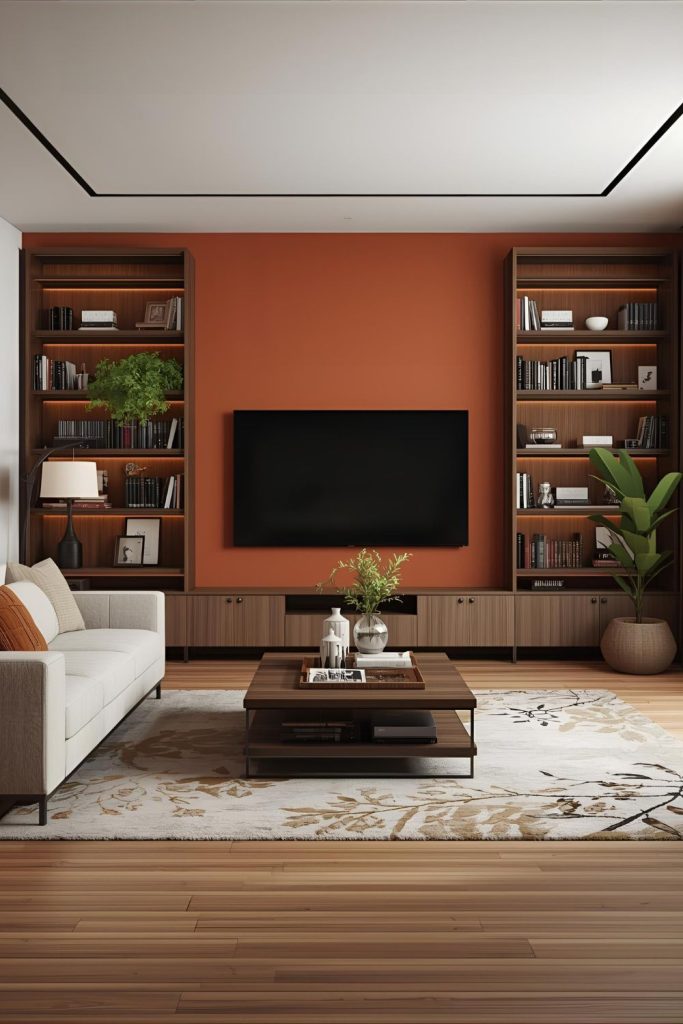
Burnt Orange Wall Using Built-In Shelving for Functional Living Room Decor
Burnt orange accent walls with built-in shelving combine warmth, color, and functionality. The shelves provide display space while the orange adds vibrancy, particularly against neutral sofas or rugs. Proper lighting ensures balance, making the wall a curated focal point in modern living rooms.
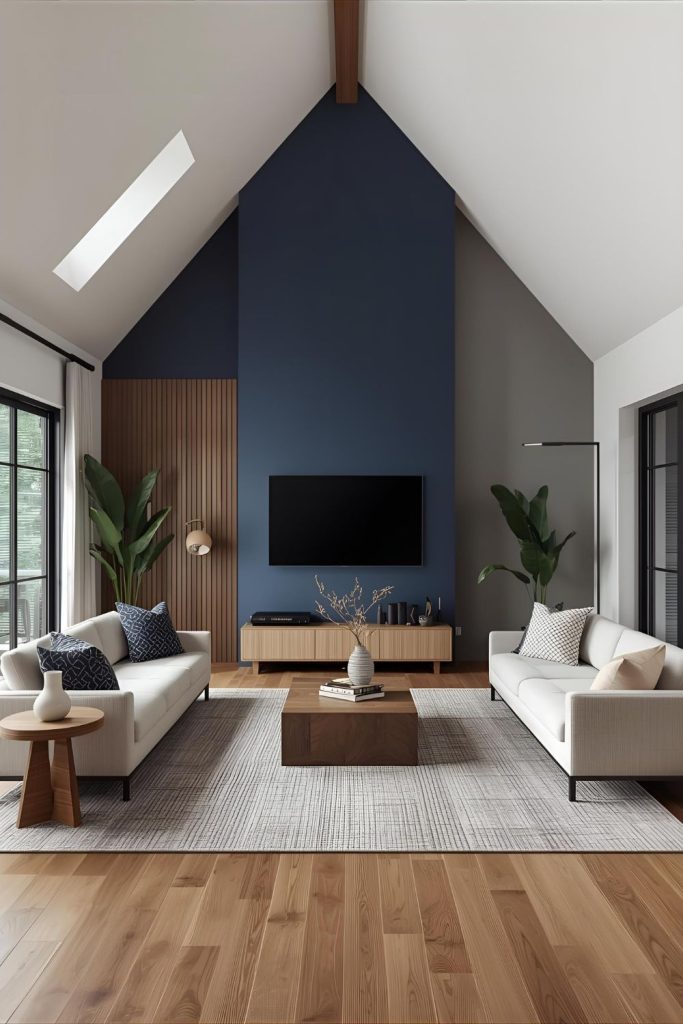
Navy Wall Accent With High Vaulted Ceiling to Create Dramatic Room Height
Navy walls in vaulted ceilings add drama while emphasizing vertical space. Contrasting furniture or wood accents balances the dark tone. The wall acts as a bold statement that enhances architectural features, creating a modern and curated living environment with visual interest and depth.
Olive Green Wall Behind Dining Area for Seamless Transition From Kitchen to Living Room
Olive green walls behind dining areas offer a seamless visual transition between kitchen and living spaces. The color blends with wood, stone, or neutral furniture, enhancing flow. Subtle décor, artwork, or lighting can reinforce a curated and cohesive modern aesthetic while keeping the space inviting.