
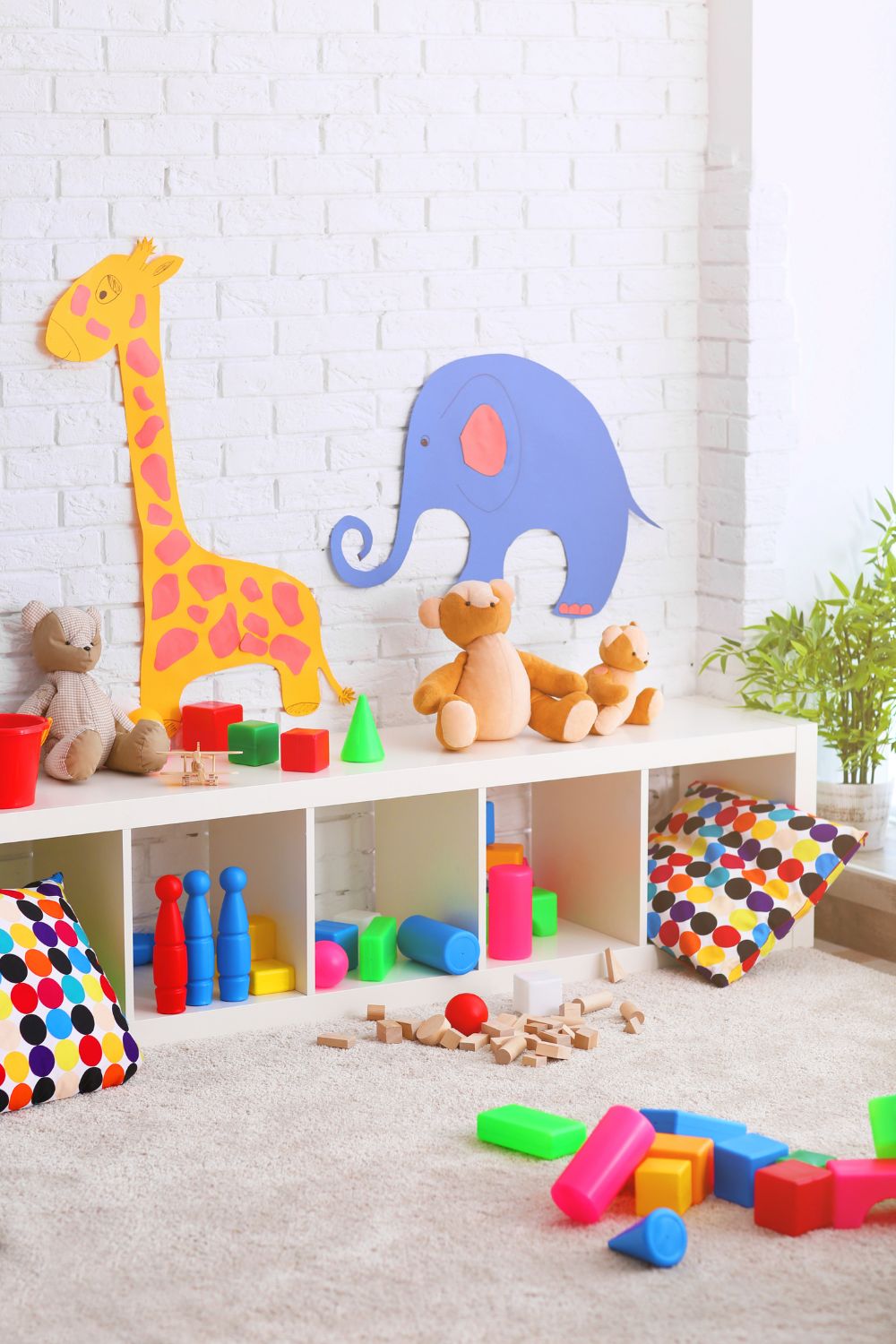
A kids creative space often ends up as a mix of scattered supplies, half-finished drawings, and piles of paper that seem to grow overnight. Parents want a setup where children can draw, paint, cut, and build without turning the room into chaos after every activity. The goal is a space that feels open, easy to use, and simple to reset at the end of the day.
Good planning helps children enjoy making things without constant mess building up around them. When everything has a place and the layout supports free movement, kids feel more confident trying new ideas. A thoughtful setup also helps parents avoid constant cleanup stress and gives children a sense of responsibility for their area.
How can parents design and organize a kids craft room layout that encourages creativity while keeping the space functional and easy to use?
A well planned layout begins with how children move and interact with the space. A bright craft table paired with colorful stools can make the area feel welcoming and comfortable for long drawing or coloring sessions. Keeping the table near a window helps bring in natural light, which makes coloring and painting easier on the eyes and more enjoyable for kids.
Placing a low open shelf near the table allows children to reach their own supplies without asking for help every time. It also helps them return items back after use, even if not always perfectly arranged. A corner setup works well in smaller rooms, where a creative corner with a chalkboard wall gives space for doodles and quick sketches without needing extra paper each time.
Some families like adding a soft rug under the table area to mark the creative space clearly. This small visual separation helps children understand where activities begin and end. A dual height table can also work in homes with children of different ages, giving everyone a comfortable spot without fighting over space.
Layout planning is not only about furniture placement but also about flow. A wall mounted art drying line above the table keeps wet paintings off surfaces while turning finished pieces into part of the room display. A simple display ledge nearby helps children see their work without stacking papers in drawers or boxes.
What storage solutions and organization systems work best in a kids craft room to keep craft supplies accessible, categorized, and clutter-free?
Storage plays a big role in keeping things manageable. Clear storage walls can turn supplies into a visible display, where kids can see colors, paper, and tools without digging through messy boxes. A mobile craft cart stocked with themed kits works well for rotating activities like painting, coloring, or building. It can be rolled next to the table during use, then parked away after.
A pegboard on the wall with colorful hooks helps hold scissors, brushes, and small tools in a way that feels playful but still orderly. A themed supply basket system, such as one for painting and another for cutting, helps children choose what they need without scattering everything around. This also reduces confusion during busy activity time.
A fold out surface attached to the wall gives extra space when needed, then folds back to keep the area open. A transparent storage drawer setup helps children see what is inside each section without opening everything at once. A dedicated “mess zone” with washable surfaces can be used for paint or glue, giving freedom for messier activities without worrying about damage.
A wall art collage area lets kids layer drawings and stickers over time, instead of stuffing them into folders. A “create and leave it” shelf also helps unfinished projects stay in one place without taking over the table. These systems keep supplies visible but controlled, so children can still enjoy freedom while learning order.
How can parents maintain a clean, organized kids craft room over time while teaching children responsible cleanup and organization habits?
Keeping the space in order depends on small habits repeated often. A simple reset routine at the end of the day helps return items to their place. Children can be guided to place tools back in baskets, wipe the table, and clear finished work from the surface. It may not always be perfect, but steady repetition builds habit.
A rotating “art of the week” wall helps manage finished drawings so they do not pile up on every surface. Old pieces can be replaced slowly, which keeps the display fresh without clutter. A single activity tray system also helps reduce mess during use, since children only take out what they need instead of everything at once.
Parents can assign a soft rule like keeping one clear section of the table open at all times. This teaches kids not to cover every inch with materials. A mobile craft cart also helps during cleanup, since everything can be returned to one spot quickly without running around the room.
A weekly check of supplies helps remove broken crayons, dried glue, or unused paper. Children can be part of this process, even if it takes a bit longer. Over time, they start to notice what belongs where and how to reset the space themselves. Small habits like these slowly build independence and keep the area from turning into constant mess again.
Top 19 Kids Craft Room Organization Ideas
A bright craft table paired with colorful stools to make the space feel inviting and playful
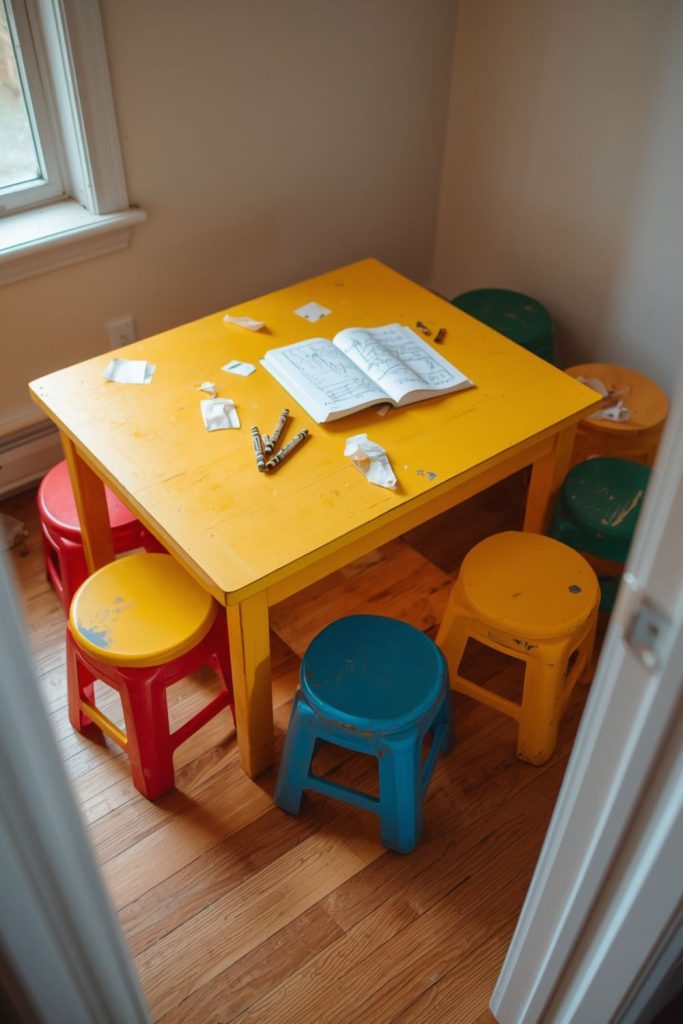
A simple table with bright stools can change the mood of a room right away. It gives children a clear place to sit and start working without hesitation. The mix of color adds a cheerful feeling that makes the area less formal and more welcoming. Keeping the table surface mostly clear helps kids focus on one activity at a time, even if they shift between drawing and coloring often. Small baskets placed nearby hold daily tools, so nothing stays scattered across the table for long periods. The setup works well in both small and large rooms, and it does not need complicated furniture changes or expensive items.
A low open shelf where supplies are arranged like a mini “art shop” kids can browse easily
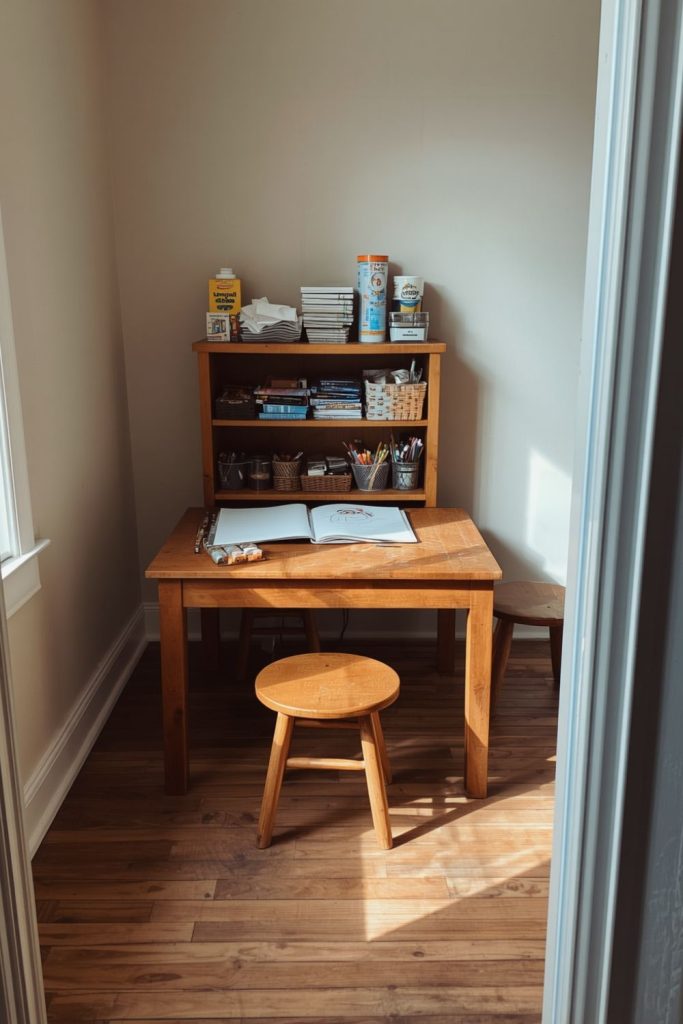
A low shelf placed near the table gives children independence while picking materials. Items like paper, crayons, and glue sit in open containers, so everything stays visible. Kids can treat it like a small shop where they choose what they need for each activity. This setup also helps reduce random piles forming on the table since everything has a clear spot. The shelf should stay at child height so reaching does not require help. Over time, children learn where items belong, even if placement is not always perfect.
A rotating “art of the week” wall where finished projects become part of the room décor
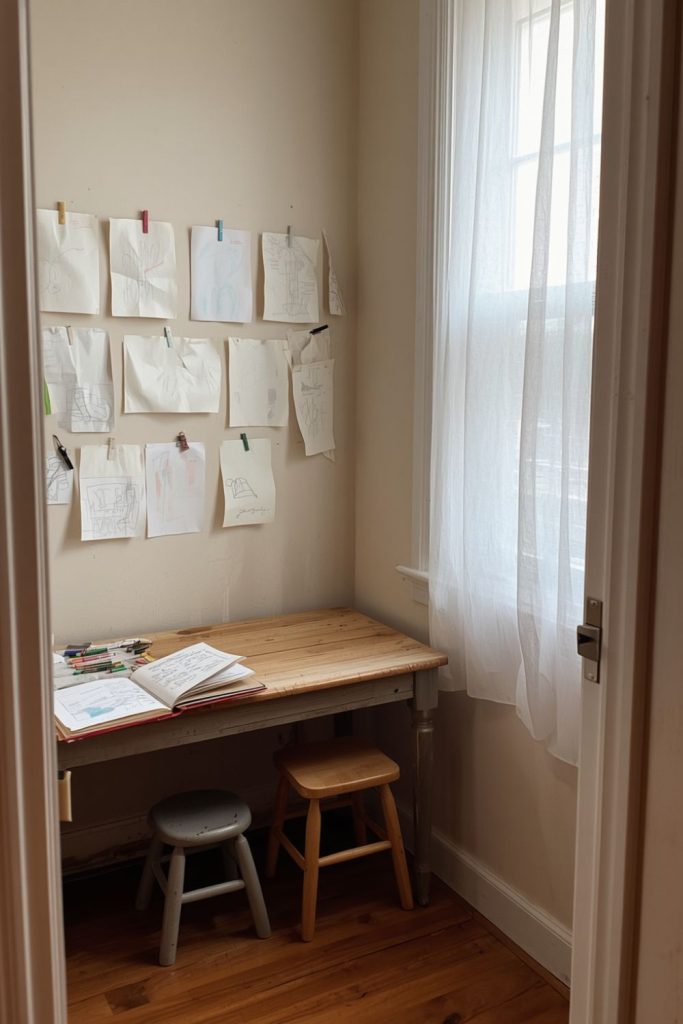
A rotating display wall gives children a sense of pride in their work. Instead of stacking drawings in folders, finished pieces get clipped or pinned on a wall space. Each week, new work replaces older ones, keeping the display fresh. This also prevents paper clutter from building up on desks or shelves. Kids enjoy seeing their work visible, which often encourages them to create more. The setup does not require expensive frames or complicated tools, just clips or simple strings across the wall.
A creative corner with a chalkboard wall for doodles, ideas, and spontaneous drawing
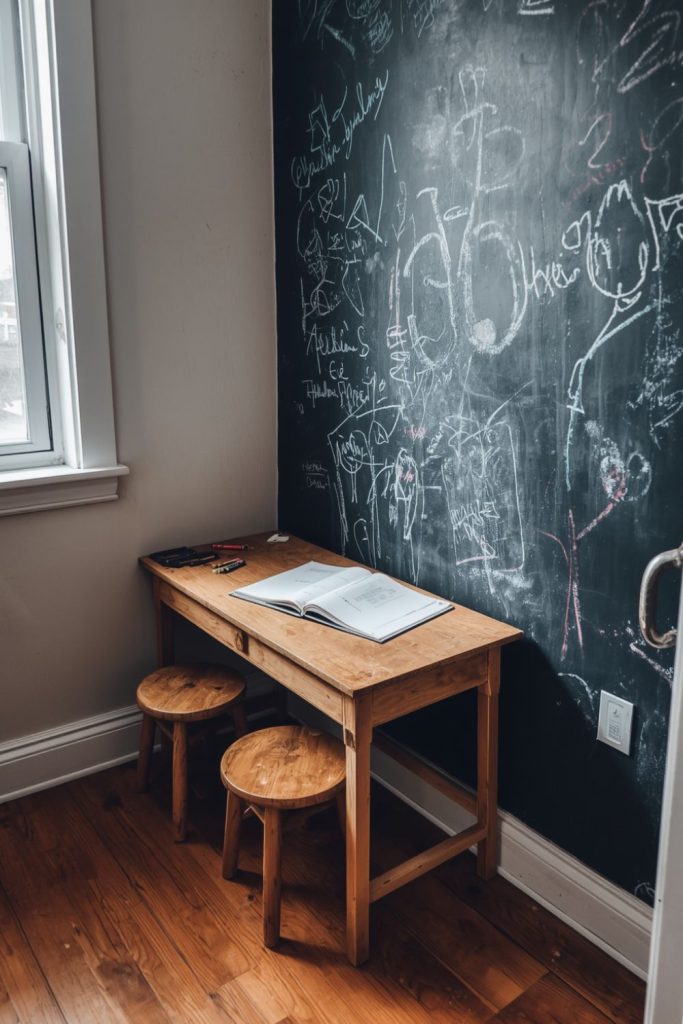
A chalkboard wall in one corner gives children freedom to draw without needing paper every time. It becomes a space for quick ideas, random sketches, or even practice drawings. Chalk marks can be wiped away easily, so mistakes do not matter much. This reduces paper waste and keeps the table cleaner for other activities. The corner works well as a backup space when the main table is in use. Kids often return to it during breaks, making it part of their daily activity flow.
A simple table setup with a rainbow tray of supplies to make choosing materials fun
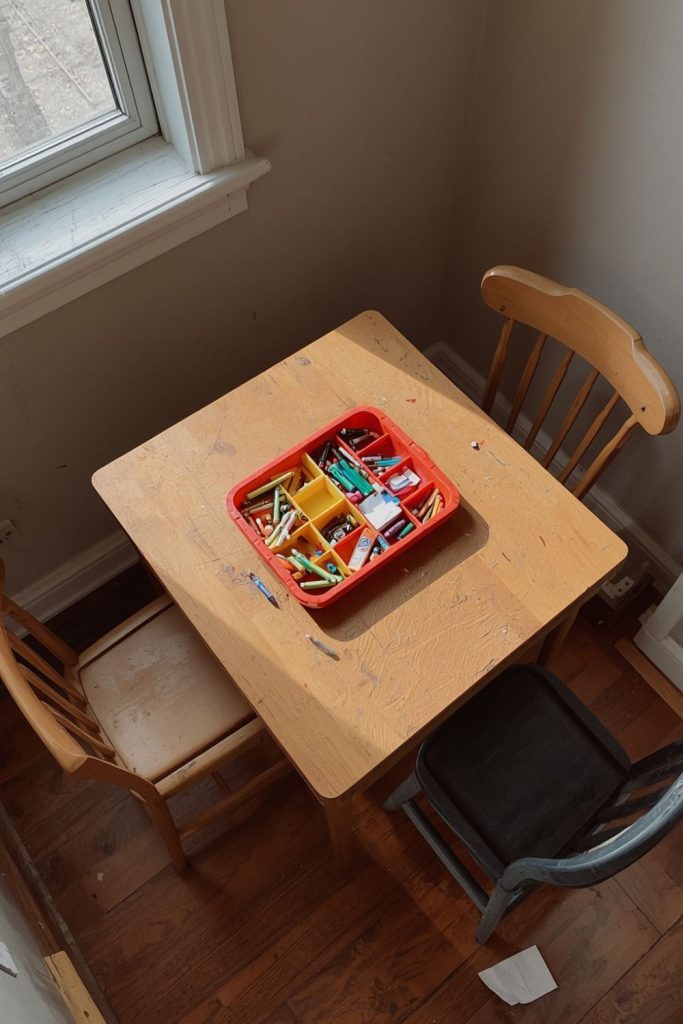
A rainbow tray setup keeps supplies grouped in a visually clear way. Each color section can hold similar items like crayons, markers, or pencils. This makes choosing materials easier for kids and reduces confusion during activity time. The tray stays on the table but does not spread across the surface, which helps maintain order. Children also enjoy selecting colors, which adds a small sense of play to the setup. It keeps things contained without feeling strict or limited.
A wall-mounted art drying line where fresh paintings are clipped like a mini gallery
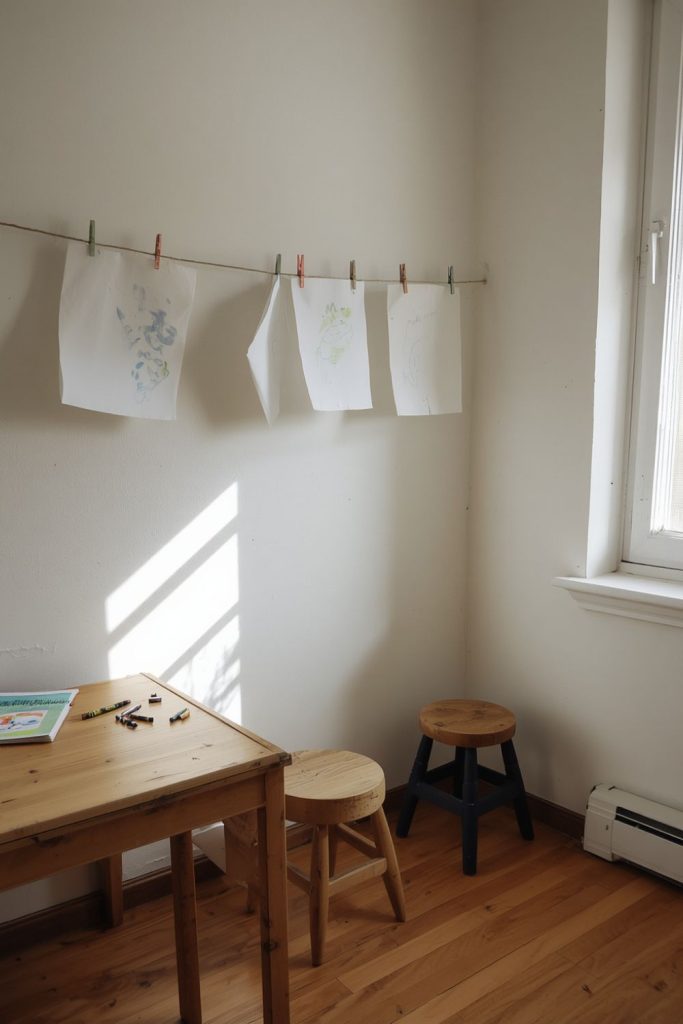
A drying line along the wall gives wet artwork a safe place to rest. Paintings can be clipped in a row so they do not touch each other or mess up nearby surfaces. Over time, this line turns into a changing display of new work. It also prevents papers from being left on tables or chairs to dry. Kids like seeing their work hanging up, even if only for a short time before new pieces replace them. The setup uses little space but adds structure to messy activity periods.
A cozy reading-and-crafting nook with cushions beside a small creative table
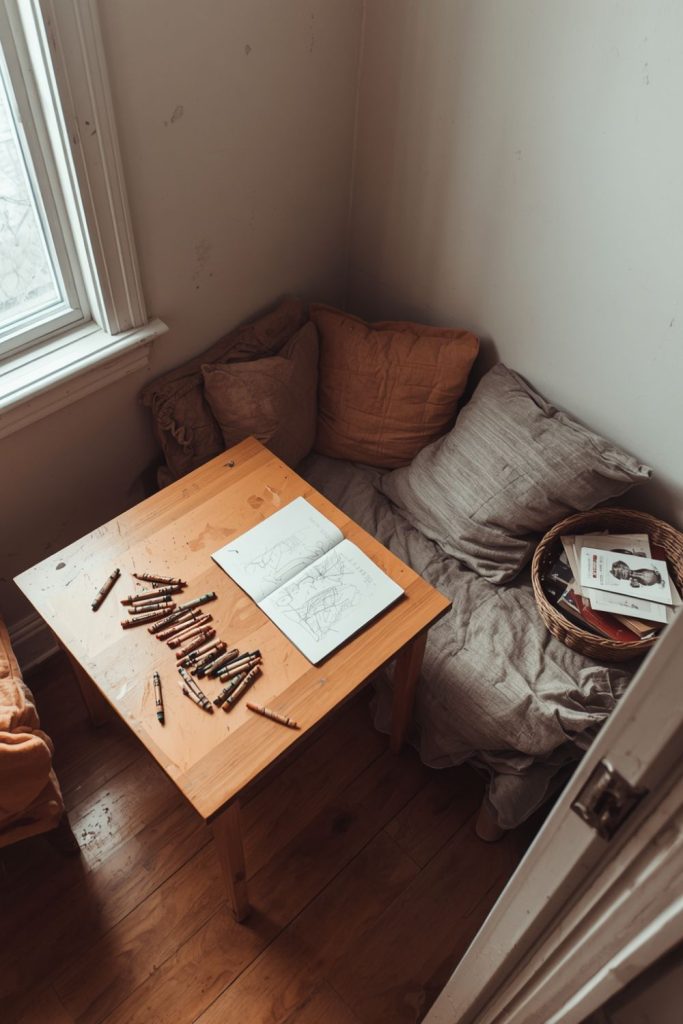
A soft corner with cushions next to a small table creates a calm spot for quieter activities. Children can sit on the floor with books or move to the table for drawing when they feel like it. The mix of soft seating and hard surface supports different moods without changing rooms. Keeping materials nearby in small baskets helps maintain order in this corner. It becomes a relaxed area where kids can switch between reading and drawing without needing a full setup change.
A transparent storage wall that turns supplies into a colorful visual display
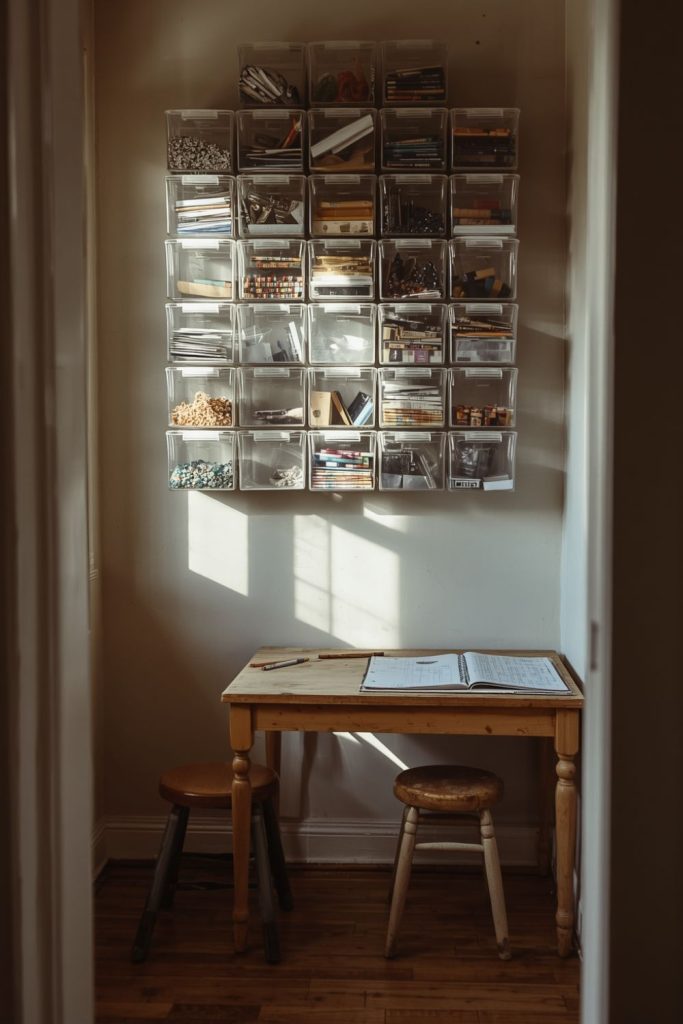
Clear containers mounted or stacked along a wall make supplies visible and easy to sort. Colors, textures, and shapes become part of the room view instead of being hidden. This helps children find what they need quickly and return items after use. It also reduces the need for labeling since everything can be seen at a glance. While it looks organized, it still allows easy access during busy activity time. The display effect adds color without extra decoration.
A dedicated “mess zone” with washable surfaces where painting and glue activities feel worry-free
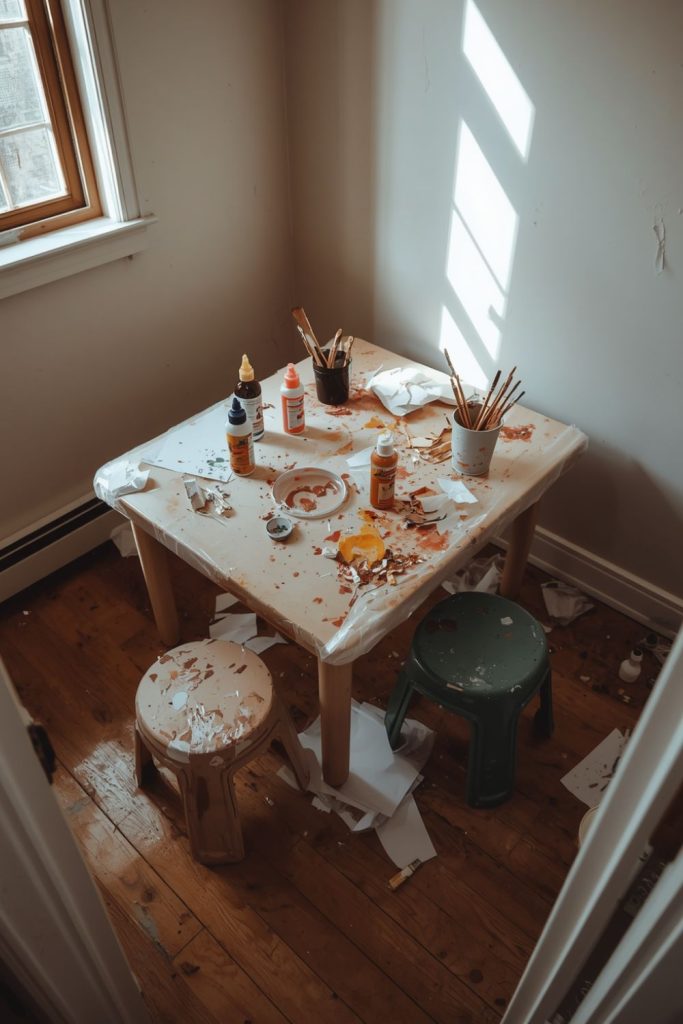
A separate area for messy activities helps protect the rest of the room. Surfaces can be wiped clean after painting or glue work, which reduces stress for parents. Children can focus on creating without worrying about making a mess in the wrong place. Keeping tools inside this zone also helps contain spills or scattered materials. It becomes a space where creativity feels free but still contained. Over time, kids learn which activities belong there naturally.
A mobile craft cart stocked with themed kits for quick, ready-to-go creative sessions
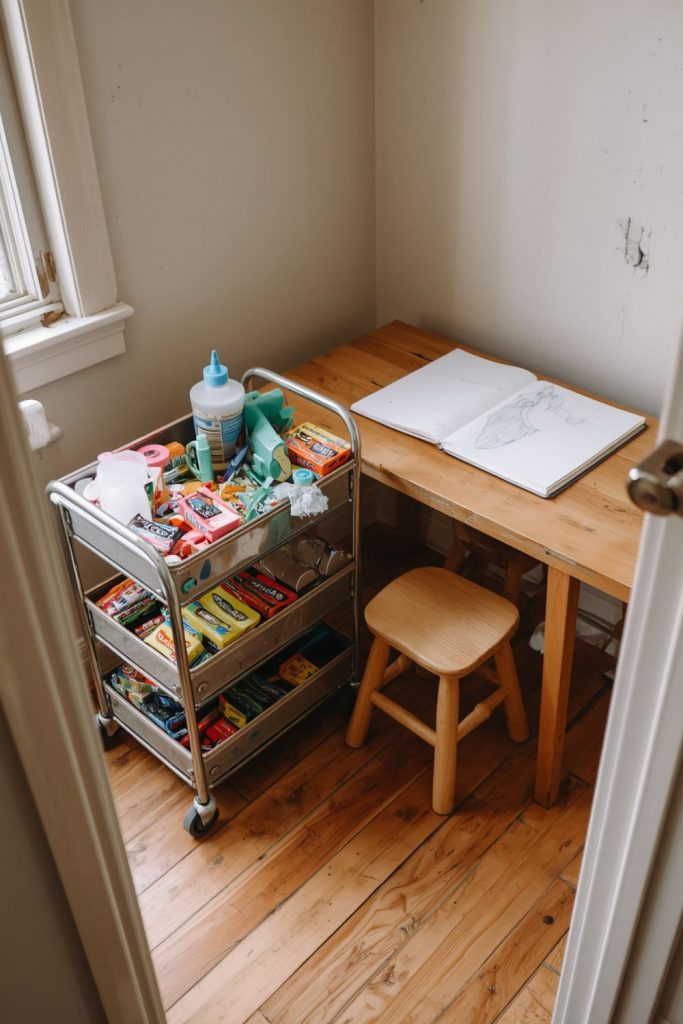
A rolling cart filled with themed supplies helps organize activities by type. One section may hold painting tools, another for cutting and paper work. Kids can roll the cart to the table and start working without searching for items around the room. After finishing, everything goes back into the cart for easy reset. It reduces clutter on the main table and keeps supplies grouped together. The cart also works well in shared spaces where flexibility matters.
A dual-height table so kids of different ages can craft comfortably together
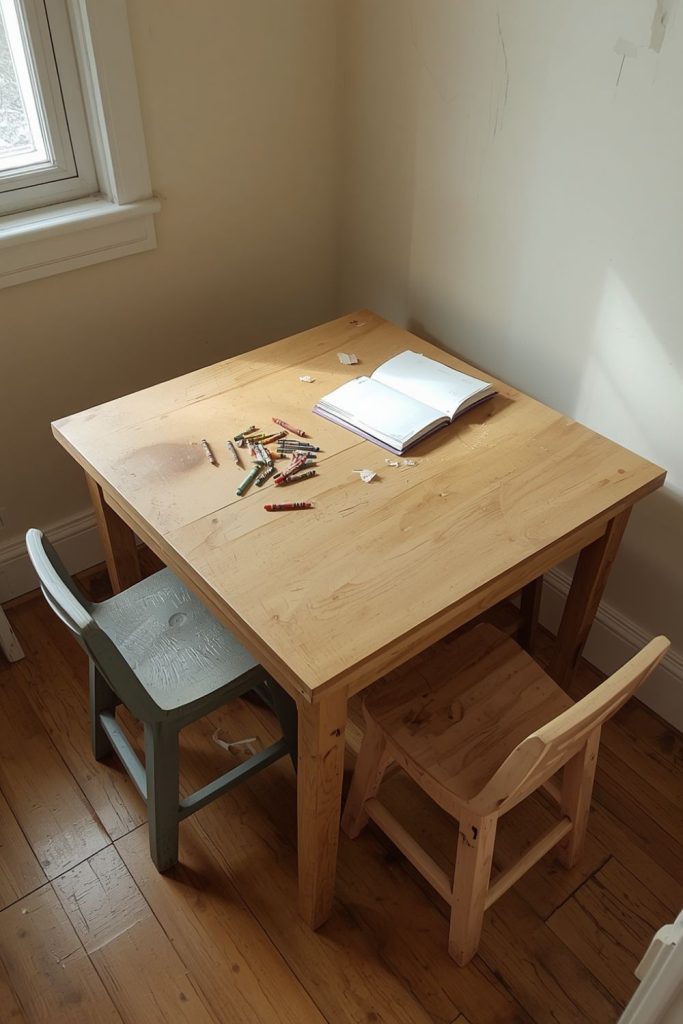
A table with two height levels allows younger and older children to use the same space without discomfort. Smaller kids can sit at the lower side while older ones use the higher section. This setup avoids constant shifting of chairs or materials. It also keeps siblings working side by side without crowding each other. The shared surface still supports group activities, but each child has a comfortable working position. It helps maintain order during group sessions.
A pegboard styled with colorful hooks holding tools like scissors and paintbrushes in a playful layout
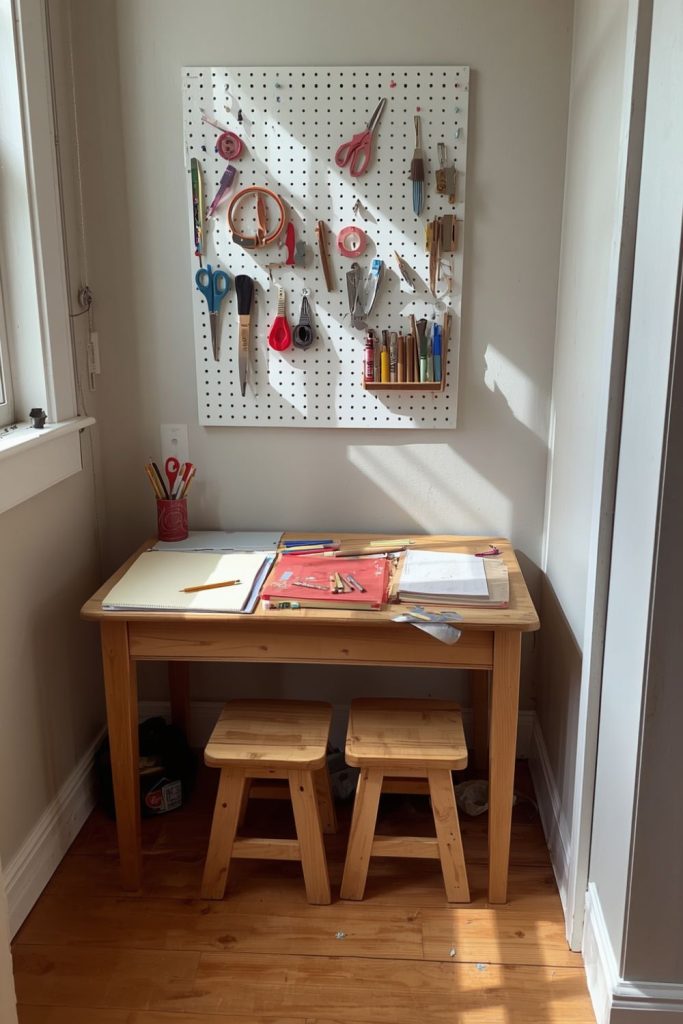
A pegboard on the wall keeps tools visible and easy to reach. Hooks can hold scissors, brushes, rulers, and small items without filling the table. Arranging them in simple patterns adds a playful look without needing extra decoration. Kids quickly learn where each item belongs after use. This reduces time spent searching through drawers. It also keeps sharp or messy tools off the working surface.
A simple display ledge where kids can proudly showcase ongoing projects
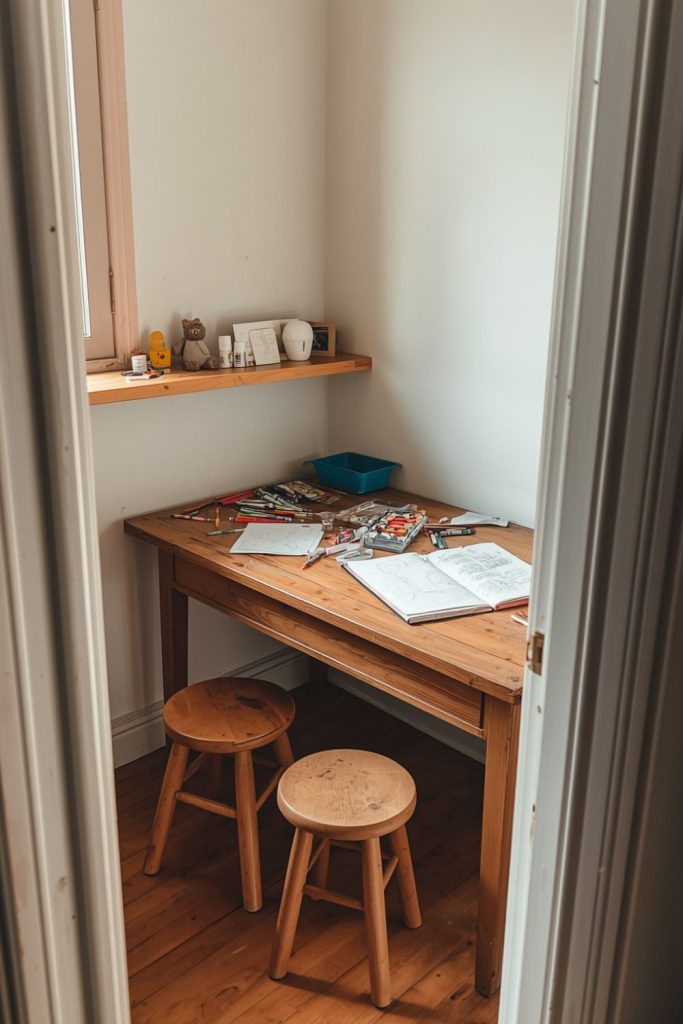
A narrow ledge along the wall gives space for works in progress. Children can place drawings, models, or half-finished projects without packing them away. This keeps materials safe and visible without cluttering the table. It also helps kids return to their work later without starting over. The ledge becomes a small personal display area that changes over time. It encourages care for unfinished pieces instead of losing them in piles.
A creative window station where natural light enhances drawing and coloring time
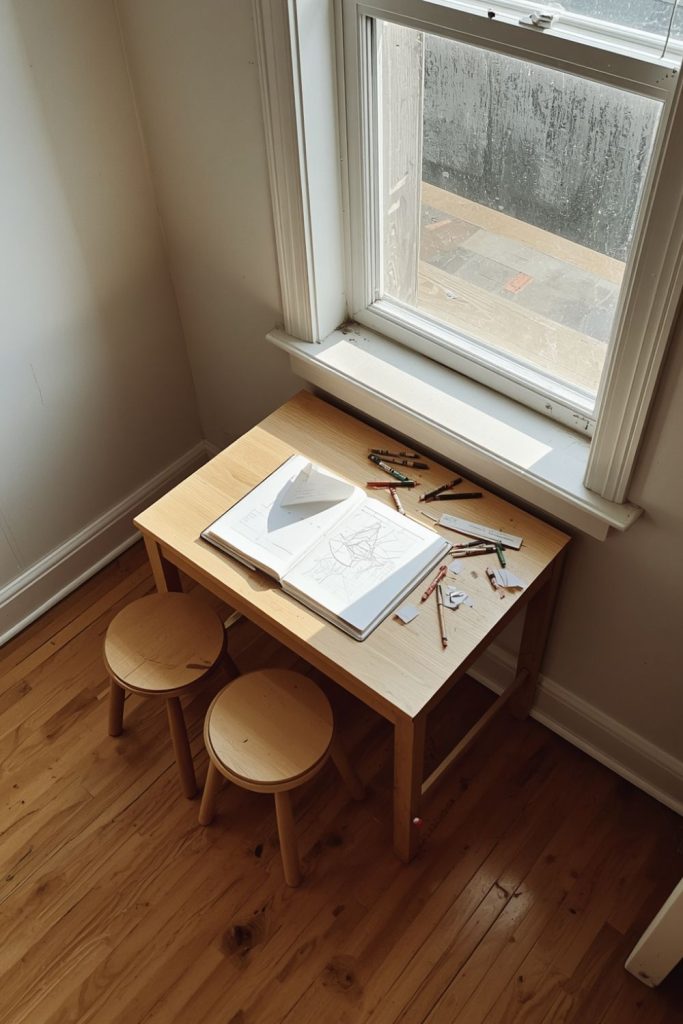
A table placed near a window gives bright natural light for creative tasks. It helps children see colors better and reduces eye strain during longer sessions. The setup also feels open and calm compared to darker corners. Supplies can stay in small containers on the side to keep the surface clear. Kids often enjoy working near windows since it feels connected to the outside environment. It also helps keep the rest of the room less crowded.
A themed supply basket system (painting, cutting, building) that turns crafting into an activity choice game
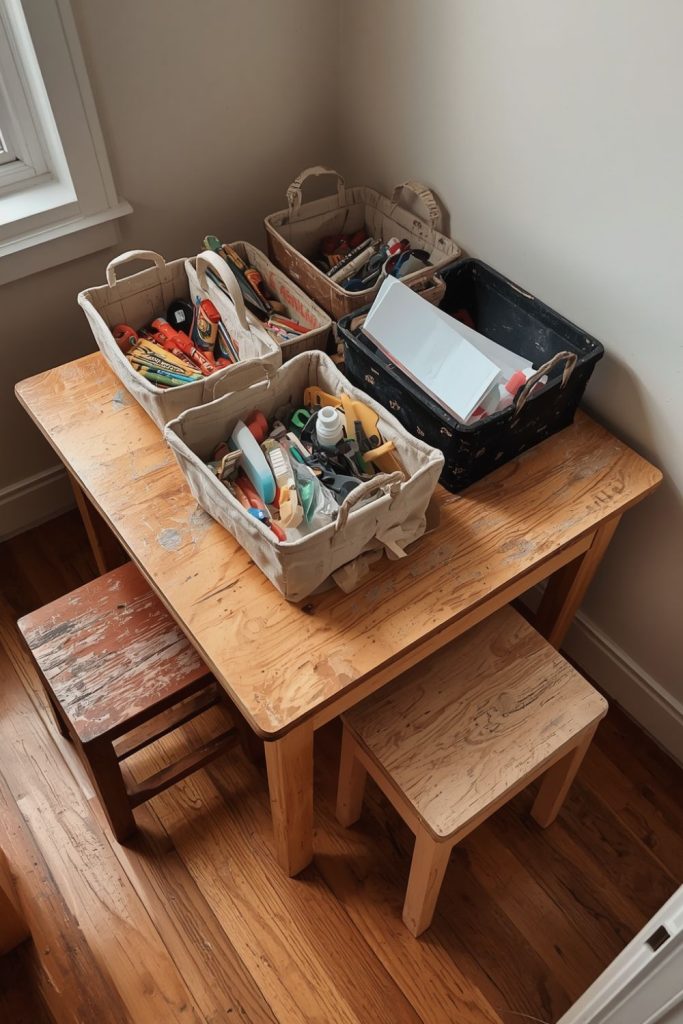
Separating supplies into themed baskets helps children pick activities easily. One basket may hold painting items, another for cutting tools, and another for building materials. Kids can choose what they feel like doing instead of searching through mixed boxes. This reduces mess and speeds up setup time. Each basket returns to its place after use, which keeps order simple. It also adds a sense of choice without overwhelming options.
A fold-out craft surface that creates surprise creative space when opened
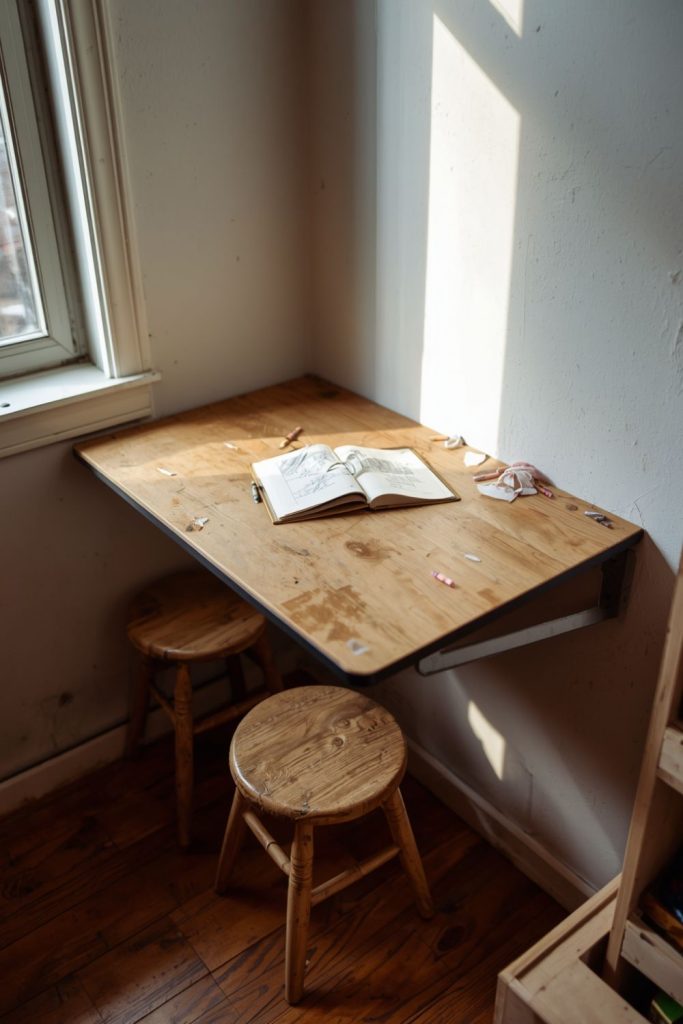
A fold-out table attached to the wall provides extra space when needed. It stays closed most of the time, keeping the room open and clear. When opened, it becomes a full working surface for larger projects. This helps manage space in smaller rooms without permanent clutter. After use, it folds back quickly, returning the area to a clean look. Kids enjoy the “open and close” setup since it feels a bit like a secret workspace.
A wall art collage area where kids can freely layer drawings, stickers, and textures
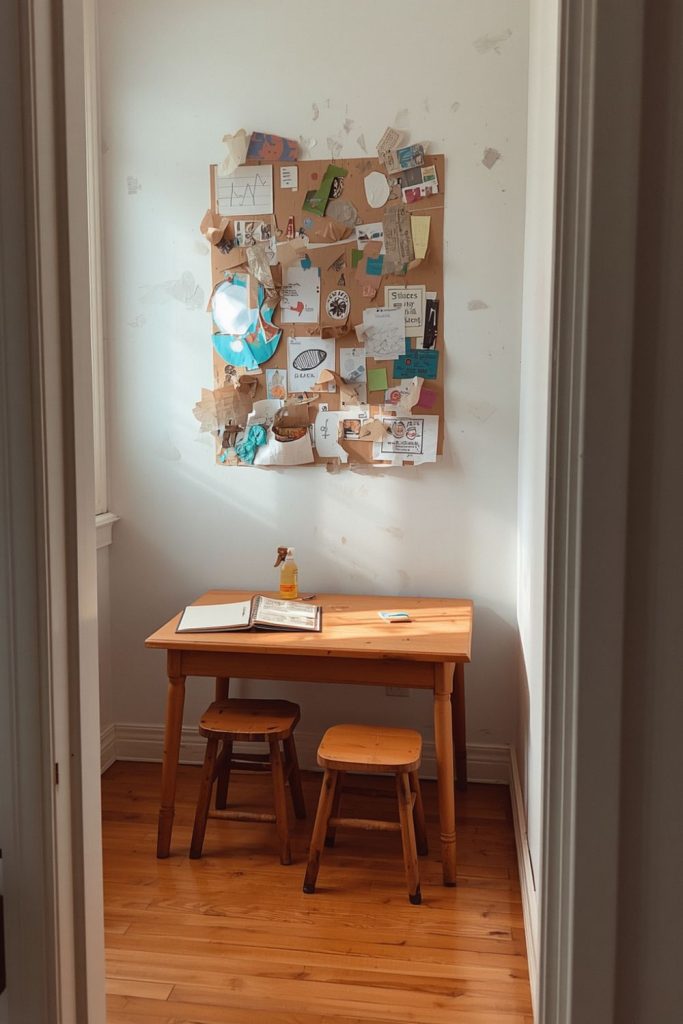
A collage wall gives children freedom to add different materials over time. Drawings, stickers, and paper pieces can overlap, creating a layered display. It removes pressure to keep everything neat or perfectly placed. The wall slowly changes as new items are added. This reduces paper piles on desks or floors. It becomes a growing visual record of creativity without requiring storage boxes.
A “create and leave it” shelf that preserves ongoing projects without cleanup pressure
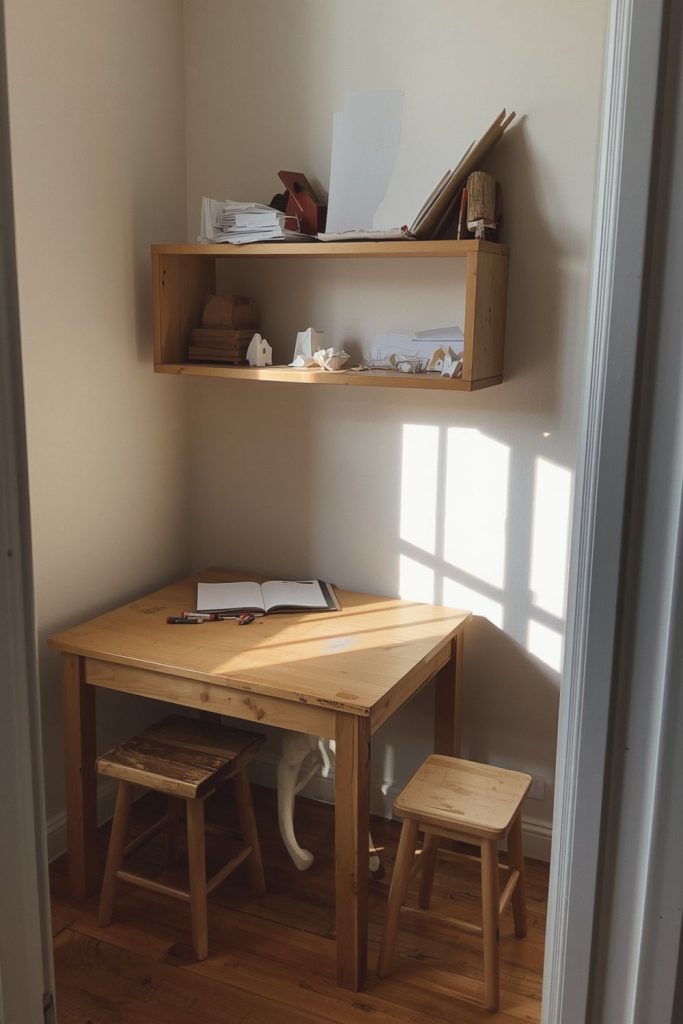
A dedicated shelf for unfinished work helps children pause projects without losing them. Items stay in one place until they are ready to continue. This avoids clutter spreading across tables or floors. Kids can return to their work anytime without starting again. It also reduces frustration when large projects take more than one session. The shelf keeps everything visible but contained.
A soft rug-defined craft zone that visually separates the creative space from the rest of the room
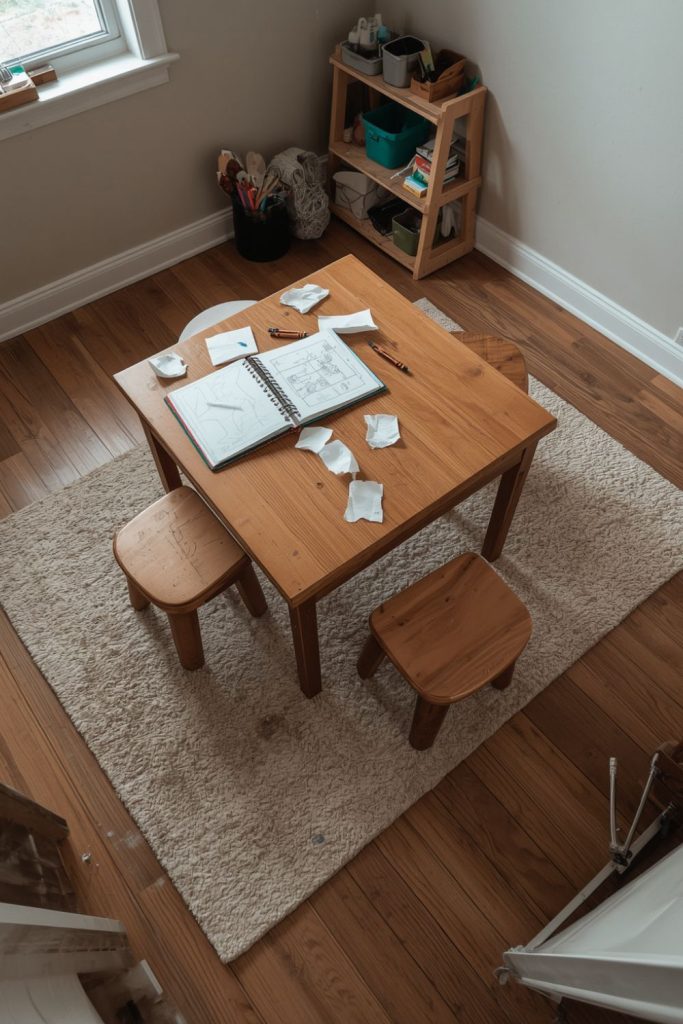
A rug placed under the activity area creates a clear boundary for creative time. It signals where activities happen without needing walls or barriers. This helps children understand where to keep materials and where to stop. The rug also adds comfort during floor activities or group play. It keeps scattered items visually contained within one section of the room. The rest of the space stays cleaner and more open.