Easter is a time for family, fun, and a little bit of creativity, especially when it comes to hands-on projects that kids can help with. Easy DIY Easter crafts are perfect for parents looking to spend quality time with children while making something colorful, festive, and memorable. Using materials you probably already have at home, these projects combine imagination, skill-building, and playful learning. From decorating eggs to creating paper bunnies, kids of all ages can enjoy crafting activities that don’t require expensive supplies or complicated instructions. The beauty of DIY Easter crafts is that they’re flexible—whether it’s a small project for toddlers or a more involved decoration for older kids, there’s something everyone can do together. Parents can use these activities to celebrate traditions, encourage creativity, and make family memories that last long after the holiday. In this guide, we’ll cover how to prepare your space, choose materials, guide your kids, adapt activities to different ages, and even showcase some fun project ideas that are easy to create at home.
What everyday household materials can be used to create easy DIY Easter crafts with kids
One of the best parts about easy DIY Easter crafts is that you don’t need fancy supplies. Everyday household items can be transformed into festive decorations and projects.
Paper, cardboard, and construction sheets can be cut, folded, or glued into shapes like bunnies, chicks, or Easter eggs.
Toilet paper rolls become the perfect base for little chicks or bunny figures, while mason jars can hold colorful candy or function as lanterns with a little tissue paper and LED light.
Old cereal boxes or leftover packaging materials can be painted and decorated to make Easter baskets, and egg cartons are great for creating miniature nests or even a bouquet of paper eggs.
Other simple items like markers, crayons, stickers, glitter, cotton balls, and yarn can easily add color, texture, and personality to any craft.
Even recycled materials like bottle caps, scrap paper, or leftover plastic eggs can become something fun and festive with a little imagination.
By using these everyday items, parents can keep costs low, reduce waste, and show kids that you don’t need to buy expensive kits to create meaningful, hands-on projects.
How can parents set up a safe and simple crafting environment for DIY Easter crafts at home
Setting up a crafting space for DIY Easter crafts doesn’t need to be complicated, but a little planning goes a long way.
Start by choosing a table or surface that can get a little messy—covering it with old newspapers or a washable tablecloth helps with cleanup.
Make sure scissors, glue, and paint are child-safe, and supervise toddlers closely with small items like beads or tiny decorations.
Keep materials organized in containers or baskets so kids can easily see and access them without creating chaos.
Having wipes, paper towels, or a damp cloth nearby is helpful for quick spills. Encourage kids to wear old clothes or aprons, especially when working with paint or markers that can stain.
Lighting is also important—bright, natural light or a well-lit room helps kids focus and enjoy the colors in their projects.
Finally, create a relaxed atmosphere with minimal distractions, letting kids experiment and explore different techniques without feeling rushed.
A calm and organized space sets the tone for creativity while keeping the experience safe and enjoyable for everyone.
What steps should parents follow to guide kids through easy DIY Easter crafts successfully
Begin by introducing the idea and showing an example or picture of the finished craft. Explain the materials they will use and demonstrate any tricky techniques slowly, so they can follow along.
Encourage children to participate in the steps they can handle, whether it’s cutting, gluing, or coloring, while adults handle more complex parts like precise cuts or handling hot glue. Keep instructions simple and repeat directions if necessary, and allow for mistakes—part of the fun is seeing how kids interpret the project in their own way.
Break projects into stages, letting kids complete one step before moving on to the next, so they don’t get frustrated or lose interest.
Offer choices whenever possible, like selecting colors, patterns, or decorations, to make the process more engaging.
Celebrate each accomplishment, even small ones, and display completed crafts prominently to give children a sense of pride.
Following these steps helps ensure the experience is both enjoyable and successful while reinforcing learning, focus, and creativity.
How can DIY Easter crafts be adapted to suit different age groups and skill levels
Not every DIY Easter craft suits every age, so adaptation is key. For toddlers and young preschoolers, focus on simple activities like coloring Easter eggs, gluing cotton balls onto bunny shapes, or painting pre-cut cardboard eggs.
These projects build fine motor skills while being easy and fun. Elementary-aged kids can handle more complex crafts like origami bunnies, paper garlands, or mason jar lanterns that involve folding, cutting, and layering.
Older children or preteens may enjoy combining different materials to create multi-step projects like a plastic egg flower bouquet or a decorative egg tree centerpiece.
You can also add variation by adjusting the number of steps or amount of supervision required. Parents can scale difficulty based on attention span and ability, making each project rewarding but not frustrating.
Offering choices for customization—colors, patterns, and themes—ensures every child can enjoy creating something unique, while group activities like mobiles or paper crowns can foster collaboration and sharing. Adaptation makes DIY Easter crafts inclusive, age-appropriate, and consistently engaging.
How can finished DIY Easter crafts be used to encourage creativity, learning, and family bonding
Finished DIY Easter crafts aren’t just decorations—they can be tools for learning and family connection. Displaying kids’ work around the house or giving them as gifts encourages pride in accomplishment and reinforces the idea that their creativity matters.
Crafts like counting and sorting colored eggs, arranging them into patterns, or designing mosaics also build early math and problem-solving skills. Discussing colors, textures, and materials can expand vocabulary and stimulate imaginative thinking.
Family crafting sessions strengthen bonds, as children and parents work together, share ideas, and celebrate progress. Beyond the immediate holiday, these projects can become traditions, building memories that children look forward to each year.
Whether it’s hanging a paper garland, decorating a mason jar, or assembling a small basket, finished crafts provide a sense of achievement, spark conversation, and keep kids engaged in learning while having fun.
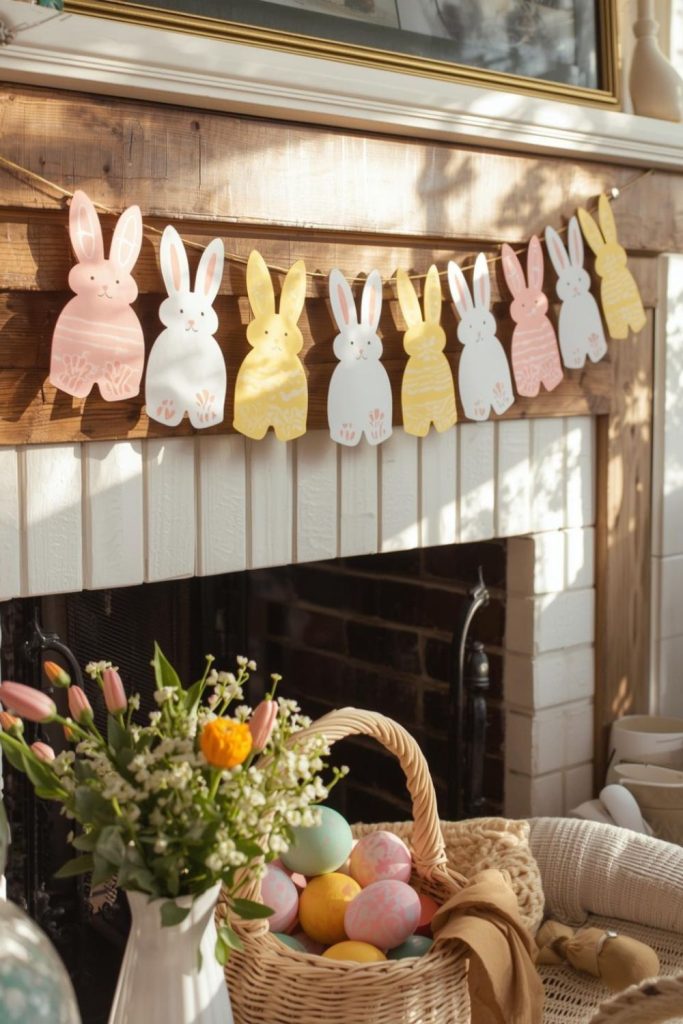
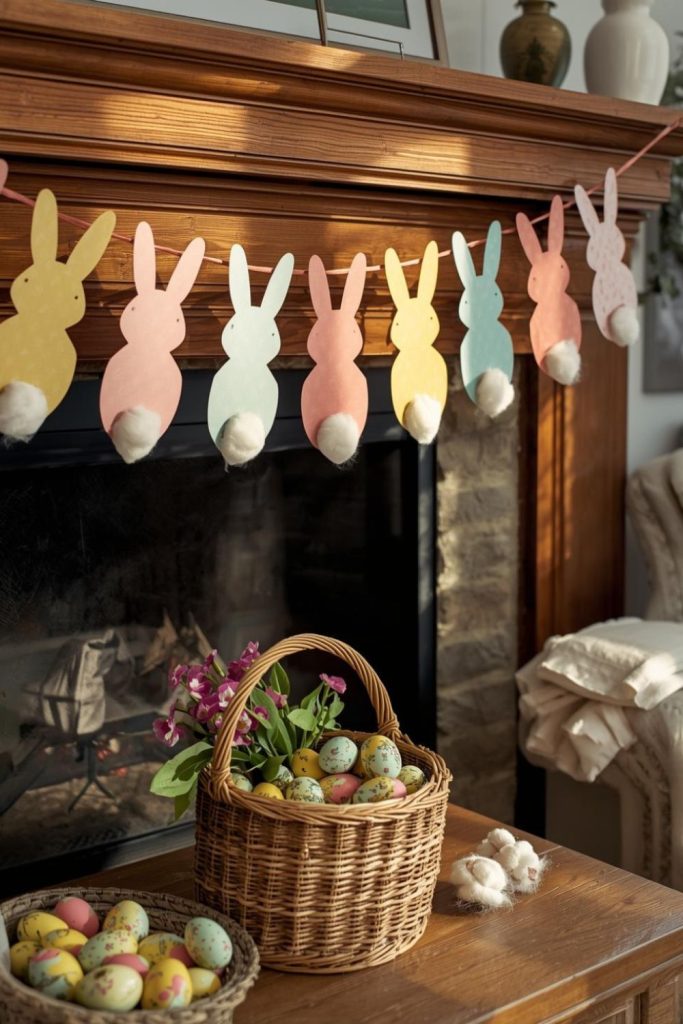
Easy paper bunny garlands kids can make for Easter
Paper bunny garlands are a simple and festive way to decorate for Easter. Kids can cut bunny shapes from colored construction paper, then add eyes, noses, and whiskers using markers, cotton balls, or stickers. Once decorated, the bunnies can be strung together on yarn or ribbon to create a garland. This project encourages fine motor skills as children cut and decorate the shapes, while also allowing them to choose colors and patterns. Parents can supervise cutting for younger kids, or pre-cut shapes for toddlers who can handle gluing and decorating. Hang the garland across windows, doors, or the mantle to instantly brighten your home with cheerful, homemade decor.
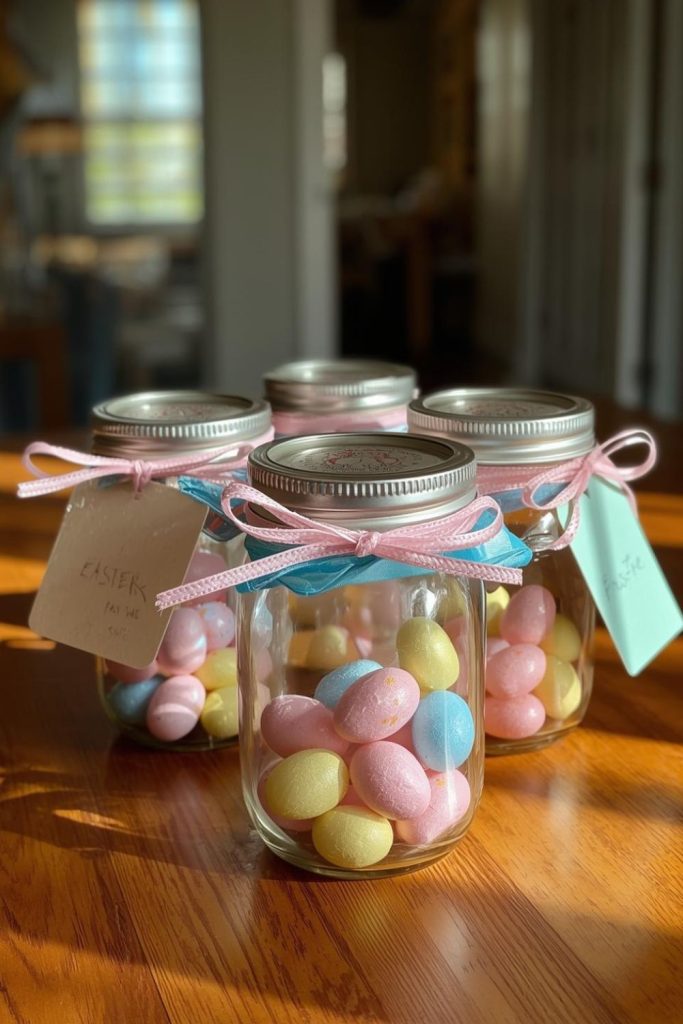
DIY mason jar candy jars decorated with Easter eggs
Mason jar candy jars are a fun, practical project for kids. Start by filling clean jars with colorful candies, small toys, or chocolate eggs. Kids can then decorate the lids and jars with ribbons, stickers, or painted designs. For a creative touch, attach small paper bunny or egg tags. These jars double as decorations or gifts for family members. The project teaches kids how to layer items, arrange colors, and decorate in a cohesive way. It’s simple enough for elementary-aged children to participate mostly independently while toddlers can assist with arranging candy or adding stickers.
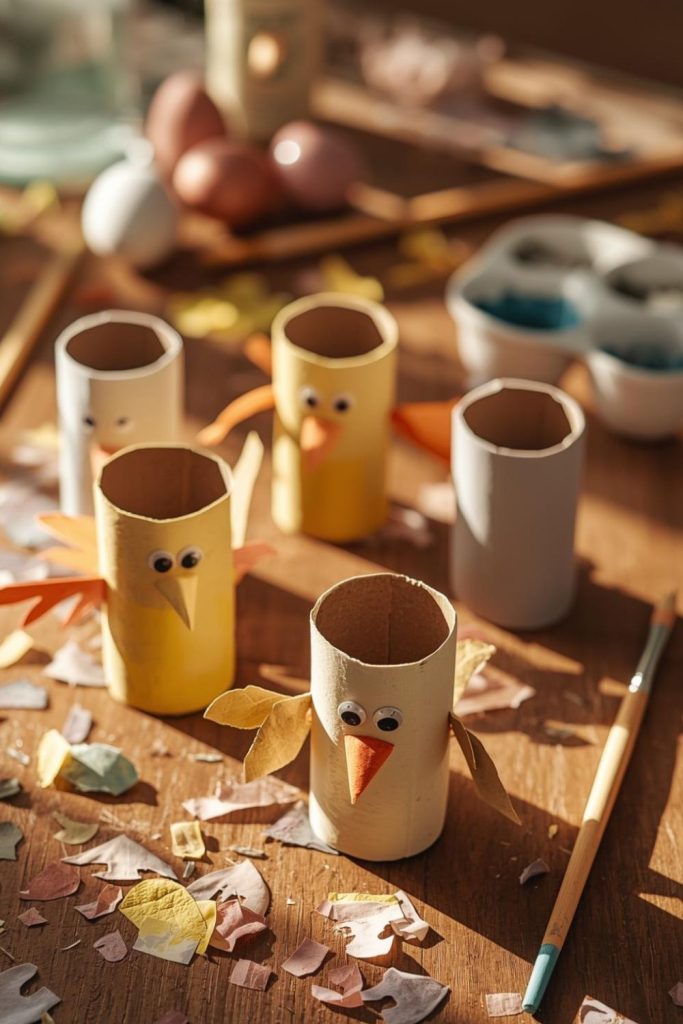
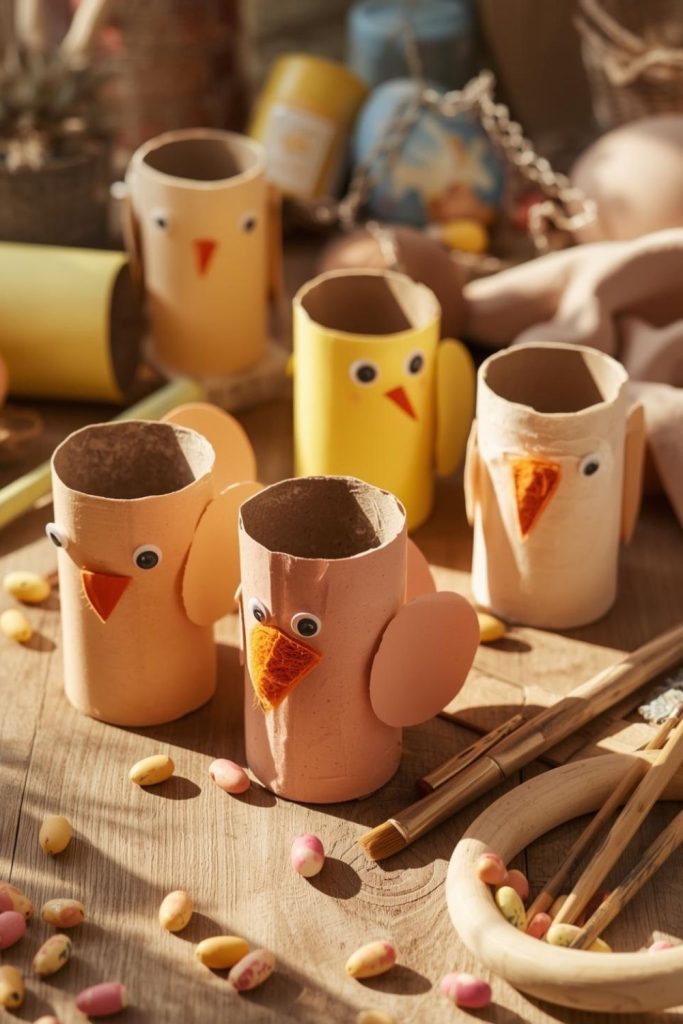
Toilet roll chicks painted with pastel colors for toddlers
Toilet roll chicks are a quick, inexpensive craft perfect for toddlers. Using empty rolls, kids can paint them in soft yellow, add orange paper beaks, and glue on googly eyes. Cotton or felt can create wings, and small scraps of paper can make feet. This project introduces toddlers to painting, gluing, and assembling in simple steps, helping them develop hand-eye coordination. Parents can pre-cut smaller parts to reduce frustration, letting toddlers focus on coloring and decorating.
Plastic egg flower bouquet crafts for spring decor
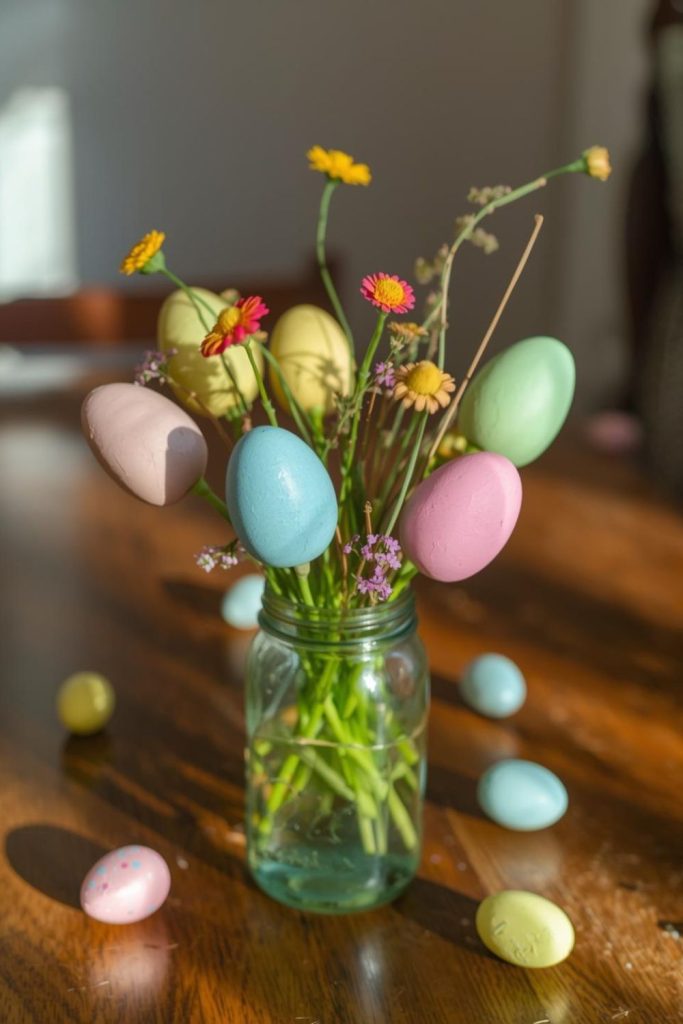
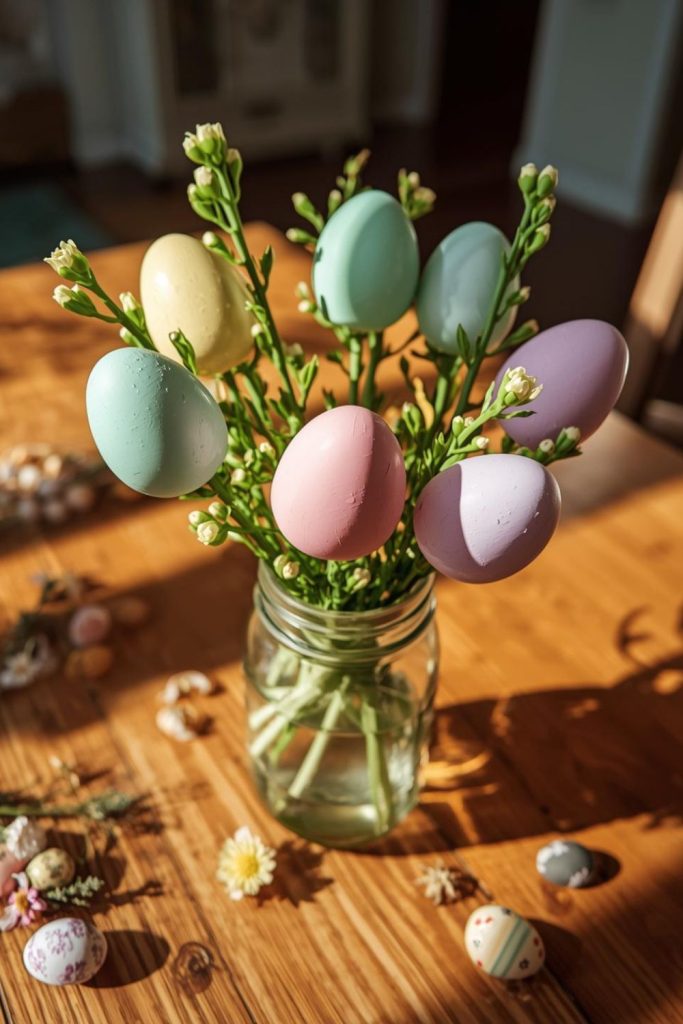
Plastic egg flower bouquets transform ordinary eggs into festive arrangements. Kids can paint or decorate eggs, then attach them to pipe cleaners or sticks to form a bouquet. Arrange them in a small vase or mason jar for a centerpiece. This project encourages planning, color coordination, and spatial awareness. Older kids can create more elaborate designs with layers or patterns, while younger children can enjoy the painting and simple assembly. The result is bright, cheerful decor that adds Easter flair to any room.
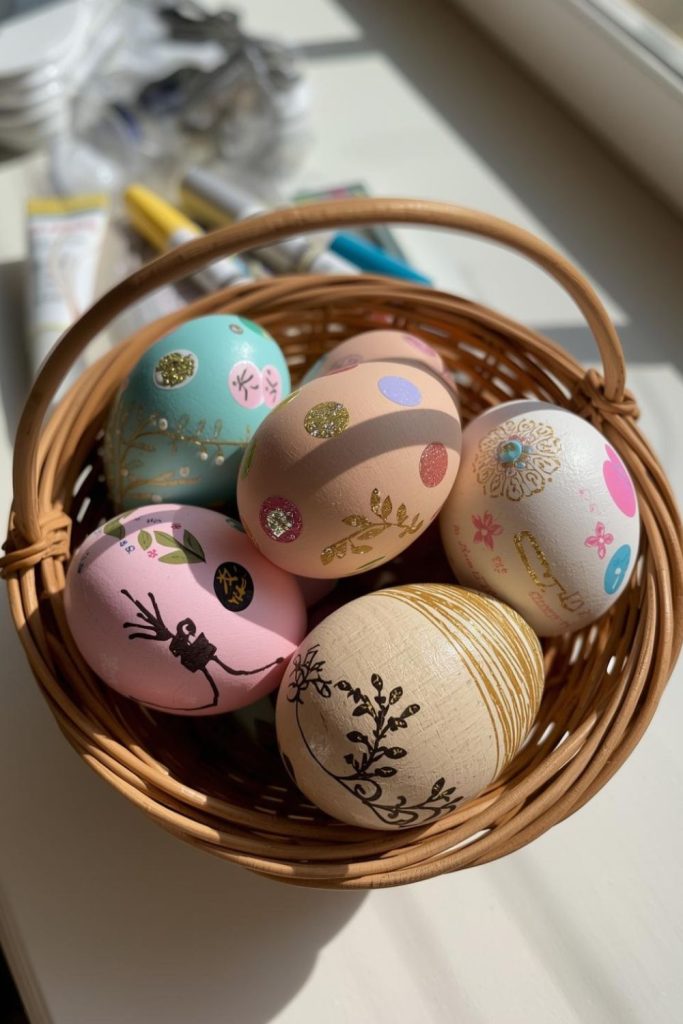
Wooden Easter egg ornaments painted by young children
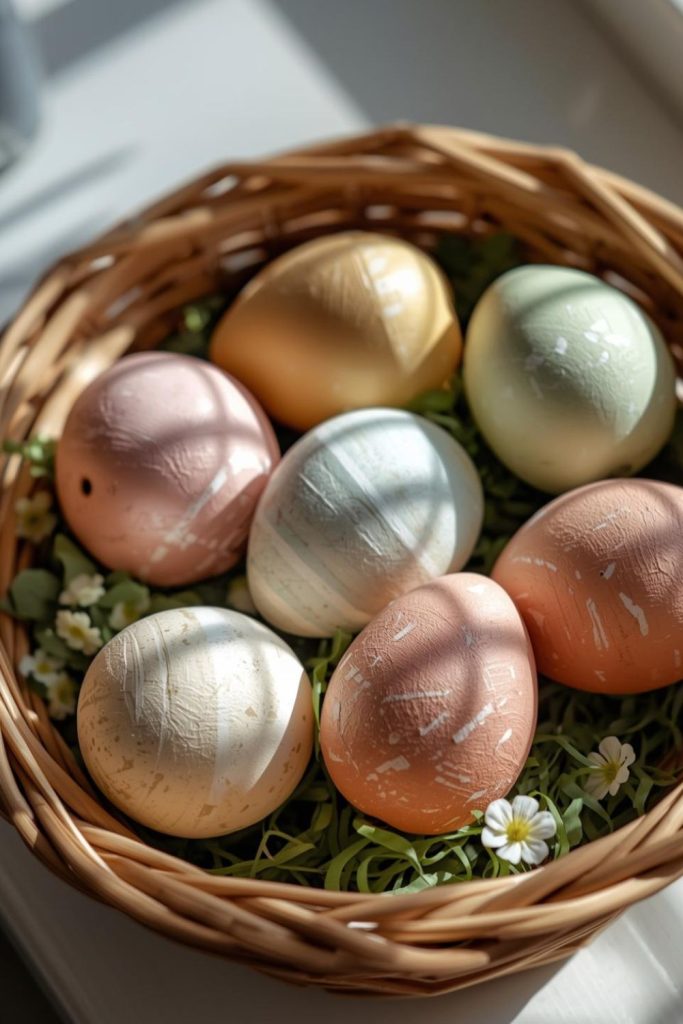
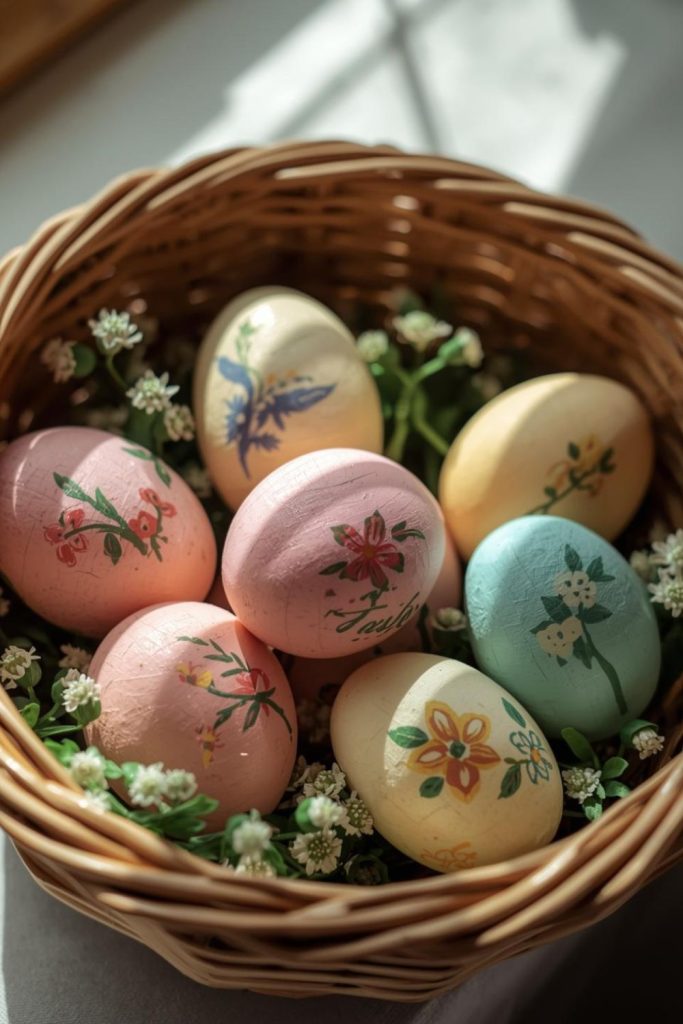
Wooden Easter eggs provide a sturdy base for painting, drawing, or gluing embellishments. Children can experiment with pastel paints, stickers, or glitter, developing fine motor skills and exploring textures. These ornaments can be hung on branches, added to baskets, or used in table centerpieces. Parents can guide designs by showing examples, or let kids freely decorate for maximum creativity. The tactile nature of wooden eggs makes them especially satisfying for small hands.
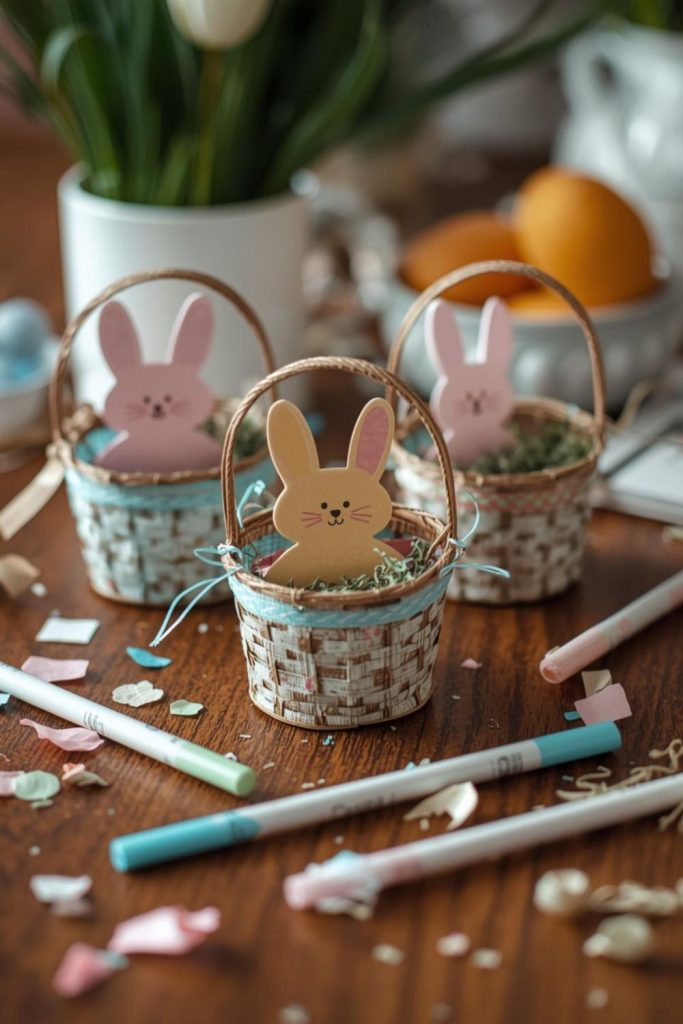
Dollar store bunny basket projects with simple supplies
Dollar store baskets can be transformed into Easter-themed creations using paper, stickers, or small craft supplies. Kids can decorate the baskets with bunnies, eggs, and flowers, turning a simple container into a festive holder for candy or small gifts. This activity teaches color coordination, pattern making, and hands-on assembly. It’s affordable and encourages kids to see how simple items can become creative projects.
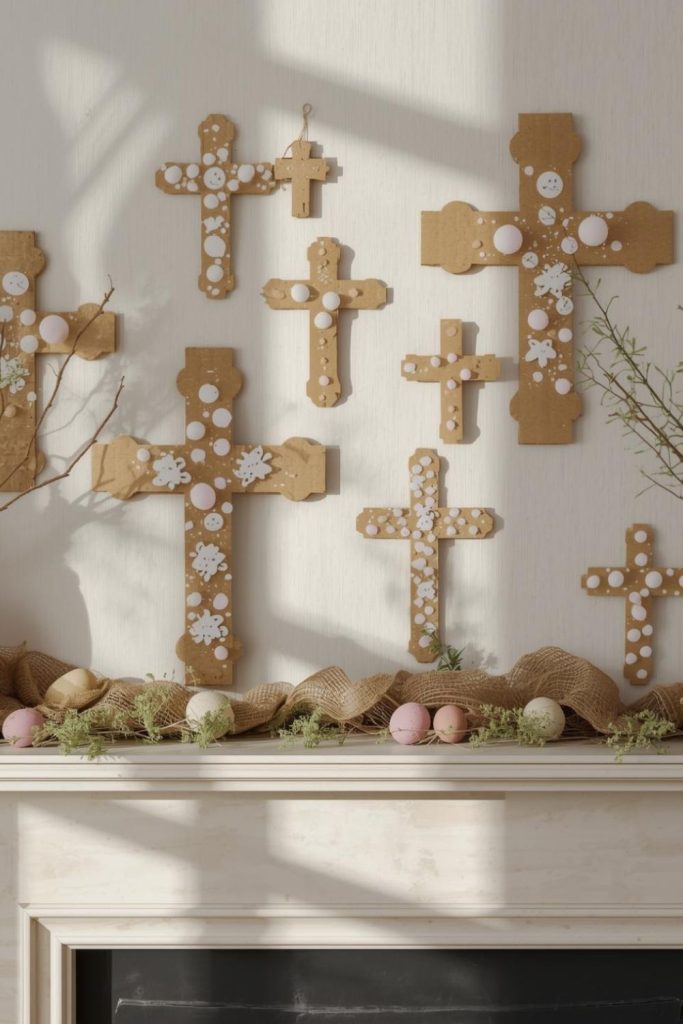
Christian cross wall hangings made from paper and cardboard
Christian-themed Easter crafts can include paper and cardboard crosses decorated with markers, stickers, or glitter. Kids can personalize them with colors or small designs. These hangings reinforce the religious meaning of Easter while allowing children to participate in creating decorations. Parents can discuss the symbolism of the cross as they craft, turning the project into a small teaching moment.
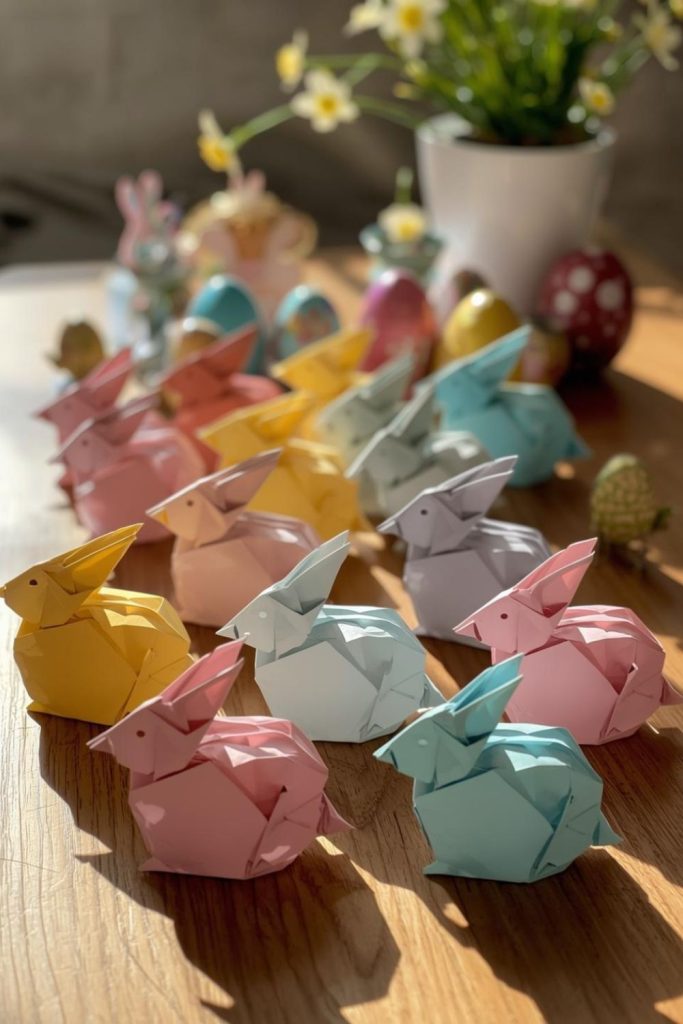
Origami Easter animals like bunnies and chicks for kids
Origami is a fun paper-folding activity that older kids can enjoy. Bunnies, chicks, and eggs can be made with colorful paper and decorated with markers or stickers. The folding process builds patience, fine motor skills, and following step-by-step instructions. Parents can demonstrate folds and offer help with tricky steps, while letting kids handle simpler folds themselves. Finished animals make cute decorations or additions to baskets.
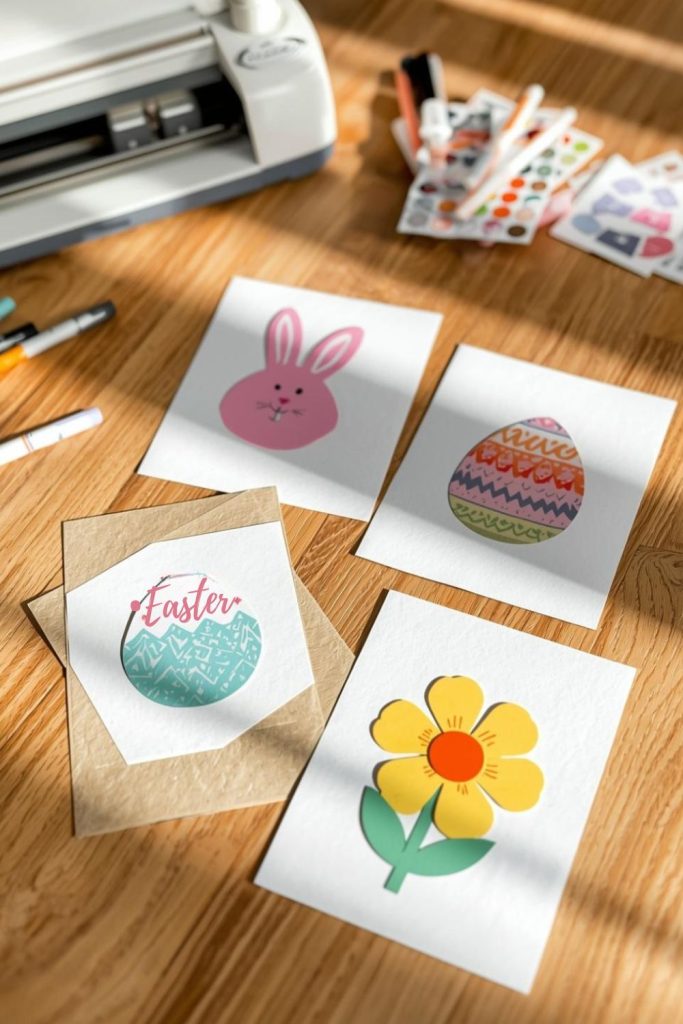
Cricut-cut paper Easter cards kids can assemble
Using a Cricut machine, parents can pre-cut shapes like bunnies, eggs, or flowers. Kids can then assemble the pieces into greeting cards or small wall decorations. This project encourages design skills and creativity while letting children participate safely without handling the machine themselves. Cards can be personalized with messages or drawings, making them meaningful gifts for family and friends.
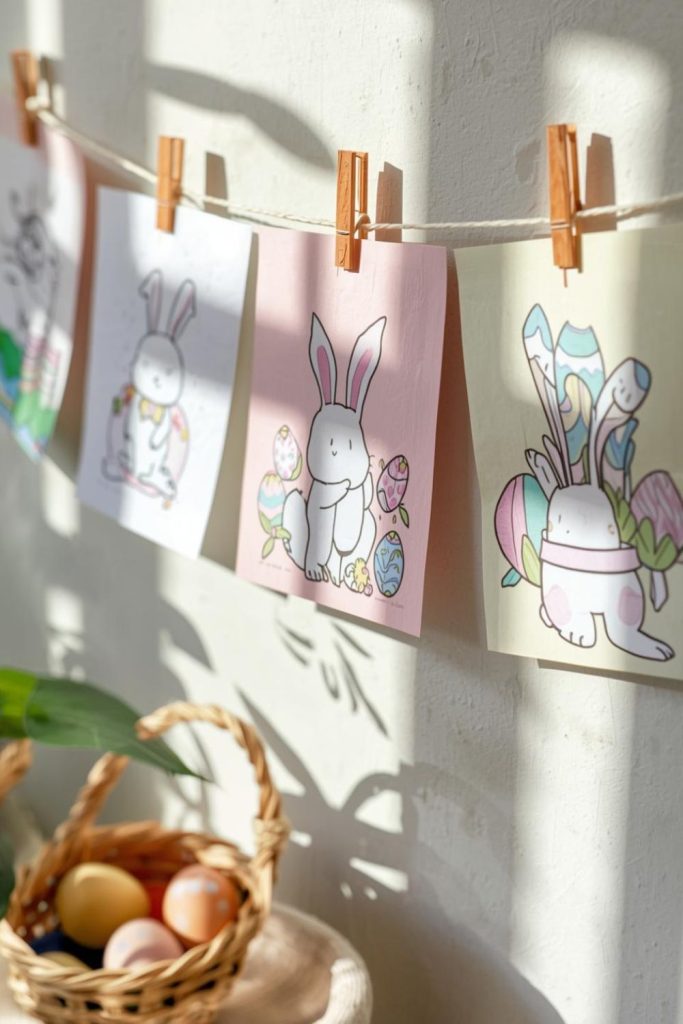
Printable Easter coloring sheets turned into hanging decor
Printable Easter coloring sheets are an easy way to create decorations. Kids can color eggs, bunnies, or chicks and then hang them on a string or attach them to walls. This project is simple for toddlers and preschoolers and allows them to choose colors, patterns, and designs. It’s low-prep and cost-effective, while still producing cheerful, personalized decor.
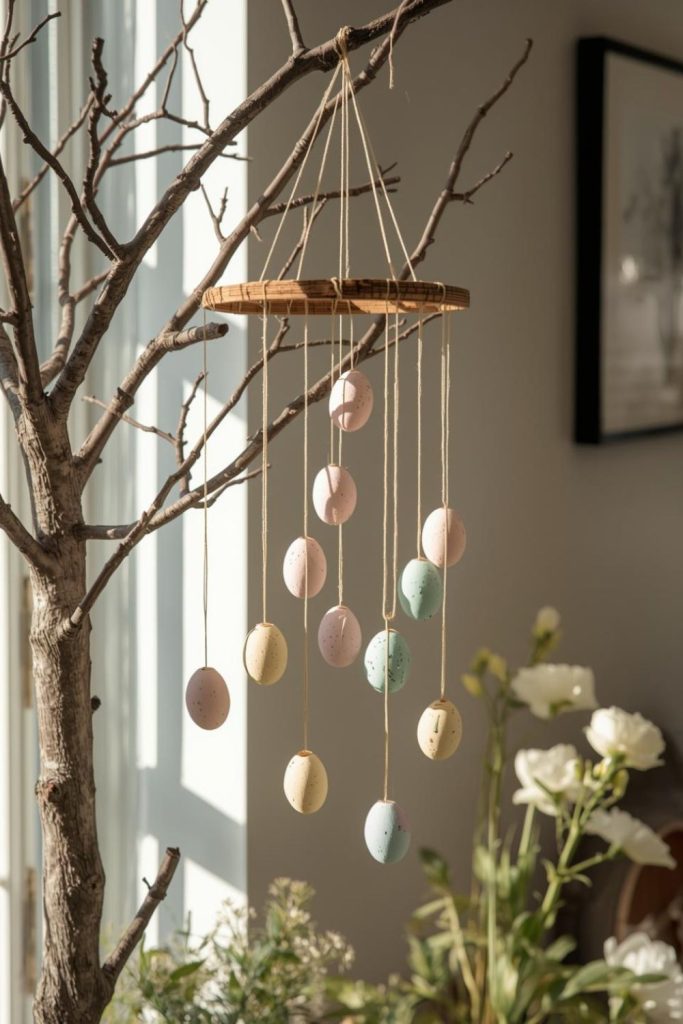
Tree branch Easter egg mobile made by preschoolers
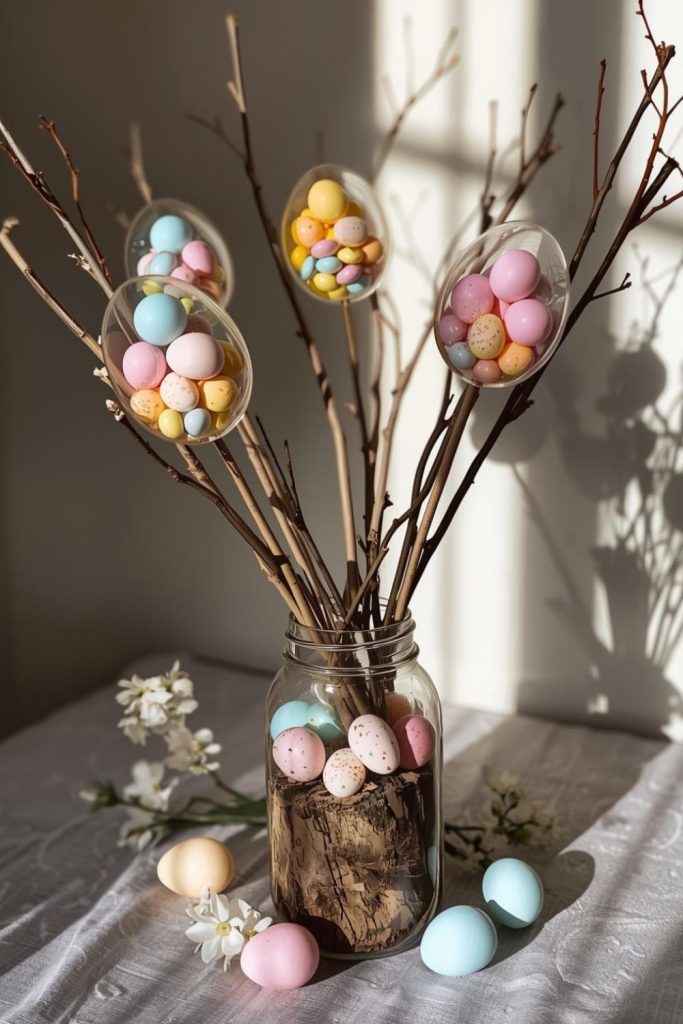
A tree branch can be decorated with hanging Easter eggs painted by kids. Each egg can be attached to string and tied to the branch to create a mobile. This project encourages fine motor skills and spatial planning. Parents can supervise the tying of strings or pre-punch holes in the eggs, letting kids focus on painting and decorating. The finished mobile makes a striking centerpiece for any room.
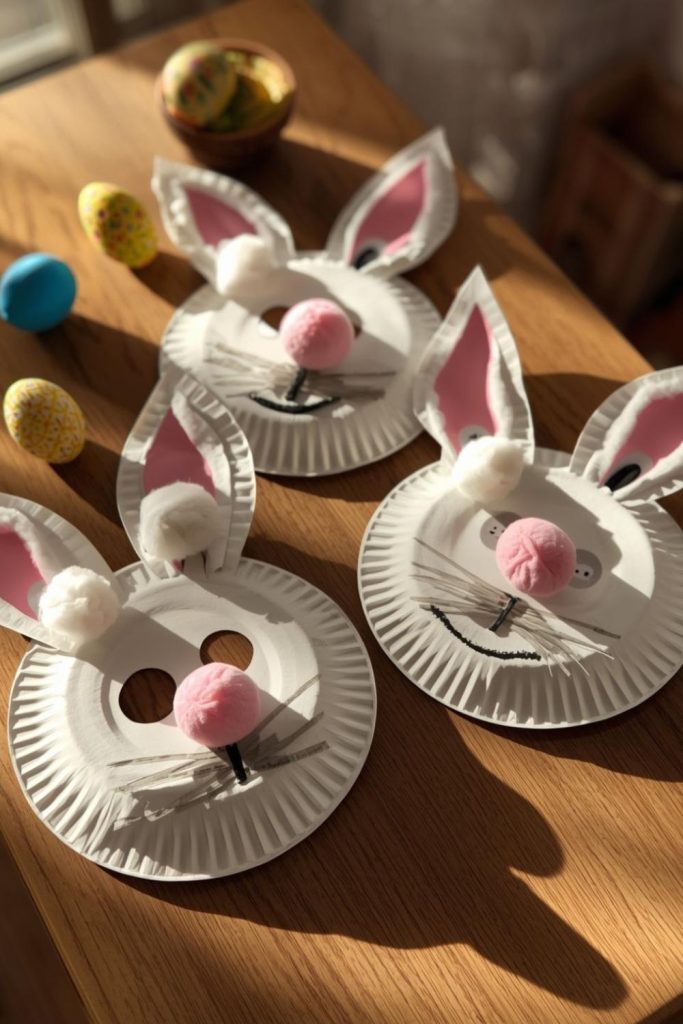
Bunny face masks crafted from paper plates and cotton
Paper plate masks can be decorated into bunny faces using cotton balls, markers, and glue. Kids can wear them for Easter games or photo opportunities. This project is tactile and fun, letting toddlers and preschoolers explore textures and colors. Parents can help with cutting out eye holes or attaching elastic bands.
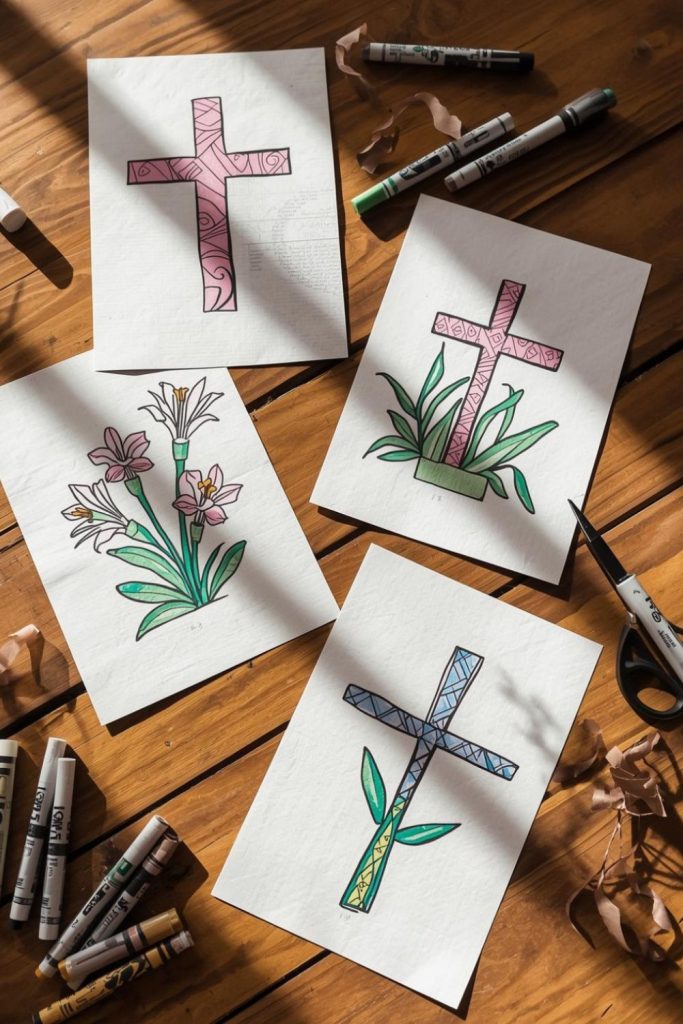
Jesus-themed Easter art using construction paper and markers
Using construction paper and markers, kids can create drawings or collages depicting Easter scenes such as crosses, lilies, or Jesus symbols. This activity encourages creativity while allowing parents to share the religious meaning of Easter. Projects can be displayed around the home or used for Sunday school lessons.
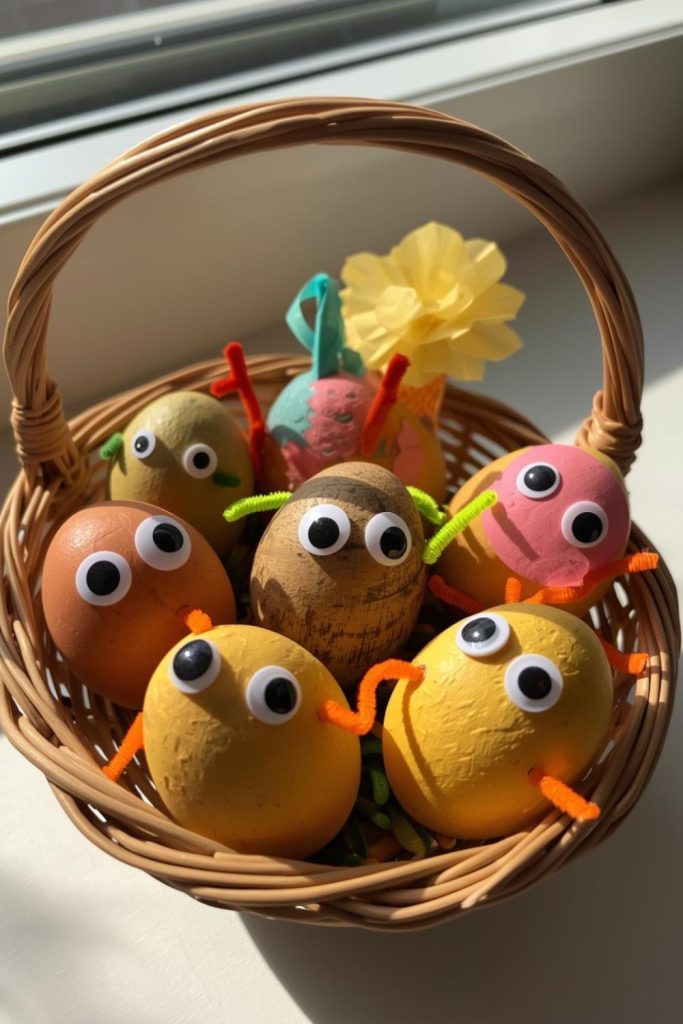
Cute Easter egg characters with googly eyes and pipe cleaners
Plastic or wooden eggs can be turned into little characters with googly eyes, pipe cleaner limbs, and paper accessories. This encourages imagination, fine motor skills, and color coordination. Children can make multiple characters and create mini scenes for play or display.
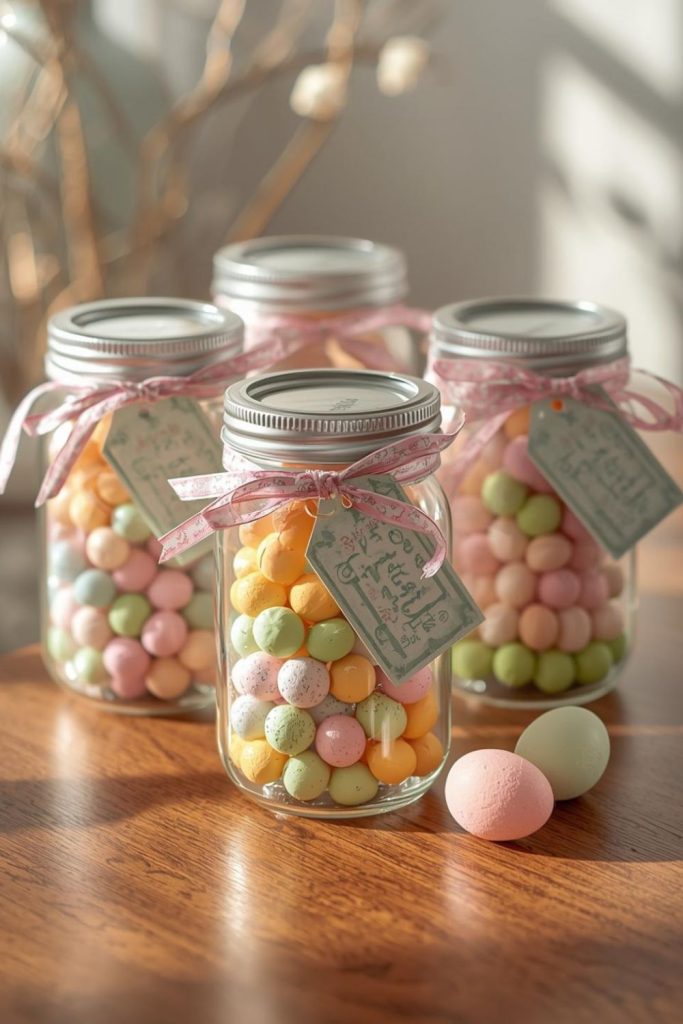
Jar gifts filled with pastel candies and handmade tags
Mason jars filled with pastel candies or small treats can be decorated with ribbons, stickers, or handmade tags. Kids can write messages or draw decorations on the tags. This project combines fine motor skills, creativity, and a sense of gift-giving. Finished jars make great gifts for family, neighbors, or teachers.
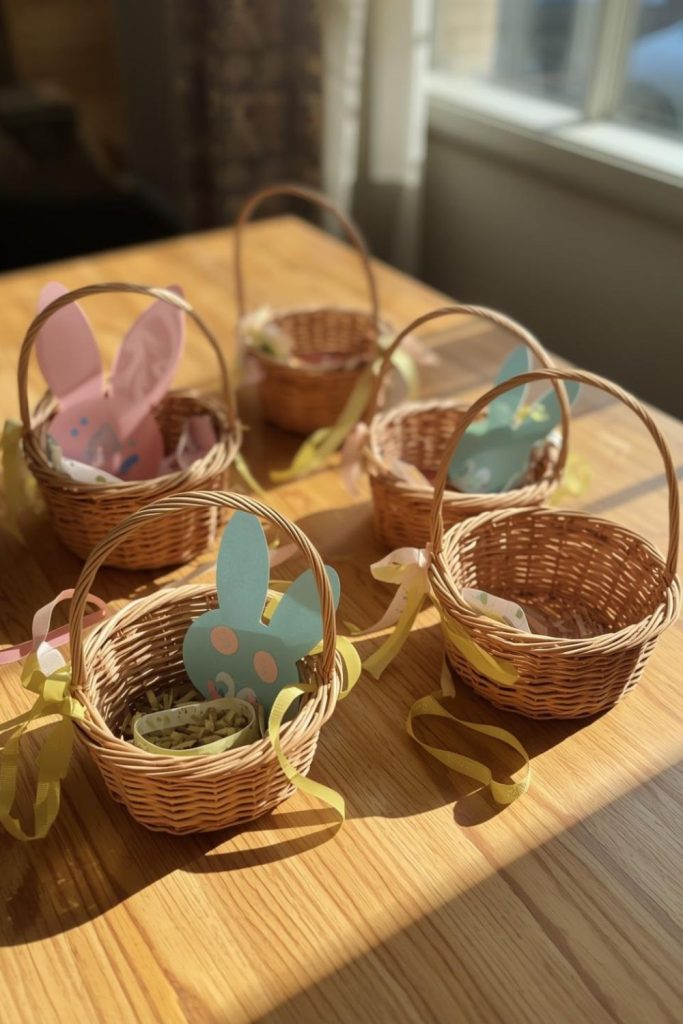
DIY Easter baskets decorated with stickers and ribbons
Kids can decorate simple baskets using stickers, ribbons, or cut paper shapes. Baskets can hold candy, eggs, or small toys. This project teaches design, patterning, and hands-on assembly skills. Younger children can focus on decoration, while older kids can help arrange contents neatly.
Recycled material Easter decorations kids can paint
Recycled materials like bottle caps, egg cartons, or cardboard can be transformed into colorful Easter decorations. Kids can paint, glue, and arrange them into flowers, eggs, or bunnies. This activity teaches resourcefulness, creativity, and environmental awareness.
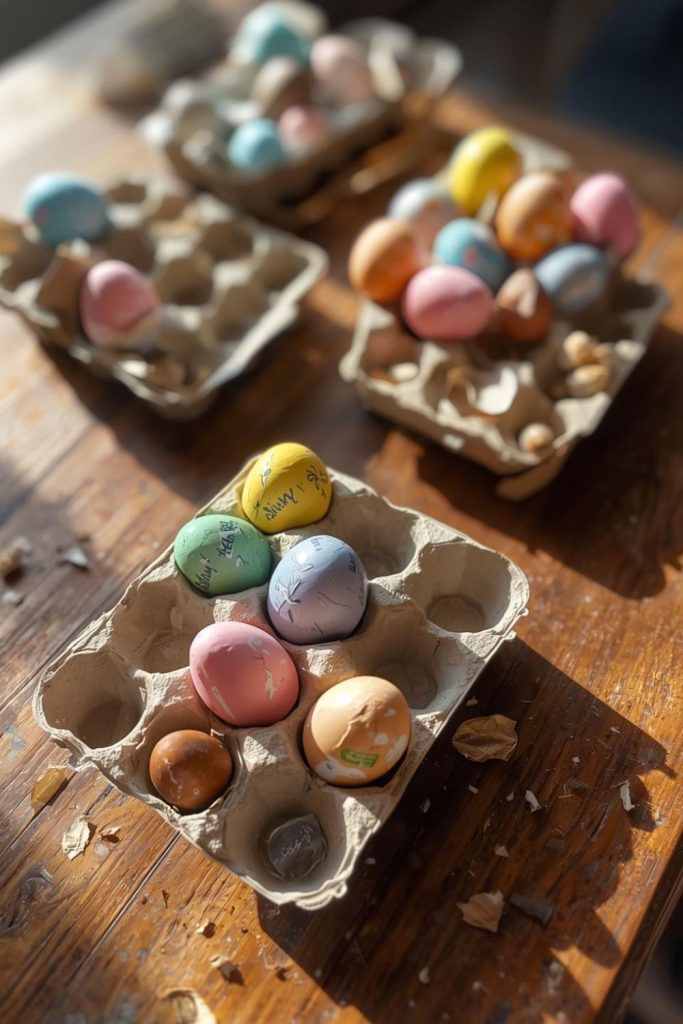
Hand-painted mini wooden eggs for small Easter gifts
Mini wooden eggs can be painted in pastel colors or with patterns. Children can personalize each egg, creating unique small gifts. These eggs are perfect for baskets, table settings, or as standalone decorations. The activity develops fine motor skills and attention to detail.
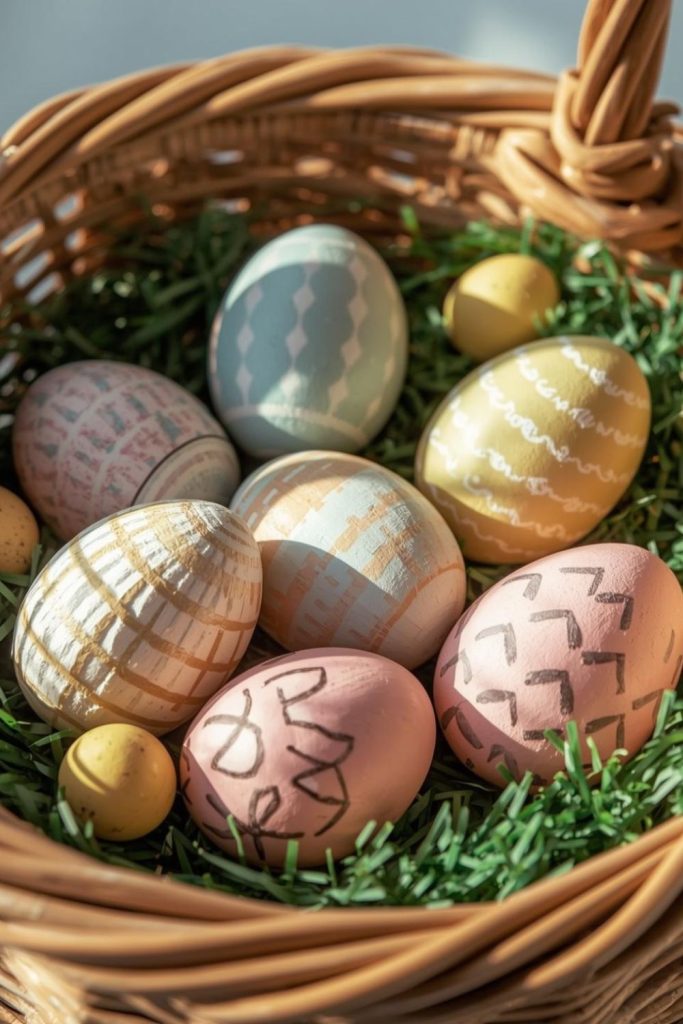
Sidewalk chalk Easter hopscotch and outdoor crafts
Outdoor crafts like Easter-themed hopscotch using sidewalk chalk are simple, fun, and get kids moving. Kids can draw eggs, bunnies, or numbers for games. Parents can join in to encourage active play and reinforce counting or color recognition. It’s a low-cost, safe, and highly enjoyable activity for toddlers and older children alike.
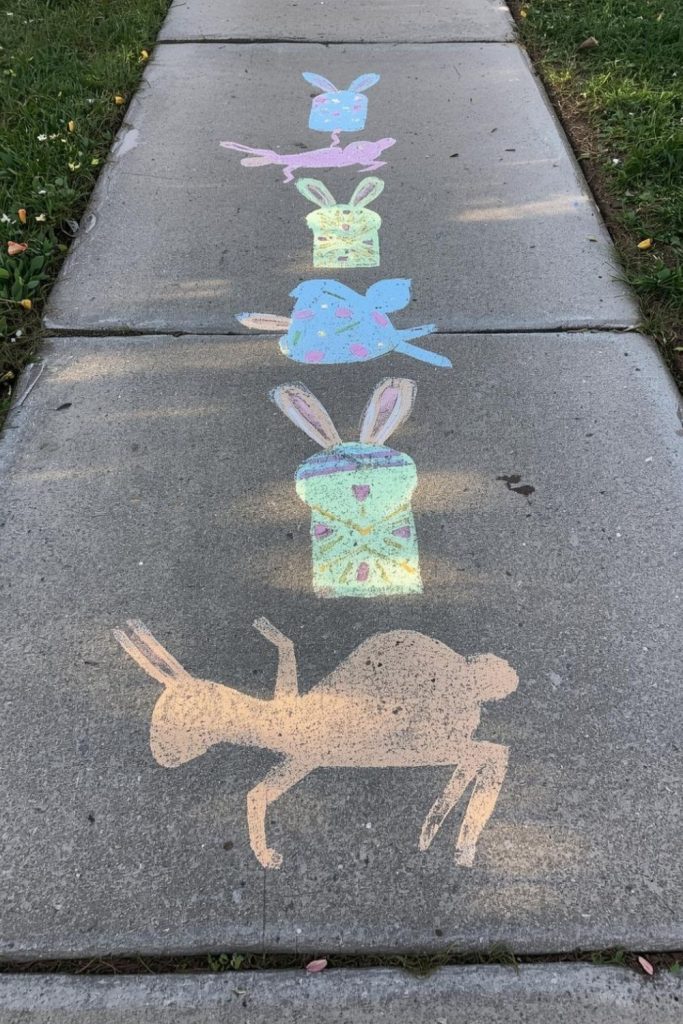
Bunny-themed paper crowns for toddlers’ Easter play
Paper crowns shaped like bunnies are easy for toddlers to wear and decorate. Kids can use markers, stickers, or cotton for ears. The crowns encourage role play, creativity, and fine motor skills. Parents can pre-cut the crown shapes, letting toddlers focus on coloring and decorating.
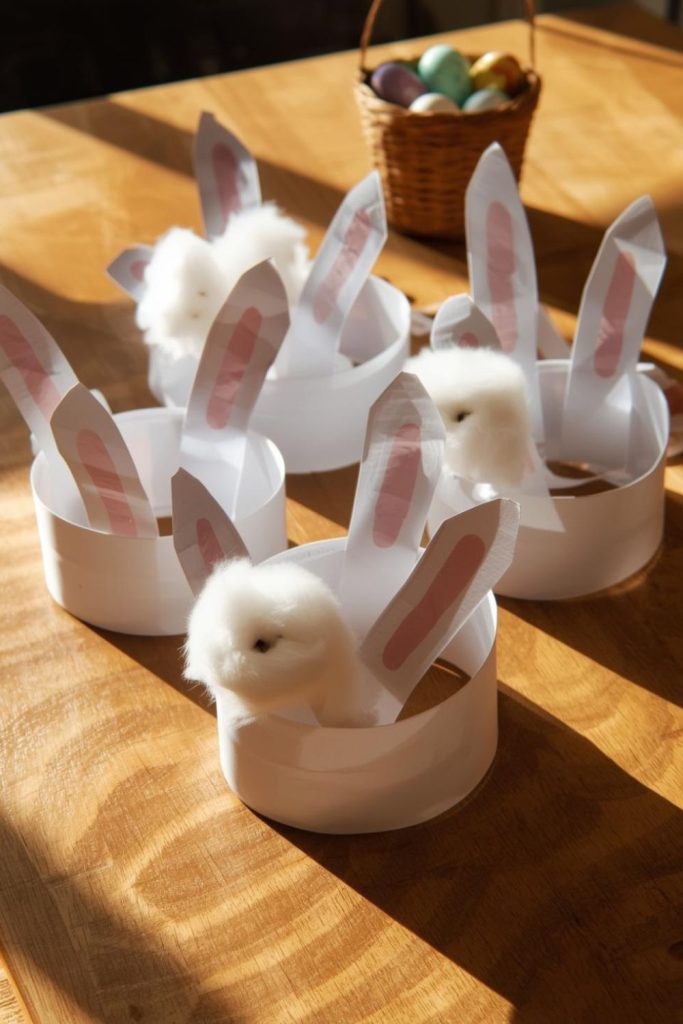
Step-by-step paper bunny craft tutorial kids can follow
A paper bunny tutorial provides instructions for folding, cutting, and assembling a bunny from paper. Kids can follow the steps with minimal supervision, learning sequencing, patience, and precision. Finished bunnies can decorate rooms, baskets, or be given as gifts.
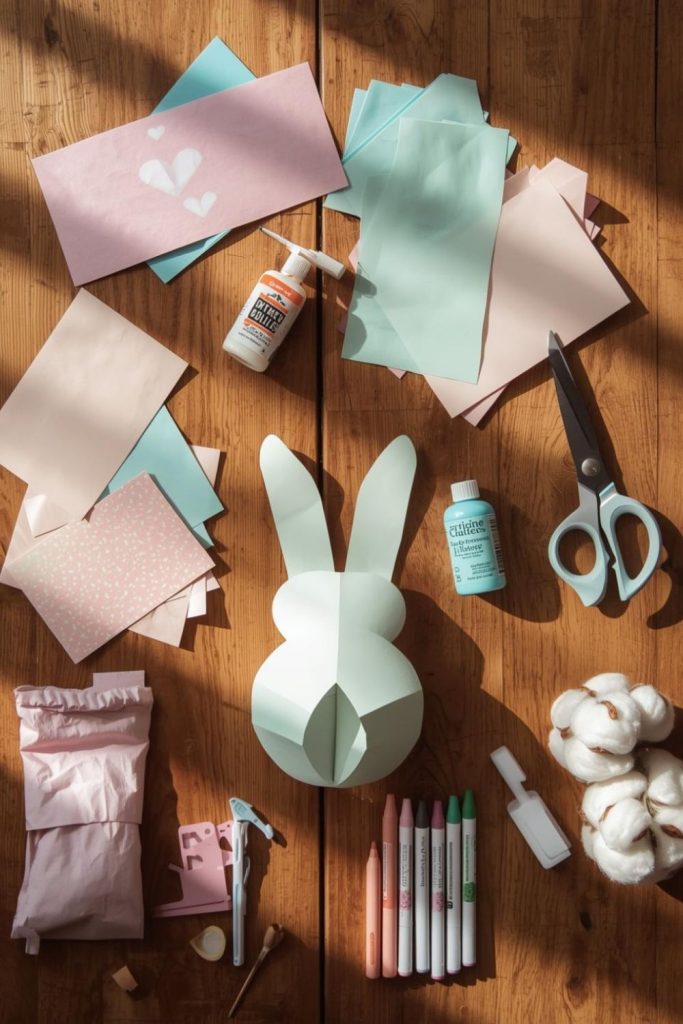
Decorative Easter eggs using stickers, glitter, and markers
Plastic, wooden, or paper eggs can be decorated with stickers, glitter, and markers. Kids enjoy experimenting with patterns, colors, and textures. Parents can help younger children with precise gluing or layering effects. These eggs make festive decor for baskets, tables, or mobiles.
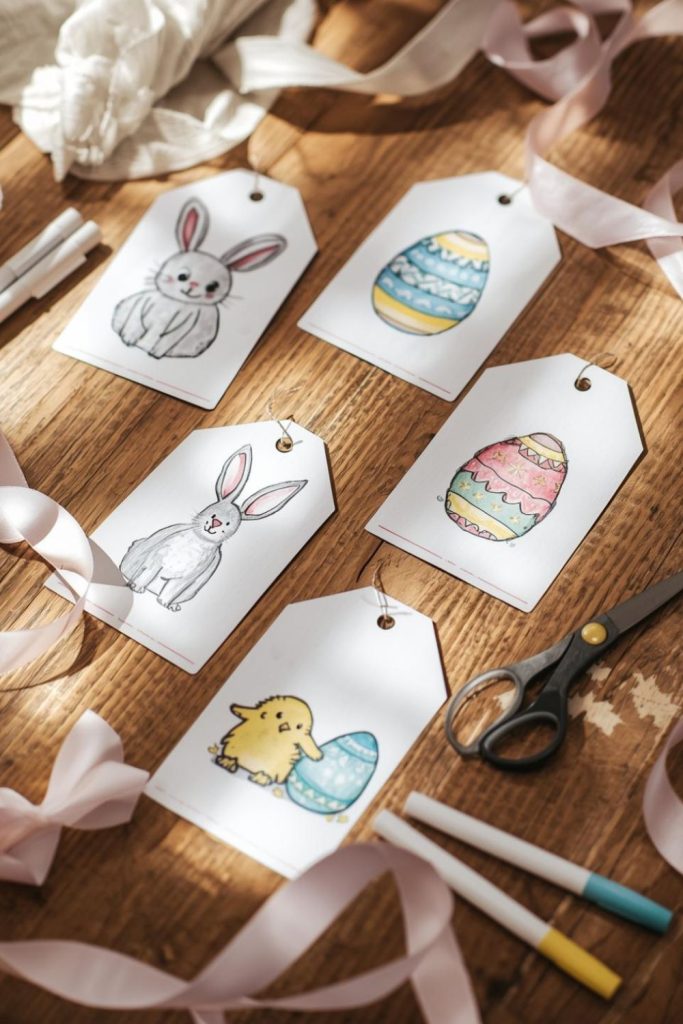
Homemade Easter gift tags with fun kid drawings
Kids can create personalized gift tags with drawings of bunnies, eggs, or chicks. Tags can be attached to baskets, jars, or gifts. This simple activity encourages creativity, drawing skills, and personal expression.
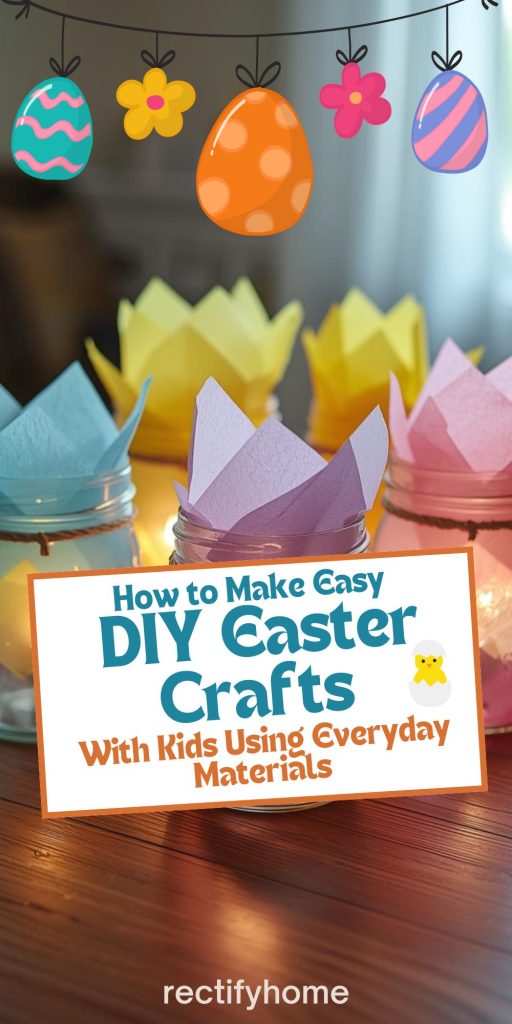
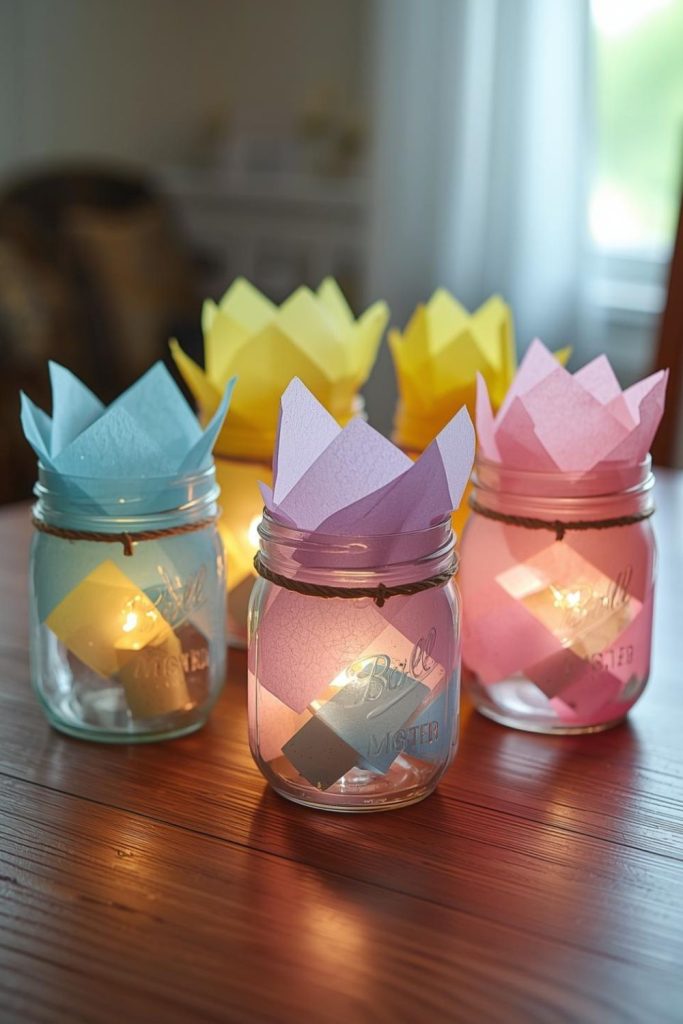
Mason jar Easter lanterns with tissue paper and LED lights
Mason jars can be turned into colorful lanterns with tissue paper and battery-operated LED lights. Kids can tear, glue, and decorate tissue paper to cover jars. The lanterns create a festive atmosphere and allow children to explore layering, color blending, and hands-on assembly.
DIY candy-filled plastic egg tree centerpiece for Easter table
Plastic eggs filled with candy can be arranged on branches or sticks to create a small centerpiece. Kids can decorate the eggs with stickers, markers, or paint. This project combines decorating, color coordination, and arrangement skills. The finished piece adds a cheerful, interactive touch to any Easter table.