
A basement often starts as extra square footage, then slowly turns into the most used room in the house once a TV goes in. Choosing the right layout for a basement TV wall is not about copying a photo online, it comes from understanding how the space actually works day to day. Homeowners upgrading a finished or semi finished basement usually want comfort, visual balance, and a setup that feels natural for movie nights, sports games, or casual family time. That is why basement tv wall ideas need to connect layout, seating, lighting, storage, and style without forcing the room to feel crowded or awkward. A good TV wall feels intentional, like it belongs there, not added as an afterthought. This guide walks through practical layout choices first, then opens the door to bold and visually striking basement tv wall ideas that can shape the entire mood of the room. Each section builds on how people actually use their basement, making decisions easier and more confident.
What is the best wall placement for a TV based on my basement’s size, shape, and traffic flow?
Wall placement sets the tone for every basement tv wall idea that follows. In a long rectangular basement, the TV often works best on the shorter wall so seating does not stretch too far back. Square basements allow more flexibility, but traffic flow matters just as much as shape. If people constantly walk in front of the screen to reach stairs, a bathroom, or storage, the layout will feel frustrating no matter how stylish the wall looks. A TV wall should face the main seating area while staying clear of walkways.
Support columns and low soffits also affect placement. Many homeowners hide these features by turning them into part of the TV wall, using panels or built ins to blend everything together. Avoid placing the TV on a wall shared with noisy mechanical rooms if possible, sound vibration can travel more than expected. The best basement tv wall ideas feel natural because the TV sits where the room already wants attention to go, not where it barely fits.
How do viewing distance and seating arrangement affect the ideal basement TV wall layout?
Viewing distance shapes comfort more than screen size alone. A TV that feels perfect in a living room may feel overwhelming or too small in a basement depending on how seating is arranged. Sectionals, recliners, and theater seating all demand different spacing. A good rule is to measure seating placement first, then choose the TV wall position that allows relaxed viewing without neck strain.
Basement tv wall ideas work best when seating lines up directly with the screen, not angled sharply from corners. If the basement doubles as a play or game space, flexible seating such as swivel chairs or modular sofas can help maintain good viewing angles. Raised seating in larger basements can also influence wall height and mounting position. A thoughtful seating plan makes the TV wall feel welcoming instead of dominating the room in an uncomfortable way.
How should ceiling height and basement lighting influence basement TV wall ideas?
Low ceilings are common in basements, and ignoring them can make a TV wall feel heavy. Mounting the TV slightly lower than eye level often works better, keeping the wall from feeling top heavy. Floor to ceiling designs should be visually broken up using shelves, textures, or lighting so they do not feel like a solid block.
Lighting affects how the wall looks when the TV is off just as much as when it is on. Recessed lights, wall washers, and soft LED strips help reduce glare while adding depth. Darker wall colors can work well in basements when balanced with controlled lighting. Basement tv wall ideas that respect ceiling height and light placement tend to feel calmer and easier on the eyes, even during long movie nights.
What type of storage and built-ins work best with different basement TV wall layouts?
Storage should support how the basement is used, not fight it. Families with kids may need closed cabinets to hide games and accessories, while media focused basements benefit from open shelves for speakers and décor. Built ins that stretch horizontally can make narrow basements feel wider, while vertical storage draws attention upward in rooms with decent ceiling height.
Symmetry helps keep the wall visually balanced, especially when the TV is large. Mixing open and closed storage keeps the space from feeling cluttered. Basement tv wall ideas that integrate storage into the wall design look more finished and reduce the need for extra furniture, which keeps walkways clear and seating comfortable.
How can I plan cable management and technology placement for a clean, functional basement TV wall design?
A clean TV wall depends on planning cables before the wall is finished, not after. In wall wiring, power outlets placed behind the TV, and hidden channels inside built ins prevent messy cords from ruining the look. Equipment like receivers, gaming consoles, and streaming boxes should live close enough for signal strength but far enough to avoid overheating.
Ventilation is often overlooked in basement tv wall ideas. Cabinets need airflow or small vents to keep electronics running smoothly. Remote friendly solutions like IR repeaters or RF remotes allow doors to stay closed without losing control. A clean wall keeps attention on the screen and design instead of tangled wires and blinking lights.
Floor to ceiling TV wall designs that become the basement’s focal point
A floor to ceiling TV wall commands attention the moment someone enters the basement. This approach works well in larger spaces where the wall can breathe without overwhelming the room. Vertical panels, textured finishes, or layered shelving help break up the height and keep the design visually comfortable.
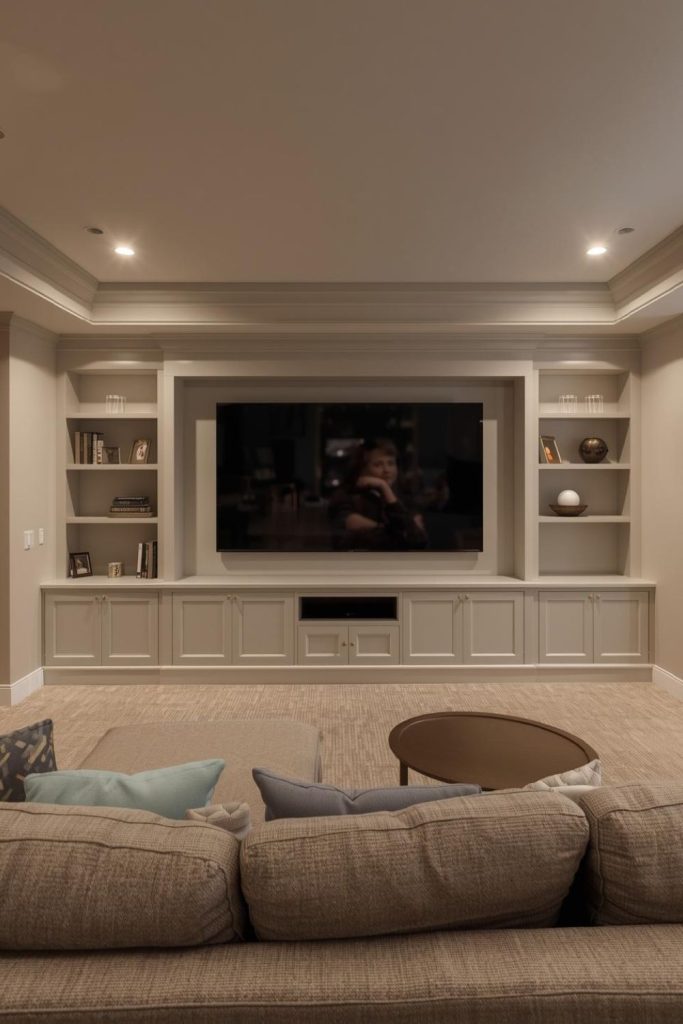
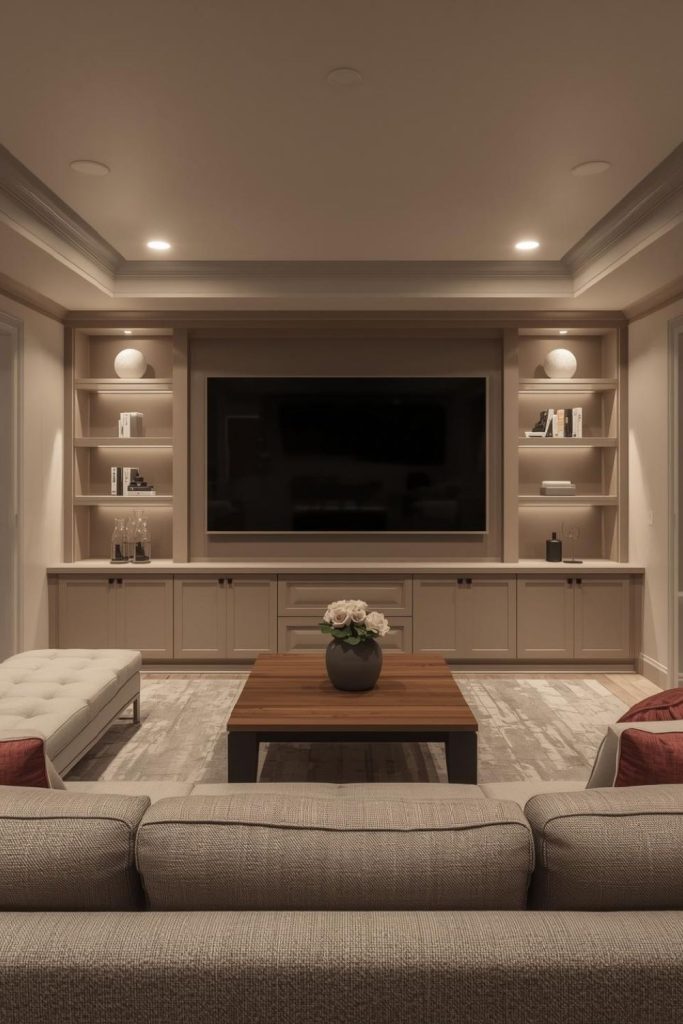
Basement tv wall ideas like this often combine storage, lighting, and décor into one unified feature. When done well, the TV feels built in rather than mounted, giving the basement a custom look that feels intentional and polished.
LED backlit TV walls that transform low light basements
LED backlighting changes how a basement feels without taking up space. Soft light behind the TV reduces eye strain and adds depth to flat walls. Color temperature matters here, warmer tones feel cozy while cooler tones lean modern.
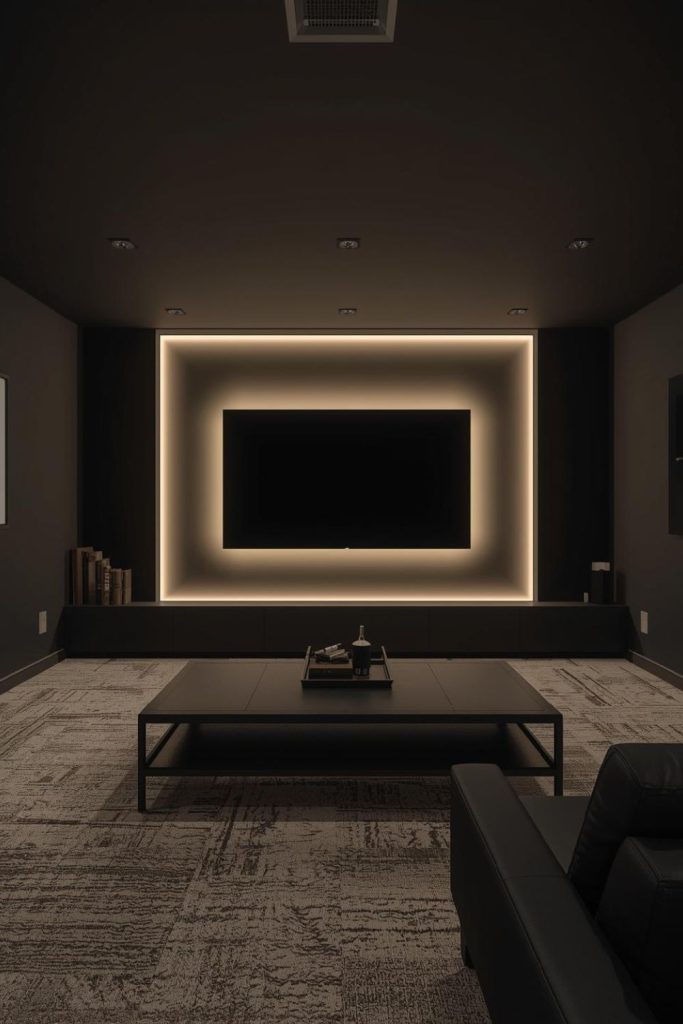
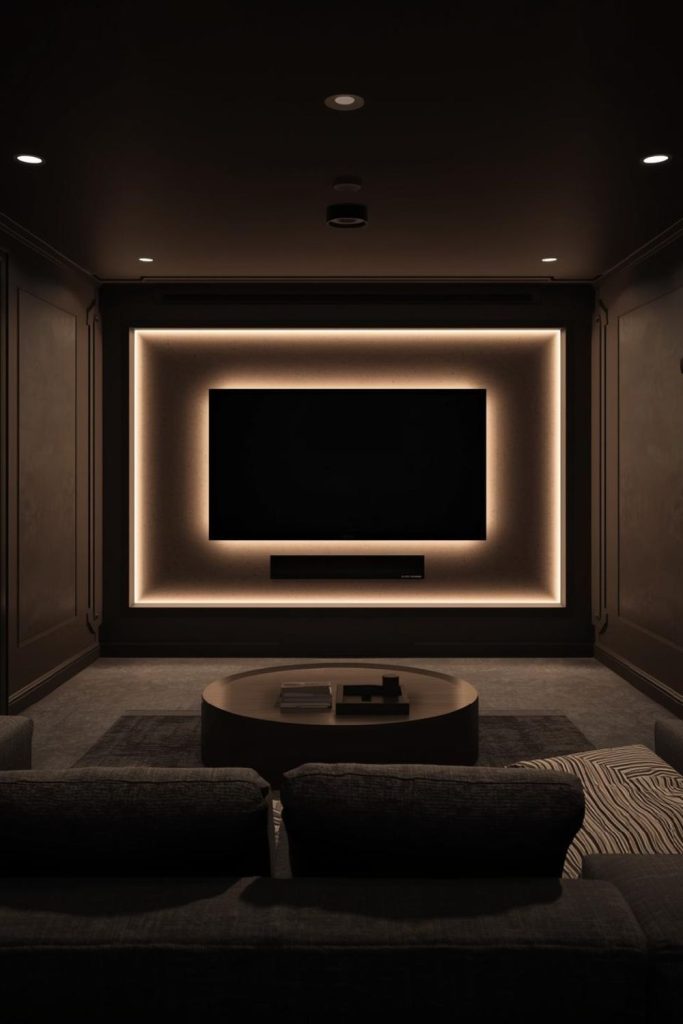
These basement tv wall ideas shine in darker basements where natural light is minimal. Subtle lighting makes the wall feel alive even when the TV is off, though sometimes brightness levels need adjusting to avoid distraction.
Built in media walls with hidden doors and seamless storage
Hidden doors and push to open cabinets keep the wall looking clean and uncluttered. Storage disappears until it is needed, which works well for families who want flexibility.
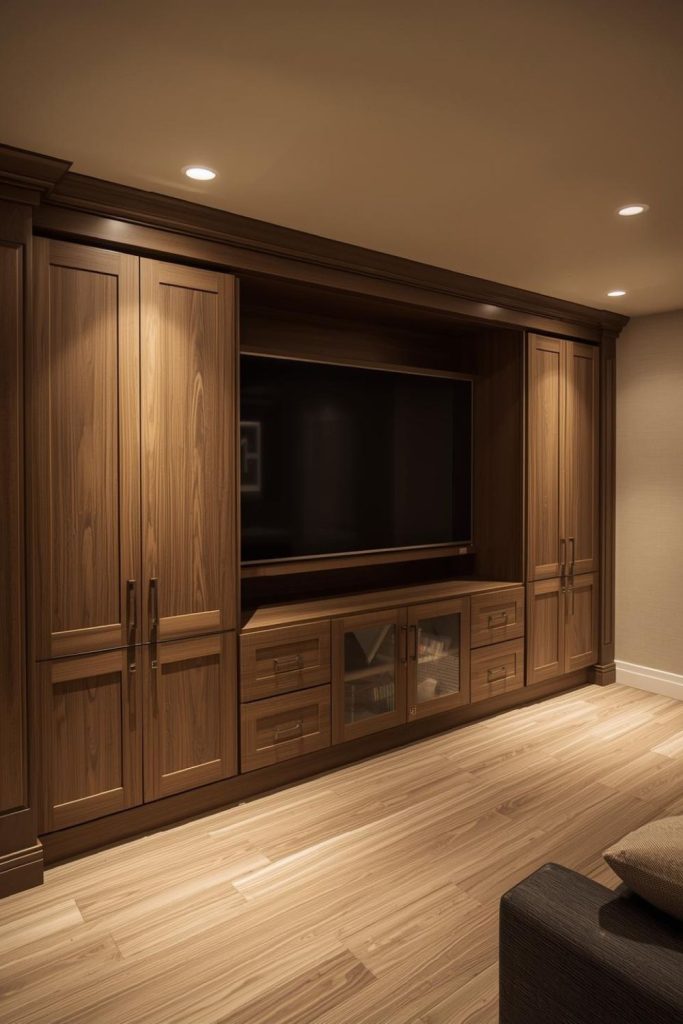
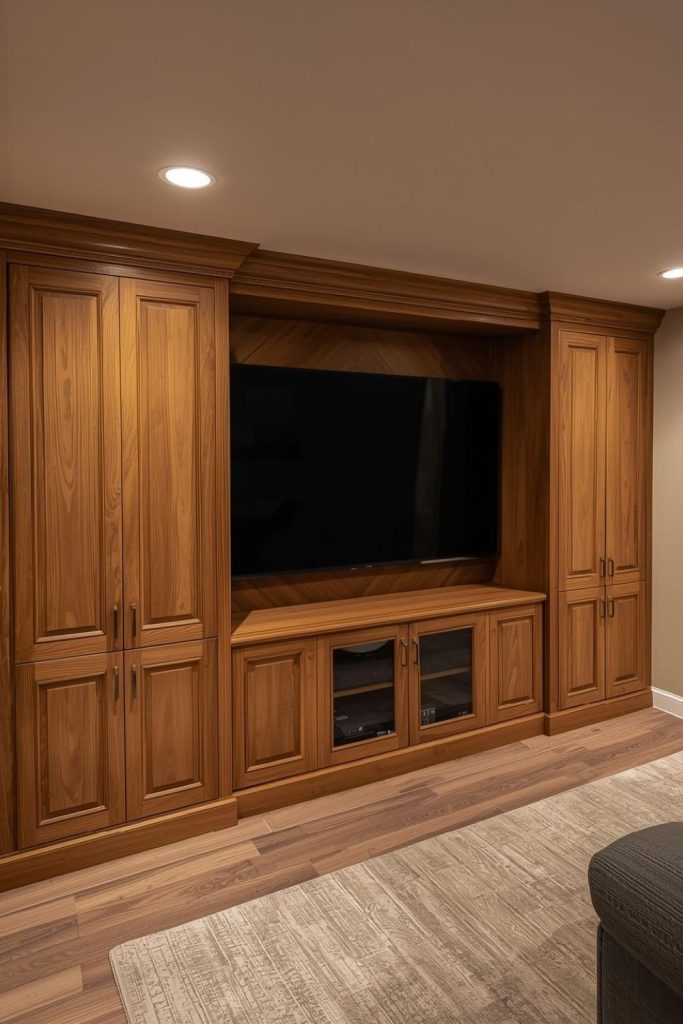
Basement tv wall ideas with hidden features feel calm and organized, though they require careful planning so everything stays accessible. The result often feels more like custom furniture than simple cabinetry.
Stone and brick accent TV walls for dramatic texture
Stone and brick bring texture that drywall can not match. Even a partial accent wall can ground the space and add warmth. Lighter stone works well in smaller basements, while darker brick suits media rooms.
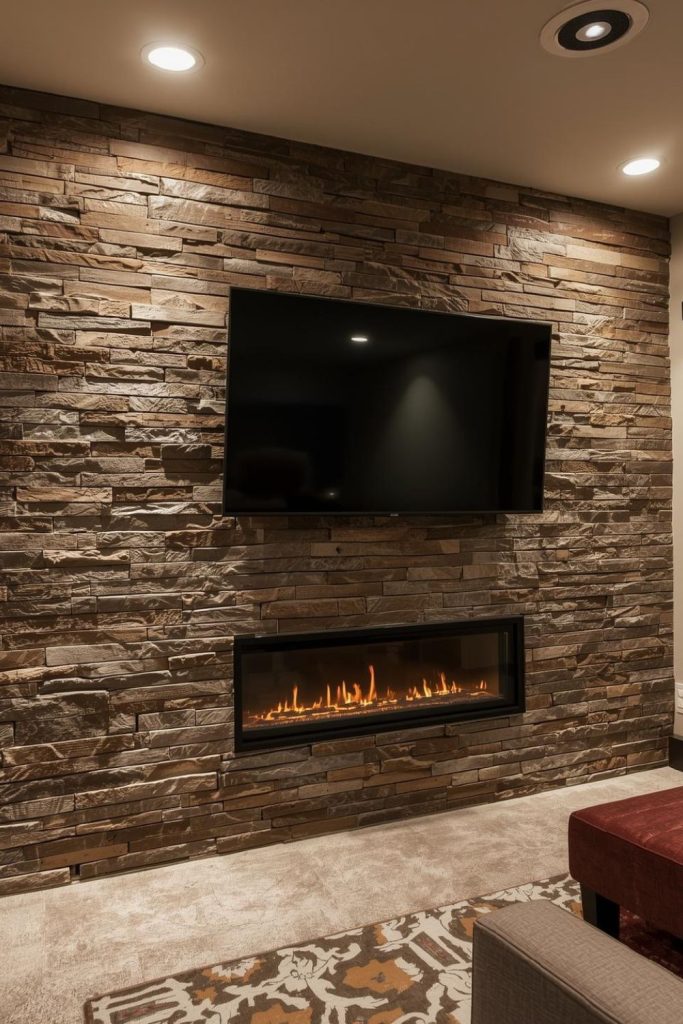
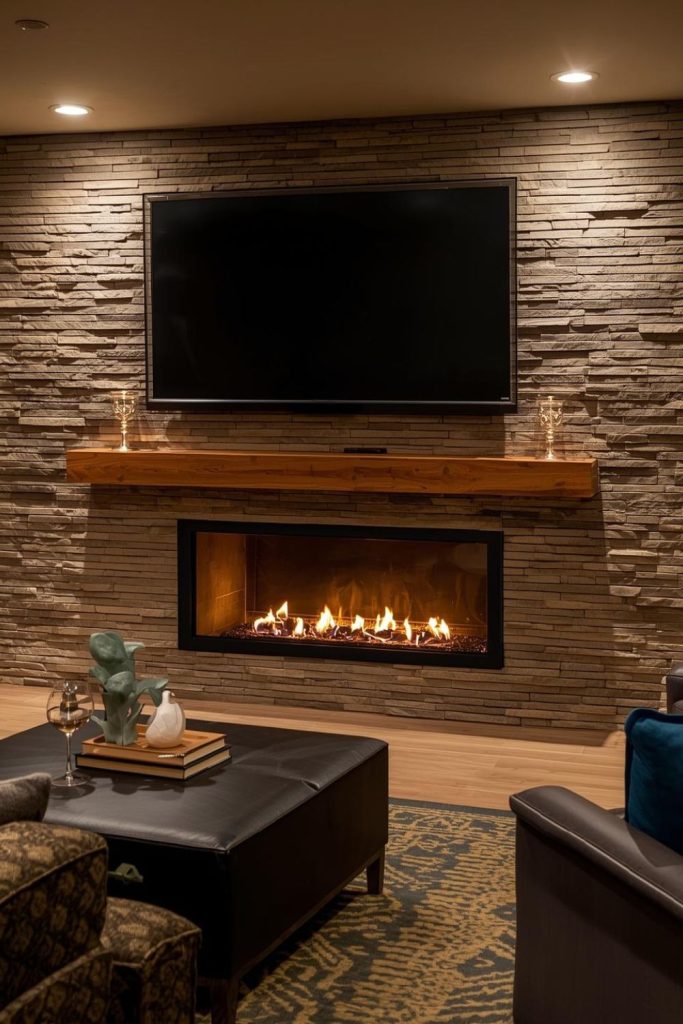
These basement tv wall ideas pair nicely with simple shelving and minimal décor so the texture remains the star. Mounting hardware should be planned early to avoid awkward gaps.
Dark, moody basement TV walls inspired by home theaters
Dark walls reduce screen glare and create a cinematic feel. Charcoal, deep navy, and matte black finishes work especially well with controlled lighting.
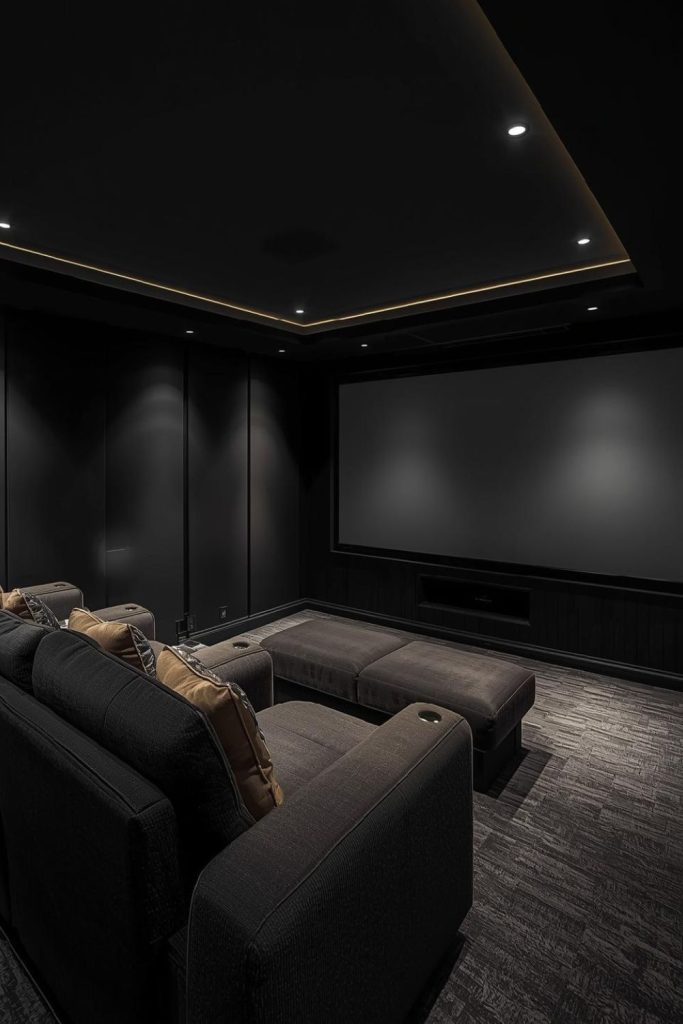
Basement tv wall ideas like this benefit from contrast through trim, shelving, or subtle lighting. The space feels cozy, though too much darkness without balance can feel heavy.
Minimalist floating TV walls for clean, modern basements
Floating panels and shelves keep the floor clear and the wall light. This style works best when cable management is flawless.
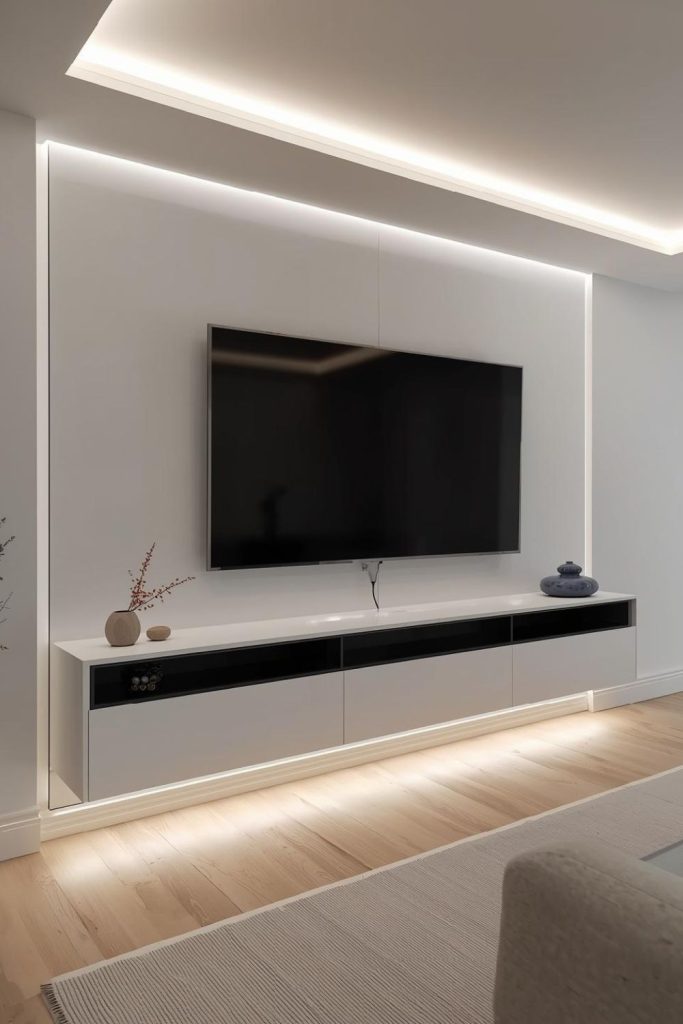
Basement tv wall ideas with a minimalist approach feel calm and modern, but clutter quickly breaks the look. Discipline with décor helps maintain the effect.
Wood slat TV walls that add warmth and depth
Wood slats add rhythm and texture without overwhelming the wall. Vertical slats can make ceilings feel taller, while horizontal ones widen the space.
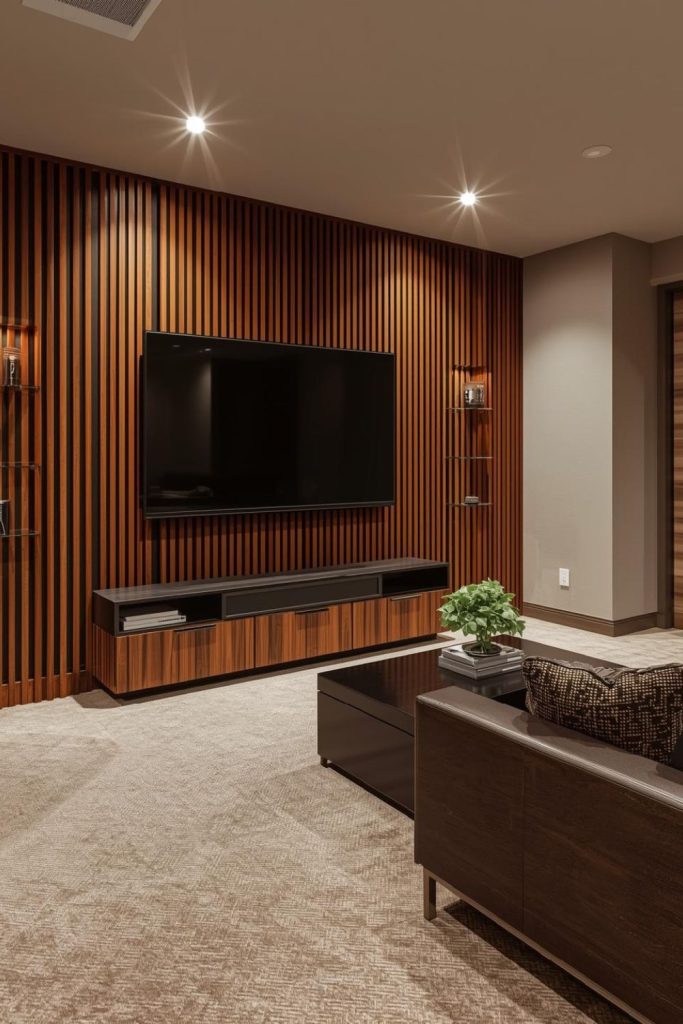
These basement tv wall ideas pair well with neutral furniture and soft lighting. Real wood adds warmth, though it may require extra care in humid basements.
Industrial style TV walls with metal accents and concrete finishes
Concrete look panels and metal shelving give the basement a bold personality. This style suits open layouts with exposed elements.
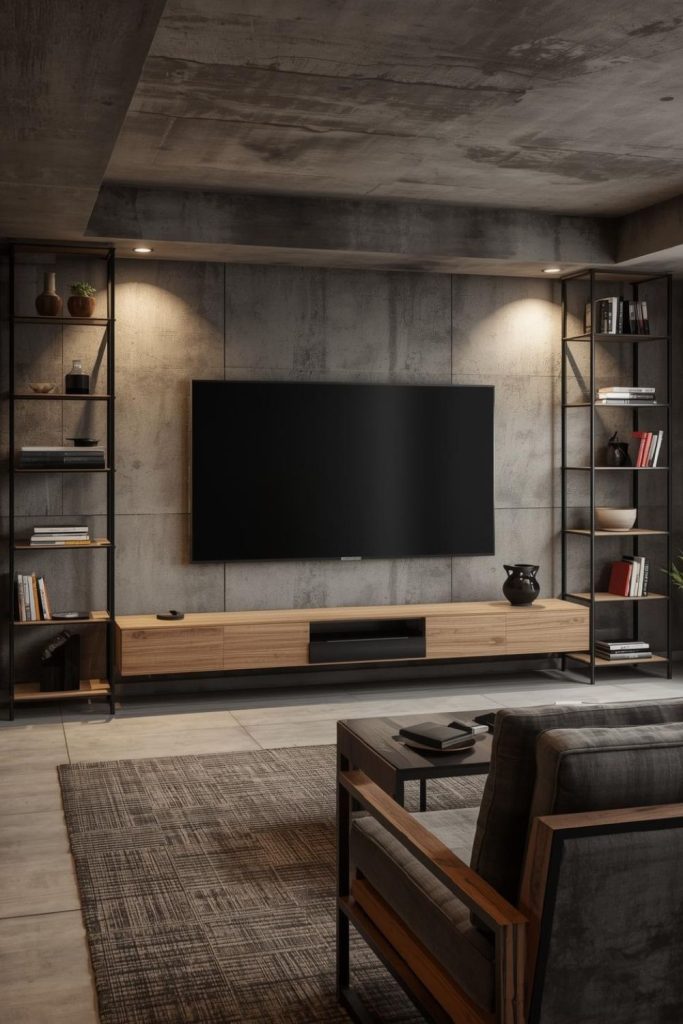
Basement tv wall ideas in this style benefit from softer seating and warm lighting to keep the room comfortable, not cold.
Framed TV wall designs that look like custom artwork
A framed TV wall treats the screen as part of the décor. Trim, molding, or paneling creates a gallery feel.
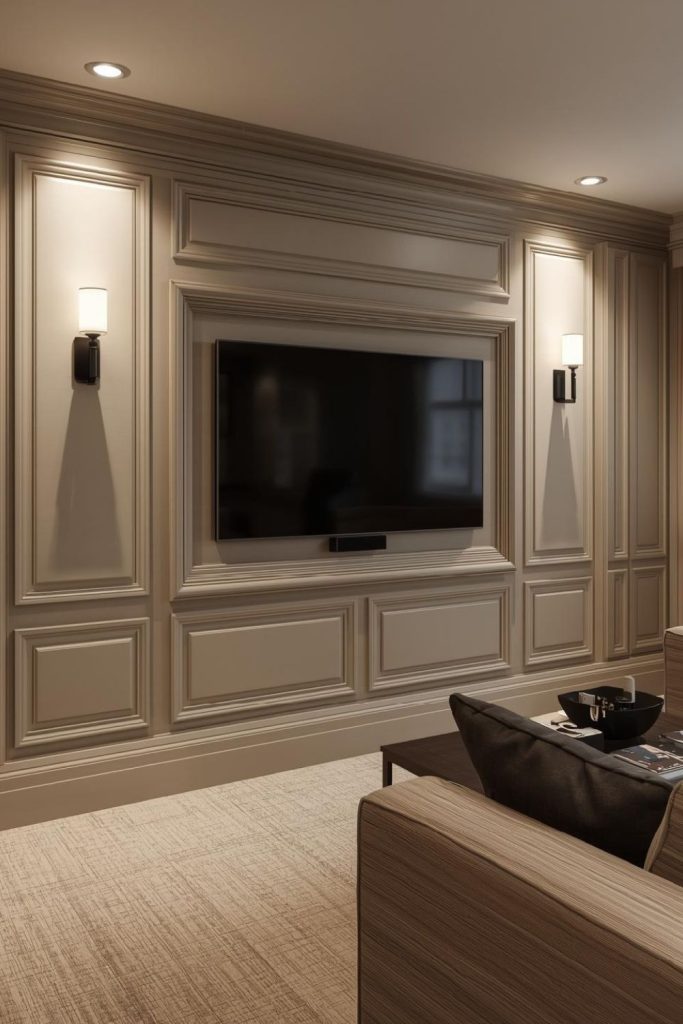
These basement tv wall ideas work well in family rooms where the TV shares space with artwork or photos, blending entertainment with style.
Multi screen TV wall setups for sports focused basements
Multiple screens allow different games at once and turn the basement into a social hub. Alignment and spacing are critical to avoid visual chaos.
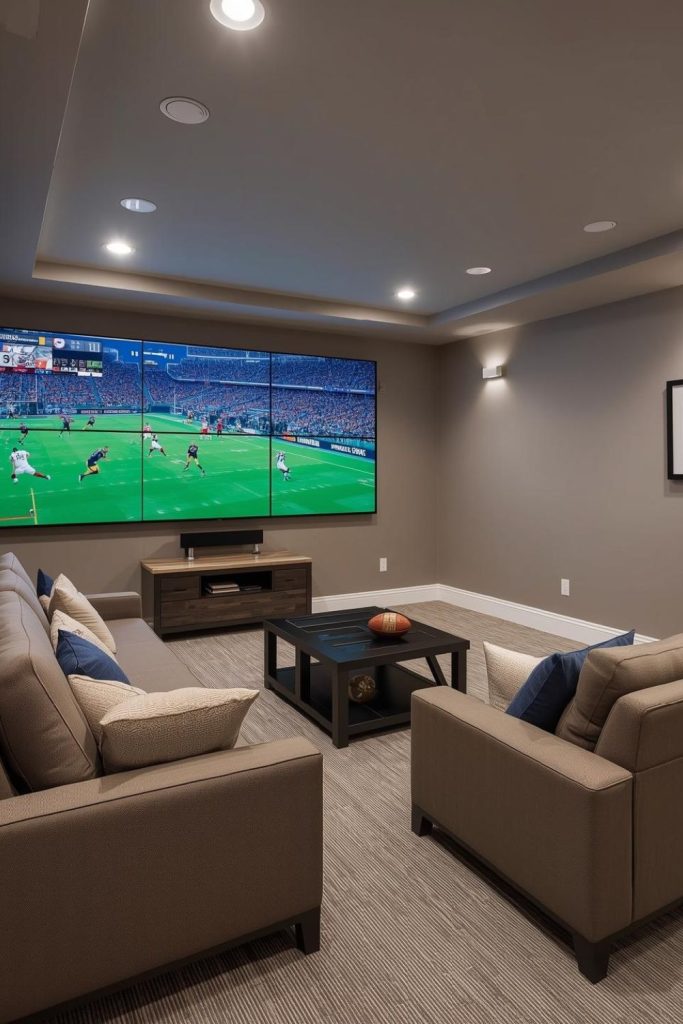
Basement tv wall ideas with multi screen layouts often pair with sound zoning and flexible seating, though wiring can get complex quickly.
Recessed TV walls that create a flush, high end look
Recessing the TV into the wall reduces bulk and keeps everything streamlined. This approach works best during renovation stages.
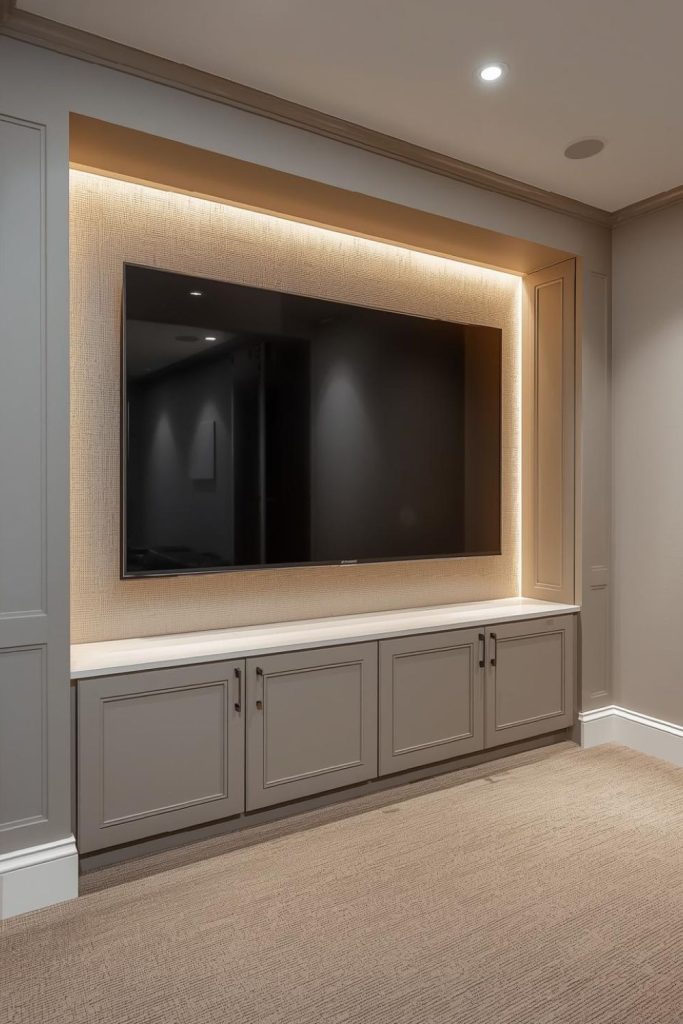
Basement tv wall ideas like this feel clean and upscale, but wall depth and ventilation need careful planning to avoid issues later.
Statement wallpaper TV walls made for basement spaces
Wallpaper behind a TV adds personality without permanent construction. Bold patterns work best when the rest of the wall stays simple.
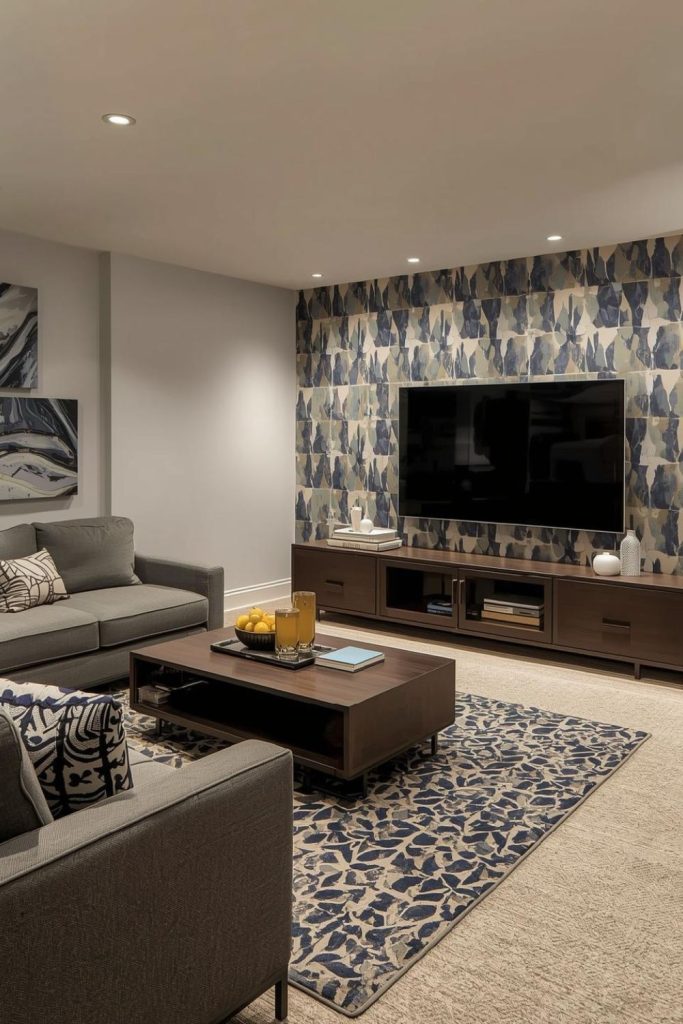
These basement tv wall ideas are easy to refresh over time, though glare and texture should be tested before installation.
Curved TV wall designs for immersive viewing experiences
A gentle curve around the TV pulls the seating area inward and creates immersion. This style suits larger basements with room to experiment.
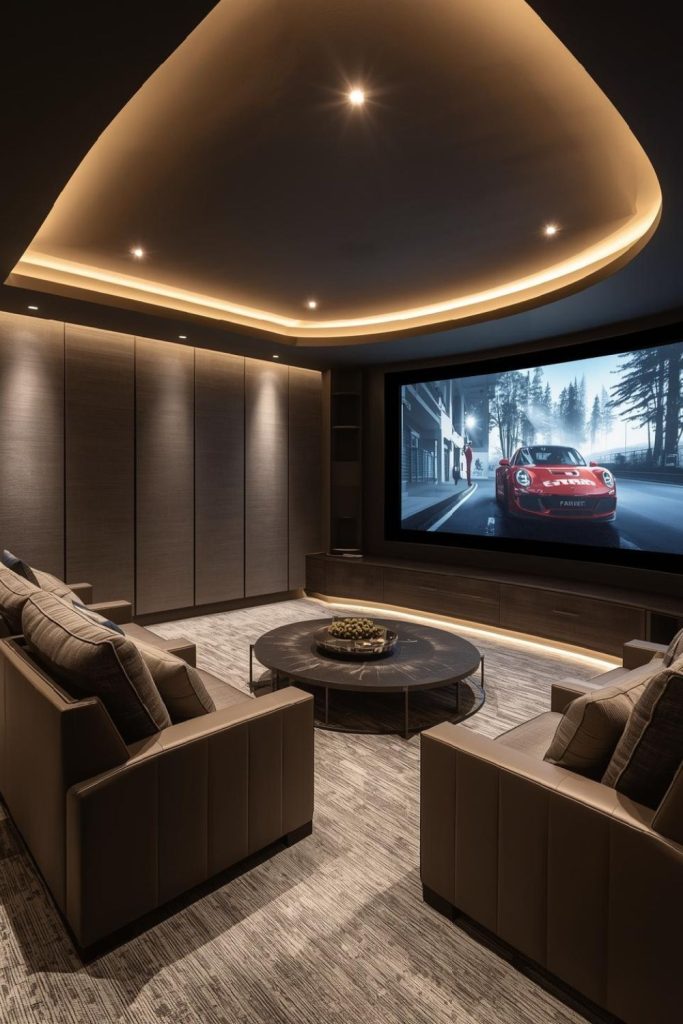
Basement tv wall ideas with curves feel custom and cinematic, but they require precise measurements to avoid awkward proportions.
TV walls with integrated electric fireplaces
Fireplaces add warmth and a focal point below the TV. Electric models work well in basements with limited venting.
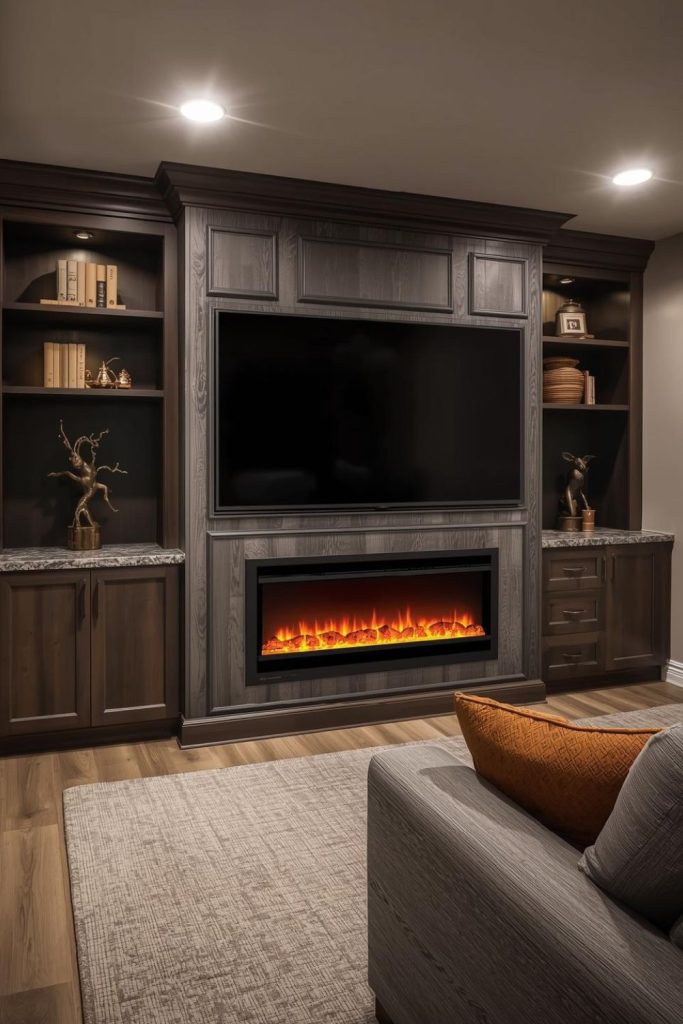
Basement tv wall ideas combining fire and screen feel cozy, though spacing is important to protect electronics from heat.
Acoustic panel TV walls that blend function with style
Acoustic panels improve sound quality while adding texture. Fabric wrapped panels can match almost any color scheme.
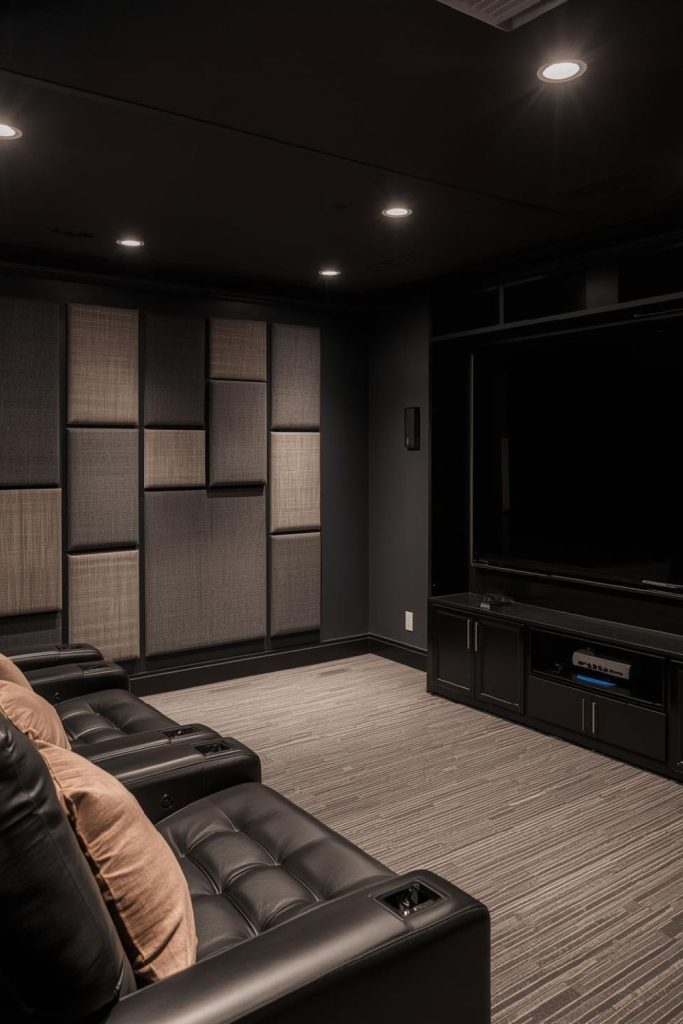
These basement tv wall ideas are ideal for movie lovers, though placement affects effectiveness more than appearance alone.
Black on black TV wall designs for ultra modern basements
Black on black designs rely on texture and finish rather than color contrast. Matte and gloss surfaces help separate elements.
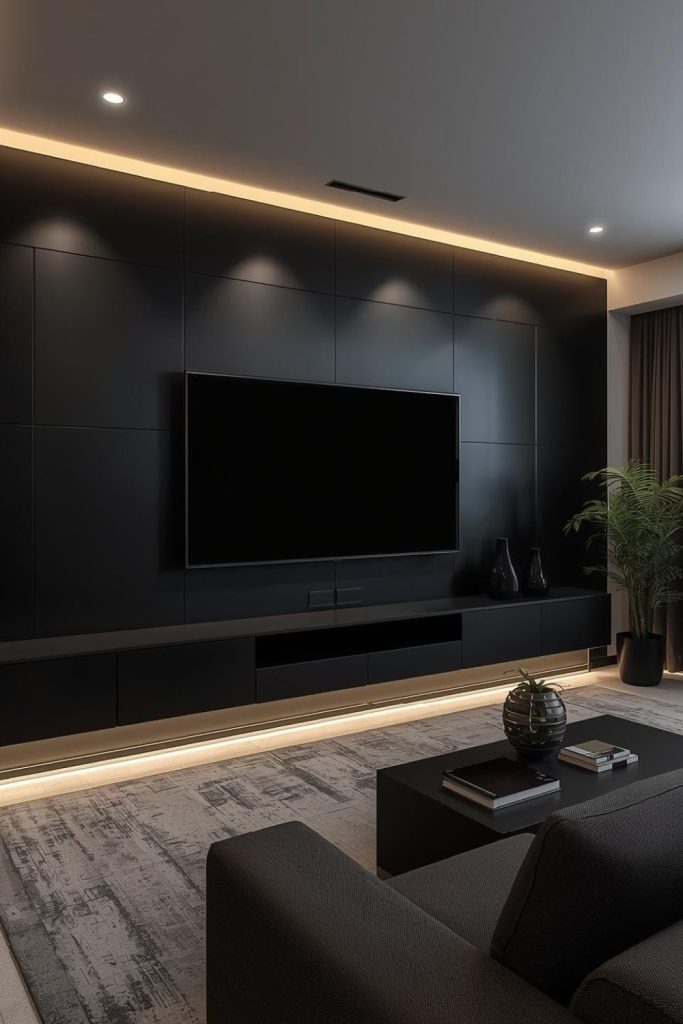
Basement tv wall ideas like this feel sleek, but fingerprints and dust show easily if finishes are not chosen carefully.
Glass and mirrored TV walls that visually expand the space
Glass panels and mirrors reflect light and make small basements feel larger. Used sparingly, they add depth without distraction.
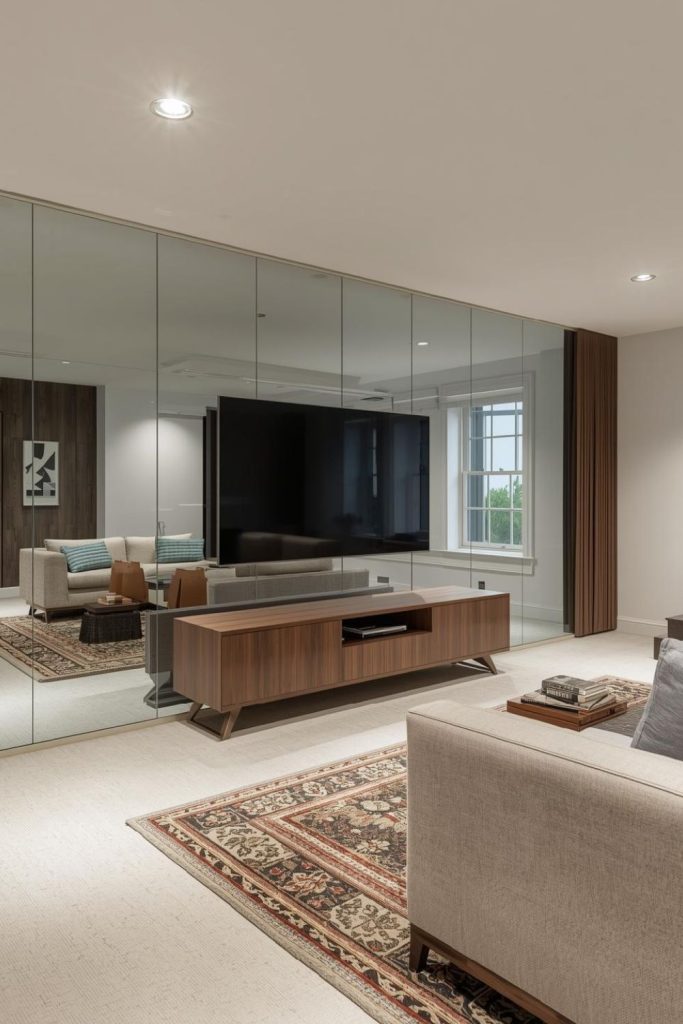
Basement tv wall ideas with reflective surfaces need careful lighting control to avoid glare on the screen.
Color blocked TV walls that add bold personality
Color blocking introduces energy and defines zones. Two or three coordinated colors work better than many shades.
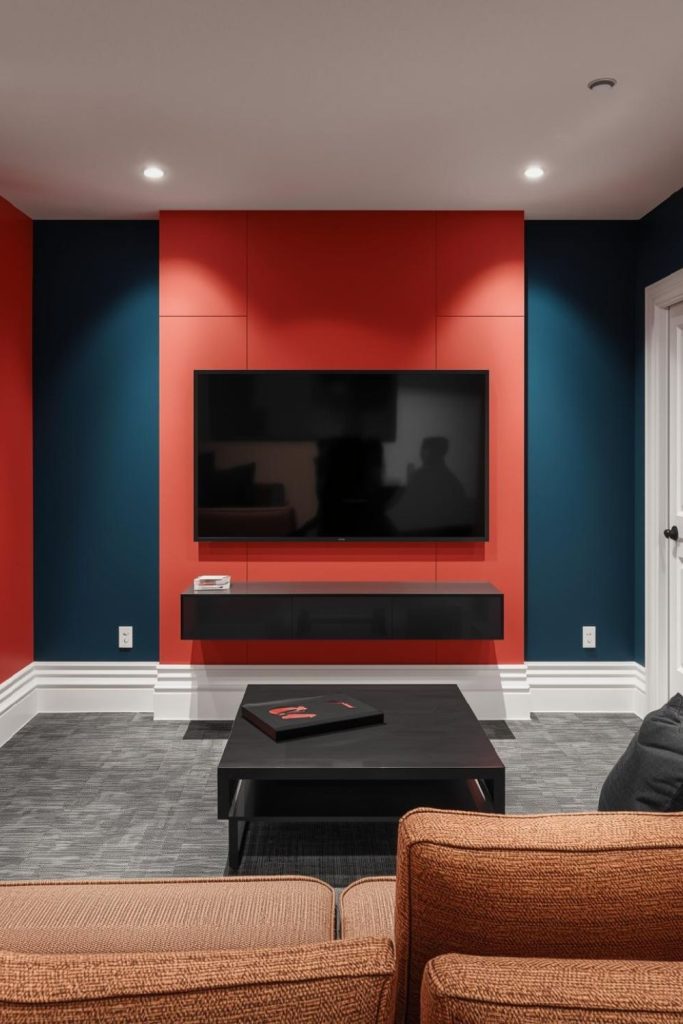
These basement tv wall ideas suit playful family spaces, though balance matters so the TV remains comfortable to watch.
Hidden TV wall designs with sliding or folding panels
Hidden panels allow the TV to disappear when not in use. This works well in multi purpose basements.
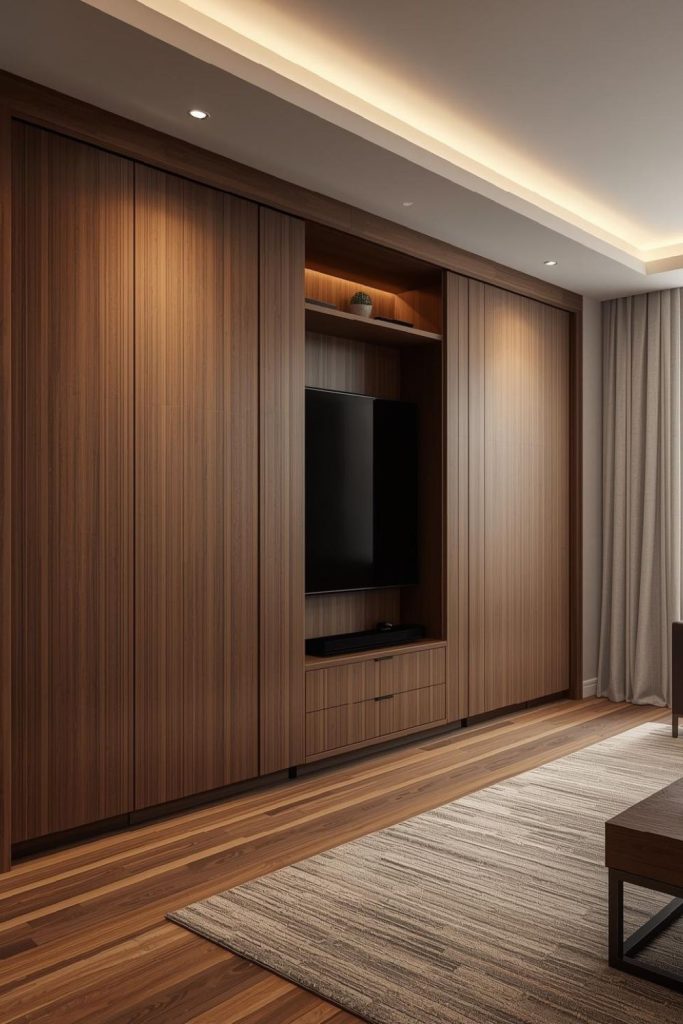
Basement tv wall ideas with concealment feel tidy and flexible, though hardware quality matters for smooth operation.
Gallery style TV walls combining screens and artwork
Mixing art and screen makes the wall feel lived in. Consistent frames and spacing keep it organized.
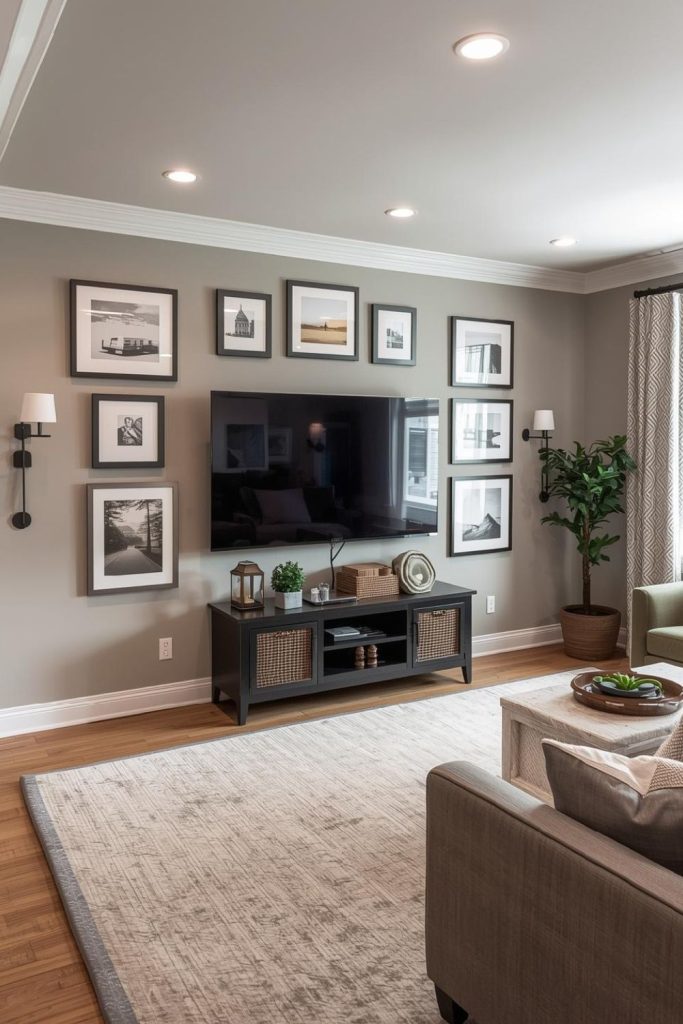
Basement tv wall ideas like this blur the line between media room and lounge, though planning is needed to avoid clutter.
Gaming inspired TV wall designs with dynamic lighting
RGB lighting and bold graphics create energy for gaming setups. Zones for consoles and accessories keep things functional.
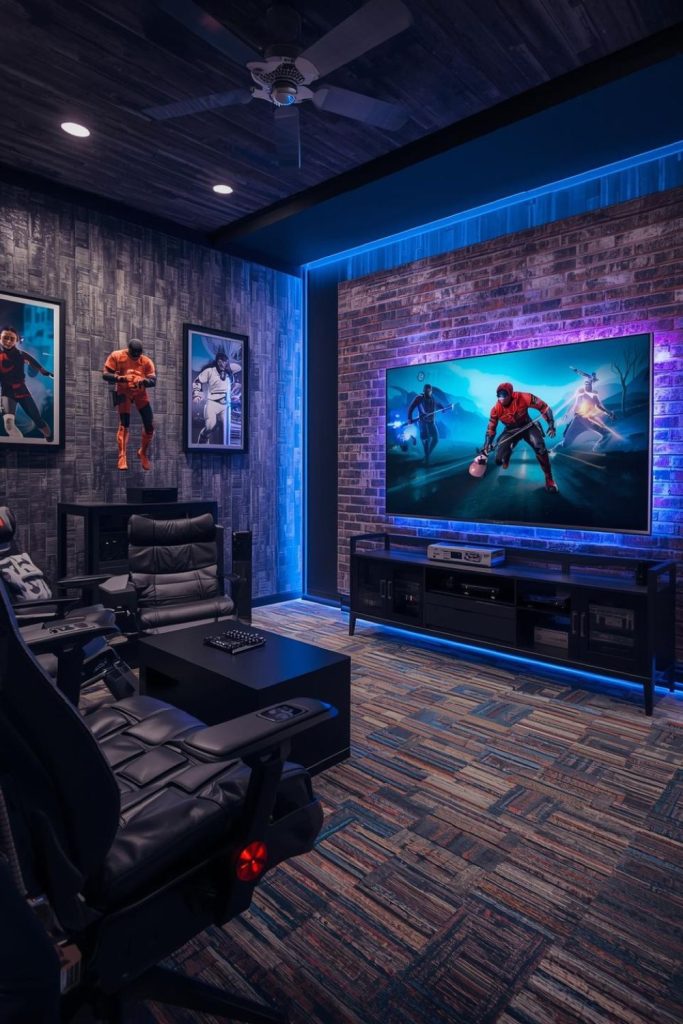
Basement tv wall ideas for gamers should balance excitement with comfort so the space works for long sessions.
Low profile TV walls designed for low ceiling basements
Slim mounts and shallow shelving reduce visual bulk. Horizontal lines help stretch the room visually.
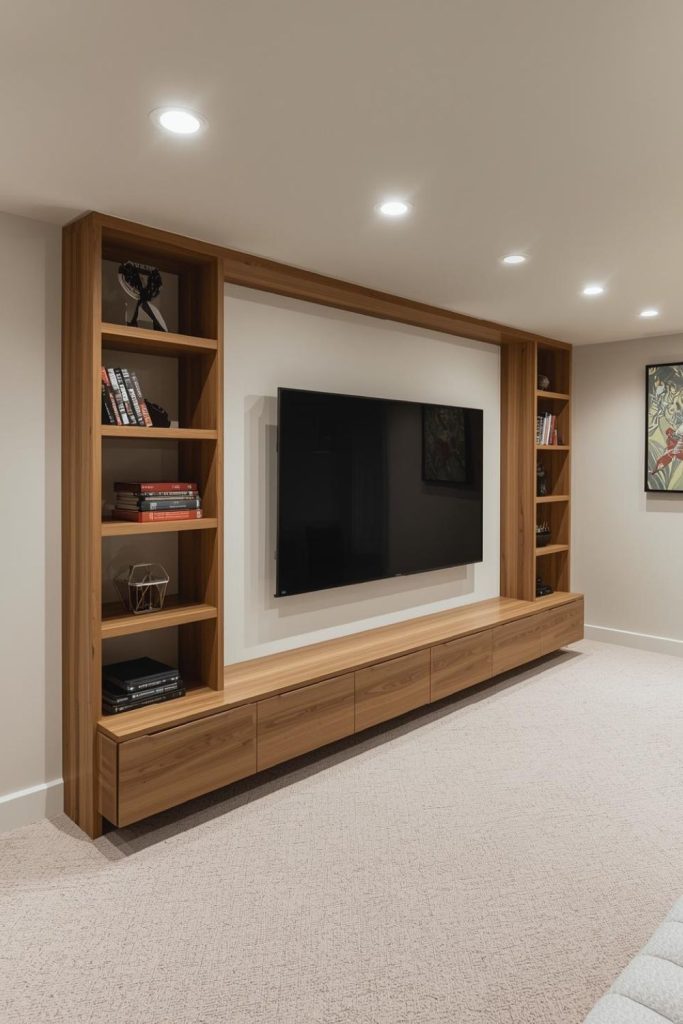
Basement tv wall ideas for low ceilings focus on simplicity and proportion, making the space feel less cramped.
Luxury hotel inspired TV wall designs for upscale basements
Hotel style walls use symmetry, soft lighting, and refined materials. Neutral palettes keep the look calm.
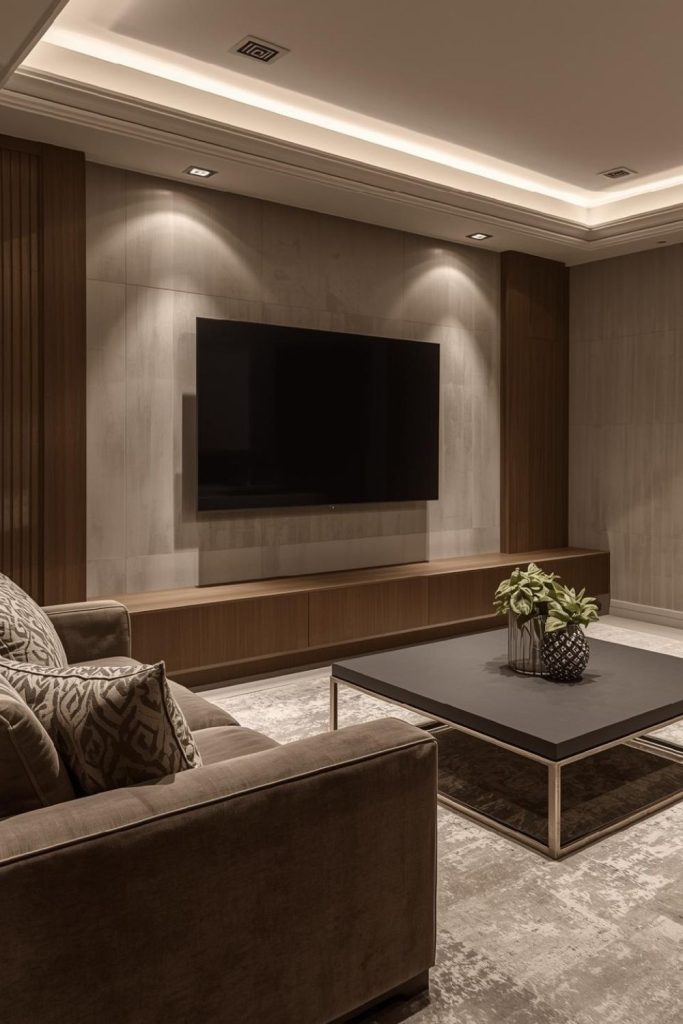
Basement tv wall ideas inspired by hotels feel polished and relaxing, though quality finishes matter more than decoration.
Rustic basement TV walls with reclaimed materials
Reclaimed wood and aged finishes add character. Imperfections give the wall a story.
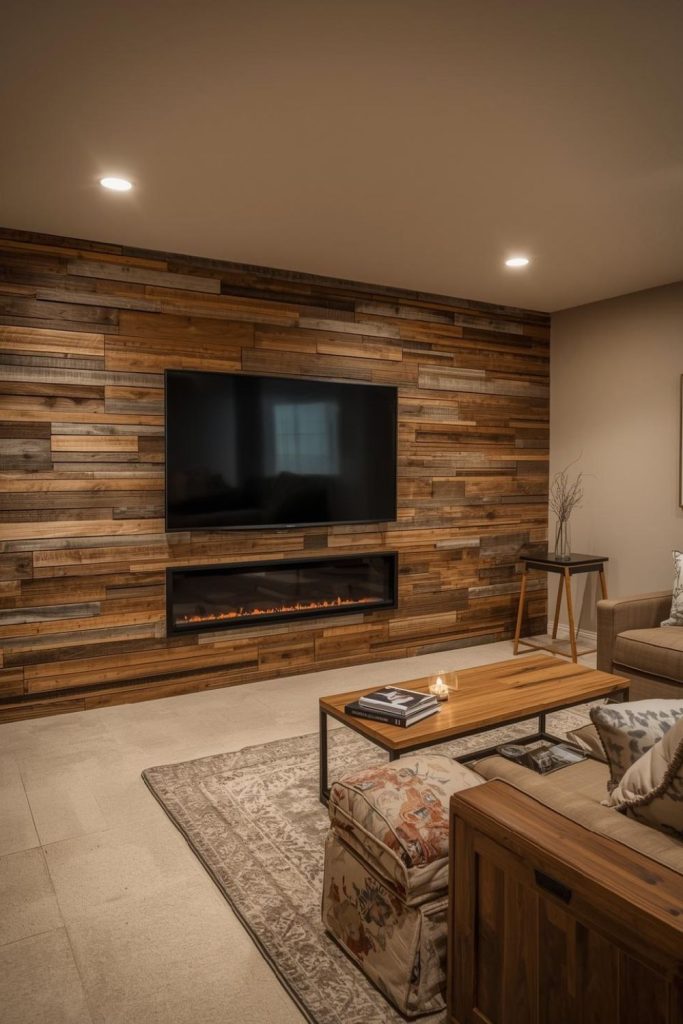
These basement tv wall ideas work best with simple furniture so the materials stand out without competing.
High contrast TV wall designs that stand out in neutral basements
High contrast walls use light and dark tones to frame the TV. This approach adds focus without heavy textures.
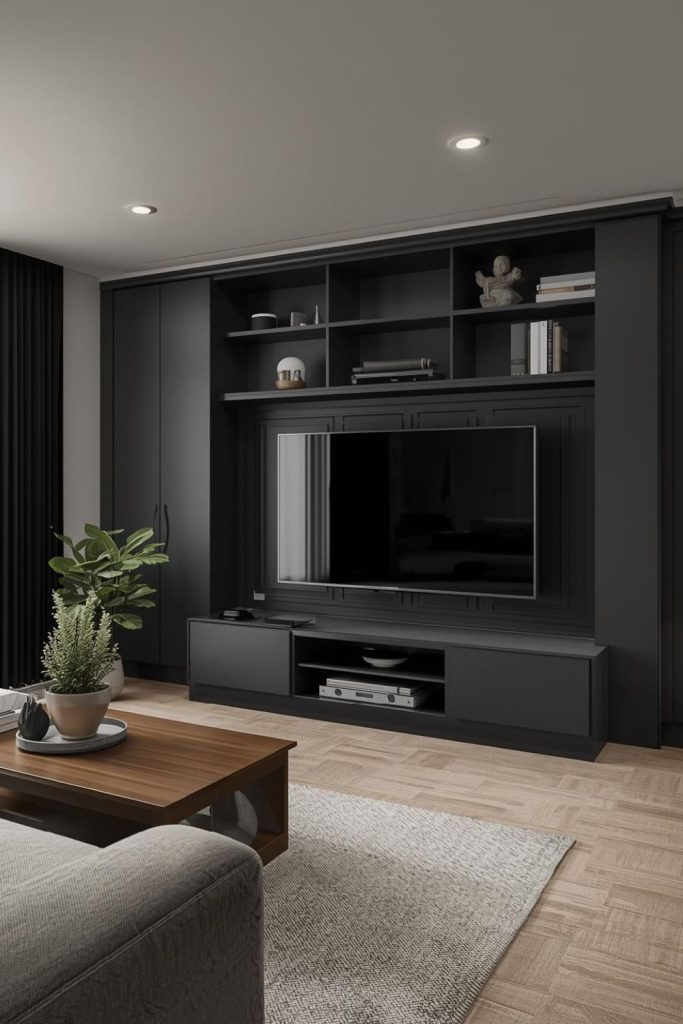
Basement tv wall ideas with contrast feel bold yet controlled, making the screen pop while the room stays balanced.