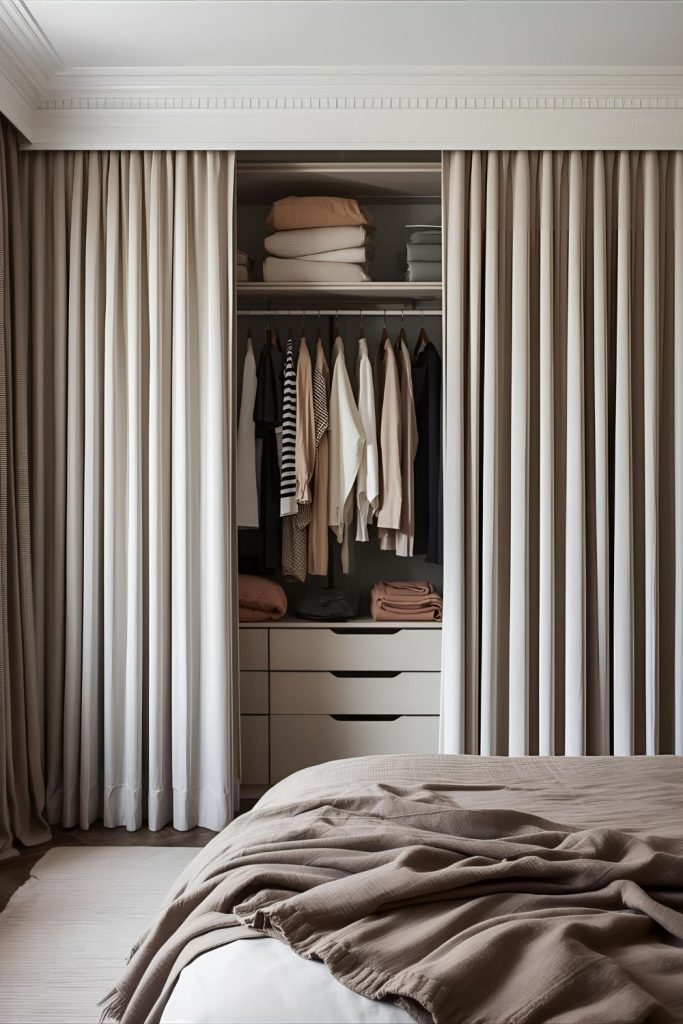
Closet spaces often get overlooked in home design, but they play a bigger role than you might think. Traditional closet doors can feel cold, rigid, and out of place, while curtain closet doors bring a softness and flexibility that completely changes a room. They don’t just hide storage—they influence the way a space feels and functions. With a simple rod and fabric, a closet can transform from a purely functional area into a part of your room’s overall warmth and personality. Whether it’s a cozy bedroom corner or a chic living area, curtain closet doors offer options that hard surfaces just can’t match. They invite textures, colors, and movement into your interiors, giving you freedom to play with design and feel without heavy construction or permanent changes. For anyone looking to make their space more inviting while keeping it versatile, curtain closet doors are a practical, stylish choice.
What interior elements make curtain closet doors feel warmer than hard-surface closet doors?
Curtain closet doors create warmth in ways that solid doors simply can’t. First, the fabric itself brings a tactile softness that visually invites comfort. Materials like linen, cotton, and velvet reflect light differently than wood or metal, creating gentle shadows and depth that make a room feel more layered.
Unlike hard surfaces, fabrics absorb sound, reducing echoes and making spaces feel calmer and cozier. The way curtain closet doors hang also contributes—soft folds and natural draping introduce a sense of flow and movement, contrasting sharply with stiff panels. Even small touches like the choice of rod, tiebacks, or loops can add subtle elegance that contributes to warmth.
Colors play a huge role too; warm hues like terracotta, soft mustard, or muted rust can make a room feel more intimate, while cool-toned hard doors often feel stark and uninviting. In addition, curtain closet doors allow for personalization through patterns, embroidery, or textures, giving each space a personality that hard doors rarely provide.
Overall, the combination of tactile, visual, and auditory qualities of curtain closet doors creates a space that feels softer, inviting, and much warmer than traditional alternatives.
How do curtain closet doors function as a flexible alternative to rigid, traditional closet doors?
One of the biggest advantages of curtain closet doors is flexibility. Unlike hinged or sliding doors, these curtains can be adjusted, removed, or swapped without tools or major installation. That means you can change a room’s look in minutes, whether you want a seasonal update or a new color scheme. They also adapt to unusual or non-standard openings, which is perfect for rooms where a traditional door wouldn’t fit or might block pathways.
Curtain closet doors can function as temporary partitions, dividing rooms or creating a sense of privacy without building walls. This flexibility extends to fabrics too—lightweight sheer curtains can open up a space, while heavier textures can provide a cozy, enclosed feel. Because they don’t rely on mechanical hardware, curtain closet doors are also less prone to wear and tear, making them low-maintenance solutions. And for those renting or living in spaces where modifications are limited, curtain closet doors offer style and utility without permanent changes. Their versatility makes them a practical and aesthetic choice for almost any interior.
How do curtain closet doors improve movement, accessibility, and flow within an interior space?
Curtain closet doors change how we move through a space. Unlike swinging doors that require clearance or sliding doors that need tracks, curtains can be drawn aside in almost any direction, creating immediate access. This makes tight hallways, compact bedrooms, or small apartments feel less cluttered and more navigable.
With curtain closet doors, you can also divide areas without blocking light or sight lines, which improves the overall flow of the room. For example, a sheer curtain can separate a dressing area from a bedroom without visually shrinking the space. Because they don’t have rigid frames, these doors reduce obstacles and allow furniture arrangements that wouldn’t be possible with conventional doors.
Accessibility is another factor: fabric doors are easy to pull aside for all ages and abilities, eliminating the frustration of stubborn hinges or heavy panels. The movement of the fabric itself adds life to a room, softening transitions and creating a gentle rhythm whenever someone opens or closes them. This combination of functional ease and visual fluidity makes curtain closet doors a smart solution for modern interiors.
How do fabric choice, color, and texture in curtain closet doors influence overall interior design?
Fabric choice, color, and texture play a massive role in how curtain closet doors affect a room. A thick, plush velvet can create a luxurious, intimate atmosphere, while lightweight cotton or linen keeps a space airy and relaxed.
Patterns, whether subtle stripes or bold geometric designs, can bring energy or calm depending on how they interact with other elements in the room. Warm colors like terracotta, soft gold, or rust complement wooden furniture, creating a unified, cozy feel, whereas cooler hues can balance neutral walls or brighten shadowed corners.
Even the weave of the fabric matters—a nubby, textured cloth adds visual interest, while smooth fabrics reflect light softly, adding to the sense of warmth. Curtain closet doors also allow layering—sheer panels under heavier fabrics, or textured curtains over solid backgrounds—to create depth and richness without cluttering the room. By carefully choosing fabric, color, and texture, these doors can either blend seamlessly into a room or stand out as a focal point, giving you a level of design control that hard doors rarely allow.
How do curtain closet doors adapt to changing room purposes and evolving interior layouts?
Curtain closet doors are incredibly adaptable to different room purposes. For instance, in a bedroom, they can separate a sleeping area from a dressing nook, then easily be moved to reveal the entire space.
In a living room, they can hide storage or act as temporary partitions for multifunctional areas. Unlike permanent doors, they can be resized, re-hung, or replaced with new fabrics as your layout or style changes.
If a space transitions from bedroom to home office, curtain closet doors can redefine boundaries without construction. Seasonal updates are simple—lighter fabrics in summer, heavier ones in winter—helping a room feel appropriate for the temperature and mood.
Their light weight and flexibility also make them ideal for renters or anyone who wants to experiment with interior design without committing to permanent installations. Overall, curtain closet doors give rooms the ability to evolve over time while maintaining a sense of warmth and visual cohesion.
Styling linen curtain closet doors to create a cozy bedroom corner
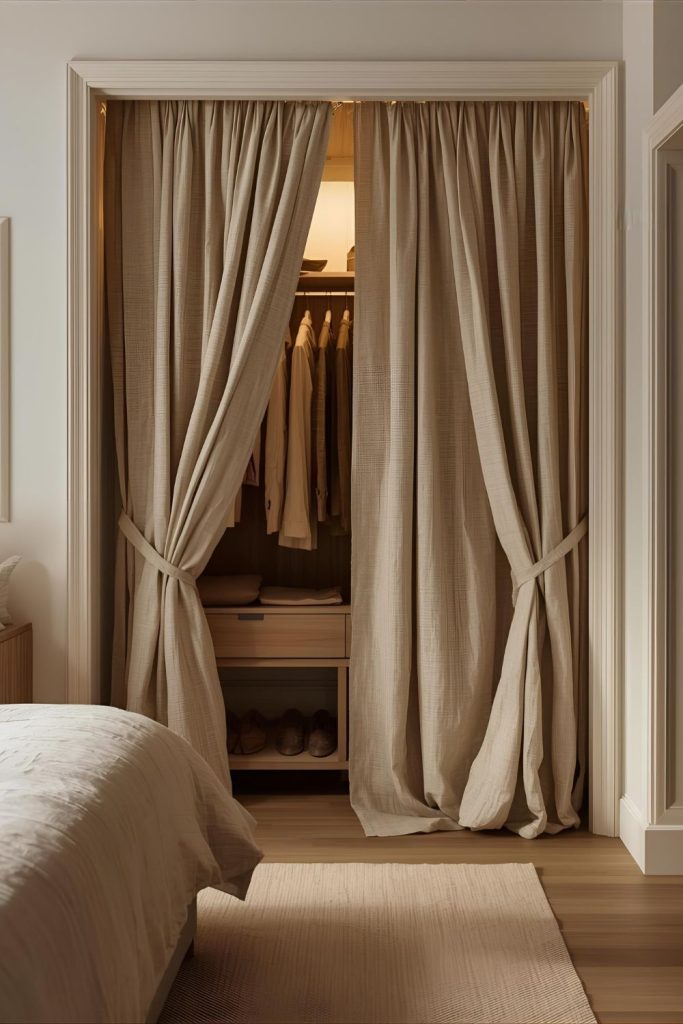
Linen curtain closet doors are perfect for bringing an effortless, cozy vibe to a bedroom. Their soft, breathable texture adds warmth without feeling heavy, and the natural fibers create gentle folds that make the space feel inviting. Linen’s slightly wrinkled look adds character, giving the room a lived-in, relaxed feel. Pair these curtain closet doors with neutral bedding and soft rugs to enhance the sense of comfort. You can also use tiebacks or wooden hooks to keep the curtains open during the day, letting light flow while still maintaining a soft boundary for the closet. Linen doors are versatile enough to fit modern, rustic, or bohemian styles, making them a practical choice for anyone looking to soften a bedroom corner without overcomplicating the design.
Using velvet curtain closet doors for a luxurious, soft interior feel
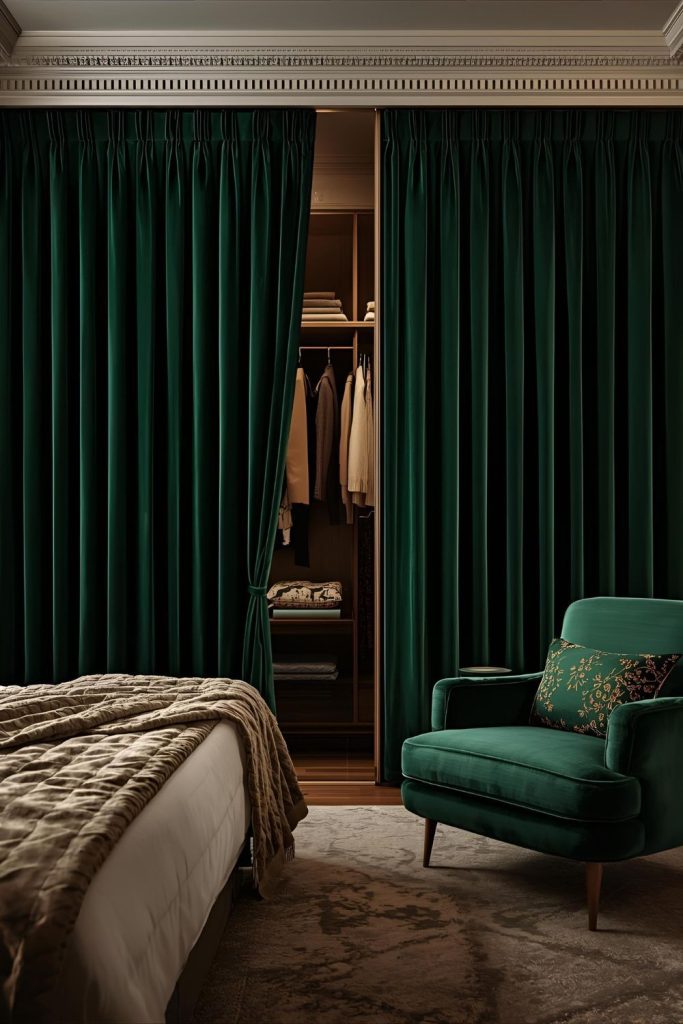
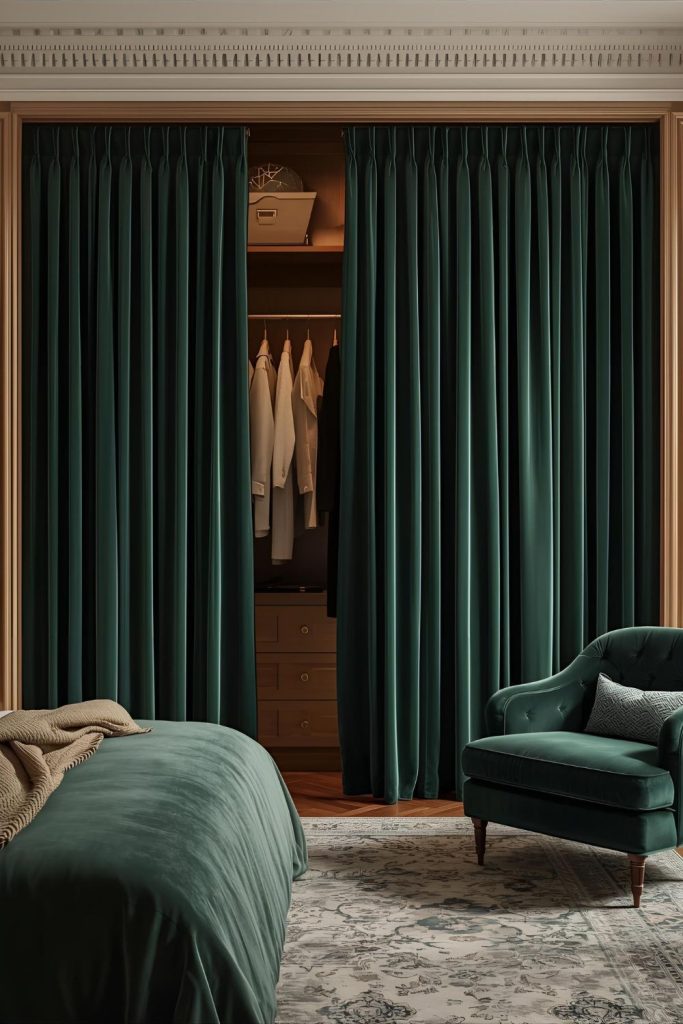
Velvet curtain closet doors instantly create a luxurious atmosphere with their rich texture and slight sheen. The fabric catches the light in subtle ways, making a room feel intimate and indulgent. These doors are ideal for bedrooms or living spaces where warmth and comfort are priorities. Velvet also dampens sound, helping the room feel calmer and more enclosed. Pair deep jewel tones with metallic accents or dark wood furniture to highlight the opulence. Even in smaller rooms, velvet curtain closet doors can elevate the space without overwhelming it, offering a stylish alternative to standard wooden or sliding doors while keeping the softness and flexibility of fabric.
Layered sheer and opaque curtain closet doors for adjustable privacy
Layering sheer and opaque curtain closet doors allows you to control light and privacy effortlessly. Sheer layers let natural light filter through while softening its intensity, creating a gentle glow that warms the room. The opaque layers provide coverage when privacy is needed, perfect for bedrooms or home offices. This combination also adds depth to the closet area, making it feel like part of the room’s design rather than just a functional necessity. Layered curtains are versatile—you can switch the panels independently, creating different moods depending on time of day or season. This style makes curtain closet doors functional, aesthetic, and flexible all at once.
Installing floor-to-ceiling curtain closet doors to visually elongate a room
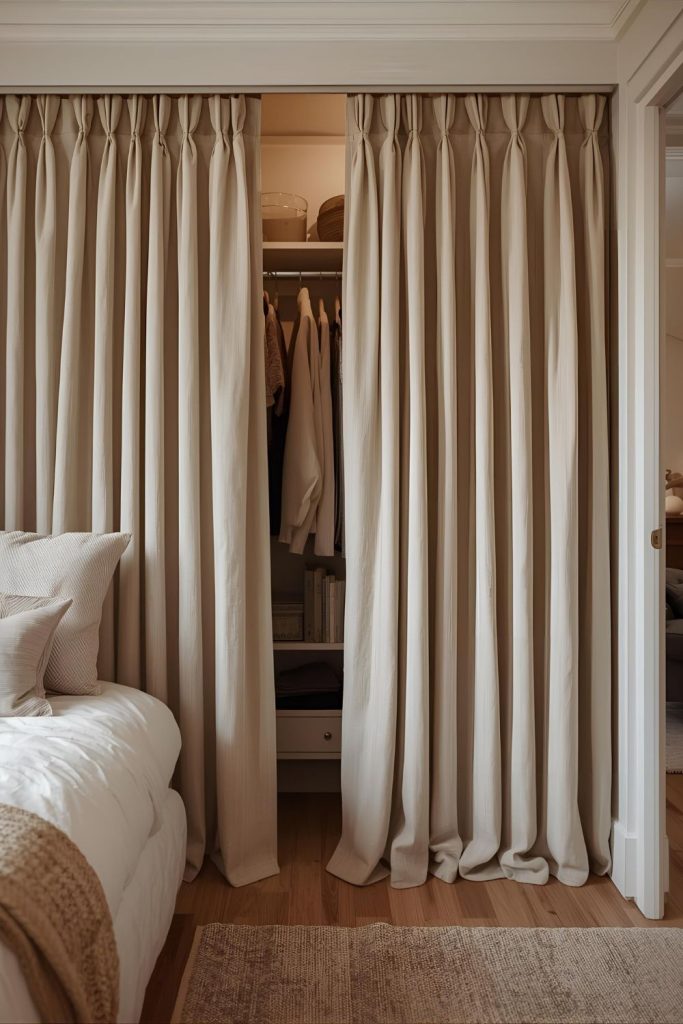
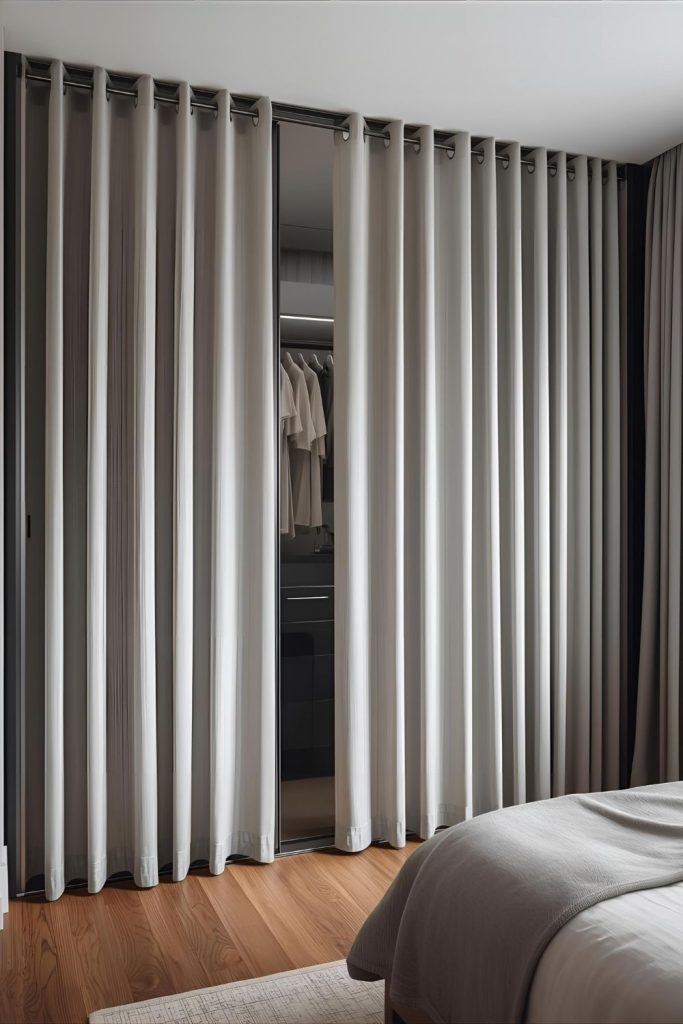
Floor-to-ceiling curtain closet doors instantly make any room feel taller and more spacious. The continuous vertical lines draw the eye upward, creating a sense of height, while the fabric softens the visual impact compared to solid doors. This approach works especially well in rooms with lower ceilings or compact layouts. Choosing lightweight fabrics allows easy movement, while heavier drapes add a grounded, dramatic feel. Floor-to-ceiling curtain closet doors can also hide multiple storage areas seamlessly, making a small bedroom or living room feel uncluttered. They combine functionality, warmth, and visual interest, proving that curtain closet doors can enhance both style and perception of space.
Choosing warm earthy tones for curtain closet doors to complement wood accents
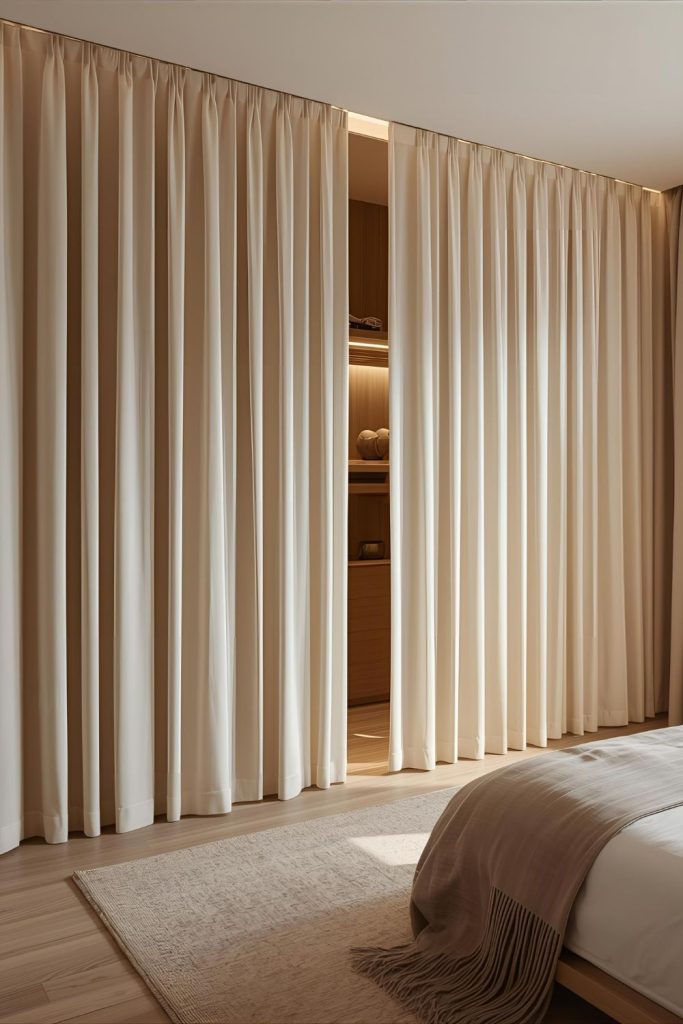
Warm earthy tones like terracotta, camel, or muted mustard can make curtain closet doors feel inviting and harmonious with natural materials like wood or stone. These colors add a cozy, grounded feeling, softening the rigidity of furniture and architectural lines. When paired with wooden rods or furniture, the curtain closet doors become an integral part of the room’s color story, enhancing warmth without overpowering other design elements. Such tones work well in bedrooms, living rooms, and even kitchens where a soft boundary is needed, demonstrating that curtain closet doors can blend aesthetics with functional space management seamlessly.
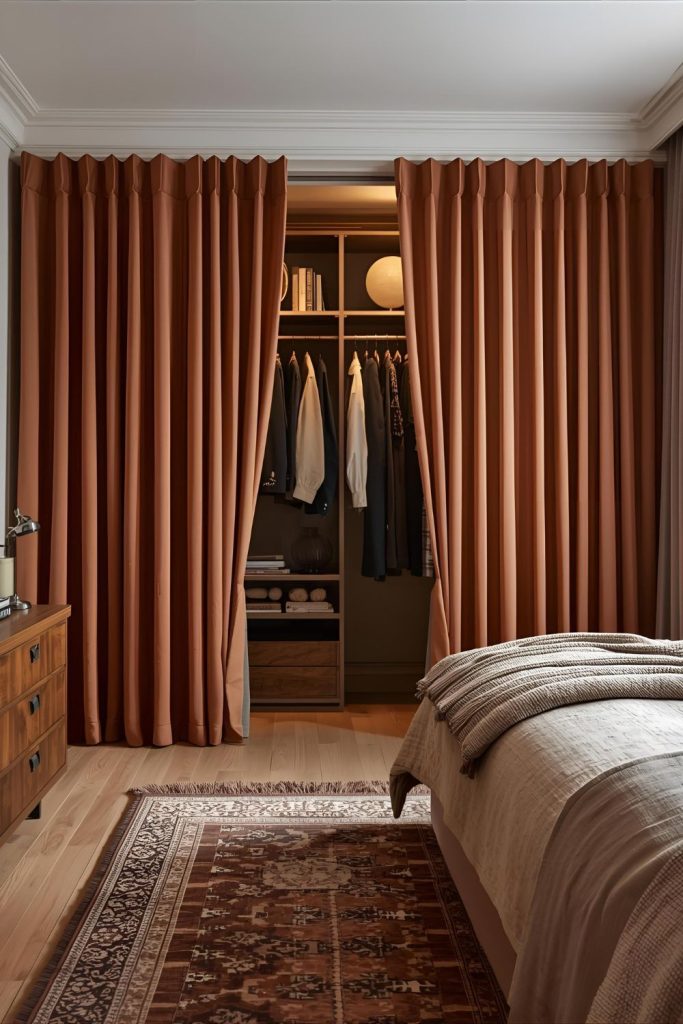
Combining patterned curtain closet doors with solid-colored walls for visual interest
Patterned curtain closet doors are a fun way to add personality and energy to a space. When paired with solid-colored walls, they become a focal point that draws attention without feeling cluttered. Floral, geometric, or abstract patterns can bring movement and dimension to otherwise flat spaces. These doors allow you to experiment with bold colors and textures without committing to permanent wall designs. Patterns also interact with lighting differently, casting subtle shadows that add warmth. Curtain closet doors with patterns make interiors lively, while still being easy to update or swap out as your style preferences evolve.
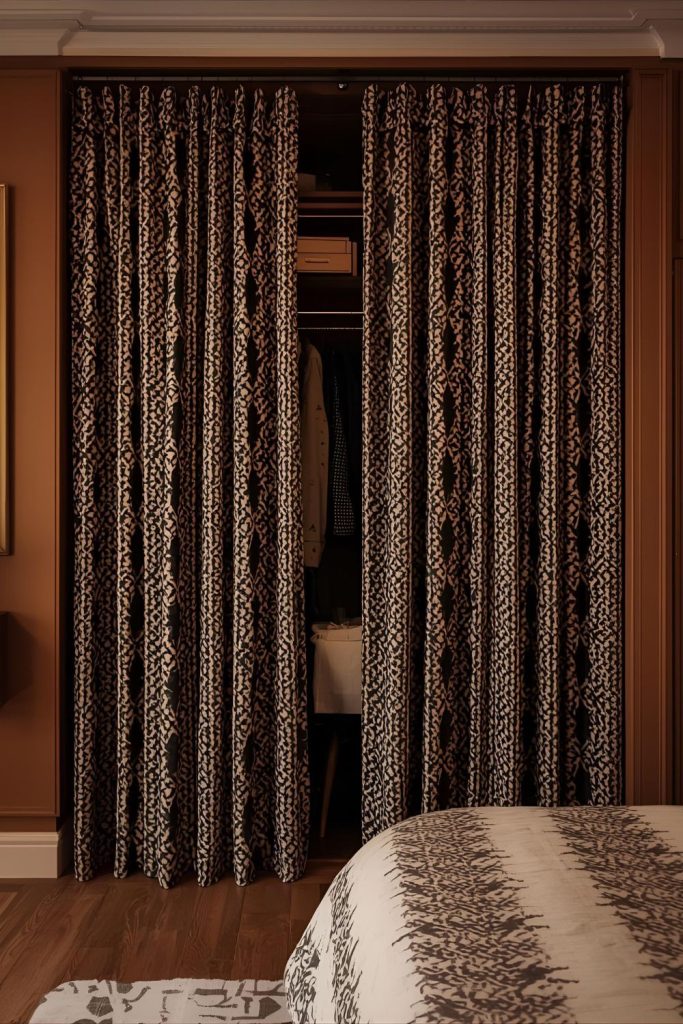
Using thermal or thick fabrics in curtain closet doors to enhance room warmth
Thick or thermal curtain closet doors do more than look cozy—they actually help insulate the room. Heavy fabrics trap heat and reduce drafts, making interiors feel warmer during colder months. They also dampen sound, creating a quieter, more intimate environment. Thermal curtain closet doors are especially practical in older homes or rooms with single-pane windows. By combining these fabrics with rich colors or textures, you can create a visually warm and physically comfortable space. Unlike rigid doors, these curtain closet doors are easy to open and close, offering both warmth and convenience in one solution.
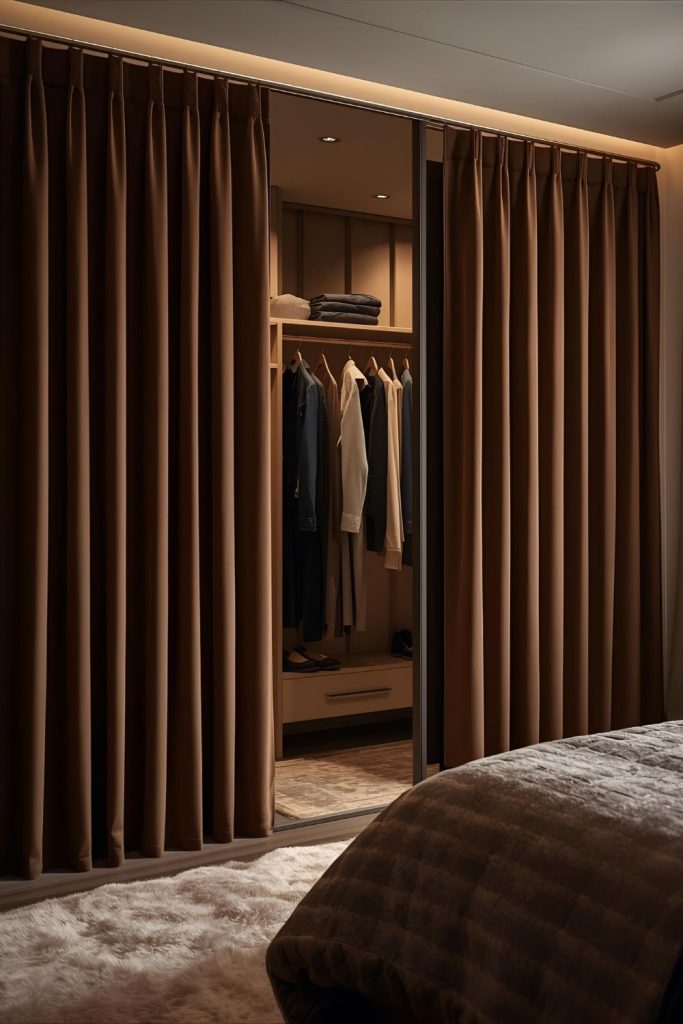
Sliding curtain closet doors to save space in narrow rooms
In narrow rooms, swinging doors often become obstacles, but sliding curtain closet doors solve this problem elegantly. The fabric glides along a rod, opening fully without requiring clearance space. This allows for more flexible furniture placement and better circulation in the room. Sliding curtain closet doors also create a continuous, soft wall effect when closed, hiding storage areas while keeping the space feeling open. You can use lightweight fabrics for ease of movement or heavier materials for added sound dampening. In any case, sliding curtain closet doors combine practicality with style, making small spaces more functional and visually appealing.
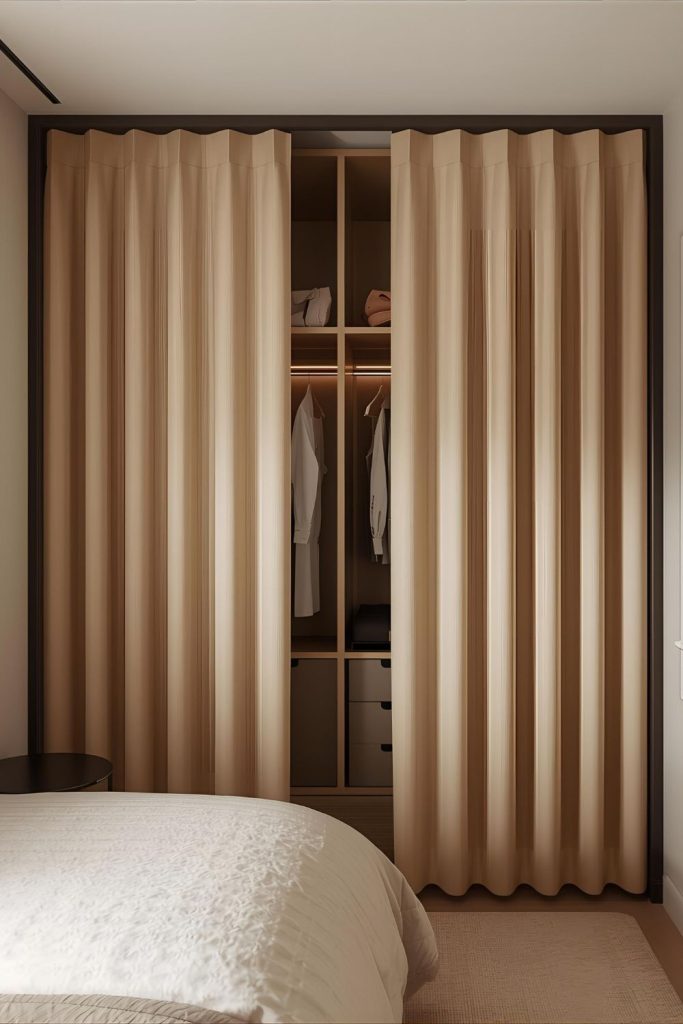
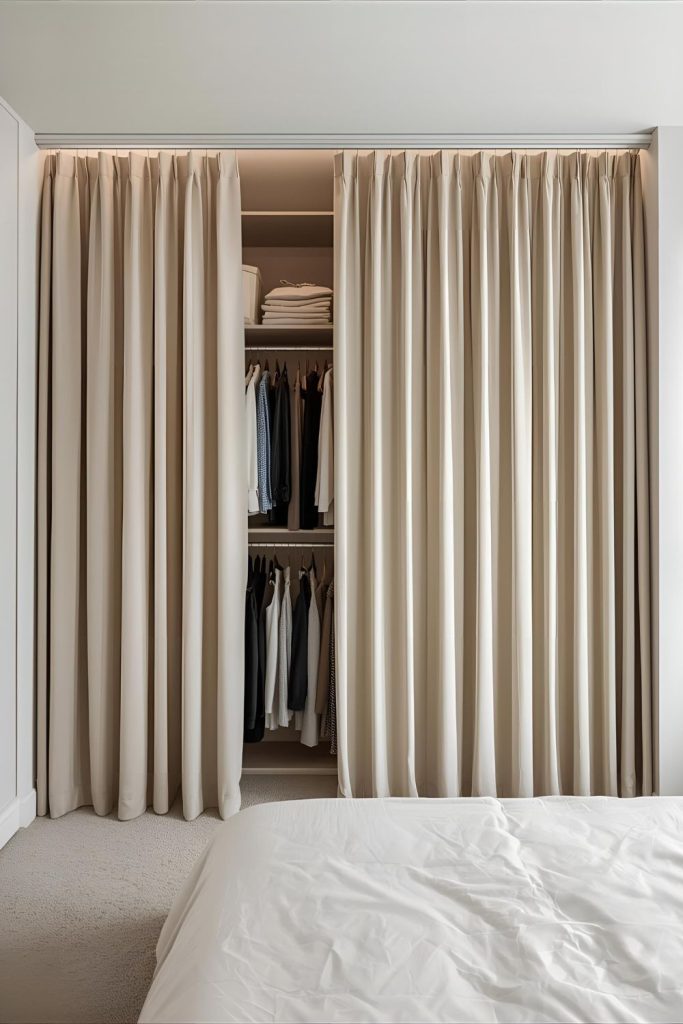
Creating a minimalist look with monochrome curtain closet doors
Monochrome curtain closet doors help achieve a minimalist, clean-lined interior. Choosing a single neutral shade allows the closet area to blend seamlessly into the surrounding walls while still providing soft texture and warmth. Fabrics like cotton, linen, or polyester work well in this approach, adding subtle dimension without drawing too much attention. Monochrome curtain closet doors are easy to pair with other design elements, from modern furniture to simple rugs. They offer a quiet elegance, proving that curtain closet doors can enhance a minimalist interior without the rigidity or harshness of standard wooden doors.
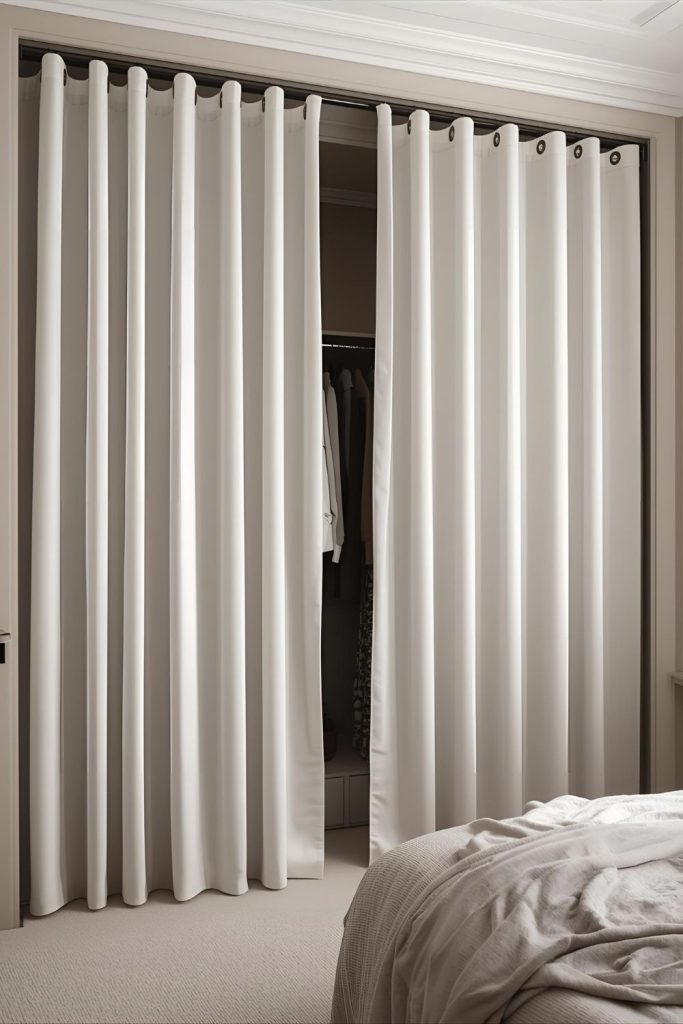
Incorporating curtain closet doors that match window treatments for cohesive design
Matching curtain closet doors with window treatments creates a harmonious, balanced look in a room. Coordinated fabrics, colors, and textures tie different areas together, making the interior feel intentional and warm. This approach also allows for layering effects—sheers or patterned fabrics on windows can be mirrored on closets for visual continuity. Curtain closet doors that echo window treatments can soften hard lines, reduce visual noise, and add a sense of calm coherence. It’s an easy way to make the room feel complete and thoughtfully designed without adding complicated furniture or décor pieces.
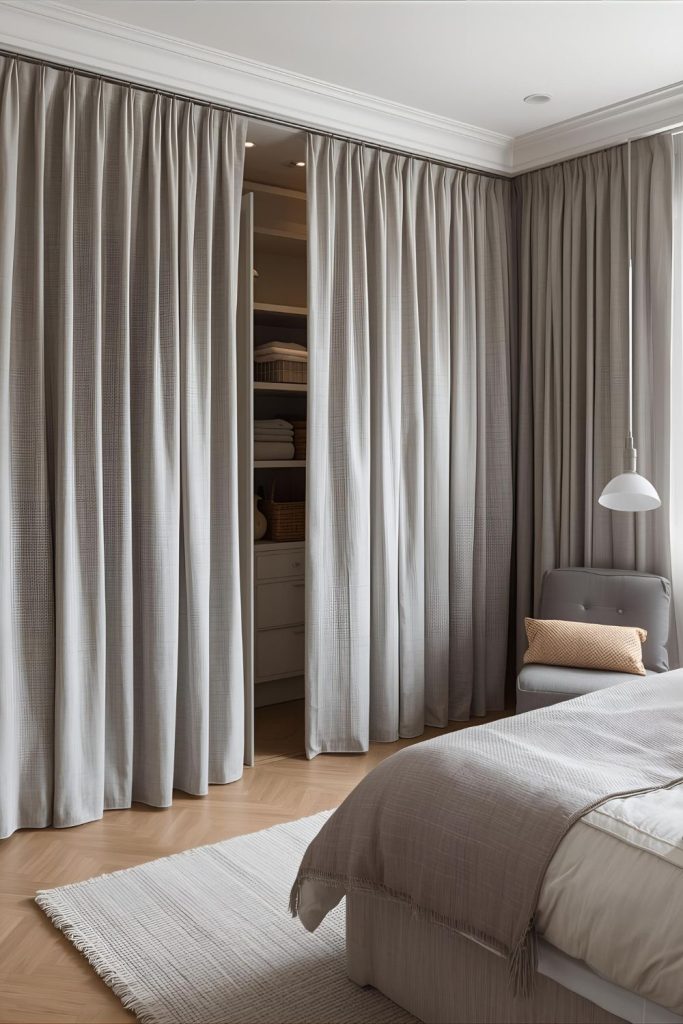
Using bold, textured fabrics to make closet doors a statement piece
Bold, textured fabrics instantly turn curtain closet doors into a focal point of any room. Materials like boucle, embroidered cotton, or jacquard add depth and visual interest, making the closet feel like part of the design rather than a hidden element. Bright colors or intricate patterns can energize a bedroom or living space, while tactile textures encourage a sense of comfort and warmth. These curtain closet doors allow you to experiment with style without permanent modifications, giving the room personality and charm while maintaining functionality.
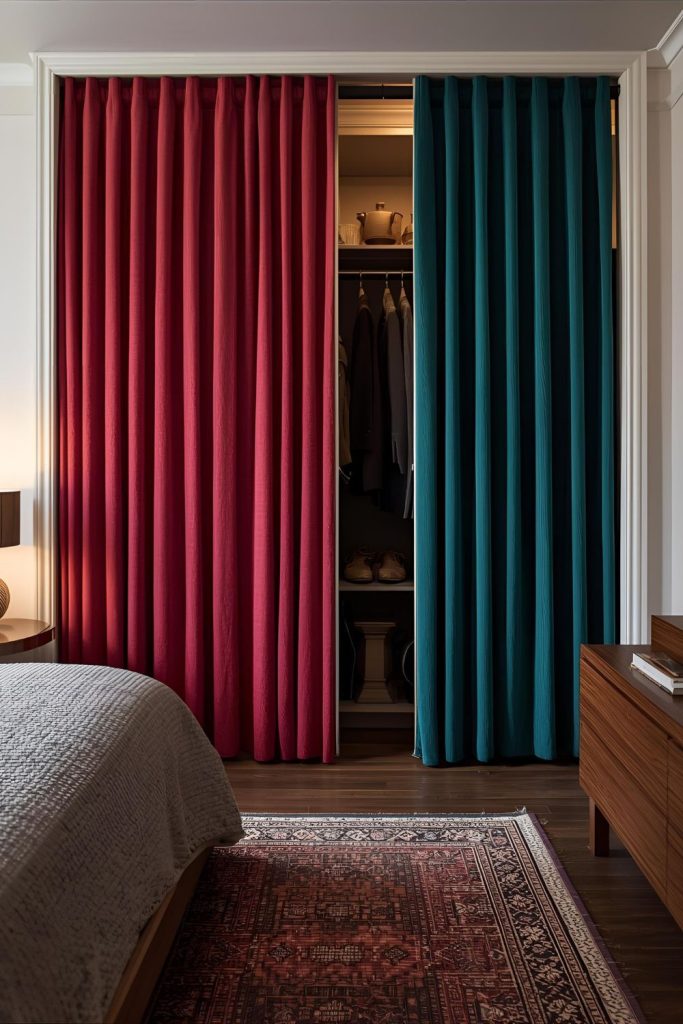
Installing curtain closet doors on open wardrobes to hide clutter elegantly
Open wardrobes can make a room feel messy if not organized, but curtain closet doors provide a soft, flexible solution. They hide clutter while still offering quick access to clothing and items. Choosing lightweight fabrics keeps the doors easy to pull aside, while heavier options give the wardrobe a polished, finished look. Curtain closet doors can also add color, pattern, or texture, enhancing the room’s warmth. This approach turns a storage solution into a design feature, balancing practicality and aesthetic appeal.
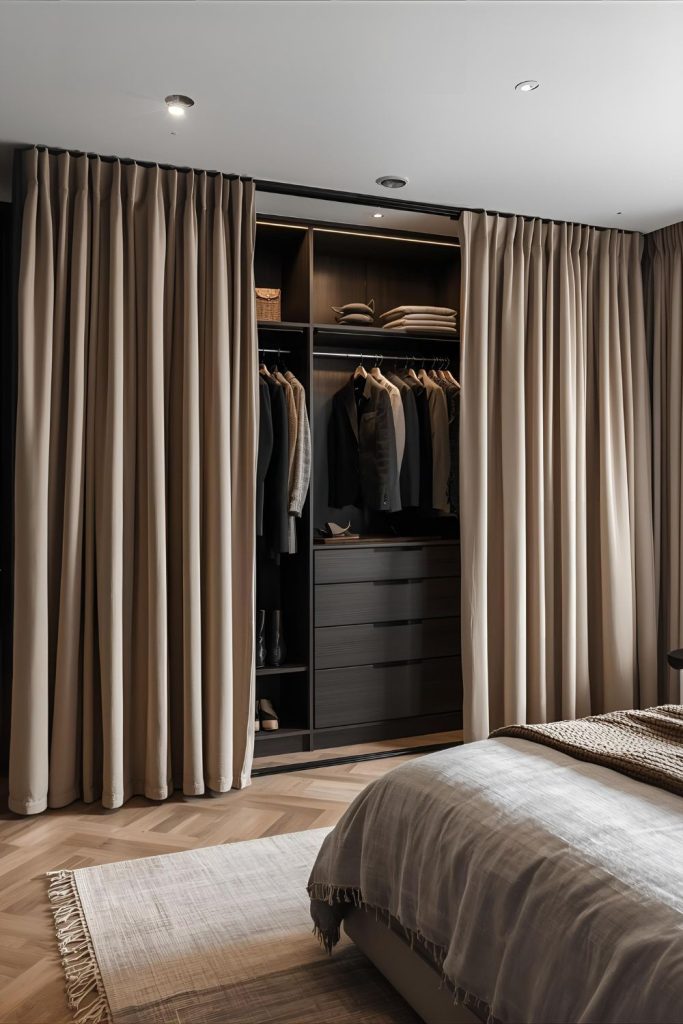
Coordinating curtain closet doors with rugs and throws for a layered interior effect
Layering curtain closet doors with rugs and throws creates a cozy, intentional feel in a room. Matching colors, patterns, or textures across these elements gives the interior depth and continuity. Soft fabrics on doors reflect the textures found in rugs and throws, amplifying comfort. This layered approach also allows for experimentation—mixing neutral curtains with bold rugs or vice versa—to create a warm, inviting atmosphere. Curtain closet doors become more than storage covers; they contribute actively to the room’s design story.
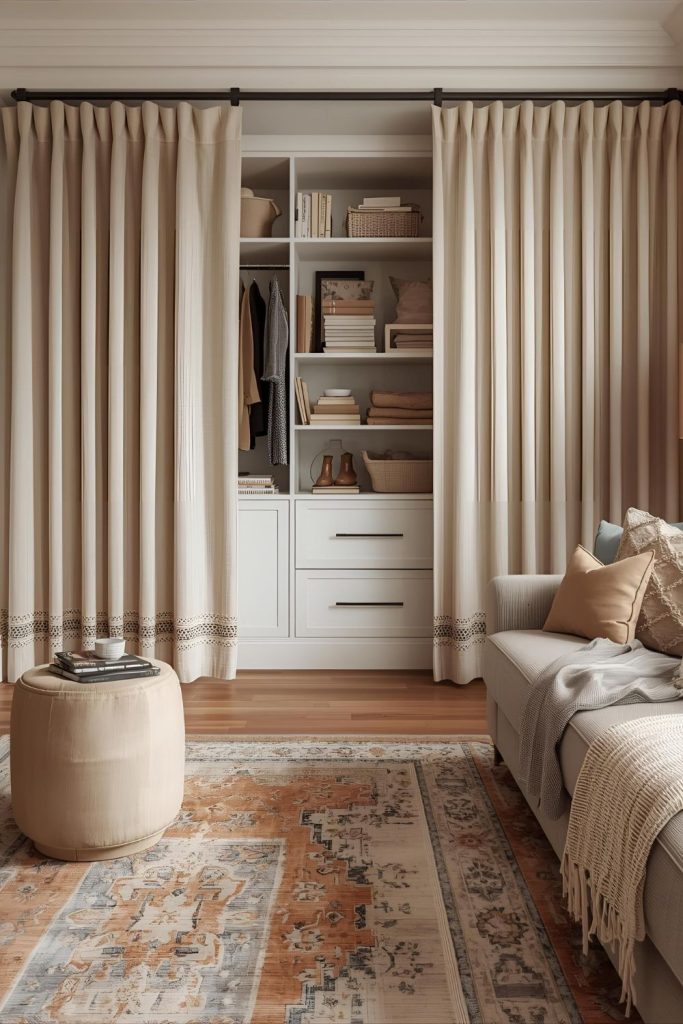
Choosing soft pastel curtain closet doors to create a light, airy feel
Pastel curtain closet doors are perfect for making spaces feel brighter and more open. Soft pinks, blues, greens, and lavenders reflect light gently, enhancing a room’s airy ambiance. These light colors pair well with neutral walls, wooden furniture, or metallic accents, creating balance without overwhelming the eye. Pastel fabrics also add subtle warmth, making the closet area feel inviting rather than stark. Using curtain closet doors in soft tones is a simple way to brighten interiors and maintain versatility for evolving décor.
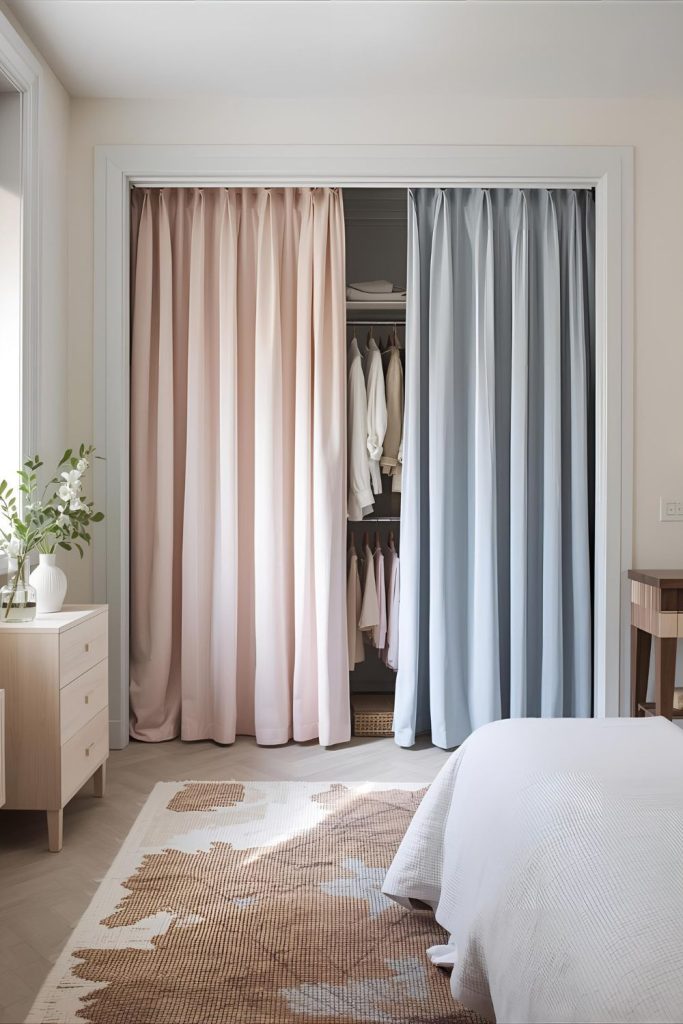
Adding metallic curtain rods to complement fabric curtain closet doors
Metallic curtain rods can elevate the look of curtain closet doors, adding shine, contrast, or elegance depending on the finish. Brass, matte black, or brushed nickel rods work well with different fabric textures, highlighting the softness of the curtains while providing structural support. The rods themselves can become a design element, framing the fabric and enhancing the room’s style. Curtain closet doors paired with metallic rods combine functional durability with aesthetic appeal, allowing rooms to feel polished and cohesive without heavy construction or complex installation.
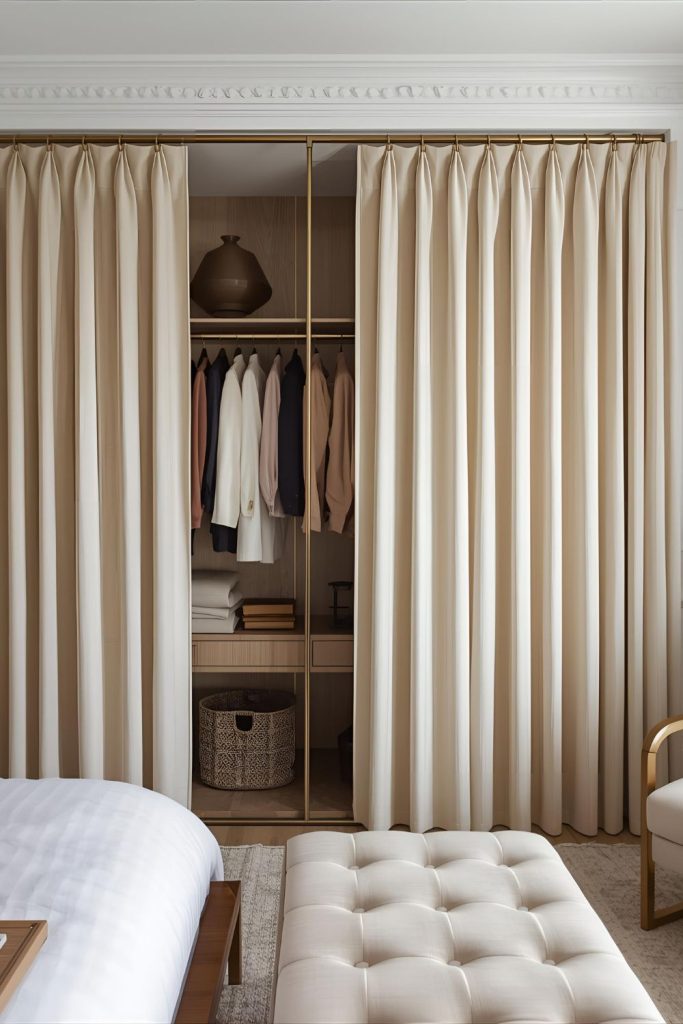
DIY hand-painted curtain closet doors for a personalized design touch
Hand-painted curtain closet doors allow for creativity and personalization. You can add stripes, geometric shapes, florals, or abstract patterns to match your room’s vibe. Painting directly on fabric creates texture and uniqueness, making the doors a design centerpiece. This approach also allows for seasonal or style updates without replacing hardware. DIY curtain closet doors blend warmth, versatility, and personal expression, letting interiors reflect personality while maintaining easy access and flexible functionality.
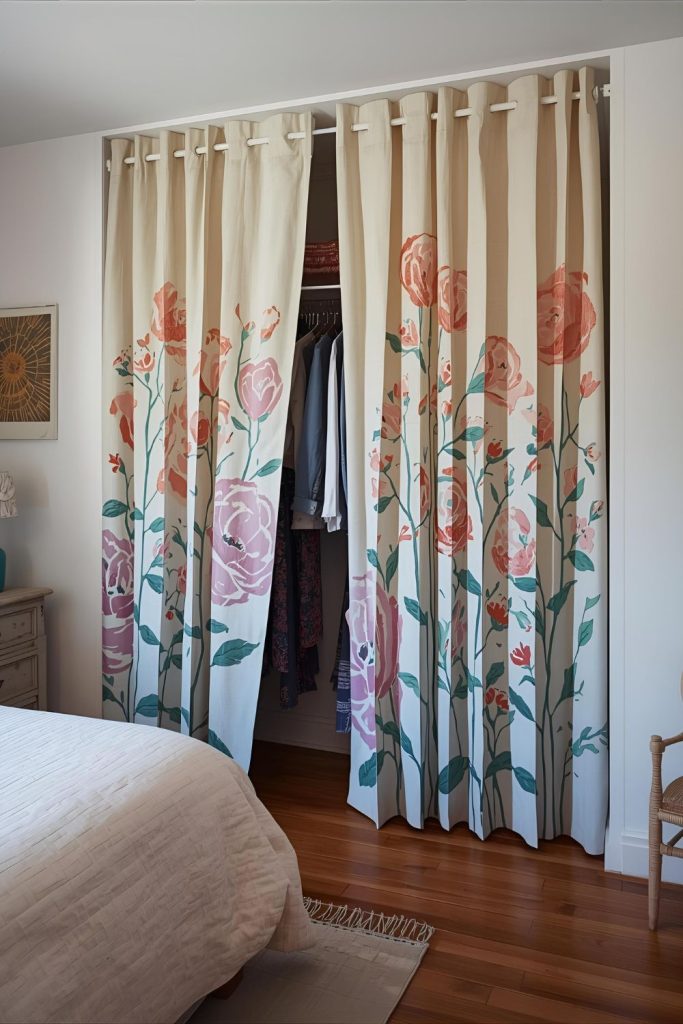
Using striped or geometric patterns on curtain closet doors to add depth
Stripes and geometric patterns can add visual dimension to curtain closet doors, making flat surfaces feel dynamic. Vertical stripes elongate rooms, while horizontal or chevron patterns expand the visual width. Geometric designs bring modernity and energy, contrasting softly with other textures in the room. These curtain closet doors work well as statement pieces in otherwise neutral interiors, adding both style and warmth. Patterns also provide an easy way to coordinate with existing décor, making the space feel curated and cohesive.
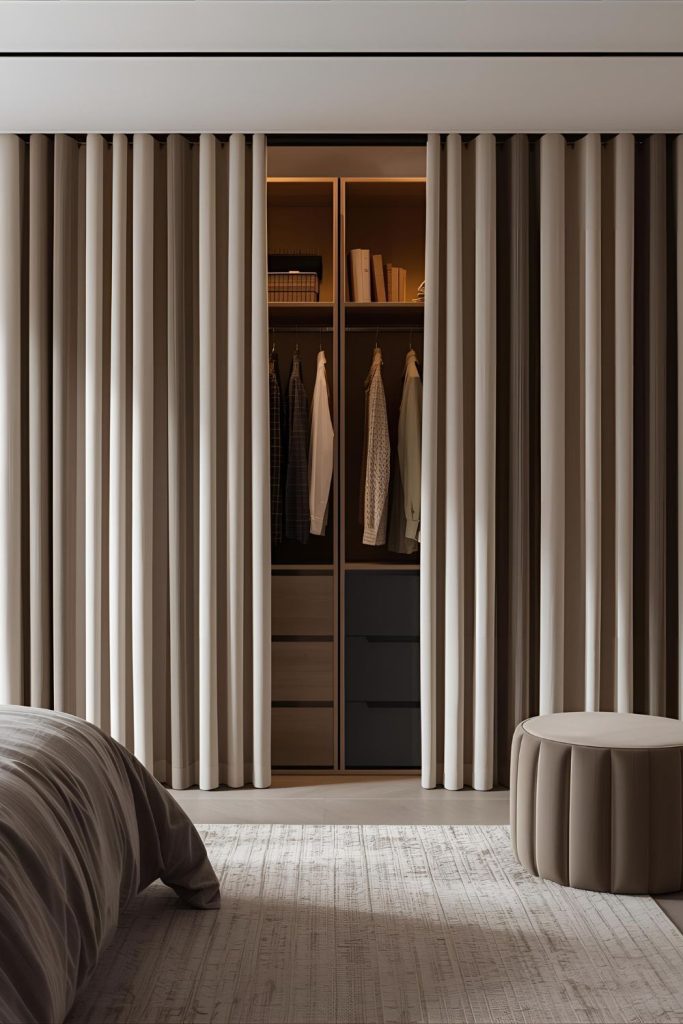
Incorporating blackout fabric curtain closet doors for bedrooms
Blackout curtain closet doors are perfect for bedrooms, offering privacy and light control. Heavy fabrics block sunlight and external glare, creating a cozy sleeping environment. They also reduce noise slightly, improving comfort and focus. Blackout curtain closet doors can double as decorative features, with rich colors or textures that complement bedding and furniture. This combination of function and warmth makes them an excellent choice for anyone wanting practical, stylish, and versatile closet solutions in their bedroom.
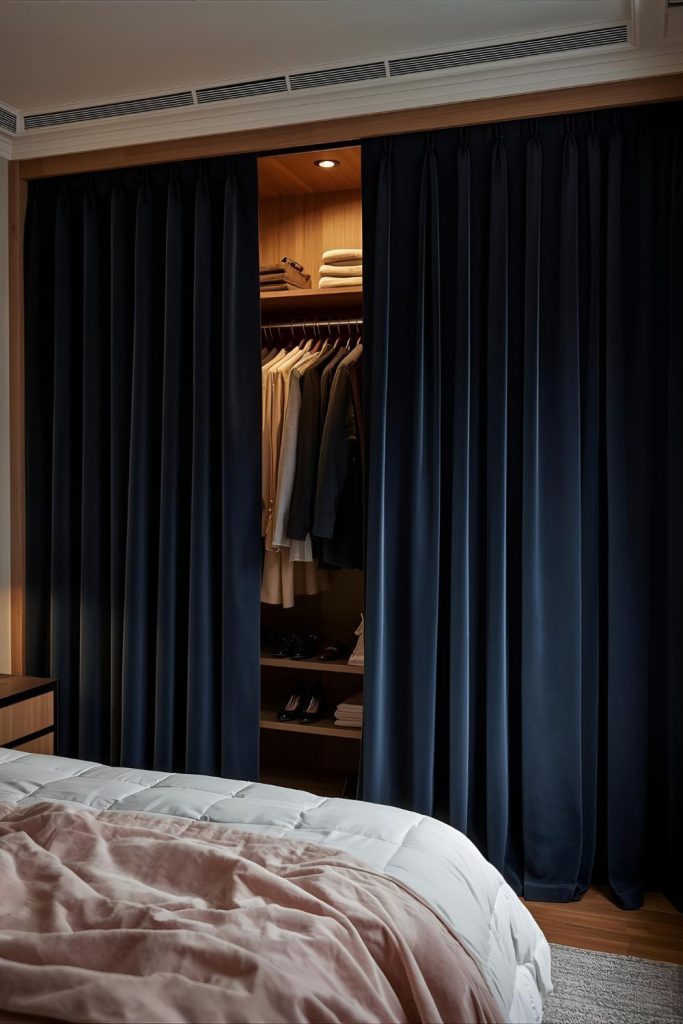
Curtain closet doors as a way to divide multifunctional living spaces
In multifunctional rooms, curtain closet doors provide flexible separation between zones. They can hide storage, define work areas, or create privacy without building permanent walls. Lightweight fabrics keep movement easy, while heavier textures create more enclosed, intimate spaces. Curtain closet doors can also be opened fully when separation isn’t needed, maintaining flow. This approach adds warmth, texture, and adaptability to interiors, proving that fabric doors are not just for closets—they’re versatile design tools.
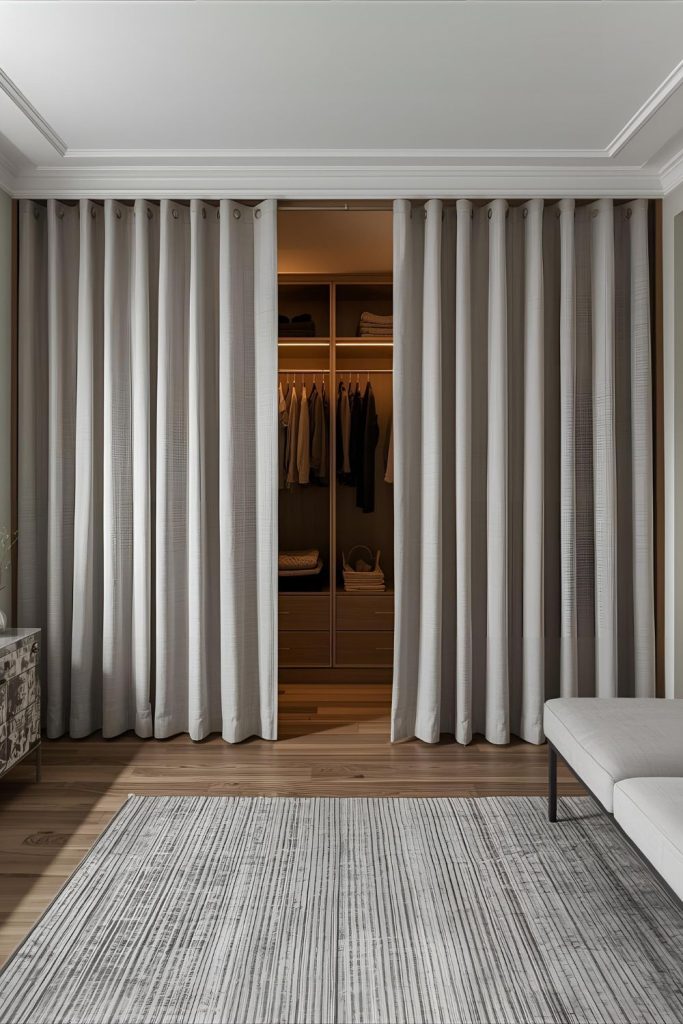
Seasonal curtain swaps: lightweight fabrics in summer, heavier textures in winter
Changing curtain closet doors seasonally is an easy way to refresh a room and adjust comfort. Lightweight cotton or linen fabrics in summer allow air circulation and light, keeping spaces airy. Heavier fabrics like velvet or thick woven cotton in winter trap warmth and reduce drafts, creating coziness. Seasonal swaps also let you experiment with color and pattern, making interiors feel renewed throughout the year. Curtain closet doors make this process simple, offering adaptability without permanent changes or costly renovations.
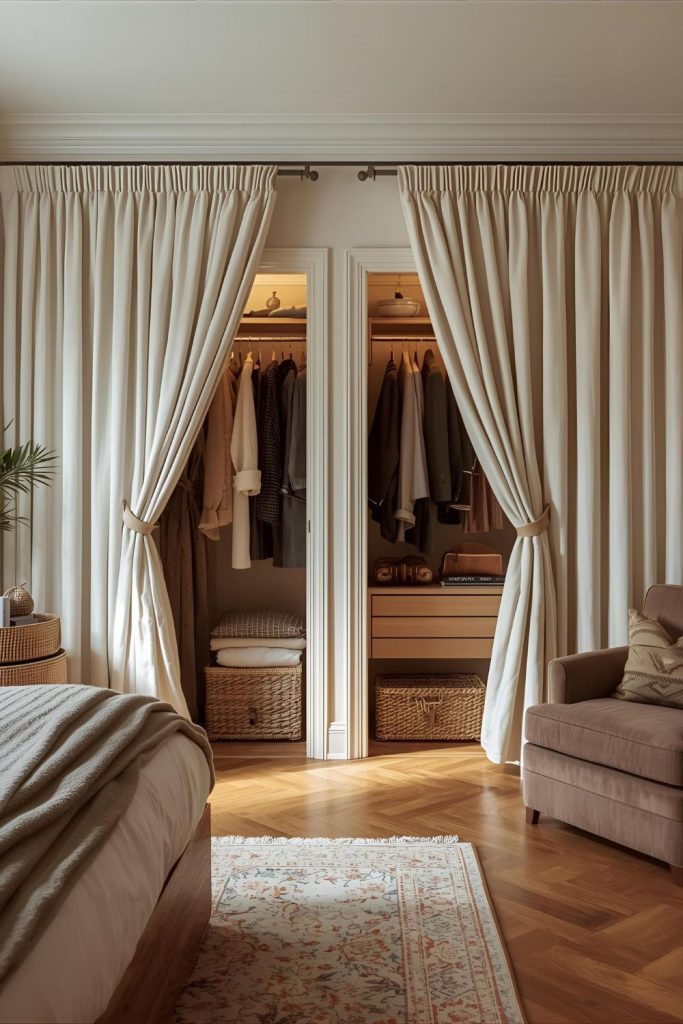
Combining curtain closet doors with minimal hardware for a floating, soft look
Using minimal rods and simple fixtures creates a floating effect for curtain closet doors. The doors appear to hover gently, adding softness and sophistication to the room. This approach highlights fabric texture and movement without visual clutter from bulky hardware. Curtain closet doors with minimal hardware work well in modern, Scandinavian, or minimalist interiors, emphasizing light, flow, and warmth. The simplicity also makes it easy to swap fabrics or adjust placement, keeping the room versatile and easy to style.
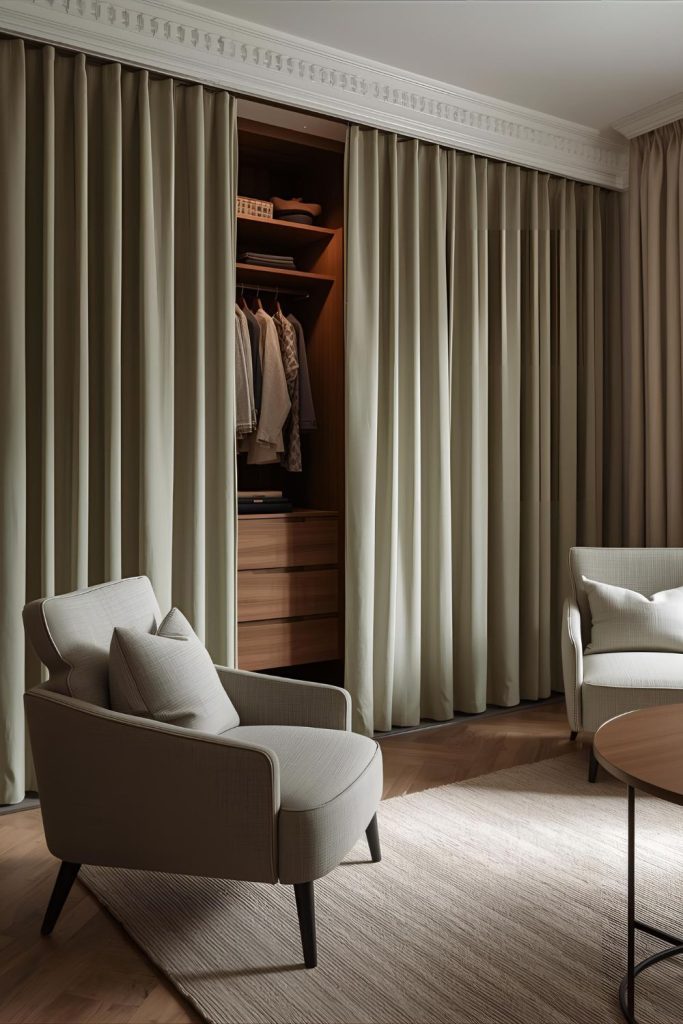
Matching curtain closet doors to accent furniture for harmonious design
Curtain closet doors can echo the colors, patterns, or textures of accent furniture, creating a cohesive interior. Matching tones to chairs, ottomans, or tables ties the space together while adding warmth through fabric softness. Coordinated elements make rooms feel intentional and well-planned without overwhelming the eye. Curtain closet doors become an extension of the furniture’s presence, blending functional storage with design harmony. This strategy helps spaces feel inviting and connected while retaining flexibility for future updates.
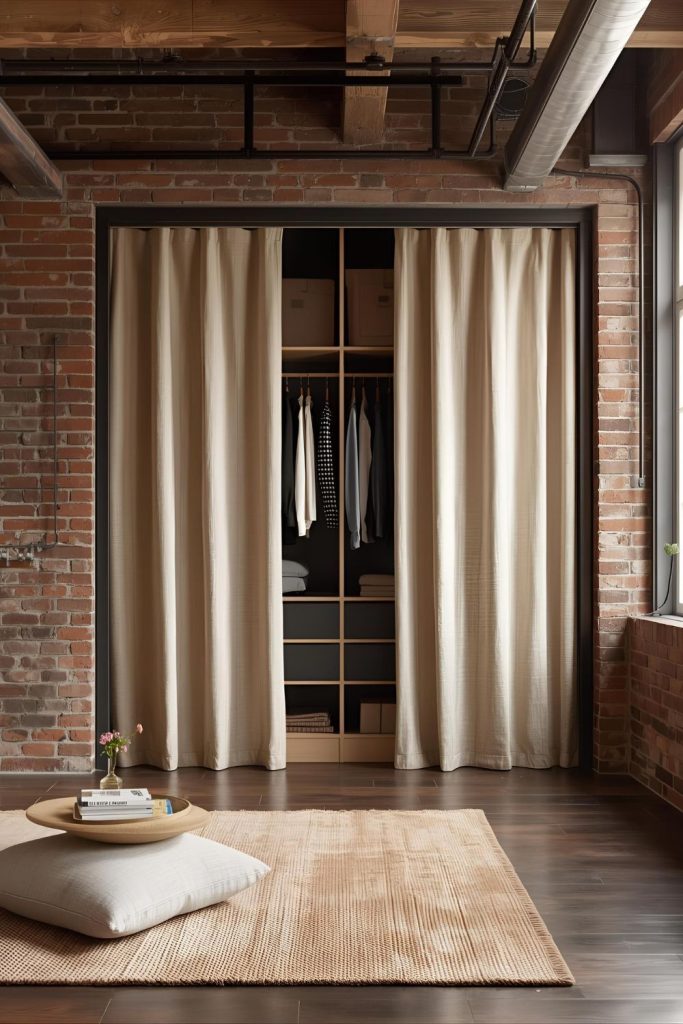
Using curtain closet doors to soften industrial interiors with fabric warmth
In industrial-style interiors with exposed concrete, metal, or brick, curtain closet doors can introduce softness and warmth. Fabrics counterbalance hard textures, adding visual relief and comfort. Neutral or warm-toned curtains complement raw surfaces, while heavier fabrics reduce echo and improve acoustic comfort. Curtain closet doors make industrial spaces feel less stark and more livable without compromising the aesthetic, proving that softness and functionality can coexist with strong architectural elements.
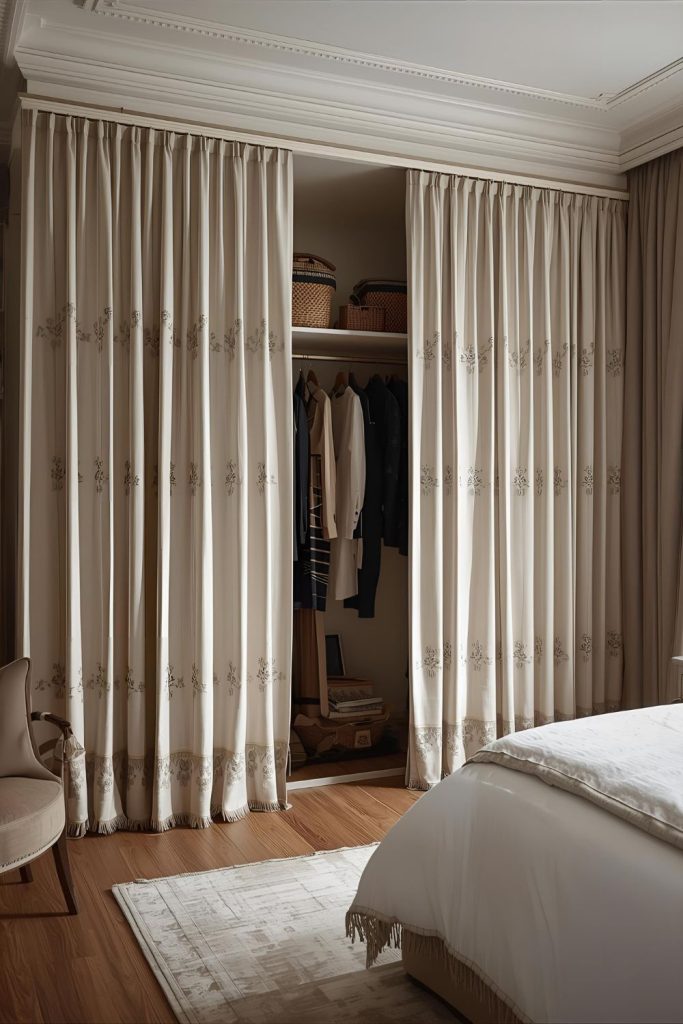
Adding subtle embroidery or decorative trims to curtain closet doors for character
Decorative touches like embroidery, piping, or trims can turn curtain closet doors into artistic features. These details add texture and interest, making fabric doors feel special and intentional. Subtle patterns or stitched motifs can complement other room elements like cushions or throws, creating continuity. Curtain closet doors with decorative details combine personality with warmth and versatility, enhancing both storage functionality and aesthetic appeal.
Hanging double-layer curtain closet doors for both aesthetic appeal and functionality
Double-layer curtain closet doors combine sheer and opaque fabrics, adding depth, flexibility, and style. The sheer layer allows light to filter through while maintaining softness, and the opaque layer ensures privacy or visual concealment when needed. This approach increases versatility, letting you adjust ambiance, light, and functionality easily. Double-layer curtain closet doors also create a rich, layered visual effect, making storage areas feel more integrated into the room design while adding warmth and comfort.