
Small galley kitchens in urban apartments often feel tight, dark, and hard to work in, even when the layout is functional. With the right mix of layout tweaks, storage choices, lighting, and simple design shifts, the same space can feel noticeably more open and easier to move through. The ideas below focus on practical changes that reduce clutter, improve light, and create cleaner sightlines so a narrow kitchen feels lighter, wider, and more comfortable to use every day.
Replace Upper Cabinets with Floating Shelves to Open Up Sightlines
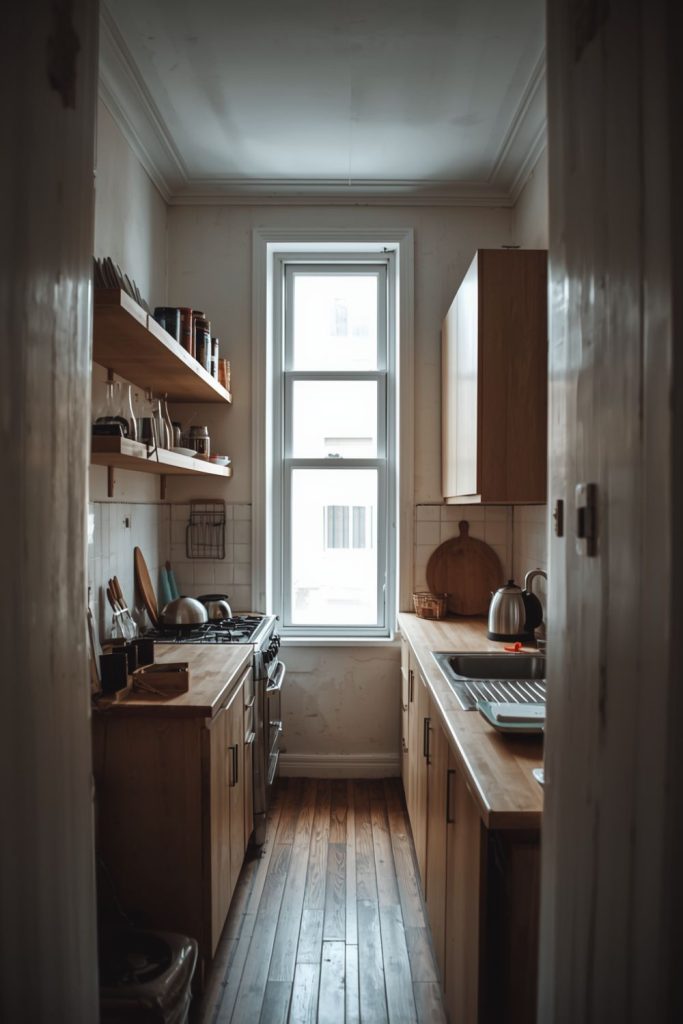
Upper cabinets can feel heavy in a narrow galley kitchen. Replacing them with floating shelves removes that blocky upper line and gives the wall a lighter look. The kitchen feels less enclosed, especially when shelves are kept minimal and not overloaded. Items like plates or glassware can still sit there, but the space reads more open from eye level.
Paint Walls and Cabinets the Same Soft White Shade for a Seamless Look
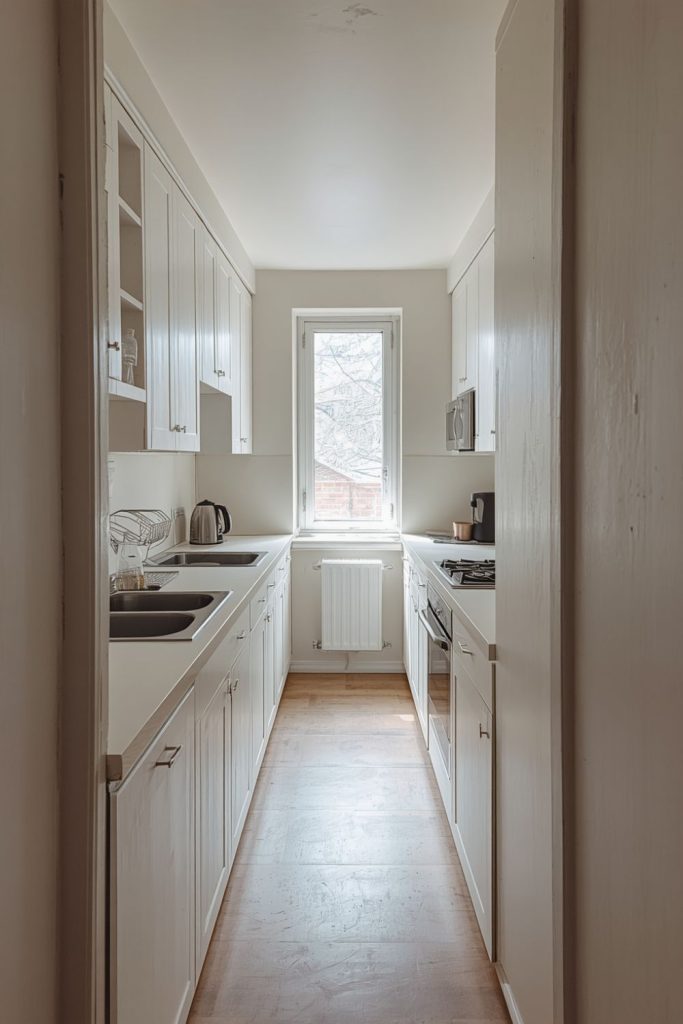
When walls and cabinets share the same soft white tone, the edges between them fade. This reduces visual stops that normally break up a small kitchen. The space starts to feel longer and more continuous, even if the actual size stays the same. Slight shifts in tone can still work, but keeping them close helps avoid a chopped up appearance.
Install Floor-to-Ceiling Cabinets to Eliminate Visual Clutter
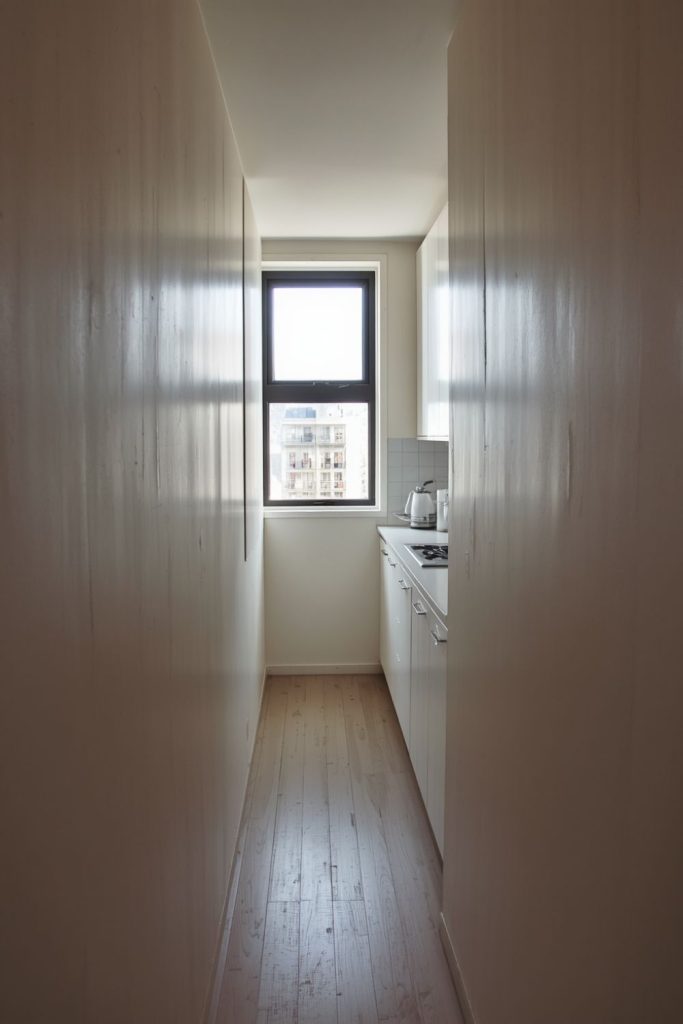
Floor to ceiling cabinets remove empty wall gaps that tend to collect visual noise. Instead of stopping midway, the storage runs straight up, which makes the kitchen feel taller. It also hides a lot of items behind closed doors, so the counters stay cleaner. This kind of vertical line helps stretch the space upward, which balances the narrow layout.
Use Glossy Cabinet Finishes to Reflect Natural and Artificial Light
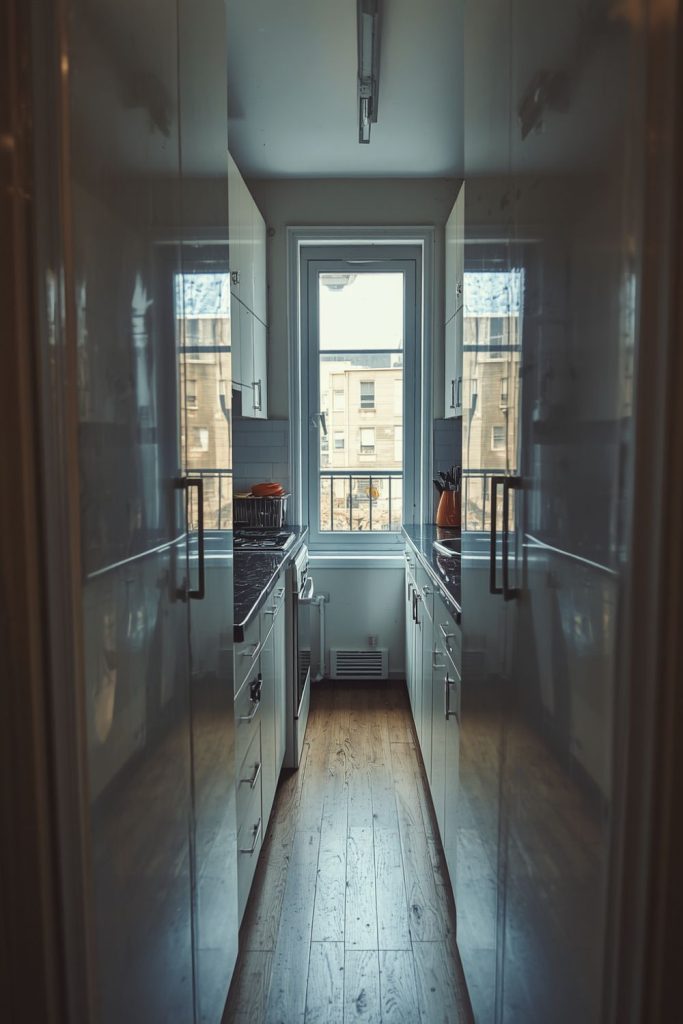
Glossy cabinet fronts reflect light around the room, which helps reduce darker areas that make a galley feel tight. Even small light sources bounce off the surface and spread more evenly. The result is a brighter kitchen that feels less closed in. It also gives a smoother look across the cabinetry, which reduces visual clutter.
Extend the Backsplash All the Way to the Ceiling to Draw the Eye Upward
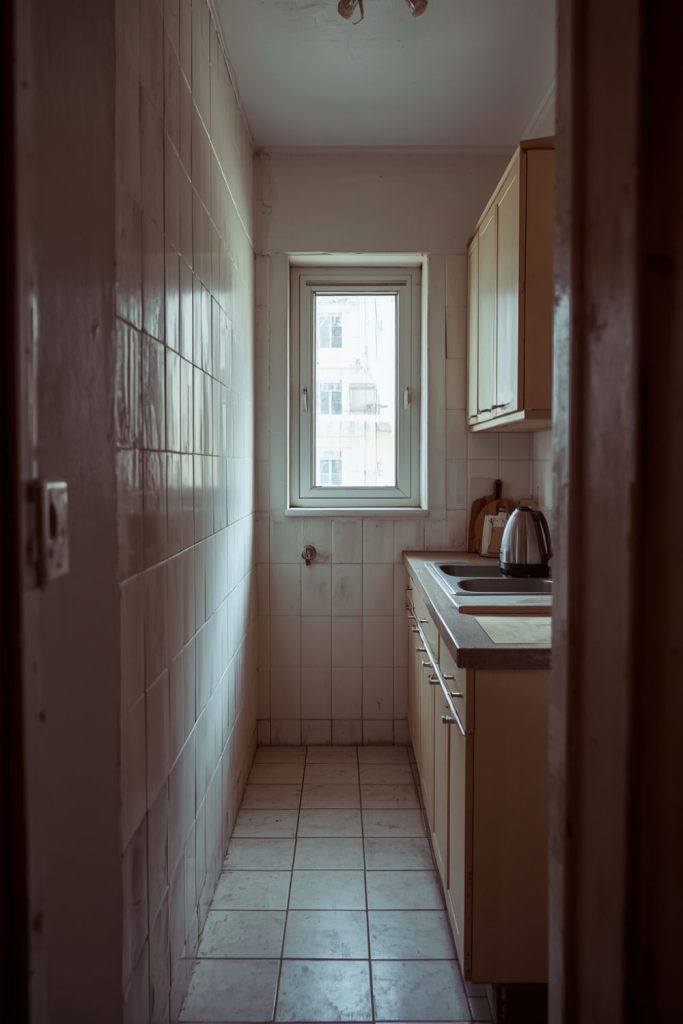
A full height backsplash creates a strong vertical line that pulls attention upward. This makes the ceiling feel higher than it is. It also removes the usual break between wall and backsplash, which keeps the surface continuous. In a small galley kitchen, this helps reduce the chopped up feeling that comes from too many horizontal divisions.
Add Under-Cabinet Lighting to Brighten Dark Corners and Narrow Walkways
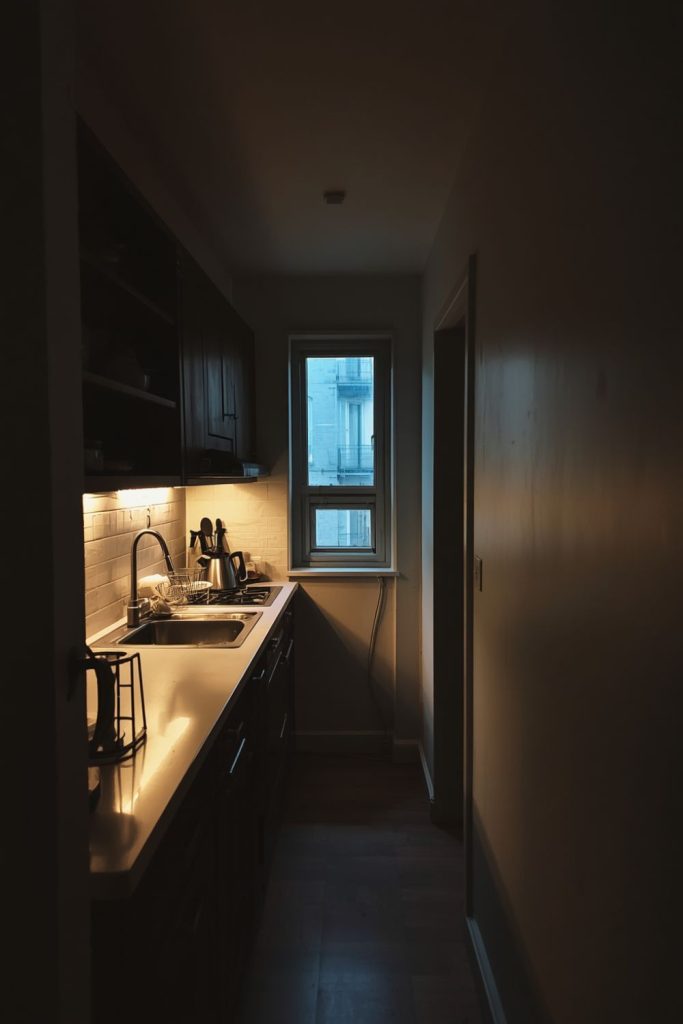
Under cabinet lighting fills in shadows on the counter area, which often make narrow kitchens feel tighter. When light spreads evenly along the workspace, the kitchen feels more open and easier to use. It also highlights the backsplash and adds depth to the wall, which improves the overall feel of space.
Choose Handleless Cabinet Doors for Cleaner, Uninterrupted Lines
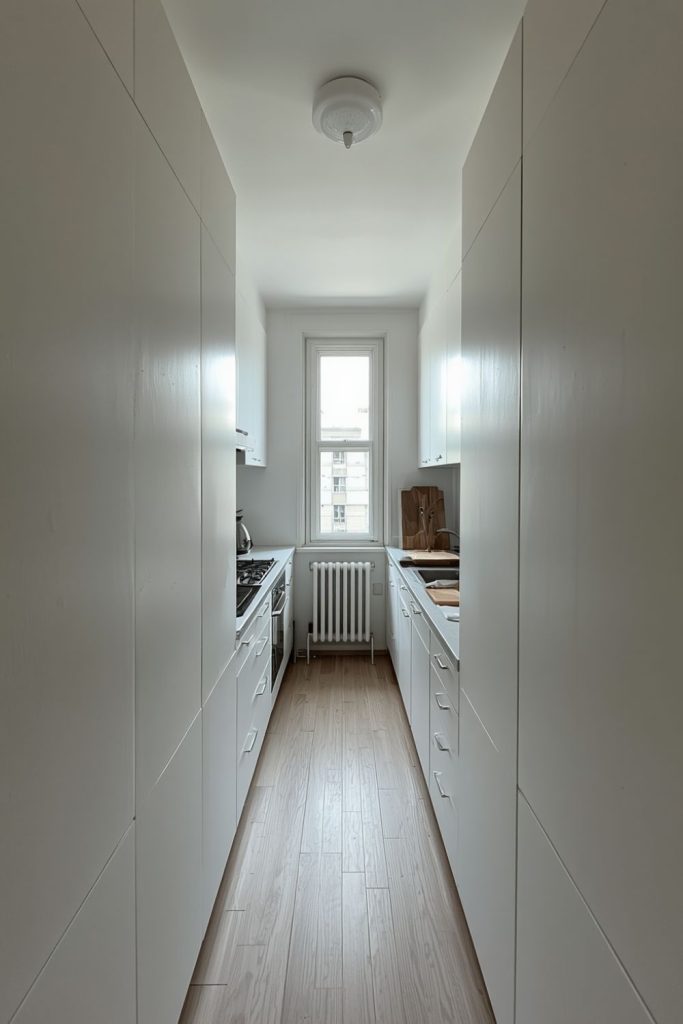
Handleless cabinets remove small visual breaks caused by knobs or pulls. This creates a smoother surface across the kitchen. In a narrow galley layout, those uninterrupted lines help the eye move along the space without stopping, which makes it feel longer and less cramped.
Incorporate a Mirrored Backsplash to Create the Illusion of Extra Depth
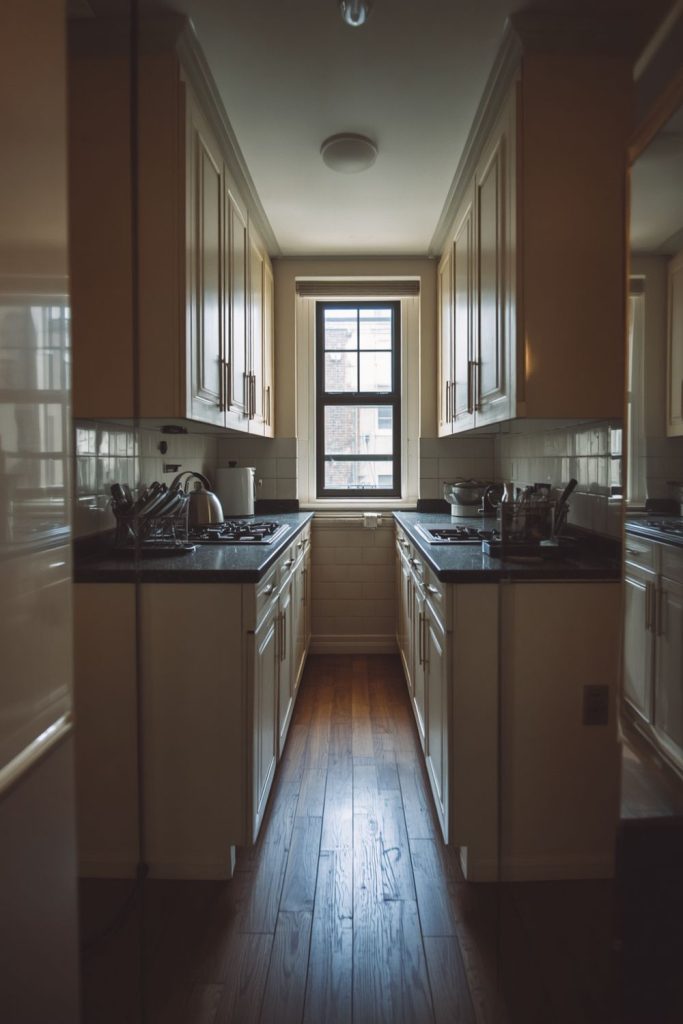
A mirrored backsplash reflects the opposite wall, which doubles the visual depth of the kitchen. This can make a narrow galley feel less like a corridor. It also increases brightness by bouncing light around, which helps reduce dark zones. The effect is subtle but noticeable in small spaces.
Swap Solid Cabinet Doors for Glass Front Uppers to Reduce Visual Weight
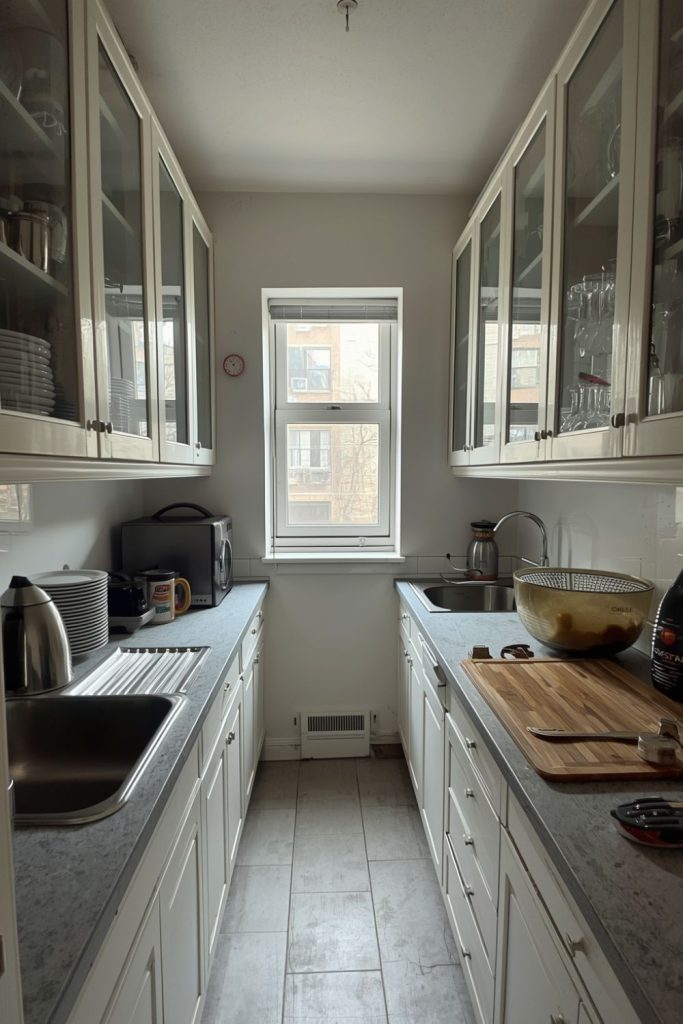
Glass front cabinets reduce the heavy block effect of solid doors. Even when filled, they feel lighter because the eye can see through them slightly. This helps the upper half of the kitchen feel less closed in. It also adds a bit of depth since layers of items become part of the visual design.
Use Large-Format Floor Tiles to Create a More Expansive Visual Flow
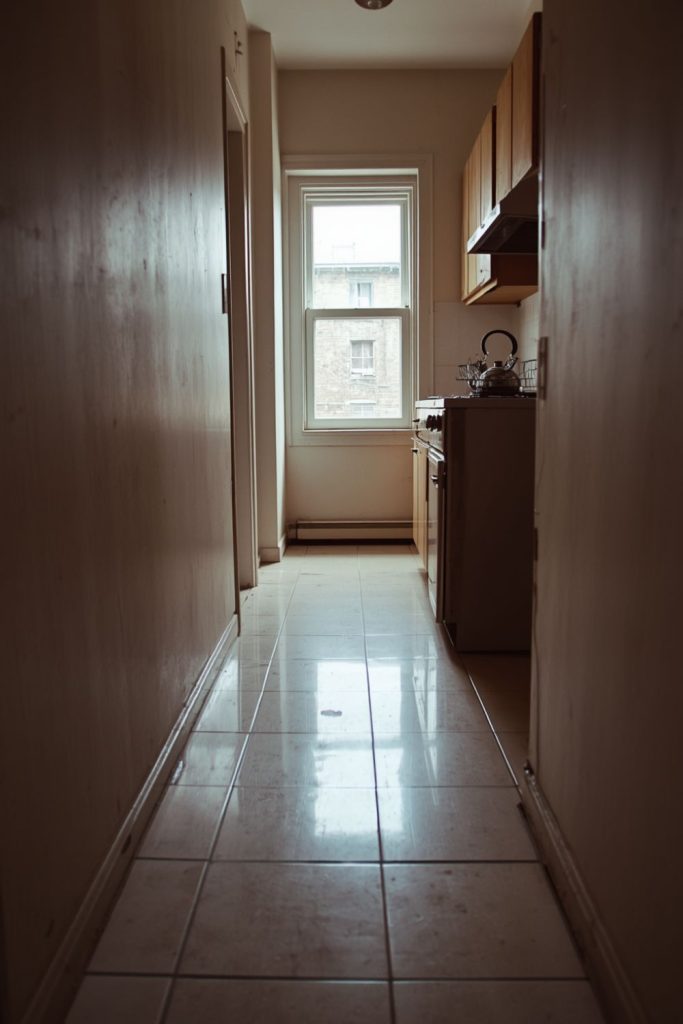
Large floor tiles reduce grout lines, which creates a smoother surface underfoot. This helps the kitchen floor feel less busy and more continuous. In a galley layout, this continuous flow supports the feeling of length, making the room appear stretched out rather than segmented.
Install Slim Open Shelving Around a Window Instead of Bulky Cabinets
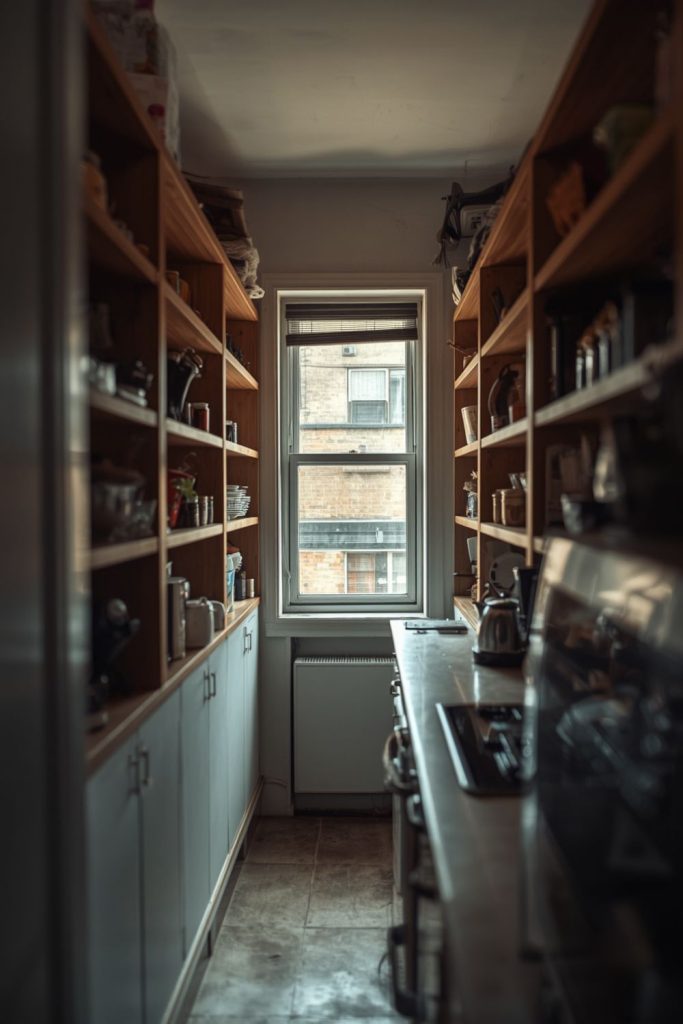
Replacing cabinets near a window with slim shelving keeps natural light areas clear. This prevents the kitchen from feeling blocked in at its brightest point. The shelves also provide storage without adding heavy mass around the window frame, which helps the space feel more open and relaxed.
Conceal Countertop Appliances Inside Dedicated Appliance Garages
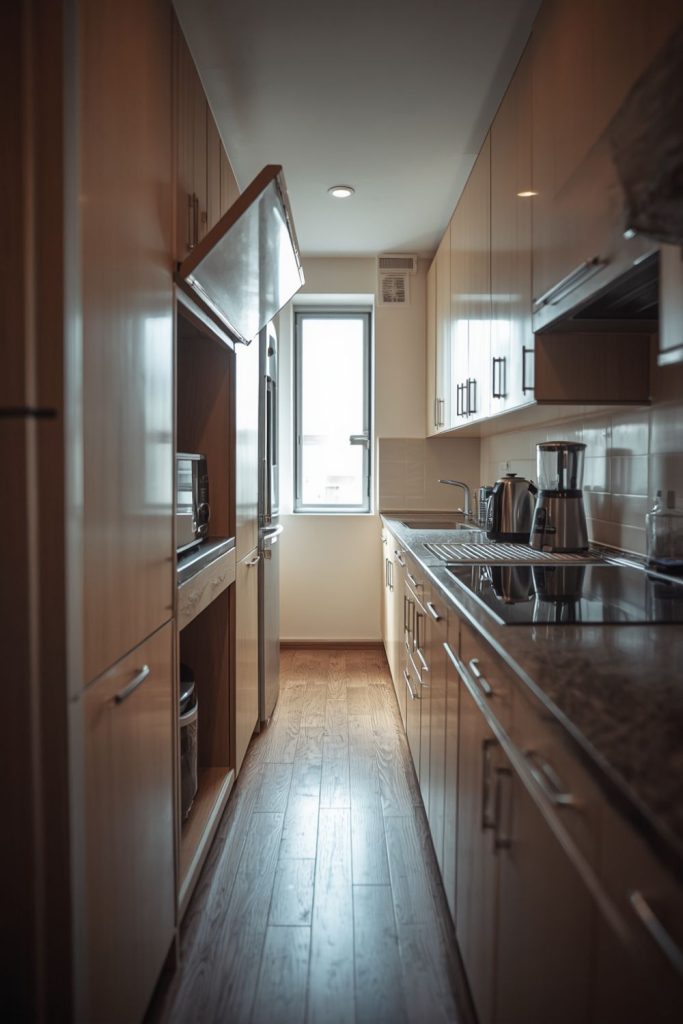
Appliance garages keep items like toasters and blenders out of sight. When counters stay clear, the kitchen instantly feels less crowded. This is one of the quickest ways to reduce visual noise in a small galley kitchen. It also makes daily cleaning easier, which keeps the space looking tidy.
Use Vertical Tile Patterns to Make Low Ceilings Appear Taller
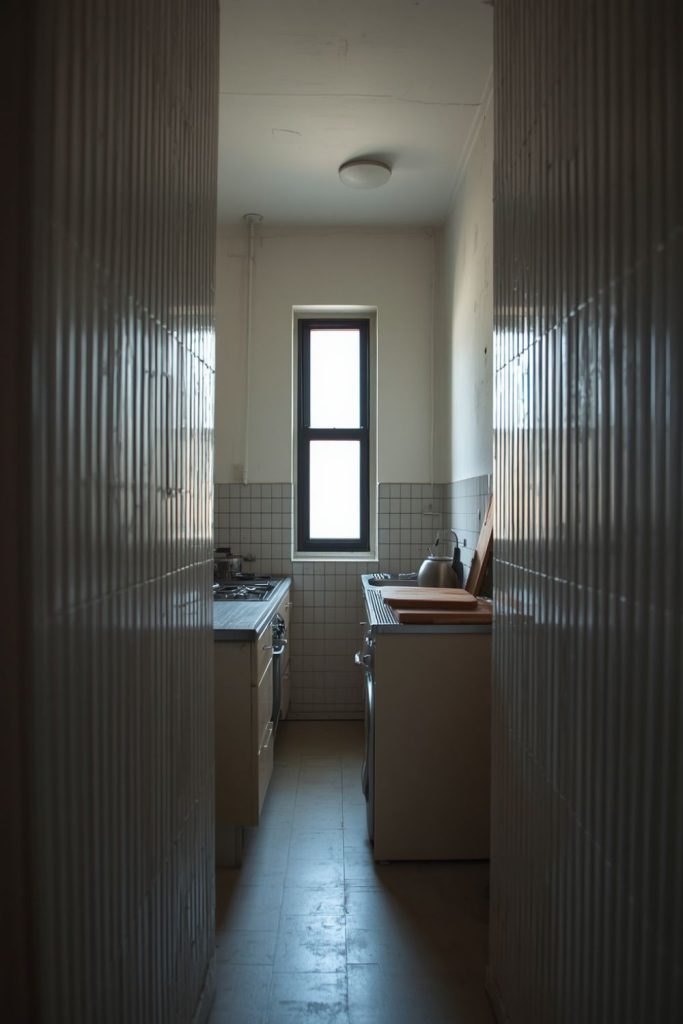
Vertical tile layouts draw the eye upward. This creates the impression of height even in kitchens with standard ceilings. It works especially well in narrow spaces where horizontal lines already dominate. The vertical direction balances that and makes the room feel more open.
Select Integrated Appliances That Blend Seamlessly into Cabinetry
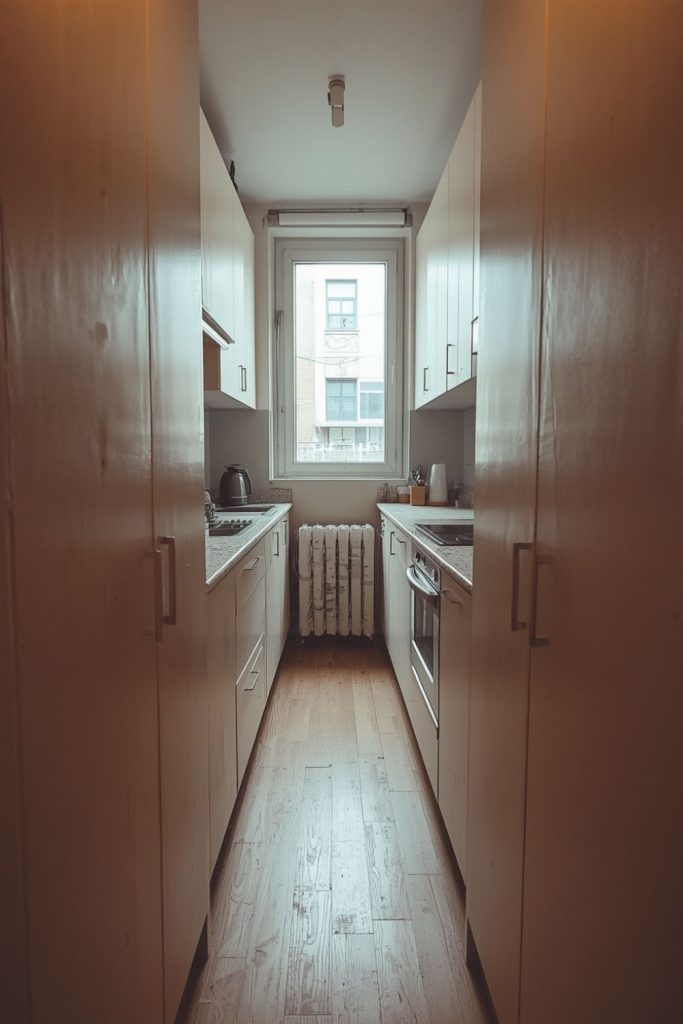
Integrated appliances sit behind cabinet panels, which reduces visual interruptions. Instead of breaking up the kitchen with metal finishes or dark fronts, everything blends into one continuous surface. This helps the space feel calmer and less busy.
Add Toe-Kick Drawers to Increase Storage Without Taking Up Visible Space
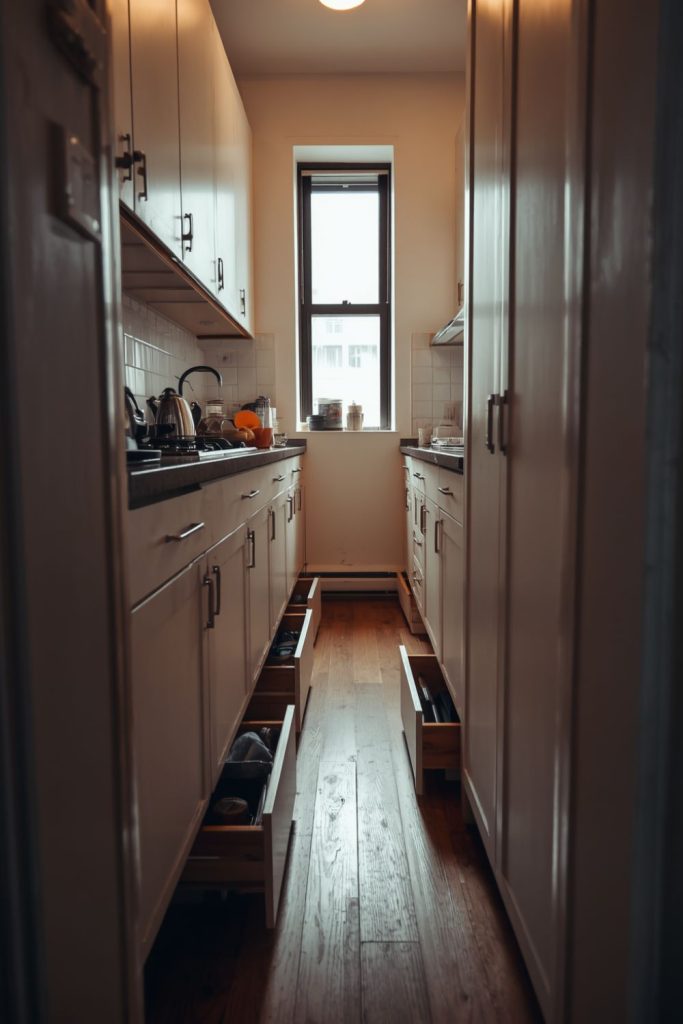
Toe kick drawers use the base area under cabinets, which is often wasted space. These drawers are hidden, so they do not affect the look of the kitchen. They help reduce clutter in other storage areas, which keeps counters and shelves clearer.
Replace a Traditional Door with a Glass Pocket Door to Improve Openness
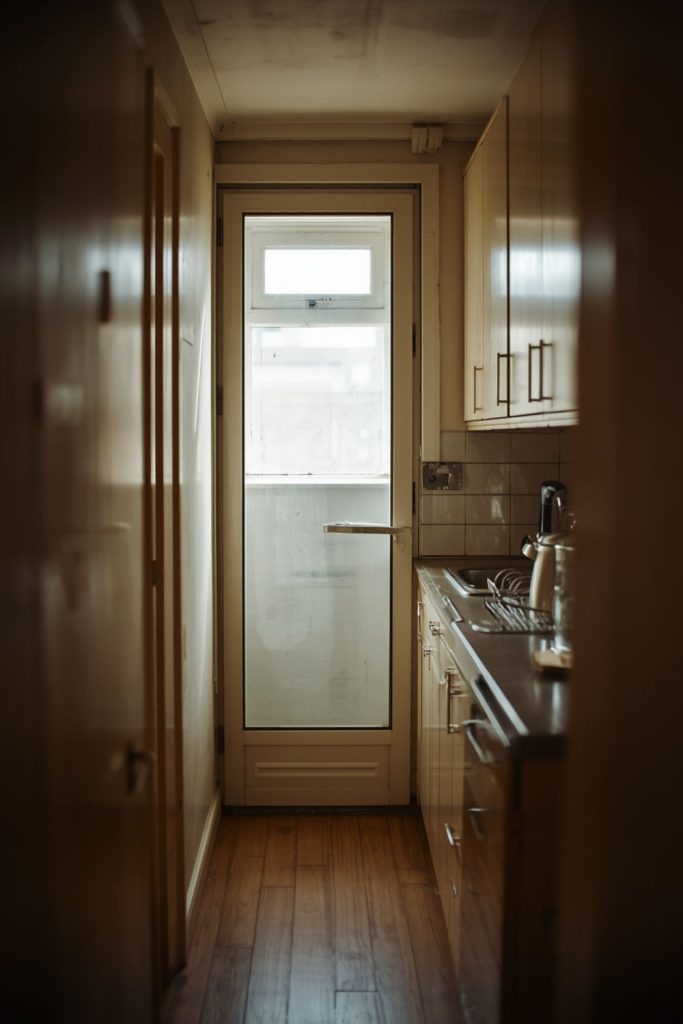
A glass pocket door reduces the visual barrier between kitchen and adjacent rooms. Because it slides away, it also saves swing space. The glass keeps light moving through both areas, which makes the kitchen feel less isolated and more open.
Use Under-Shelf Lighting to Highlight Open Storage and Add Depth
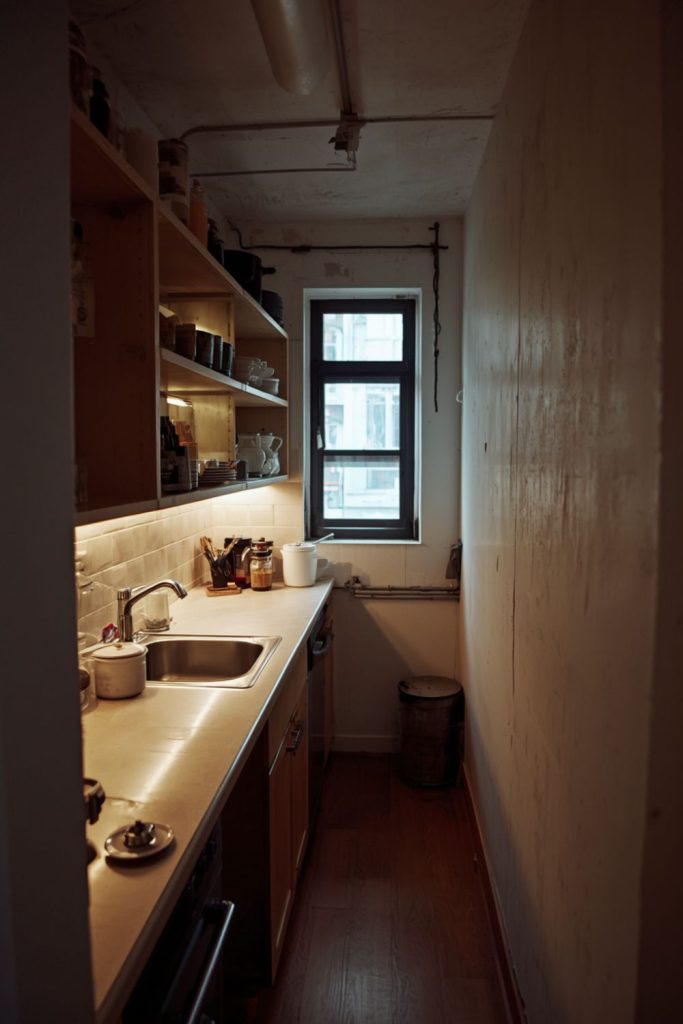
Under shelf lighting adds soft layers of light between storage levels. This prevents shelves from feeling flat or heavy. It also highlights objects on display, which adds a bit of depth to the wall and keeps the space visually active without clutter.
Choose Continuous Quartz Countertops and Backsplashes for a Streamlined Look
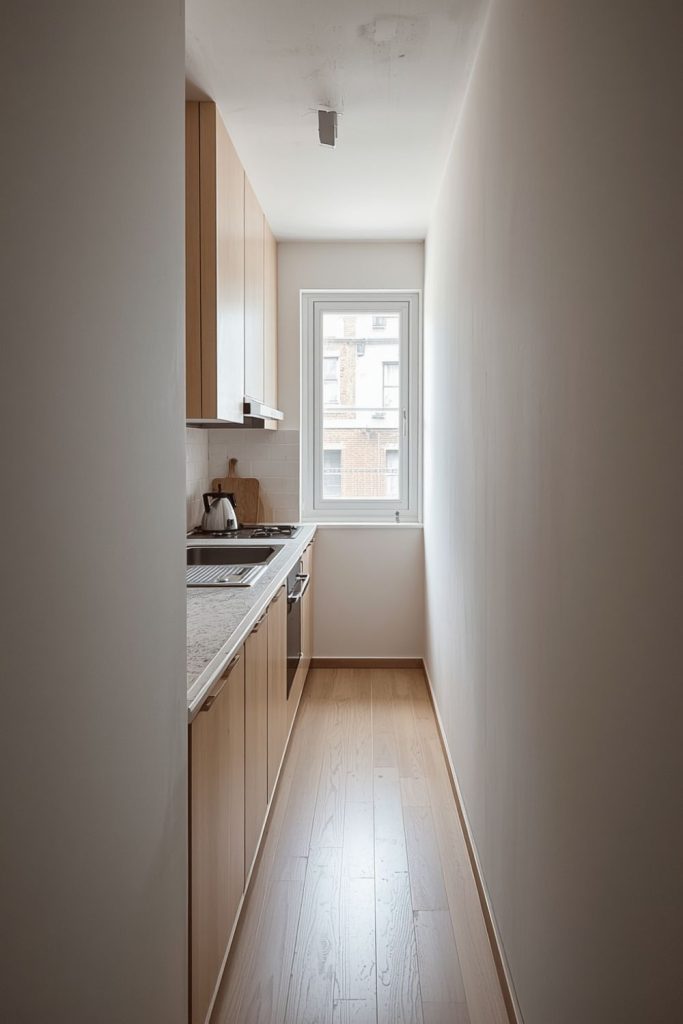
Using the same quartz material for both countertop and backsplash removes a major visual break. This creates a smooth surface that runs across the kitchen. It helps reduce fragmentation and makes the space feel longer and cleaner.
Install Pull-Out Pantry Storage to Keep Everyday Items Hidden Yet Accessible
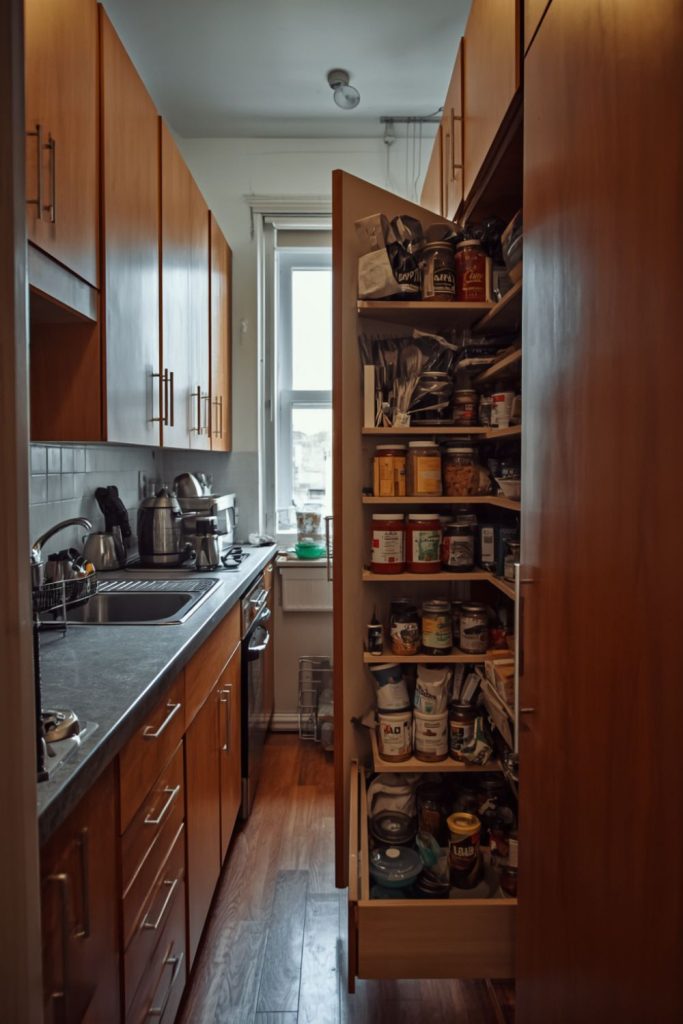
Pull out pantry systems store food items behind closed panels but still keep them easy to reach. This reduces the need for open shelving or countertop storage. When everything has a place behind doors, the kitchen looks less crowded and more open.
Maximize Natural Light with Bare Windows or Minimalist Window Treatments
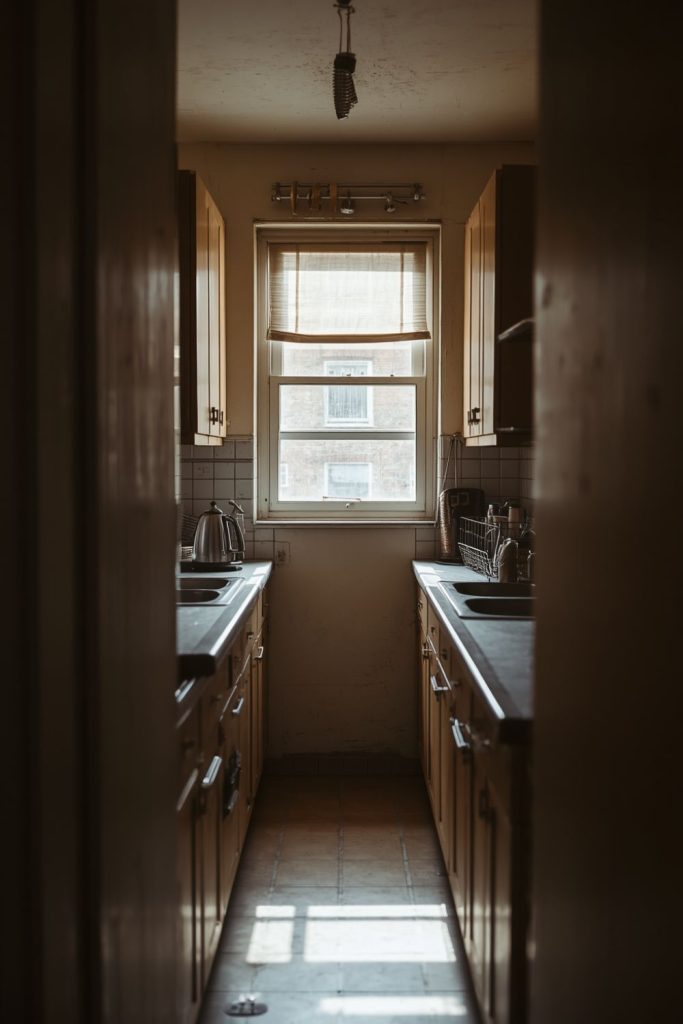
Keeping windows simple allows more daylight into the kitchen. Heavy curtains or dark shades can block light and make a narrow space feel tighter. A clean window area improves brightness and gives a sense of openness during the day.
Create a Monochromatic Color Palette to Visually Expand the Kitchen
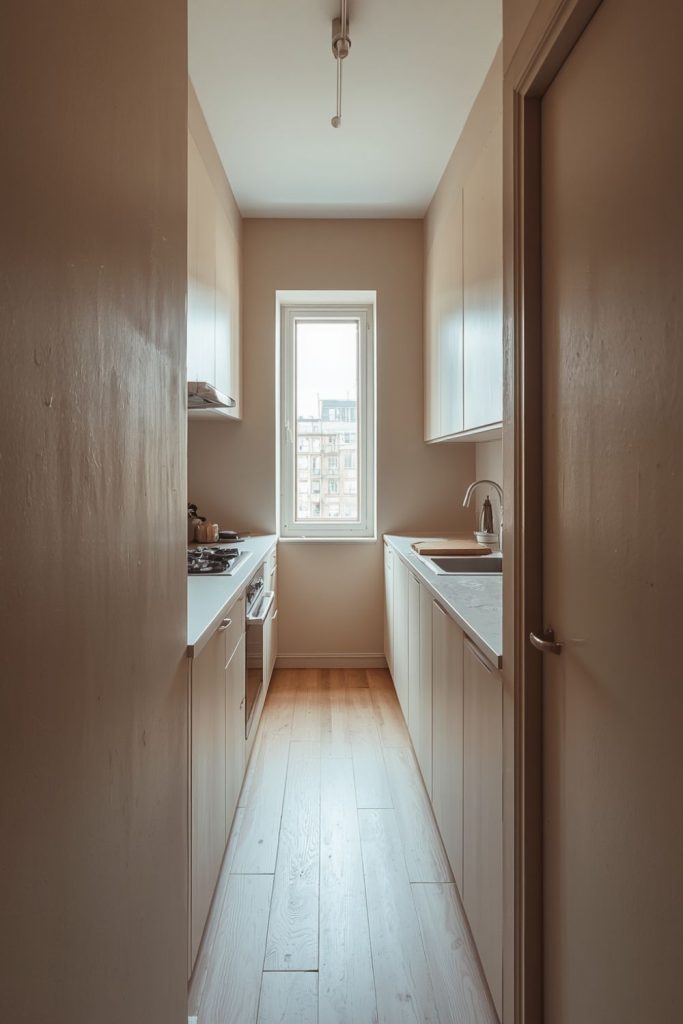
A monochromatic palette removes strong color breaks between surfaces. When cabinets, walls, and trim sit in similar tones, the kitchen feels more continuous. This reduces visual stops and helps the space feel wider and less segmented.