
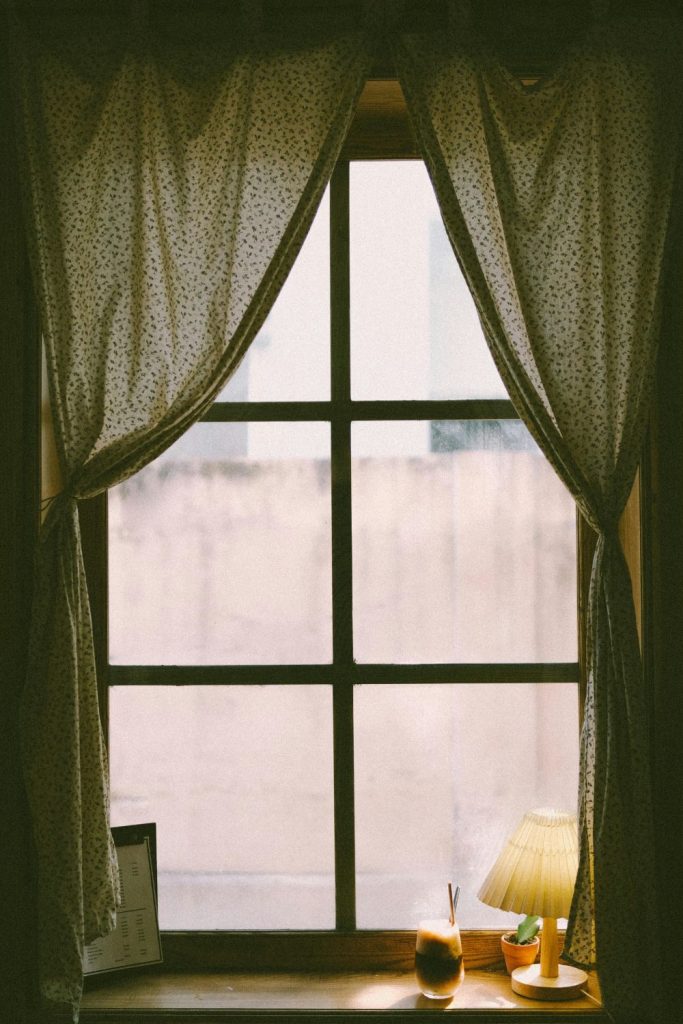
Small apartments often feel tight because windows don’t get enough attention. Heavy curtains, wrong placement, or too much fabric can make the room feel darker and smaller than it really is. Short window curtains fix that by keeping things light, letting in more daylight, and opening up the visual space around the window. With the right setup, even a small room can feel brighter, taller, and more breathable without changing anything structural.
Café curtains covering only the lower third of the window to keep maximum daylight flowing in
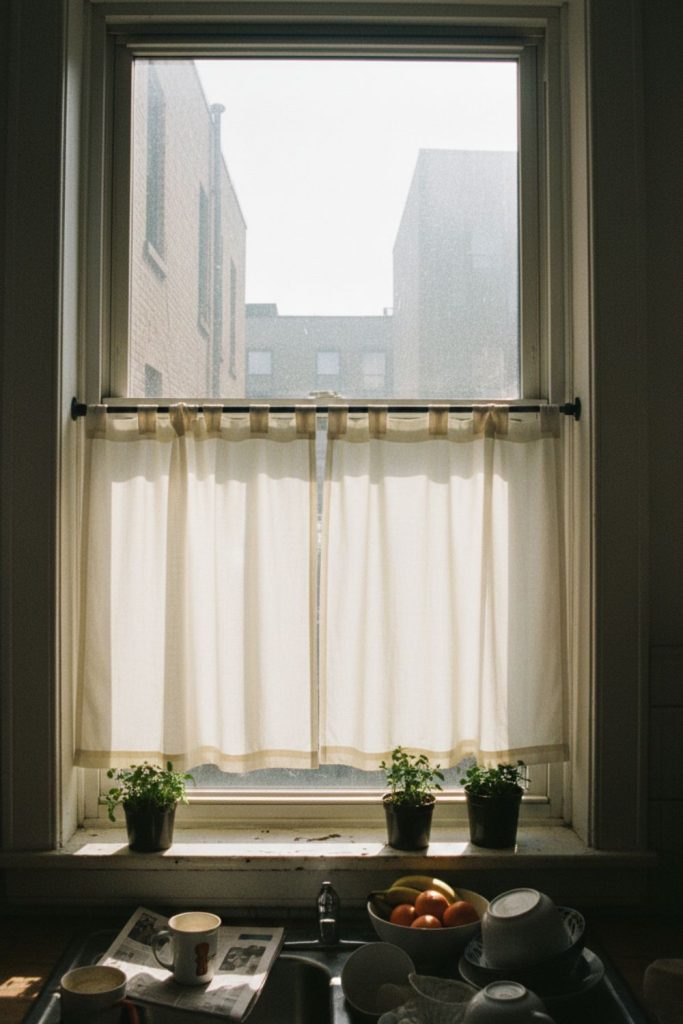
There’s something quietly smart about covering just the bottom part of a window. Café curtains that sit at the lower third give you privacy where you need it most while leaving the upper portion completely open. That top section becomes your main light source, and it makes a noticeable difference, especially in tighter apartments where every bit of daylight counts.
This setup works well in kitchens, street-facing living rooms, or anywhere neighbors are close by. You still get that soft filtered look below eye level, but the sunlight pours in freely above. The contrast between covered and uncovered space also tricks the eye a little, making the window seem taller than it really is.
Fabric choice matters here. Go for light cotton or linen so the bottom half doesn’t feel heavy. If the curtain is too thick, it defeats the purpose. Keep the rod slim and simple too, so it doesn’t interrupt the clean line across the middle. It’s simple, yes, but it changes the feel of the whole room more than you’d expect.
- Related post Soft, Stylish, and Versatile: Why Sheer Curtains Living Room Designs Fit Every Modern Lifestyle
Sill length sheer curtains hung 6–8 inches above the frame to visually raise ceiling height
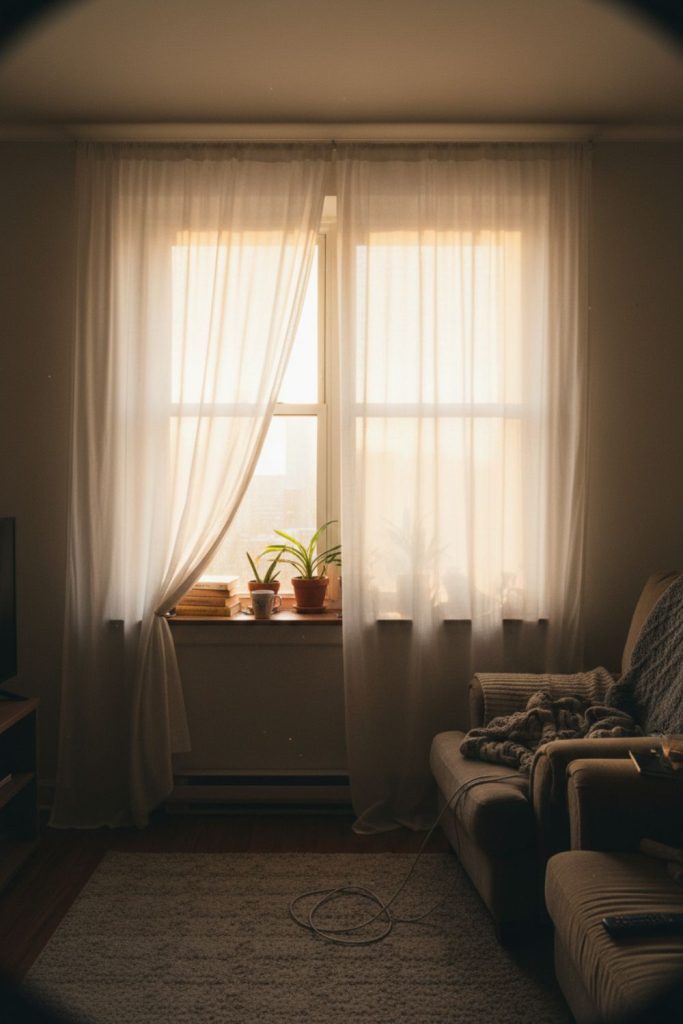
If your ceilings feel low, this trick works almost instantly. Hanging sheer curtains slightly above the window frame pulls the eye upward, creating the impression that the ceiling sits higher than it does. It’s a small adjustment, but visually it stretches the entire wall.
Sheer fabric plays an important role here. It allows light to pass through easily, so even when the curtain is closed, the room doesn’t dim. That soft glow spreads across the walls, making everything feel more open. Heavier materials would block that effect and bring the ceiling back down visually.
Keep the curtain length just at the sill or slightly below. Long panels would compete with the illusion you’re trying to create. The goal is height, not drama. A light neutral shade works best, something that blends without drawing too much attention. When done right, people won’t notice the trick itself, they’ll just feel like the room has more air.
- Related post The Ultimate Guide to Choosing Kitchen Curtains Above Sink for a Stylish, Functional Space
Extra wide short curtains extending beyond the window edges to create the illusion of larger windows
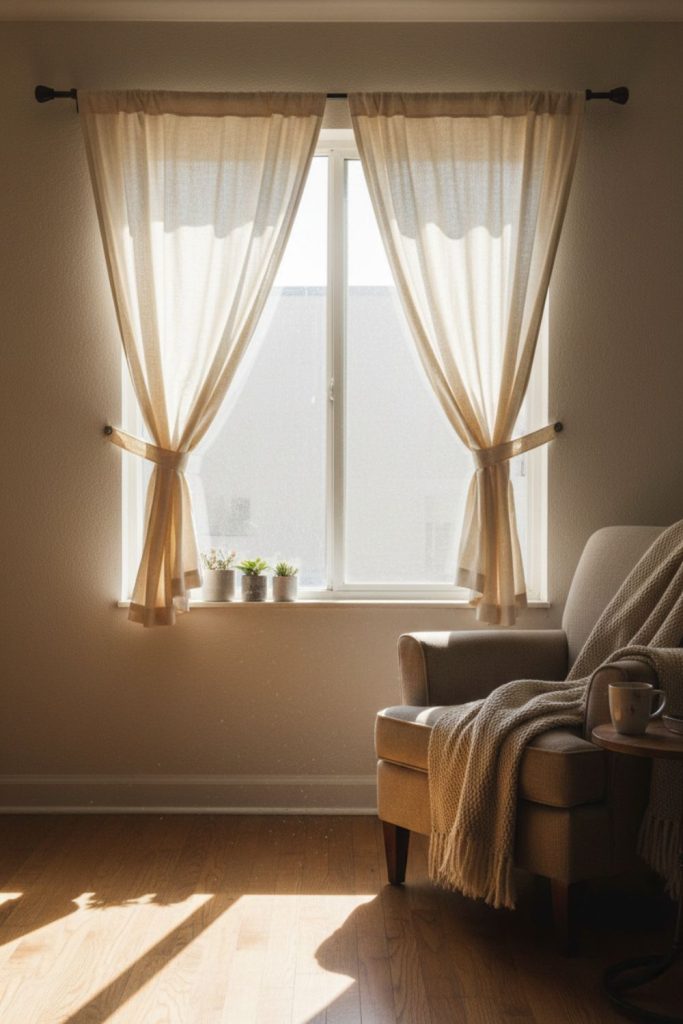
One of the easiest ways to fake a bigger window is to extend your curtain rod beyond the actual frame. By placing short curtains wider than the window, you reveal more glass when they’re open, which makes the window appear larger than it really is.
This idea works especially well in small apartments where windows tend to be narrow. When the curtains sit mostly on the wall rather than over the glass, the full width of the window becomes visible. It feels more expansive, almost like you’ve added extra inches without touching the structure.
Choose lightweight fabrics so the panels stack neatly at the sides without bulking up the wall. If they’re too thick, they’ll crowd the edges and ruin the illusion. Keep the colors light or similar to the wall tone so everything flows together instead of breaking up the space.
It’s one of those subtle shifts that doesn’t call attention to itself, but once you see it, you’ll notice how much more open the room feels.
White linen short curtains that blend seamlessly with white walls for an expanded look
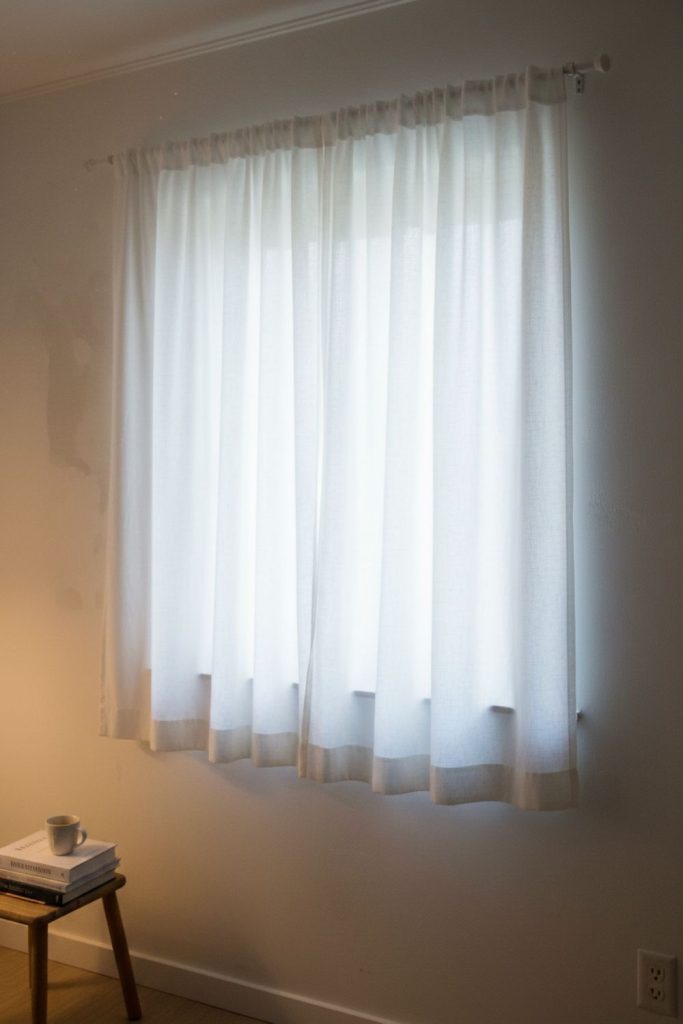
White on white might sound plain, but in a small apartment, it’s actually a clever move. White linen short curtains that match your wall color create a continuous surface, so the eye doesn’t stop at the window. Instead, it glides across the wall, making the room feel wider and calmer.
Linen adds just enough texture to keep things from looking flat. It catches light softly, creating gentle shadows that shift throughout the day. That movement gives life to the space without adding clutter.
This approach works best when you keep everything in a similar tone family. Bright white walls with slightly off-white curtains still work, as long as the difference is subtle. If the contrast is too strong, the illusion breaks.
It’s a quiet design choice, but very effective. The window blends into the wall, and suddenly the room feels less boxed in, even though nothing structural has changed.
Vertical stripe short curtains to subtly stretch wall height in tight rooms
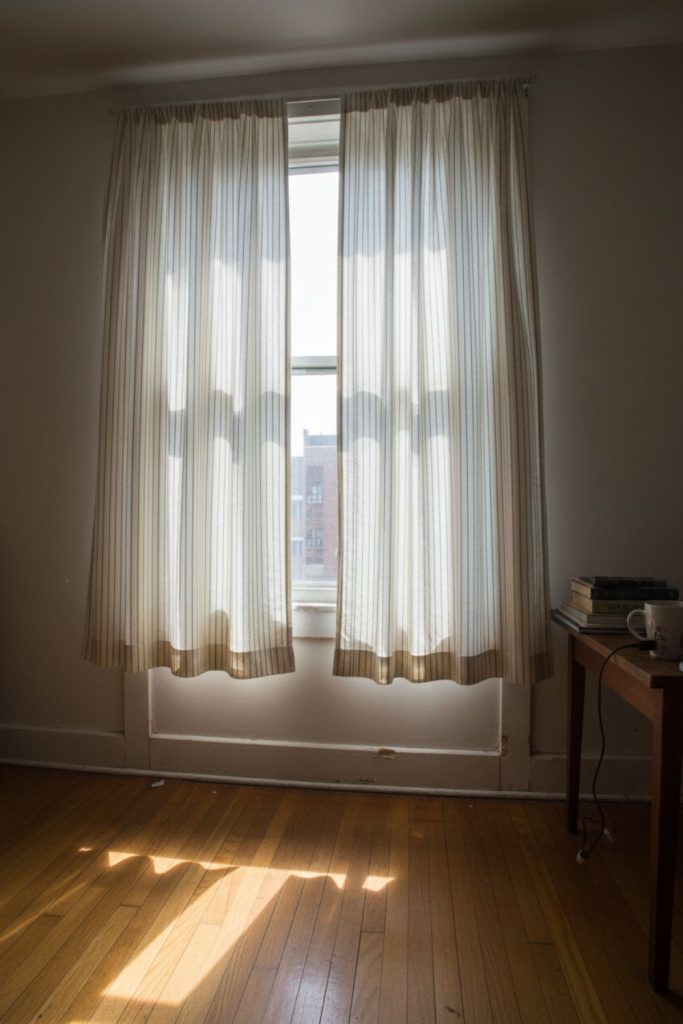
Vertical stripes have a long history of making things look taller, and they do the same for your walls. Short curtains with narrow vertical stripes draw the eye upward, giving the illusion of added height without any construction.
The key is subtlety. Thin, closely spaced stripes work better than bold, high-contrast ones. You want the pattern to guide the eye, not dominate the room. Soft tones like beige and white or pale gray combinations keep things calm while still doing the job.
When placed on a short curtain, the stripes don’t overwhelm the space. Instead, they act like gentle visual lines that extend the wall upward. Pair them with a slightly higher curtain rod placement, and the effect becomes even stronger.
It’s a small detail, but in a compact apartment, these small shifts stack up. Before long, the room feels less compressed and more balanced.
Split café curtains tied outward on both sides to expose more glass surface
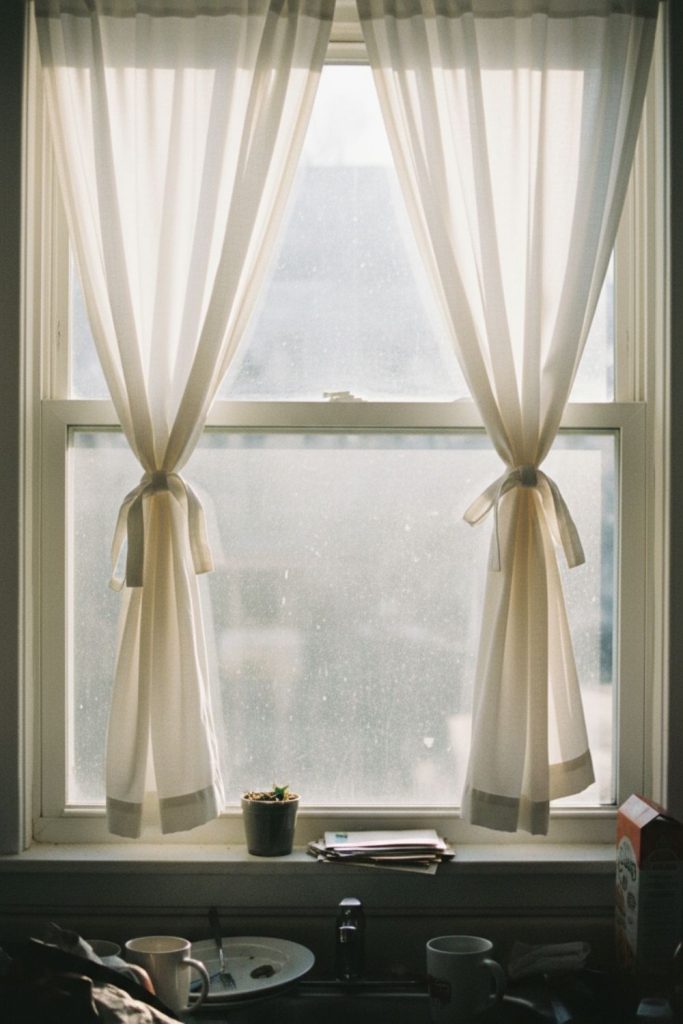
Split café curtains bring a bit of movement into the space. Instead of a single flat panel, you have two sections that can be tied outward, revealing more of the window in the center. That open middle section allows more light to enter and gives a clearer view outside.
This style feels relaxed and slightly playful, but it also serves a purpose. By pulling the fabric to the sides, you reduce visual blockage and let the window breathe. It creates a wider visual opening, even if the actual size stays the same.
Use soft ties or simple fabric bands to hold the curtains in place. Avoid anything bulky or decorative that might weigh down the look. Light fabrics work best here again, keeping everything airy and easy.
It’s a simple adjustment, but it changes how the window interacts with the room. More light, more openness, and just enough shape to keep things interesting.
Ultra light voile short curtains that diffuse light without blocking brightness
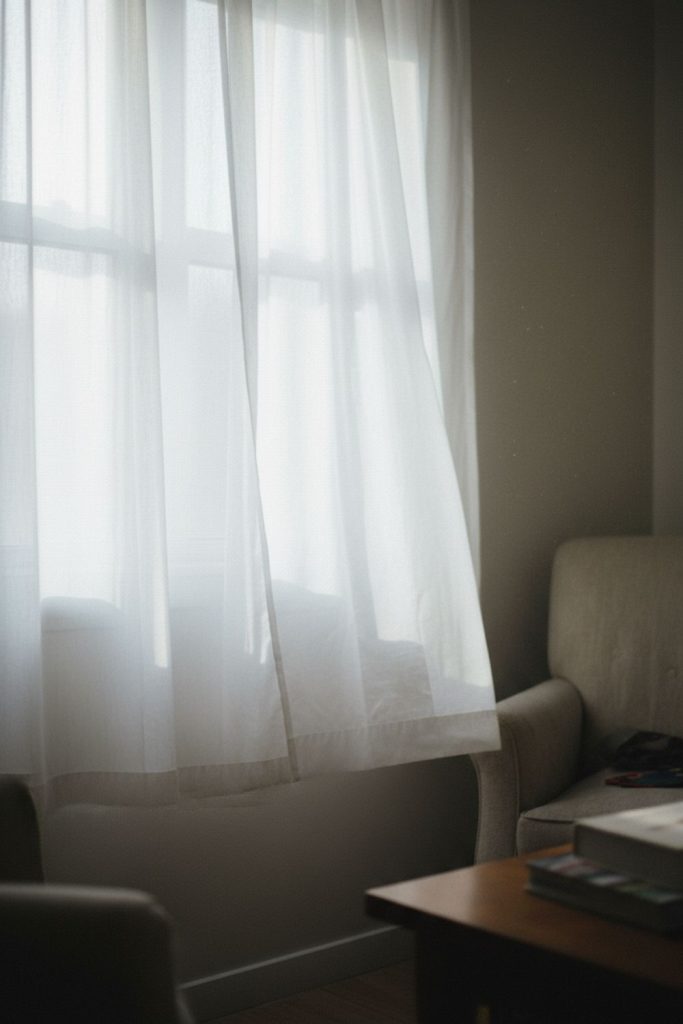
Voile fabric is almost weightless, and that’s exactly why it works so well in small spaces. It softens incoming light without dimming the room, creating a gentle glow that spreads evenly across surfaces.
With short voile curtains, you keep the window area visually light. There’s no heavy edge cutting across the wall, just a soft layer that barely interrupts the view. This makes the room feel open, even when the curtains are closed.
Voile also moves easily with air, adding a bit of life to the space. That slight motion can make a room feel less static, which matters more than you’d think in compact living areas.
Stick to pale tones to keep the effect strong. Dark voile exists, but it loses that brightening quality. When used right, this fabric almost disappears, leaving behind only light and softness.
Short curtains installed inside the window frame for a clean recessed architectural effect
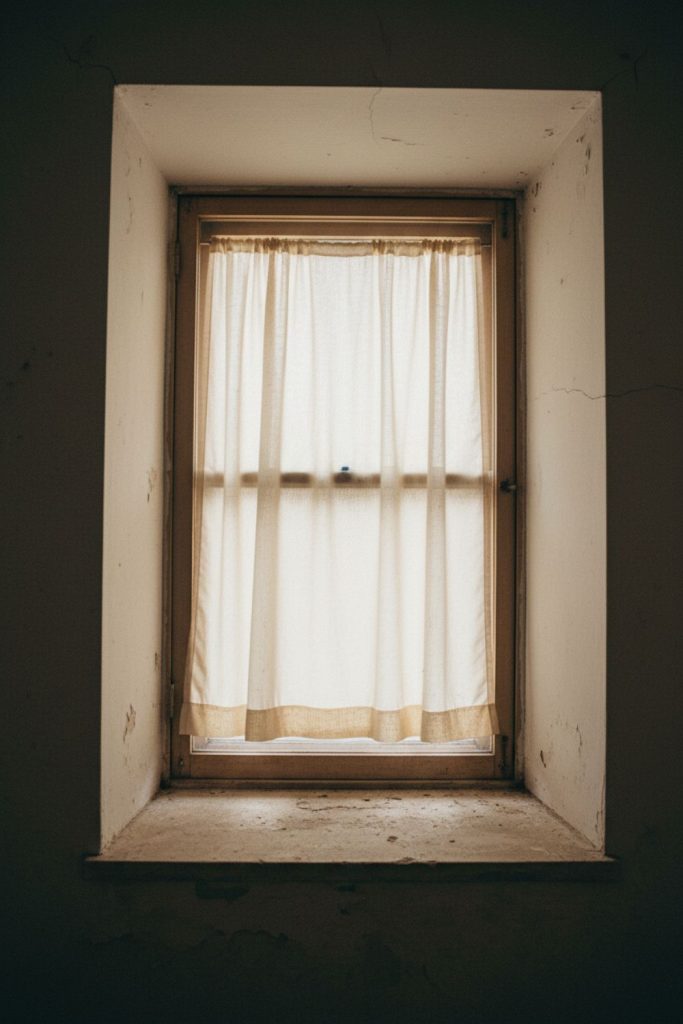
Mounting short curtains inside the window frame gives a neat, built-in look. It creates a clear boundary where the window sits slightly set back into the wall, adding a bit of depth without adding clutter.
This approach works well in modern or minimal interiors. There’s no extra fabric spilling onto the wall, so everything stays clean and contained. That simplicity helps the room feel more organized and less crowded.
It also highlights the window itself rather than the curtain. The focus shifts to the light coming in, not the covering. That shift makes a difference in how open the space feels.
You’ll want precise measurements here, since the curtain needs to fit neatly within the frame. But once installed, it feels intentional and polished, even in a small rental space.
Pale neutral short curtains paired with matching décor to create a continuous visual flow
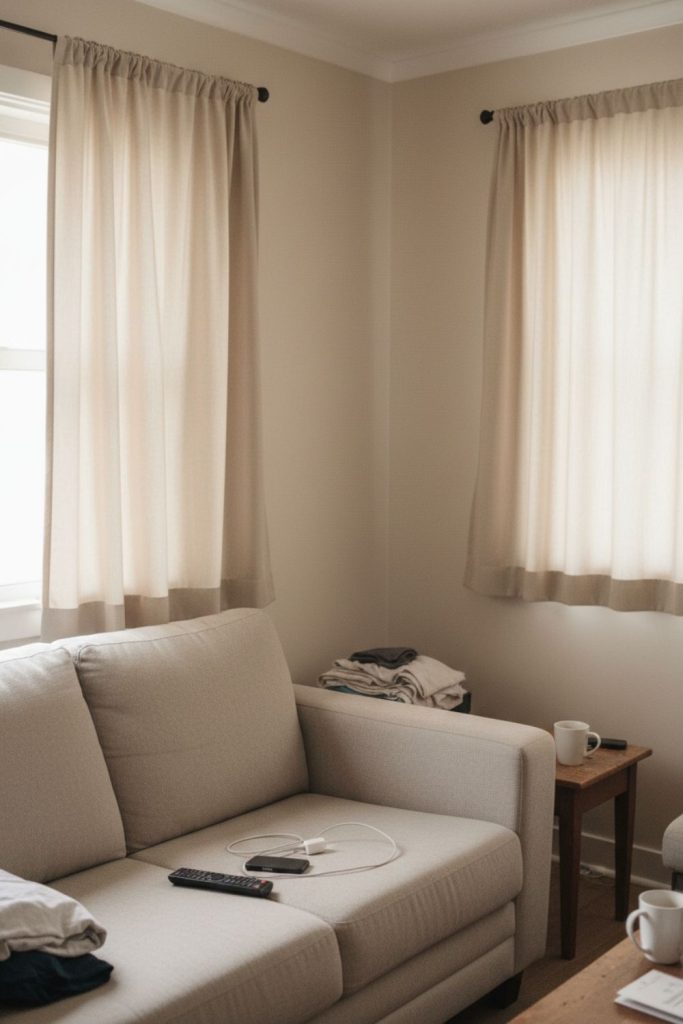
When your curtains match the surrounding décor, the room feels more connected. Pale neutral tones like soft beige, warm gray, or muted ivory help everything blend together into one smooth visual line.
Short curtains in these shades don’t interrupt the space. Instead, they become part of it. Pair them with cushions, rugs, or furniture in similar tones, and the whole room starts to feel more cohesive.
This continuity reduces visual breaks, which is exactly what small apartments need. The fewer interruptions your eye encounters, the larger the space feels.
It’s not about being boring, it’s about being intentional. A calm palette can still feel rich and layered when textures vary slightly. The result is a space that feels open, calm, and easy to live in.
Bottom half frosted window film with a minimal sheer topper for privacy without darkness
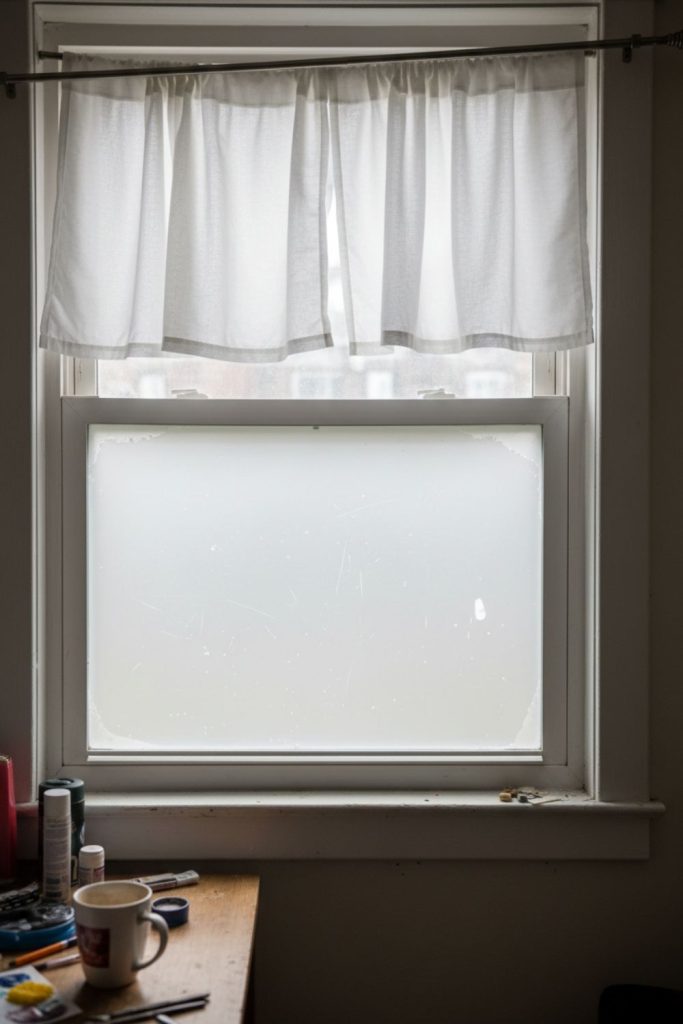
This idea combines two treatments for a balanced result. Frosted film on the lower half gives full privacy, while a short sheer curtain at the top softens incoming light.
The film keeps things bright because it doesn’t block light, it just diffuses it. That means your room stays illuminated without exposing the interior to the outside. The sheer topper adds a gentle layer above, giving the window a finished look.
This setup is especially useful in ground-floor apartments or buildings with close neighbors. You don’t have to rely on heavy curtains anymore, which often darken the room.
It’s practical and visually light at the same time. The window remains mostly open, and the space feels brighter because of it.
Narrow short curtain panels spaced apart to intentionally reveal more of the window
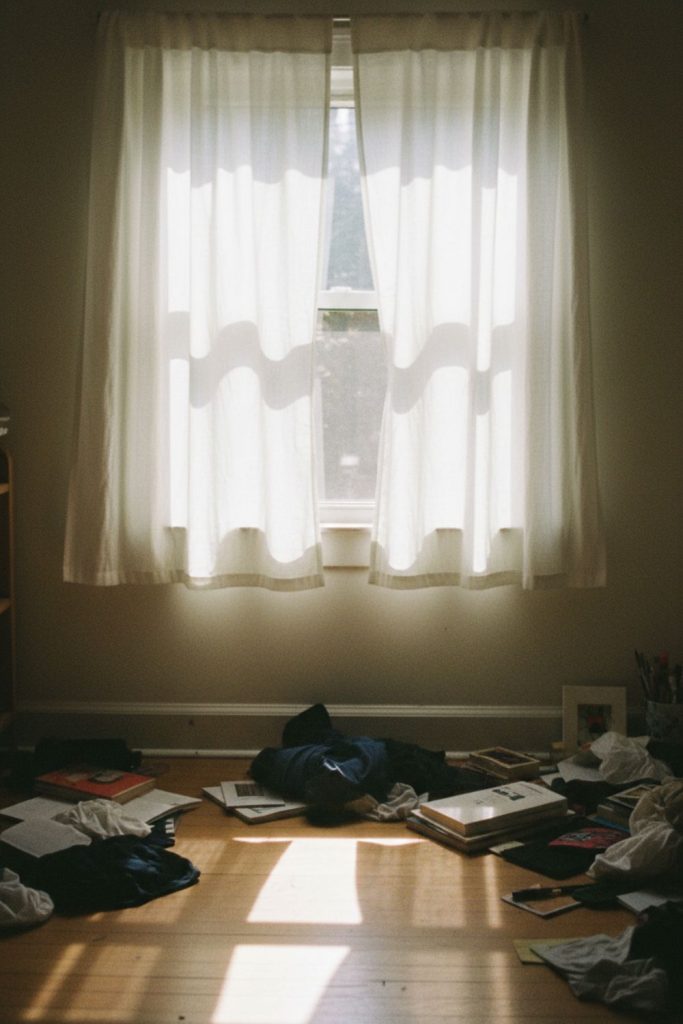
Instead of covering the entire window, narrow panels spaced apart leave visible gaps of glass between them. These gaps allow more light to pass through and break up the heaviness that full coverage can create.
The spacing becomes part of the design. It gives rhythm to the window and keeps the look from feeling flat. In a small room, that extra light makes a noticeable difference.
Keep the panels slim and the fabric light. The goal is to suggest coverage, not fully block the window. When arranged well, it feels intentional rather than incomplete.
It’s a subtle shift in thinking, using less fabric instead of more, but it pays off in how open the space feels.
Soft pastel short curtains that reflect light and brighten dim apartment corners
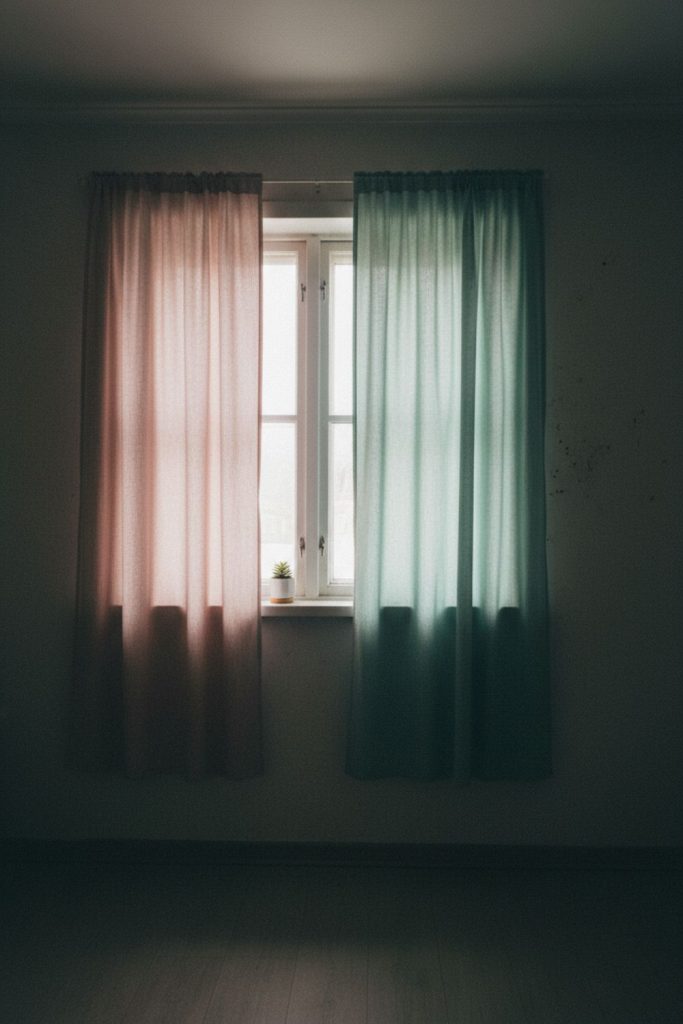
Soft pastels do something interesting with light. Instead of absorbing it, they reflect it gently back into the room. Shades like pale blush, light mint, or soft blue can brighten corners that don’t get much direct sunlight.
Short curtains in these tones add a bit of color without overwhelming the space. They feel light, almost airy, which helps maintain that open look small apartments need.
Pair them with neutral walls to keep balance. Too many competing colors can shrink the space visually. But one soft hue, repeated lightly, can make the room feel fresher.
It’s a simple way to add personality while still keeping things bright and open.
Minimal rod pocket short curtains with no visible hardware for a clutter free look
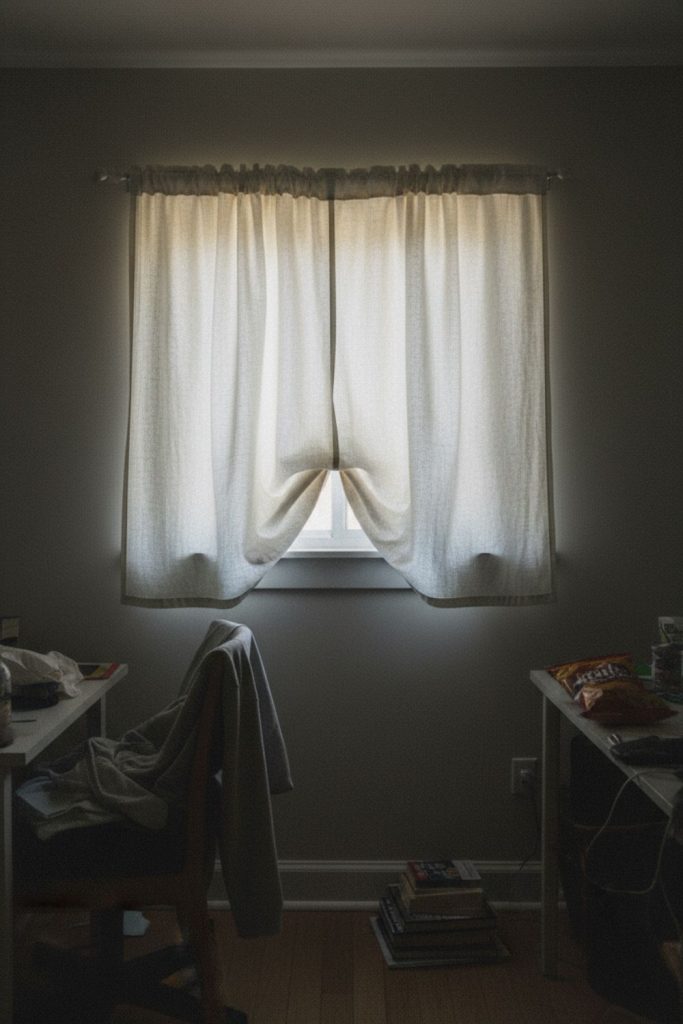
Visible hardware can break the flow of a wall, especially in small spaces. Rod pocket curtains hide the rod within the fabric, leaving a clean, uninterrupted line across the top.
This simplicity helps the room feel less busy. There’s nothing extra drawing attention, just the curtain and the light filtering through it.
Short versions of this style work particularly well because they don’t compete with furniture or wall décor. Everything stays compact and tidy.
Choose a light fabric so the gathered top doesn’t feel bulky. When done right, the curtain almost blends into the background, letting the room feel more open.
Short curtains with a slightly curved hemline to guide the eye upward
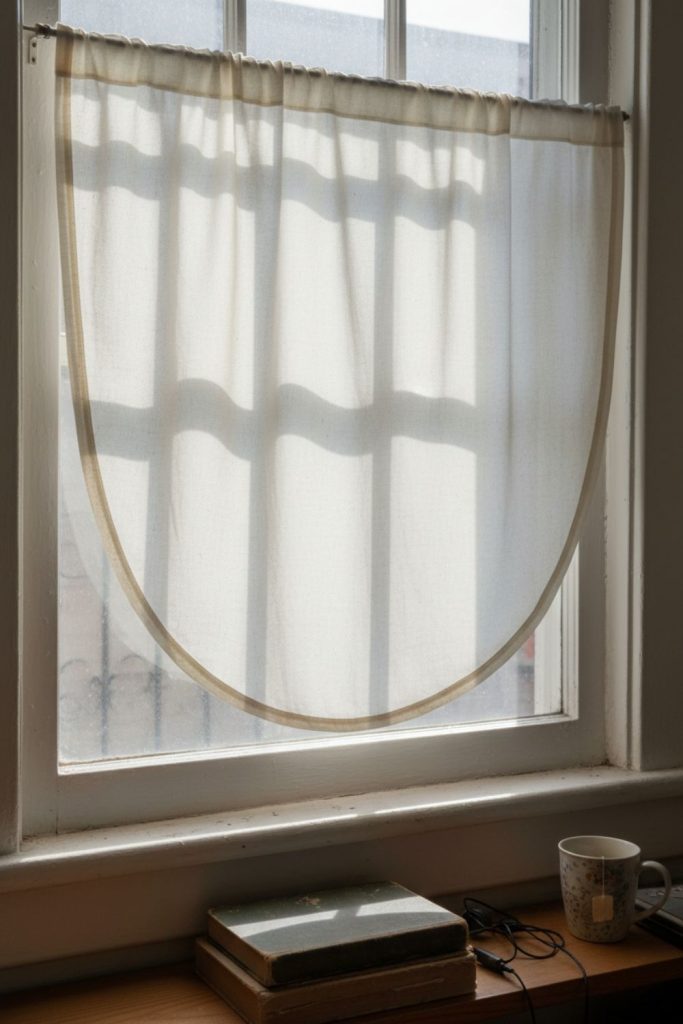
A curved hemline introduces a gentle visual movement. Instead of a straight horizontal line, the curve draws the eye upward toward the center, creating a subtle lifting effect.
This works well in small rooms where straight lines can feel rigid. The curve softens the space and adds a bit of interest without needing bold patterns or colors.
Keep the curve slight, not dramatic. The goal is to guide the eye, not distract it. Light fabrics enhance the effect, allowing the shape to fall naturally.
It’s a small design detail, but it changes how the window feels within the room.
Monochromatic short curtains that match the wall color to visually erase boundaries
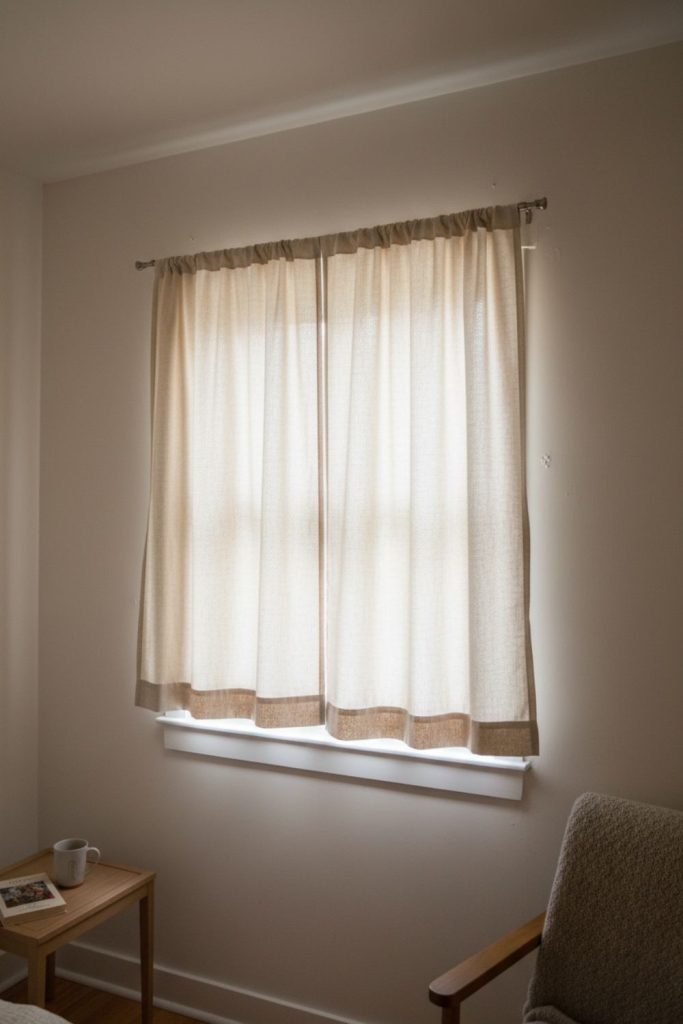
Matching your curtains to your wall color removes visual breaks. The window area blends into the wall, making it harder to tell where one ends and the other begins.
This creates a smooth, uninterrupted surface that feels larger. It’s especially useful in very small apartments where every visual break can make the room feel tighter.
Short curtains keep this effect controlled. Long ones might add weight, but short ones stay light and subtle.
It’s a quiet approach, but very effective. The room feels more open simply because there’s less contrast dividing it.
Lightweight cotton café curtains clipped loosely for a relaxed airy drape
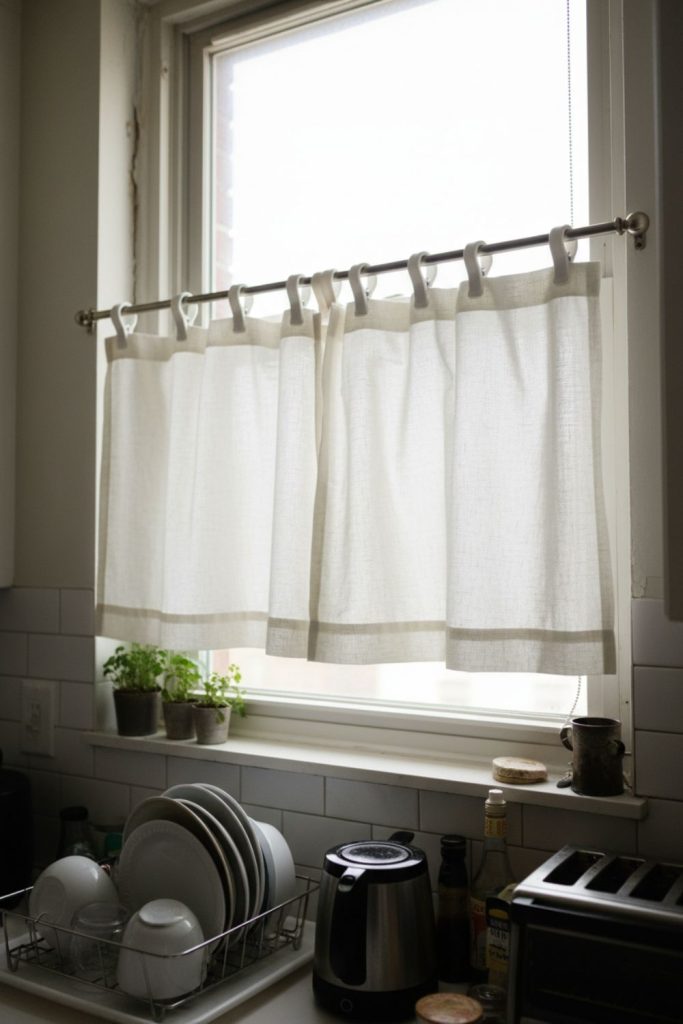
Clipped curtains bring a casual feel that works well in compact spaces. The loose drape keeps things from feeling stiff, while the clips add a bit of visual detail without heaviness.
Lightweight cotton is ideal here. It falls naturally and lets light pass through easily. The result is a window treatment that feels easy and open.
The relaxed look also works well for renters who want something flexible. Clips make it simple to adjust or swap fabrics without much effort.
It’s not overly styled, and that’s part of the appeal. The space feels lived in, not overdone.
Short curtains paired with a slim curtain rod placed close to the ceiling line
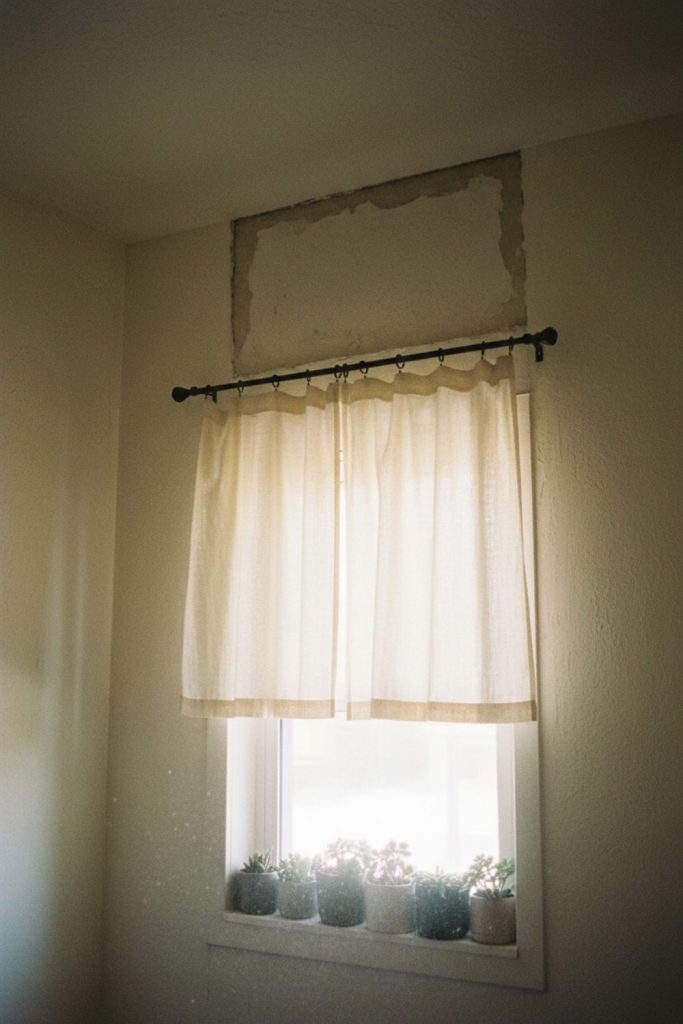
Placing the rod closer to the ceiling extends the perceived height of the wall. Even with short curtains, this higher placement tricks the eye into seeing more vertical space.
A slim rod keeps the look clean and avoids adding visual weight. Thick rods can draw attention and break the illusion.
The curtain itself should stay light and simple. The focus here is on placement rather than fabric.
It’s one of the easiest adjustments you can make, but it has a strong effect on how tall the room feels.
Subtle geometric pattern short curtains that add depth without overwhelming the space
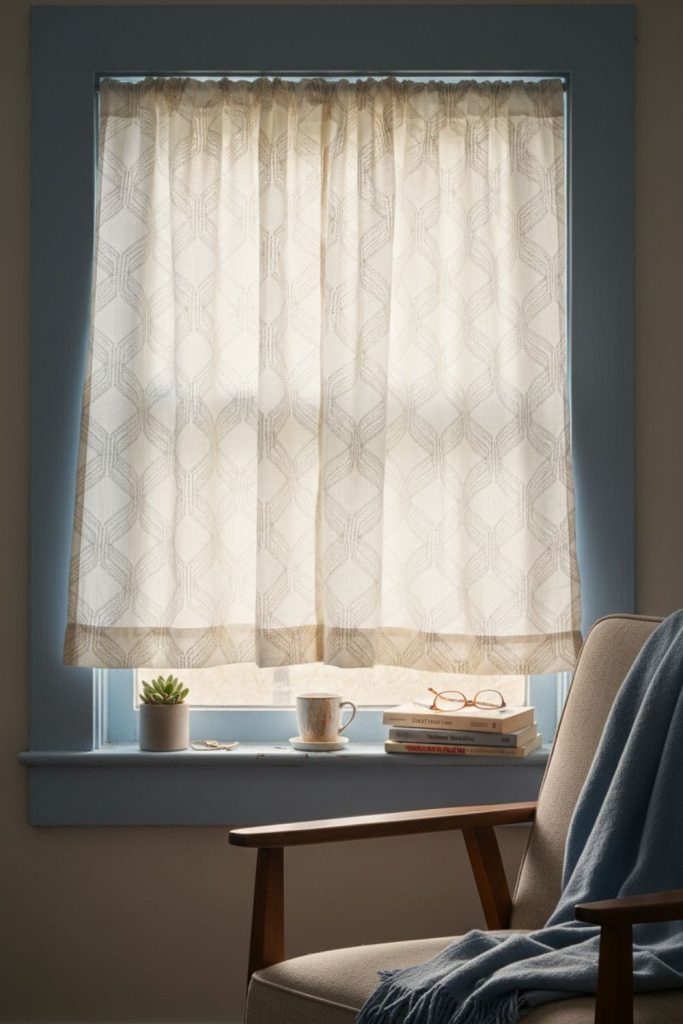
Patterns can add depth, but in small apartments, they need to stay controlled. Subtle geometric designs work well because they introduce structure without dominating the room.
Short curtains with these patterns create interest at the window without pulling focus away from the rest of the space. The pattern should be low contrast, something you notice up close but not from across the room.
This adds a layer of detail that keeps the space from feeling flat. At the same time, it doesn’t crowd the room visually.
It’s a balance between plain and bold, giving just enough texture to keep things interesting.
Semi sheer layered café curtains in two tones to create dimension while staying bright
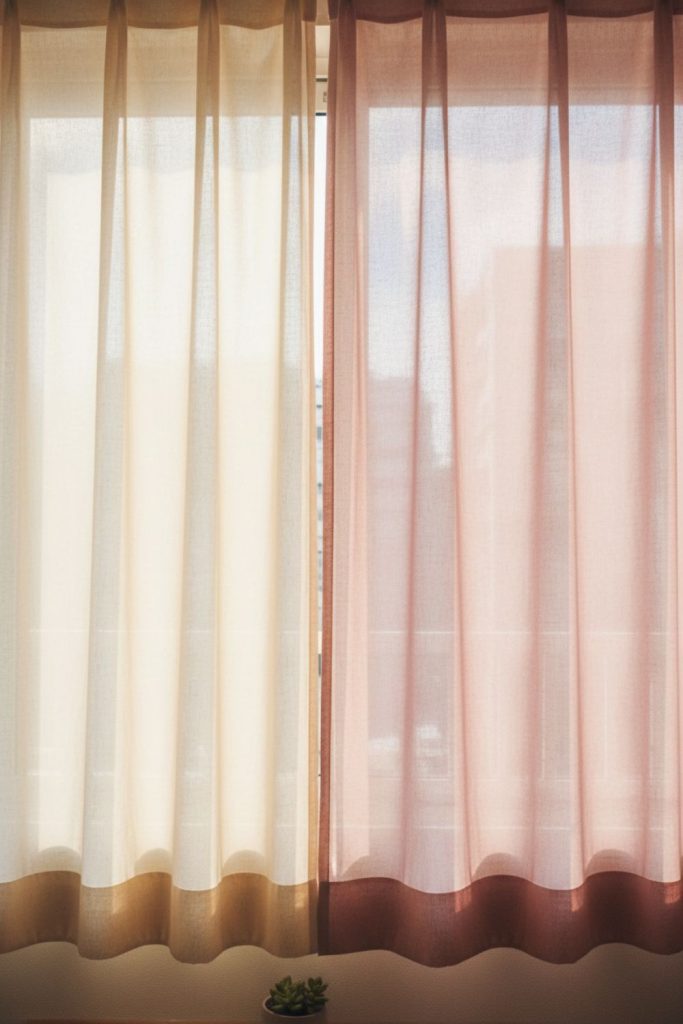
Layering doesn’t have to mean heaviness. Using two semi sheer fabrics in slightly different tones adds depth while still allowing light through.
The layers create a soft gradient effect, which makes the window feel more dimensional. It’s a gentle way to add richness without blocking brightness.
Keep both layers light in color so the effect stays airy. Dark layers would cancel out the benefit.
This setup works well in living areas where you want a bit more visual interest but still need the room to feel open.
Short curtains styled only on operable lower panes to keep the top fully open
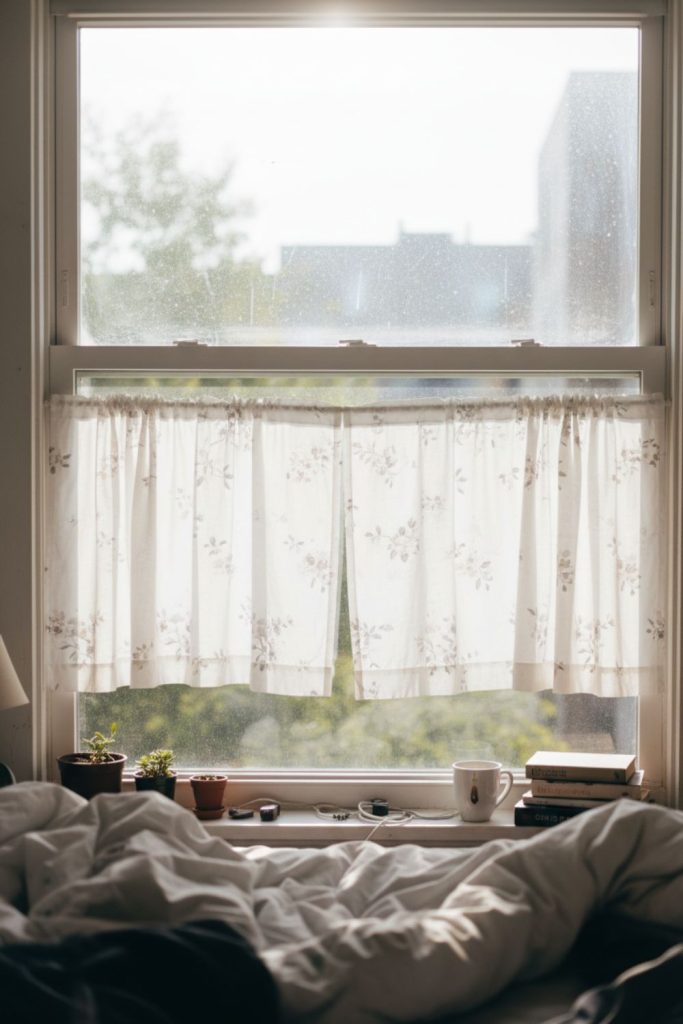
If your window has sections that open, focus the curtain on the lower panes only. This keeps the top completely free, allowing maximum light to enter.
It also keeps the upper view clear, which can make the room feel more connected to the outside. That connection adds a sense of space, even in a small apartment.
The lower curtain provides privacy where it matters, while the top stays open and bright. It’s a practical balance that works in many layouts.
Simple fabrics work best here, keeping attention on the light rather than the covering.
Light reflective soft fabric short curtains that bounce daylight deeper into the room
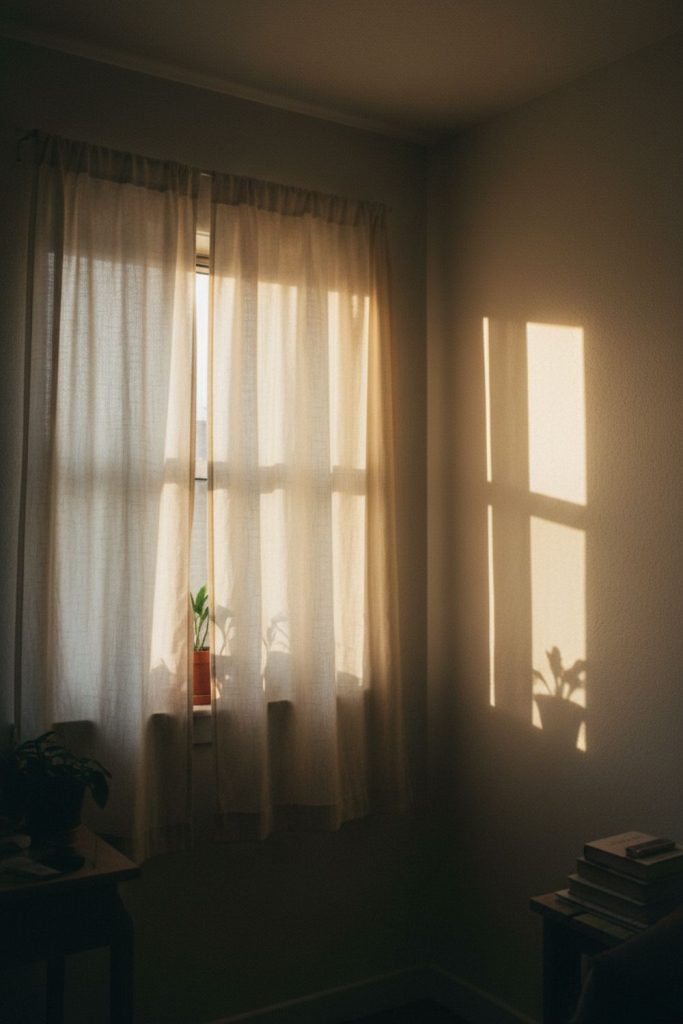
Some fabrics catch light better than others. Soft, slightly reflective materials help spread daylight further into the room, reaching corners that would otherwise stay dim.
Short curtains in these fabrics act almost like subtle reflectors. They don’t shine, but they gently push light around, making the space feel brighter.
This is especially helpful in apartments with limited window exposure. Every bit of reflected light adds to the overall brightness.
Choose light colors to enhance the effect. Combined with a simple design, this approach quietly improves how the room feels throughout the day.